

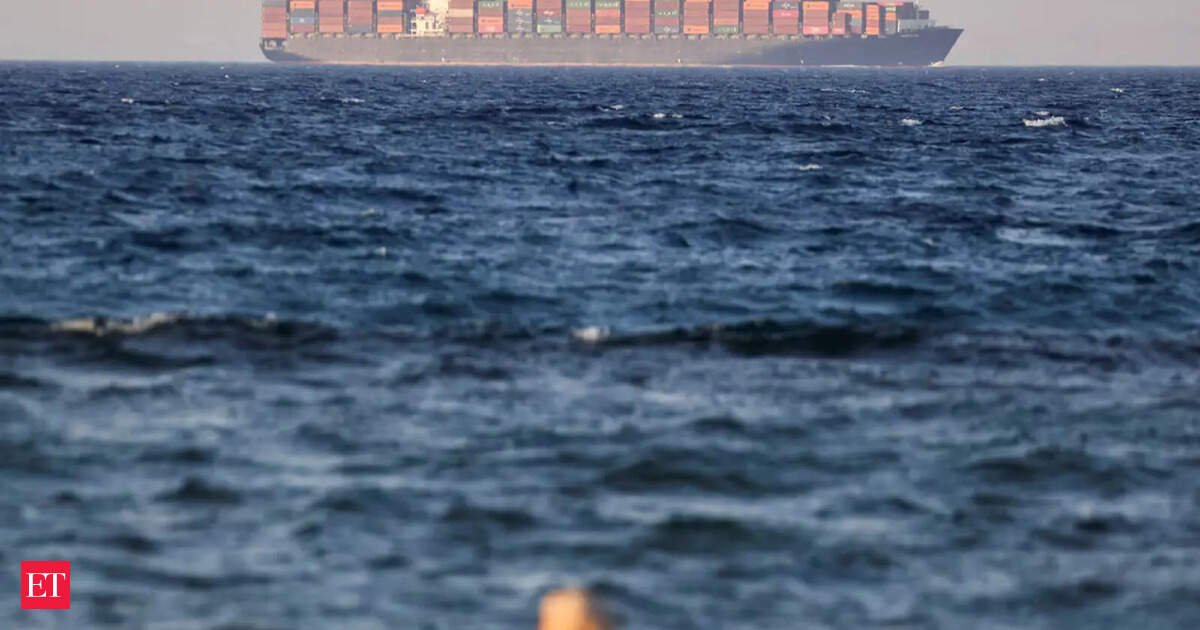
“For me, the key message is very loud and clear. We need to look after the seafarers better, and shipping should not be used as collateral in any geopolitical conflict,” Dominguez said in response to a question by PTI during a virtual press conference here.
Three Indian seafarers were killed in a US attack off the coast of Oman earlier this month on commercial tanker Settebello, which had 24 Indian crew members on board.
The attack on Settebello came two days after a Palau-flagged vessel with 24 Indians came under attack by the US Navy as the ship tried to evade the US blockade of Iranian ports.
The International Maritime Organization (IMO) secretary-general said the conflict affects innocent people like seafarers and also innocent people around the world who are not even a part of the conflict.

According to Indian government data, Indians account for 12 per cent of the global seafaring workforce.
India’s seafarer workforce has grown from 1.25 lakh to over 3 lakh, making the country one of the world’s top three suppliers of trained seafarers, who are engaged in a host of maritime operations such as navigation, ship operations, logistics, and allied industries. India has voiced its firm opposition to attacks on merchant shipping amid the ongoing Iran conflict and had told the UN Security Council that several of its nationals have died or are missing due to attacks in the region.
“Many Indian nationals have lost their lives or are missing as a result of attacks against countries of the region and against merchant vessels and sea lanes of communication,” India has said.
Dominguez said, “The seafarers feel forgotten, particularly by the global media and by everyone around the world, and whenever they turn on the news, they listen to how this conflict is really being negative for the countries, for the global economy, the fuel price etc, and not so much attention on the innocent seafarers.”
He said seafarers have been the priority of all the work that the IMO carries out.
“It is regrettable that 14 seafarers have actually lost their lives in more than 40 attacks on different vessels during the conflict,” he said.
Dominguez said he has spoken to a few seafarers who have left the region and who shared information about the difficulties they have endured.
“The main focus of my actions has been working with the countries in the region, the flag states of all those vessels, as well as the nationalities of the seafarers and the ship owners to continue to provide support to the seafarers that are still stuck there,” he said.
This includes ensuring supplies for the seafarers — from water, fuel for the vessels, food and medical assistance to managing to contact their families “so they can still have those connections”.
“I also learned… not only how difficult it’s been for them to be in an area with so much danger and uncertainty, but at the same time how resilient they are in supporting each other,” he said.
In the wake of the Settebello attack, Dominguez had expressed his “deep sadness” and “strong condemnation” of the attack.
“This is simply unacceptable. My thoughts are with the families of the three seafarers who lost their lives and with all those awaiting news of the crew members,” Dominguez had said, adding that IMO has underscored the need to protect seafarers, civilian shipping and the freedom of navigation at all times.
“All actions affecting international shipping must fully respect international law and the safety of life at sea. The protection of seafarers is a shared responsibility that must remain paramount,” Dominguez had said.
On Thursday, the IMO said that following an attack on a vessel in the Gulf of Oman, it has decided to temporarily pause its evacuation operation pending further clarity.