

Close Menu

    Subscribe to Updates

    Get the latest news information from worldwide businesses.

    What's Hot

    Leaves about $15 million for Fantilli

    July 24, 2026

    Volvo trademark reveals EX50 EV name: Here’s what we know

    July 24, 2026

    Ozempic and Mounjaro linked to a surprising hair loss risk

    July 24, 2026
    Facebook Instagram YouTube LinkedIn X (Twitter)
    Trending
    • Leaves about $15 million for Fantilli
    • Volvo trademark reveals EX50 EV name: Here’s what we know
    • Ozempic and Mounjaro linked to a surprising hair loss risk
    • From Grade 3 Fatty Liver to Recovery: Sunaina Roshan’s Routine
    • Midjourney bought the astrology app Co-Star
    • Vietnam is looking to restrict social media for kids; here are the growing number of other countries doing the same
    • Dalmia Bharat sees new assets boosting volumes soon; Profit falls 50%
    • US pummels Iran as Tehran targets regional bases stationing US forces
    Newspublicly
    • About Us
    • Advertise & Partner with us
    • Pitch Your Story
    • Contact Us
    Facebook Instagram LinkedIn X (Twitter)
    Subscribe
    • Home
    • World News
      • Asia
      • India
      • USA
      • UK & Europe
      • Middle East
    • Economy & Business
      • Global Economy
      • Corporate & Industry
      • Finance & Markets
      • Policy & Trade
    • Technology
      • Gadgets & Devices
      • Software & Apps
      • AI & Machine Learning
      • Robotics & Automation
    • Health & Medicine
      • Fitness & Nutrition
      • Research & Innovation
      • Disease & Treatment
      • Doctors, Clinics & Patient Care
    • Travel & Tourism
    • Automobile
      • Electric & Hybrid Vehicles
      • Auto Industry Insights
    • Sports
    • More
      • Education
      • Real Estate
      • Environment & Climate
      • Space & Astronomy
      • War & Conflicts
    Newspublicly
    Home»Health & Medicine»Research & Innovation»Scientists discover vitamin B2 may help cancer cells survive
    Research & Innovation

    Scientists discover vitamin B2 may help cancer cells survive

    AdminBy AdminMay 15, 2026No Comments4 Mins Read0 Views
    Share
    Facebook Twitter LinkedIn Copy Link WhatsApp


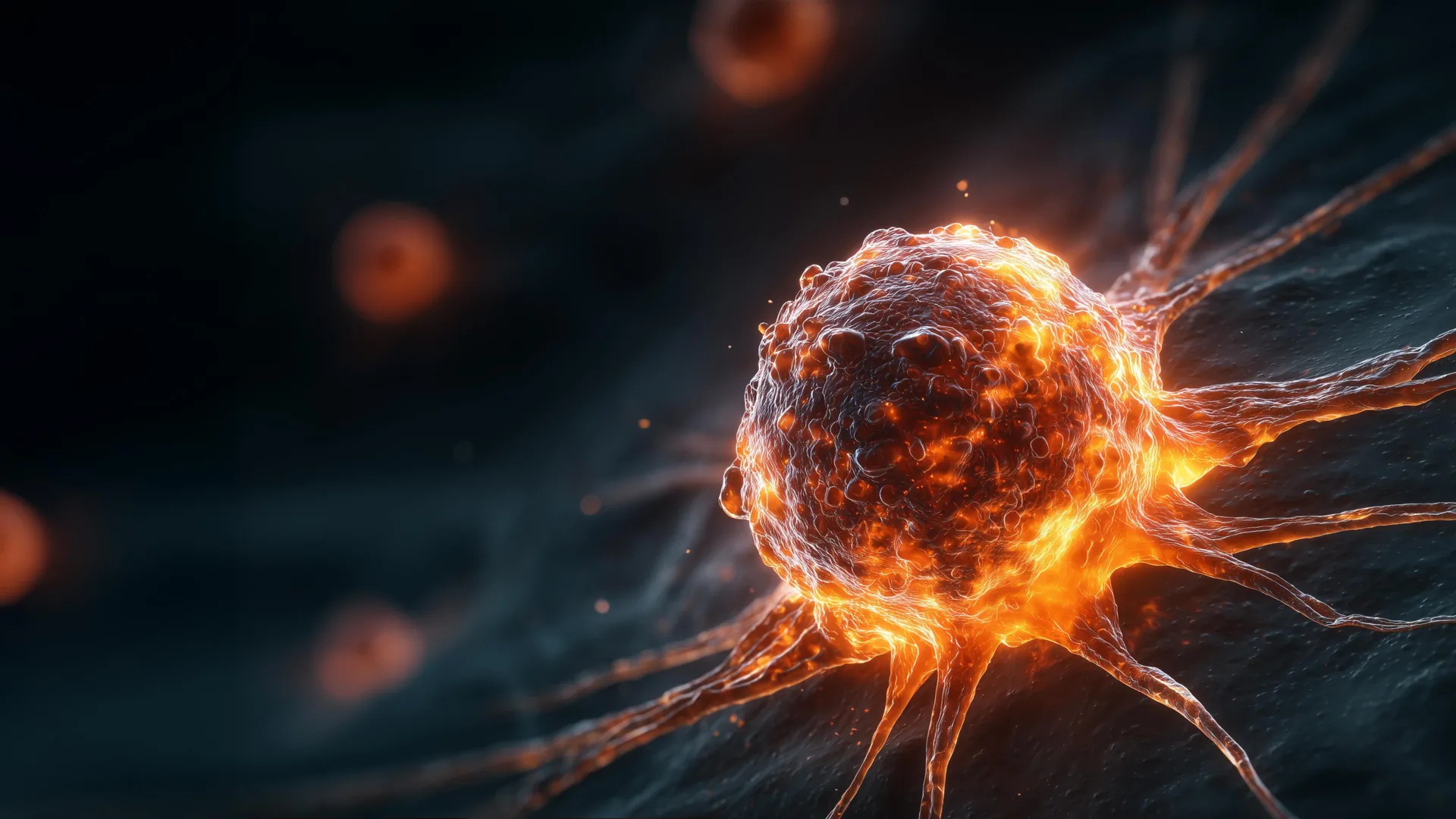
    Vitamin B2 is essential for human health, but new research suggests it may also help cancer cells stay alive.

    Also known as riboflavin, vitamin B2 cannot be produced by the body and must come from food sources such as dairy products, eggs, meat, and green vegetables. Once absorbed, the vitamin is converted into molecules that help protect cells from oxidative damage and support other important biological functions.

    Scientists at the Rudolf Virchow Centre (RVZ) at Julius-Maximilians-Universität Würzburg (JMU) have now discovered that this protective effect may come with a serious drawback. Their findings show that vitamin B2 metabolism can also shield cancer cells from destruction.

    “Vitamin B2 plays a crucial role in protecting cancer cells from ferroptosis, a special form of programmed cell death,” says PhD student Vera Skafar. She is part of the research team led by José Pedro Friedmann Angeli, Professor of Translational Cell Biology. The study was published in Nature Cell Biology.

    How Vitamin B2 Helps Cancer Cells Survive

    Programmed cell death is one of the body’s natural defense systems. It allows damaged or dangerous cells to die in a controlled way without triggering inflammation in nearby tissue. Ferroptosis is one type of this process and has been linked to cancer, neurodegenerative diseases, and other serious conditions.

    Ferroptosis occurs when iron-driven damage to cell membranes overwhelms a cell’s antioxidant defenses. Cancer cells often avoid this fate by strengthening systems that protect them from oxidative stress.

    The new study found that vitamin B2 metabolism plays an important role in these protective defenses. According to the researchers, this means that blocking riboflavin-related pathways could make tumors more vulnerable to ferroptosis and easier to destroy.

    Researchers Test a Possible Cancer Therapy Strategy

    A protein called FSP1 was central to the team’s investigation. The protein helps healthy cells avoid unwanted cell death, and vitamin B2 supports its activity.

    Using genome editing and cancer cell models, the researchers found that cancer cells became much more sensitive to ferroptosis when vitamin B2 was limited.

    The team believes this process could eventually be used as a cancer treatment by shutting down vitamin B2 metabolism in tumors and triggering cancer cell death. However, there is currently no inhibitor specifically designed for that purpose.

    To explore the idea further, the researchers tested roseoflavin, a naturally occurring compound produced by bacteria that has a structure similar to vitamin B2.

    Roseoflavin Successfully Triggered Ferroptosis

    In laboratory experiments using cancer cell models, the researchers found that roseoflavin was able to trigger ferroptosis even at low concentrations.

    “It turned out that roseoflavin triggers ferroptosis in low concentrations,” says the group leader, “our experiments show the feasibility of this concept.”

    The findings suggest that targeting vitamin B2 metabolism could become a promising new approach for future cancer therapies based on ferroptosis.

    Next, the RVZ research team plans to develop more effective inhibitors of vitamin B2 metabolism and test them in preclinical cancer models.

    Potential Implications Beyond Cancer

    Friedmann Angeli says the importance of ferroptosis extends beyond oncology.

    “Ferroptosis is not only relevant to cancer. Increasing evidence suggests that it also contributes to pathological processes in neurodegenerative diseases and in tissue damage following organ transplantation or ischemia-reperfusion injury.”

    Because of this, understanding how vitamin B2 metabolism influences ferroptosis could eventually help scientists better understand a wide range of diseases involving excessive or insufficient cell death.

    The research was supported by the German Research Foundation (DFG) through the priority program “Ferroptosis: from Molecular Basics to Clinical applications” (SPP2306).

    The work was also conducted as part of the DeciFerr (Deciphering and exploiting ferroptosis regulatory mechanism in cancer) project led by Professor Friedmann Angeli. Since May 2024, the project has received funding from the European Research Council (ERC) through an ERC Consolidator Grant worth nearly two million euros.


    Source link

    Author

    • Admin

      NewsPublicly.com is News & Articles Platform that creating SEO-focused articles on travel, lifestyle, and digital trends.

    Admin
    • Website

    NewsPublicly.com is News & Articles Platform that creating SEO-focused articles on travel, lifestyle, and digital trends.

    Related Posts

    Ozempic and Mounjaro linked to a surprising hair loss risk

    July 24, 2026

    APOE2 may protect the brain from Alzheimer’s and aging

    July 24, 2026

    Ancient ape fossil in Egypt challenges the story of human origins

    July 24, 2026
    Leave A Reply Cancel Reply

    Demo
    Top Posts

    The Blue Moon rises on May 30— Where and when to see the second full moon of the month

    May 30, 202640 Views

    New SOCOM rifle allows barrel swapping and cartridge changes

    June 1, 202633 Views

    “Inside Gemini Robotics 1.5: How Robots Learn to Reason & Act

    November 22, 202527 Views

    525 pounds of cocaine seized after Nebraska K9 alerts troopers on I-80

    May 28, 202624 Views
    Don't Miss

    Leaves about $15 million for Fantilli

    July 24, 20262 Mins Read0 Views

    Columbus Blue Jackets forward Cole Sillinger has signed a three-year contract extension, avoiding salary arbitration.…

    Volvo trademark reveals EX50 EV name: Here’s what we know

    July 24, 2026

    Ozempic and Mounjaro linked to a surprising hair loss risk

    July 24, 2026

    From Grade 3 Fatty Liver to Recovery: Sunaina Roshan’s Routine

    July 24, 2026
    Stay In Touch
    • Facebook
    • Twitter
    • Instagram
    • YouTube
    • LinkedIn
    • WhatsApp

    Subscribe to Updates

    Get the latest creative news from SmartMag about art & design.

    Demo
    NEWSPUBLICLY
    Facebook X (Twitter) Instagram LinkedIn

    Home

    • About Us
    • Leadership
    • Advertise & Partner With Us
    • Pitch Your Story
    • Media Kit & Pricing
    • Career
    • FAQs

    Guidelines

    • Editorial & Submission
    • Partnership
    • Advertising & Sponsor
    • Intellectual Property Policy
    • Community & Comment
    • Security & Data Protection
    • Send Your Opinion

    Quick Links

    • Cookie Policy
    • Payment & Billing Terms
    • Refund & Cancellation
    • Copyright Policy
    • Complaint & Support
    • Sitemap
    • Contact Us

    Subscribe Us

    Get the latest news and updates!

    Copyright © 2026 Newspublicly (DIGITALIX COMMUNICATION). All Rights Reserved.
    • Privacy Policy
    • Terms of Use
    • Disclaimer