

Close Menu

    Subscribe to Updates

    Get the latest news information from worldwide businesses.

    What's Hot

    Chronic inflammation: Oncologist explains warning signs, causes and ways to reduce risk | Health News

    June 24, 2026

    Early humans were bringing fire into caves 1.8 million years ago

    June 24, 2026

    What are FDCs and why are they being increasingly banned? | Explained

    June 24, 2026
    Facebook Instagram YouTube LinkedIn X (Twitter)
    Trending
    • Chronic inflammation: Oncologist explains warning signs, causes and ways to reduce risk | Health News
    • Early humans were bringing fire into caves 1.8 million years ago
    • What are FDCs and why are they being increasingly banned? | Explained
    • Google’s new rules for the app store will allow alternative billing next week
    • Facebook rolls out an AI companion app for creators
    • India to release first-ever monthly index tracking services sector output from July 14
    • S&P upgrades Bharti Airtel to ‘BBB+’ on strong India, Africa growth and debt reduction prospects
    • Everyone on Wall Street now believes in buying the dip. That is exactly why you should worry.
    Newspublicly
    • About Us
    • Advertise & Partner with us
    • Pitch Your Story
    • Contact Us
    Facebook Instagram LinkedIn X (Twitter)
    Subscribe
    • Home
    • World News
      • Asia
      • India
      • USA
      • UK & Europe
      • Middle East
    • Economy & Business
      • Global Economy
      • Corporate & Industry
      • Finance & Markets
      • Policy & Trade
    • Technology
      • Gadgets & Devices
      • Software & Apps
      • AI & Machine Learning
      • Robotics & Automation
    • Health & Medicine
      • Fitness & Nutrition
      • Research & Innovation
      • Disease & Treatment
      • Doctors, Clinics & Patient Care
    • Travel & Tourism
    • Automobile
      • Electric & Hybrid Vehicles
      • Auto Industry Insights
    • Sports
    • More
      • Education
      • Real Estate
      • Environment & Climate
      • Space & Astronomy
      • War & Conflicts
    Newspublicly
    Home»Health & Medicine»Research & Innovation»Scientists discover ancient brain cells that help block distractions
    Research & Innovation

    Scientists discover ancient brain cells that help block distractions

    AdminBy AdminJune 24, 2026No Comments4 Mins Read0 Views
    Share
    Facebook Twitter LinkedIn Copy Link WhatsApp


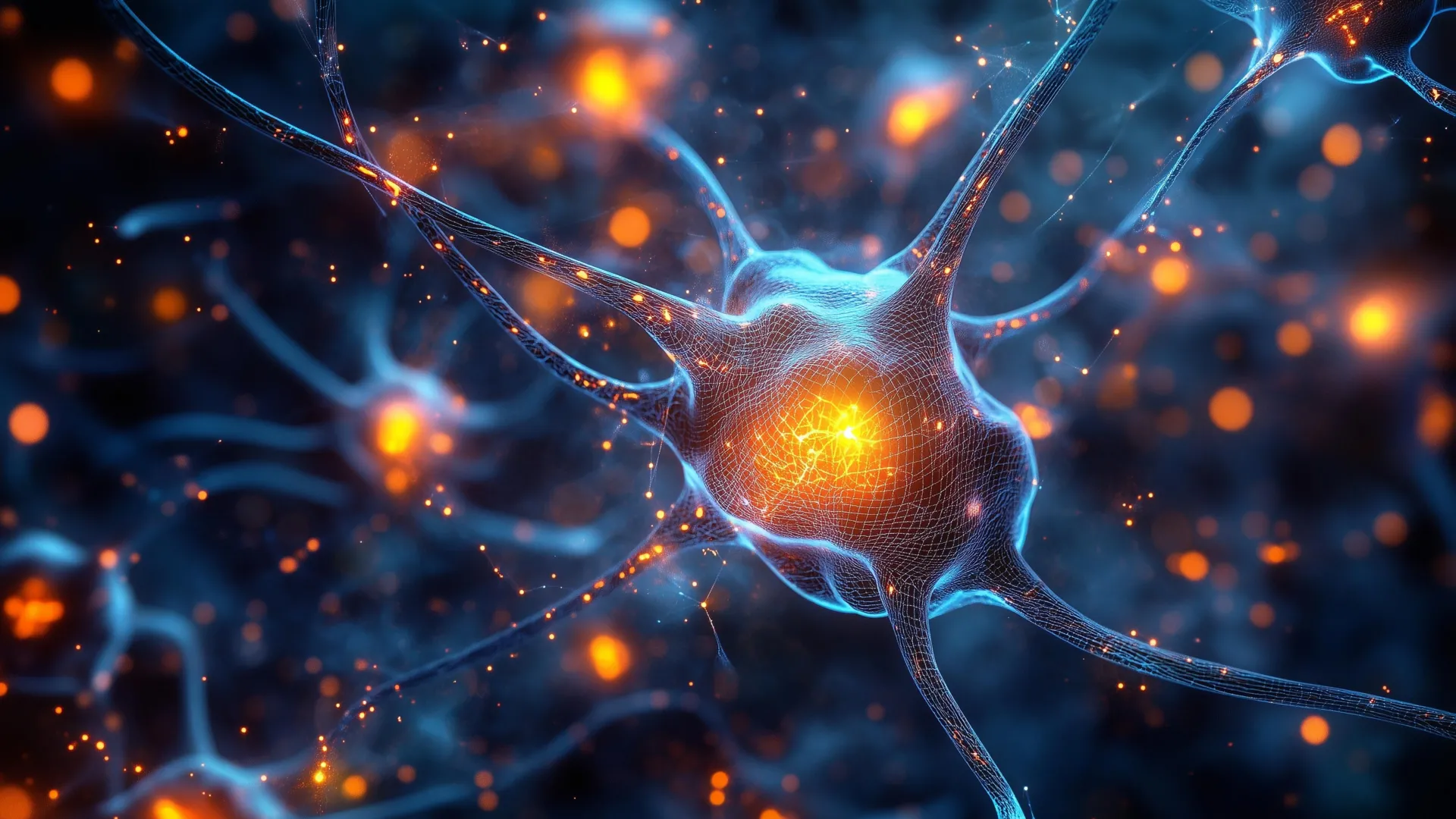
    Scientists have identified a group of neurons located in an ancient region of the brain that plays a key role in helping animals focus. These cells appear to improve attention by filtering out distractions and directing the brain toward the most important information.

    The discovery, made in mice by researchers at Johns Hopkins University, points to a brain system that is shared by all vertebrates, including humans. The findings could eventually help researchers develop more precise treatments for attention-related disorders.

    “A hallmark of ADHD is that even faint distractors draw attention away — and that’s exactly what we see here when these neurons are silenced,” said senior author Shreesh Mysore, a neuroscientist who studies neural circuits tied to behavior. “But the very next day, when the neurons are turned back on, the same animal can ignore distractors again, even very strong ones.”

    The federally funded study was recently published in Nature Communications and selected as an editorial highlight.

    Ancient Brain Region Linked to Attention

    Humans and other animals constantly sort through competing information, focusing on what matters most while ignoring less important signals. This ability, known as selective spatial attention, allows people to follow a conversation in a noisy room or spot a friend in a crowded space. Difficulties with this process are associated with conditions such as autism and Attention-Deficit/Hyperactivity Disorder (ADHD).

    For many years, scientists believed that attention was controlled primarily by the prefrontal cortex, a brain region that is especially developed in humans and other primates. However, that explanation leaves an important question unanswered. Many animals can also focus their attention despite lacking a highly developed prefrontal cortex.

    “If we really go back in evolution, for hundreds of millions of years, birds have had this ability, fish have had this ability. And they do not typically have a highly developed prefrontal cortex, so how does the brain solve this problem?” said lead author Ninad Kothari, a postdoctoral fellow in the university’s Department of Psychological and Brain Sciences. “We were able to identify an evolutionarily old region in the brainstem which affords this ability.”

    Brainstem Neurons Act as a Focus Filter

    The researchers found that attention in mice is also regulated by a network of inhibitory neurons located in the brainstem. These neurons are present across vertebrate species, including birds and fish. The decision to investigate these cells in mice grew out of earlier work by Mysore and other researchers studying birds, frogs, and turtles.

    To test the neurons’ role, the team designed an attention task similar to those used in human studies. Mice viewed visual cues on a screen and were rewarded when they correctly responded to information displayed directly in front of them while ignoring distracting cues appearing off to the side.

    The mice performed the task successfully until researchers temporarily switched off the brainstem neurons.

    “When we inactivate these neurons, the mice become hyper distractable,” Kothari said.

    Distraction Increases When Neurons Are Disabled

    The scientists conducted additional tests to determine whether the mice were failing because of vision problems or movement difficulties. Those possibilities were ruled out.

    Instead, the experiments showed that the animals specifically lost the ability to evaluate competing information and focus on the most relevant signal.

    “The only thing impaired was their ability to take the competing pieces of information, compare them, and pay attention to the location with the most important information,” Mysore said. “This part of the brain is like an attentional selection engine. It helps solve the question: ‘What is most important information I should pay attention to right now?'”

    Potential Implications for ADHD and Autism

    The researchers now want to better understand exactly how these neurons influence spatial attention across vertebrate species and whether they serve a similar function in humans.

    “All the evidence to date suggests that these neurons exist in humans too,” said Mysore. “But are they responsible for selective spatial attention in humans? An exciting hypothesis is that they play a crucial role.”

    Future studies may examine the activity of these neurons in people with ADHD and autism. If researchers find that the cells function differently in those conditions, the discovery could help guide the development of more targeted medications and therapies.

    The study’s authors also include Arunima Banerjee, Qingcheng (Jessica) Zhang, and Wen-Kai You of Johns Hopkins University.


    Source link

    Author

    • Admin

      NewsPublicly.com is News & Articles Platform that creating SEO-focused articles on travel, lifestyle, and digital trends.

    Admin
    • Website

    NewsPublicly.com is News & Articles Platform that creating SEO-focused articles on travel, lifestyle, and digital trends.

    Related Posts

    Early humans were bringing fire into caves 1.8 million years ago

    June 24, 2026

    The universe may be hiding conscious minds stranger than we can imagine

    June 24, 2026

    Why South Africa’s leopards shrank to half their normal size

    June 24, 2026
    Leave A Reply Cancel Reply

    Demo
    Top Posts

    The Blue Moon rises on May 30— Where and when to see the second full moon of the month

    May 30, 202640 Views

    New SOCOM rifle allows barrel swapping and cartridge changes

    June 1, 202633 Views

    “Inside Gemini Robotics 1.5: How Robots Learn to Reason & Act

    November 22, 202525 Views

    525 pounds of cocaine seized after Nebraska K9 alerts troopers on I-80

    May 28, 202624 Views
    Don't Miss

    Chronic inflammation: Oncologist explains warning signs, causes and ways to reduce risk | Health News

    June 24, 20266 Mins Read0 Views

    Chronic inflammation has increasingly been linked to a wide range of long-term health conditions, including…

    Early humans were bringing fire into caves 1.8 million years ago

    June 24, 2026

    What are FDCs and why are they being increasingly banned? | Explained

    June 24, 2026

    Google’s new rules for the app store will allow alternative billing next week

    June 24, 2026
    Stay In Touch
    • Facebook
    • Twitter
    • Instagram
    • YouTube
    • LinkedIn
    • WhatsApp

    Subscribe to Updates

    Get the latest creative news from SmartMag about art & design.

    Demo
    NEWSPUBLICLY
    Facebook X (Twitter) Instagram LinkedIn

    Home

    • About Us
    • Leadership
    • Advertise & Partner With Us
    • Pitch Your Story
    • Media Kit & Pricing
    • Career
    • FAQs

    Guidelines

    • Editorial & Submission
    • Partnership
    • Advertising & Sponsor
    • Intellectual Property Policy
    • Community & Comment
    • Security & Data Protection
    • Send Your Opinion

    Quick Links

    • Cookie Policy
    • Payment & Billing Terms
    • Refund & Cancellation
    • Copyright Policy
    • Complaint & Support
    • Sitemap
    • Contact Us

    Subscribe Us

    Get the latest news and updates!

    Copyright © 2026 Newspublicly (DIGITALIX COMMUNICATION). All Rights Reserved.
    • Privacy Policy
    • Terms of Use
    • Disclaimer