







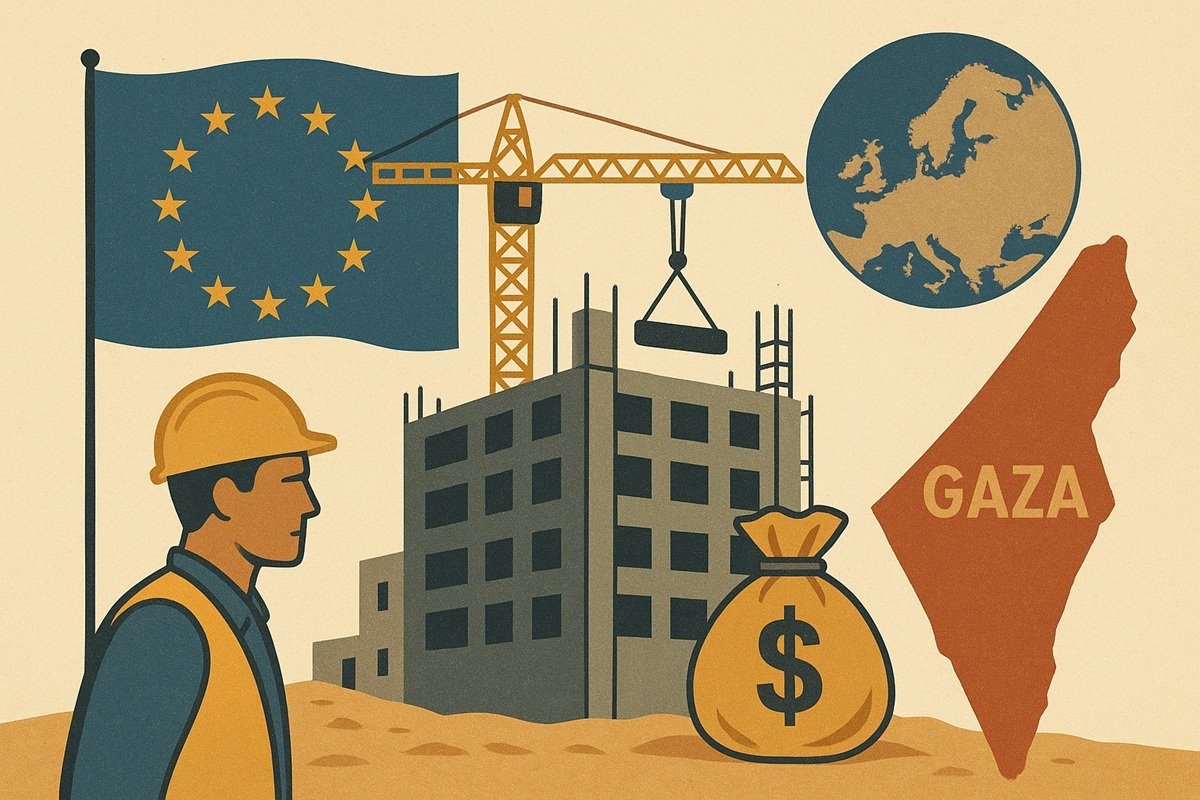
The devastation across Gaza has reached levels unseen in decades, pushing global powers to accelerate discussions on how to rebuild the region once a sustainable ceasefire is in place. A major turning point came with the introduction of an Arab-backed $53 billion reconstruction proposal—a plan that aims not only to rebuild Gaza but also to stabilize the broader Middle East.
One key pillar of this strategy is Europe’s role, which is becoming increasingly significant as the continent positions itself as a diplomatic and financial partner.
Why Gaza’s Reconstruction Needs Global Cooperation?
Gaza’s infrastructure—homes, hospitals, roads, energy networks, and water systems—has suffered extensive destruction. Rebuilding requires coordinated international support, long-term vision, and political guarantees that reconstruction efforts will not collapse under renewed conflict.
This is where the Gaza reconstruction plan Europe supports becomes critical. European nations are pushing for a framework that ties rebuilding funds to security arrangements, governance reforms, and transparent oversight.
What the $53 Billion Arab-Backed Plan Includes?
Arab states, led by the Gulf nations, proposed a comprehensive plan estimated at $53 billion, focusing on:
1. Emergency Infrastructure Recovery
Rebuilding essential facilities—water pipelines, electricity grids, bridges, and medical centers.
2. Housing and Civilian Rehabilitation
Millions are displaced. The plan includes large-scale residential construction.
3. Economic Revitalization
Creating jobs, reviving trade routes, and supporting small businesses to ensure long-term stability.
4. Governance and Security Guarantees
A central part of the proposal focuses on establishing a stable administrative structure under international supervision.
Europe’s Strategic Role in the Reconstruction Effort
Europe has long been one of the largest financial donors to Palestinian humanitarian programs. But with this Gaza reconstruction plan Europe sees an opportunity to reshape its political role in the Middle East.
1. Financial Contributions
European nations—including Germany, France, the UK, and the EU Commission—have signaled readiness to support the plan through grants, infrastructure investments, and humanitarian assistance.
2. Diplomatic Mediation
Europe is working with Arab states, the U.S., and regional actors to ensure the reconstruction plan aligns with long-term peace frameworks.
3. Oversight & Accountability
The EU emphasizes transparency in fund distribution to ensure aid reaches civilians and prevents misuse.
4. Long-Term Development Vision
Beyond rebuilding physical structures, Europe advocates for rebuilding institutions—education systems, health networks, and economic frameworks.
Why Europe’s Role Matters?
European involvement brings three major advantages:
- Credibility: Europe is viewed as a neutral mediator compared to other global powers.
- Economic Strength: EU financial capabilities can accelerate major reconstruction projects.
- Policy Stability: Europe supports multi-year development programs, offering long-term consistency.
These factors strengthen the Gaza reconstruction plan Europe is helping shape and elevate global confidence in the initiative.
Challenges Ahead
Despite optimism, several obstacles remain:
- Ensuring security for reconstruction teams
- Negotiating political agreements between Palestinian factions
- Guaranteeing border access for materials
- Securing long-term donor commitments over multiple years
Progress will depend on diplomatic breakthroughs and sustained collaboration.
Conclusion
The $53 billion Arab-backed Gaza reconstruction plan marks one of the largest proposed rebuilding efforts in modern Middle Eastern history. As discussions advance, Europe’s role is essential—not only for funding but also for political stabilization, transparency, and long-term development.


