

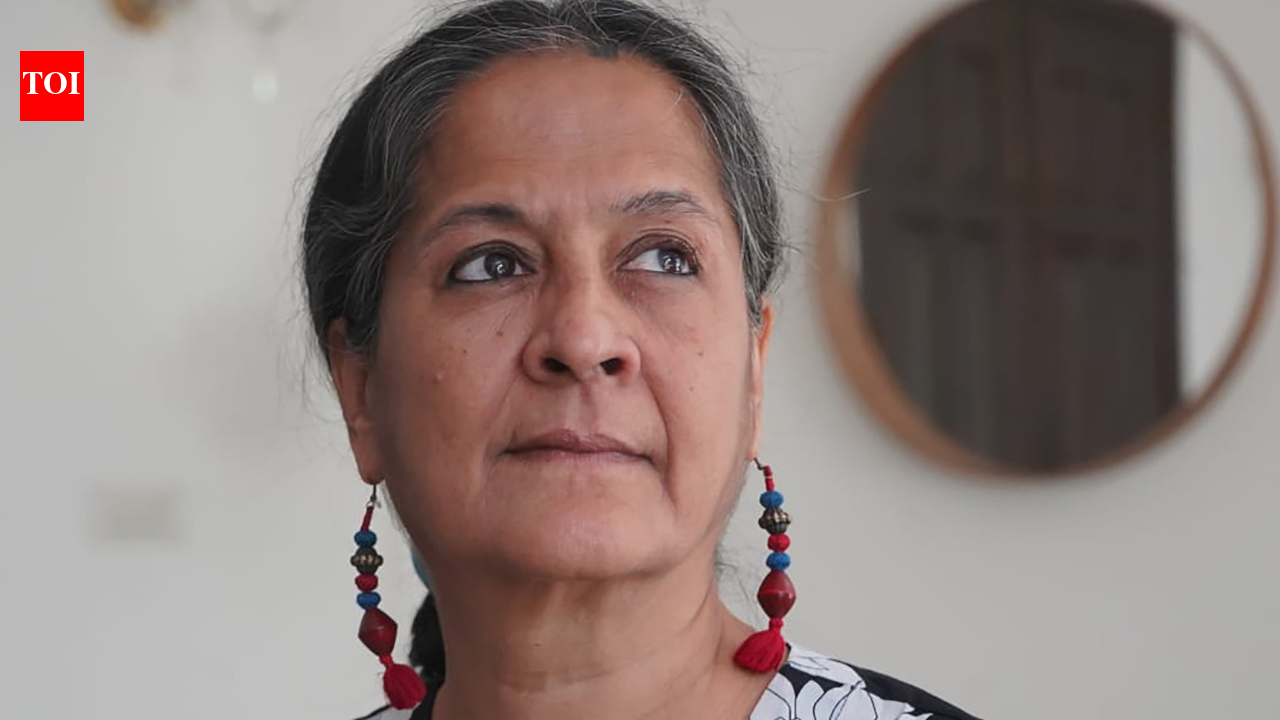
More than a decade ago, when Masooma Ranalvi first spoke publicly about being subjected to khatna (the local term for female genital mutilation or FGM) at age seven, she helped push the practice within the Dawoodi Bohra community in India into the national spotlight. As the SC resumes hearings in the long-pending case in which she is a petitioner, fresh evidence from Kerala is also widening the debate beyond the Bohra community. Ranalvi, founder of WeSpeakOut, spoke to Mohua Das about why she believes the fight in India may be entering a new phaseHas there been a shift in the way the court views FGM?It felt different. Earlier too, the three-judge bench — Justices Dipak Misra, Chandrachud and Khanwilkar — had made very positive observations. They questioned bodily integrity and spoke about child rights before the matter shifted into the religious space. This time, the core issue before the nine-judge bench is the conflict between Articles 25 and 26 of the Constitution — the individual’s freedom of religion versus a denomination’s right to manage its religious practices.We submitted that when a child is subjected to bodily alteration and mental suffering in the name of religious observance, it enters constitutional and criminal scrutiny. To this, Justice Bagchi remarked as far as FGM is concerned, the expressions ‘health’ and ‘public health’ themselves may be sufficient. What we are hoping for is recognition from the court that this is a child rights violation, a criminal act, and something that affects bodily integrity. If that happens, it will create pressure within the community and on the govt to make policy changes, run awareness campaigns, educate doctors, support survivors, and spread awareness about the harms of FGM. It also gives courage to people within the community who are still on the fence.The FGM petition has now spent years moving between the Constitution benches and questions around religious practices. What has this long legal limbo meant on the ground for survivors and activists?That’s an excellent question because nobody really cared what happened in the interim seven years. We were really dejected. More importantly, the practice continued, and many girls went through something that perhaps could have been avoided had the matter been heard earlier. Nobody really sees the urgency of the issue. This is irreversible damage being done to a child’s body. There should be no space for something like this in a modern society that claims to care about women’s and children’s rights. At the same time, the delay forced us to regroup and rethink our strategies. We realised this is an uphill battle because we are up against a very powerful religious hierarchy, politically and economically. They have done everything possible to stall progress on this issue. So, we began looking outward, learning from global movements and forming alliances. FGM exists in 94 countries, and there are struggles everywhere. In Africa, 29 countries have laws against FGM. Last year, the WHO released updated guidelines for health workers after nearly a decade. Type III infibulation (the most severe kind of FGM) gets the most attention, but there are other forms too, including nicking and pricking.How are Indian groups engaging with the growing Asian network you helped create around FGM?Over the last five years, we’ve been building alliances and learning from one another. One important aspect of this network is that it is telling the world FGM is not just an African issue. It exists across many parts of Asia too. But across most places, religion is used as the justification to sustain the practice.For years, FGM was seen only as a Dawoodi Bohra issue. What prompted WeSpeakOut to look at reports of FGM emerging from Sunni communities in Kerala?There had been whispers about the practice in Kerala and parts of Tamil Nadu, but there was no direct evidence or survivor testimony. Then, around 2017, there was a story about a Kozhikode clinic and one survivor who spoke about it. There was a huge backlash against her. After that, the issue again went cold. But we decided to explore it further. Getting evidence is next to impossible. In the Bohra community, some of us stepped forward and gave interviews, so conversations opened up. However, our yet-to-be-released exploratory study gives enough evidence to show this needs more research, data collection, and intervention strategies.What differences did you notice in Kerala compared to the Bohra context?The biggest difference is age. In the Bohra community, there is a stipulated age of around seven. In Kerala, FGM is done around the 40th day after birth. At that age, the part involved is so tiny that even skilled surgeons would struggle. The chances of damaging the clitoris are extremely high. Another difference is who performs it. In Kerala, it is the ‘Ossathi’ community, women from the barber community who traditionally perform the practice. In some places, there are also clinics that point to growing medicalisation. The women survivors spoke about difficult sexual experiences, but they had not necessarily connected them to the FGM they underwent. That understanding comes much later when you begin understanding the function of the clitoris.After more than a decade of working on this issue, do you see more Bohra parents choosing not to subject their daughters to khatna even if they may not say so publicly?Absolutely. Wherever we’ve been able to reach women through conversations, literature, campaigns, or media coverage, it has had a positive impact. But there are still many women who haven’t heard or engaged with these debates, especially in smaller towns and rural areas in Maharashtra, Gujarat, Rajasthan, and Madhya Pradesh where many Bohras live. There is also another section that openly says this is their belief and their right, and they want the practice to continue. That’s why outreach matters. The more conversations happen, the more likely it is that the practice will reduce over time.