

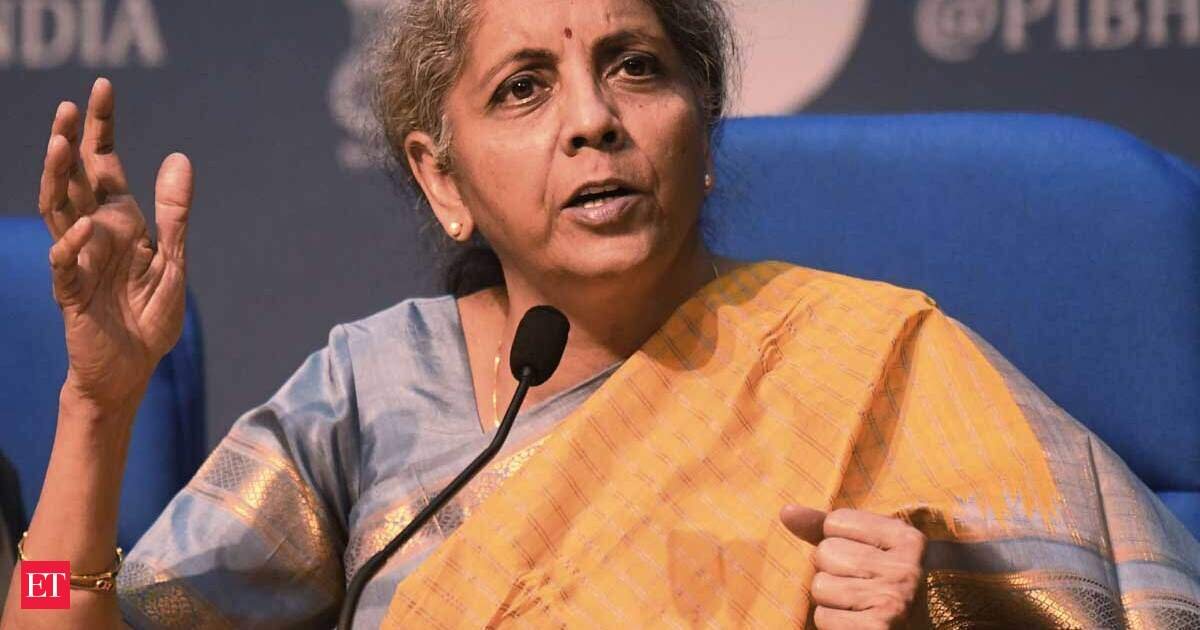
The challenge, she said, is not merely the inadequate availability of capital, but the creation of enabling conditions such as confidence in projects, predictable policies and credible long-term frameworks to ensure sustained private participation. Sitharaman was delivering the keynote address at a seminar on the ‘Role of the New Development Bank in Mobilising Private Capital in Member Countries’, organised on the sidelines of the BRICS finance ministers and central bank governors’ meeting in Jaipur.

Also Read: Most UPI transactions to stay free: FM Nirmala Sitharaman
The meeting was held in the run-up to the summit of the 11-member grouping of emerging economies-which includes Brazil, Russia, India, China and South Africa-next month. India holds the rotating BRICS presidency for 2026. The finance minister highlighted the role of multilateral development banks in de-risking investments, improving project bankability and bolstering investor confidence. India, for its part, requires large private investment in infrastructure to top up public capital. In January, the finance ministry created a three-year pipeline of infrastructure projects with an estimated cost of more than ₹17 lakh crore, which were sought to be developed through public-private partnerships. This followed the 2019 launch of the National Infrastructure Pipeline to draw investments into such projects. As of March 2025, this pipeline covered 13,000 projects with a total estimated cost of ₹185 lakh crore, according to an ICRA report.
Separately, delivering the inaugural address at the BRICS finance ministers and central bank governors’ meeting, Sitharaman underscored the need for the group’s members to “work together towards resilient, inclusive and sustainable growth, while translating cooperation into practical outcomes”. India believes that public capital must act as a catalyst, not as a substitute for private investment, she said at the seminar.