

Close Menu

    Subscribe to Updates

    Get the latest news information from worldwide businesses.

    What's Hot

    ChargePoint is bringing ultra-fast EV chargers to 12 busy highway travel plazas

    July 14, 2026

    Free People Promo Codes | July 2026 | Condé Nast Traveler

    July 14, 2026

    Can uncontrolled diabetes cause anxiety, breathlessness and chest pain? Experts explain after Sunita Ahuja’s Lock Upp 2 health concerns

    July 14, 2026
    Facebook Instagram YouTube LinkedIn X (Twitter)
    Trending
    • ChargePoint is bringing ultra-fast EV chargers to 12 busy highway travel plazas
    • Free People Promo Codes | July 2026 | Condé Nast Traveler
    • Can uncontrolled diabetes cause anxiety, breathlessness and chest pain? Experts explain after Sunita Ahuja’s Lock Upp 2 health concerns
    • Yale scientists found a hidden network inside the eye
    • Healthy diet as a bulwark against pain
    • Low Skeletal Muscle Density on Coronary CT Linked to Higher Heart Attack and Mortality Risk: Study
    • SpaceXAI’s Grok programming tool was uploading its users’ entire codebase to cloud storage
    • Apple opens its new Siri AI to everyone with the iOS 27 public beta
    Newspublicly
    • About Us
    • Advertise & Partner with us
    • Pitch Your Story
    • Contact Us
    Facebook Instagram LinkedIn X (Twitter)
    Subscribe
    • Home
    • World News
      • Asia
      • India
      • USA
      • UK & Europe
      • Middle East
    • Economy & Business
      • Global Economy
      • Corporate & Industry
      • Finance & Markets
      • Policy & Trade
    • Technology
      • Gadgets & Devices
      • Software & Apps
      • AI & Machine Learning
      • Robotics & Automation
    • Health & Medicine
      • Fitness & Nutrition
      • Research & Innovation
      • Disease & Treatment
      • Doctors, Clinics & Patient Care
    • Travel & Tourism
    • Automobile
      • Electric & Hybrid Vehicles
      • Auto Industry Insights
    • Sports
    • More
      • Education
      • Real Estate
      • Environment & Climate
      • Space & Astronomy
      • War & Conflicts
    Newspublicly
    Home»Health & Medicine»Research & Innovation»New dark matter theory could solve multiple cosmic mysteries at once
    Research & Innovation

    New dark matter theory could solve multiple cosmic mysteries at once

    AdminBy AdminJuly 14, 2026No Comments3 Mins Read0 Views
    Share
    Facebook Twitter LinkedIn Copy Link WhatsApp


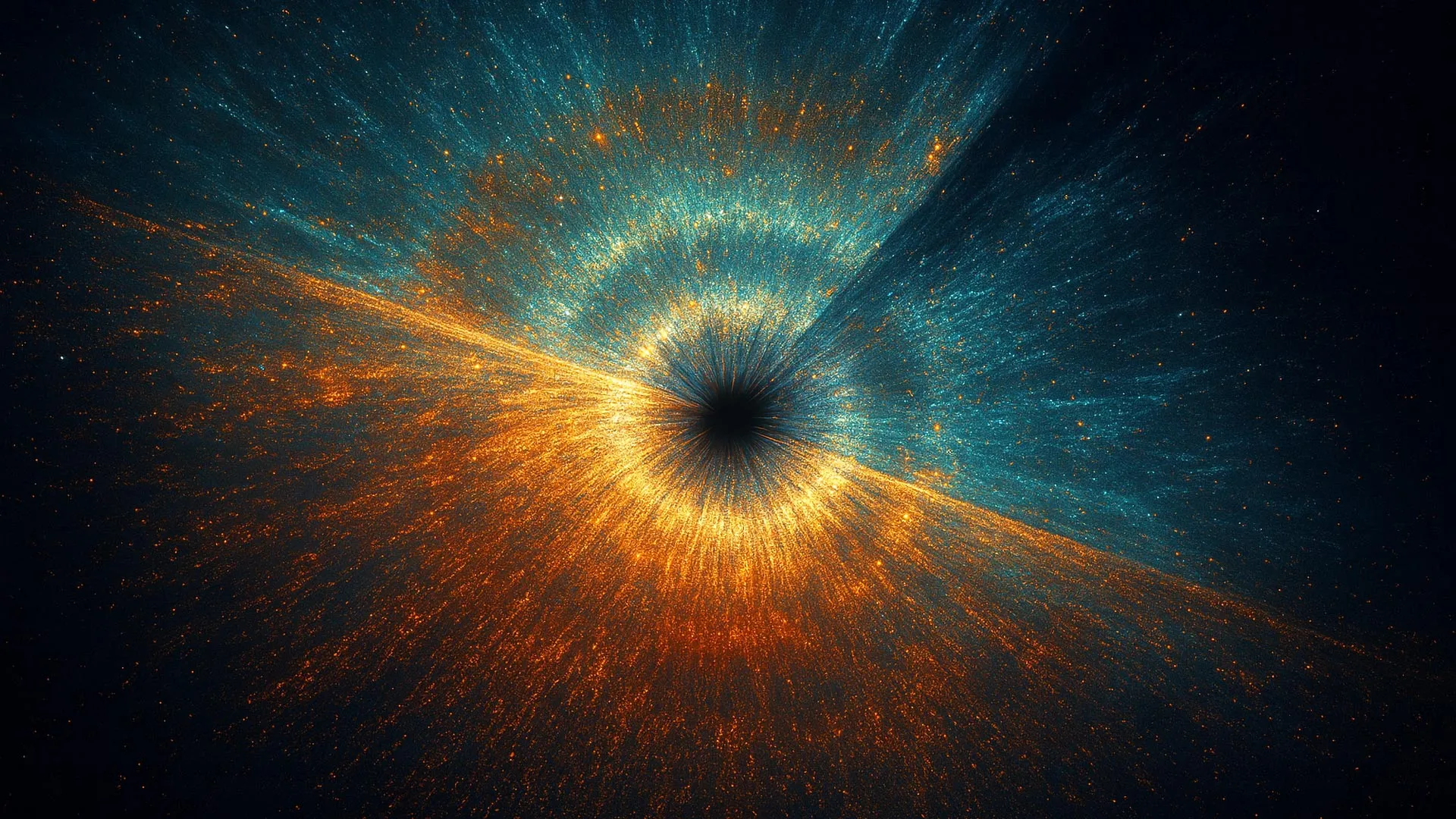
    Dark matter has long been one of astronomy’s greatest mysteries. It cannot be seen or touched, yet its gravitational influence helps shape galaxies and the large scale structure of the universe. For decades, scientists have relied on the “cold dark matter” model to explain how galaxies formed and evolved. But as telescopes and observations have become more precise, researchers have uncovered several puzzling features that the standard model struggles to explain.

    Among the biggest mysteries are the surprisingly low concentrations of dark matter found at the centers of some dwarf galaxies and the unexpectedly dense dark matter clumps inferred from strong gravitational lensing. Although these observations seem to point in opposite directions, a new study suggests they could share the same underlying explanation.

    A New Theory for Dark Matter

    Physicists at the Purple Mountain Observatory of the Chinese Academy of Sciences (CAS) propose that dark matter may not consist of a single type of particle. Instead, it could be made up of particles with different masses.

    Their new “two component self interacting dark matter” model includes at least two kinds of dark matter particles, one heavier and one lighter. In addition to interacting through gravity, these particles can also collide directly with one another. Those interactions lead to a process called “mass segregation.”

    In simple terms, heavier dark matter particles gradually drift toward the centers of galaxies, while lighter particles spread outward over time. Researchers compare this behavior to star clusters, where the most massive stars slowly migrate inward and lower mass stars move farther from the center.

    Simulations Match Cosmic Observations

    Using high resolution computer simulations combined with detailed theoretical modeling, the team found that mass segregation naturally reproduces a broad range of astronomical observations.

    In dwarf galaxies, the process creates dark matter cores with relatively low central densities, matching recent observations of galaxy clustering. In larger and more complex environments, some dark matter halos become increasingly compact, producing dense structures capable of generating strong gravitational lensing.

    The model also boosts the likelihood of small scale gravitational lensing events. As heavier dark matter particles accumulate in key regions, dark matter substructures become more effective at magnifying the light from distant background galaxies. This could help explain why astronomers observe more small scale strong lensing events than traditional models predict.

    A Richer Picture of the Invisible Universe

    The researchers say these seemingly contradictory cosmological puzzles may actually point toward the same conclusion. Rather than requiring separate explanations, they could all reflect the fact that dark matter has more complex internal properties than previously thought.

    As future sky surveys and gravitational lensing observations become even more precise, scientists will have new opportunities to test whether dark matter is truly made of multiple components. Those natural “cosmic magnifying glasses” could provide some of the strongest evidence yet for this new picture of the invisible universe.

    The findings are the second study from the Purple Mountain Observatory team exploring two component self interacting dark matter. Their earlier work, published in Physical Review D, examined how mass segregation influences the wide range of dark matter core densities observed in dwarf galaxies. The new research was published in Science Bulletin. The study’s authors are Daneng Yang, Yi-Zhong Fan, Siyuan Hou, and Yue-Lin Sming Tsai.

    Purple Mountain Observatory, part of the Chinese Academy of Sciences, is one of China’s leading centers for dark matter research. The institute plays a major role in indirect dark matter detection through the DAMPE (Wukong) satellite and conducts influential research in astrophysics, cosmology, dark matter, and galaxy evolution.


    Source link

    Author

    • Admin

      NewsPublicly.com is News & Articles Platform that creating SEO-focused articles on travel, lifestyle, and digital trends.

    Admin
    • Website

    NewsPublicly.com is News & Articles Platform that creating SEO-focused articles on travel, lifestyle, and digital trends.

    Related Posts

    Yale scientists found a hidden network inside the eye

    July 14, 2026

    Scientists discover why peach fuzz can suddenly make you itch

    July 14, 2026

    Popular weight-loss drugs Ozempic and Wegovy may slow biological aging

    July 14, 2026
    Leave A Reply Cancel Reply

    Demo
    Top Posts

    The Blue Moon rises on May 30— Where and when to see the second full moon of the month

    May 30, 202640 Views

    New SOCOM rifle allows barrel swapping and cartridge changes

    June 1, 202633 Views

    “Inside Gemini Robotics 1.5: How Robots Learn to Reason & Act

    November 22, 202525 Views

    525 pounds of cocaine seized after Nebraska K9 alerts troopers on I-80

    May 28, 202624 Views
    Don't Miss

    ChargePoint is bringing ultra-fast EV chargers to 12 busy highway travel plazas

    July 14, 20263 Mins Read0 Views

    Photo: ChargePoint ChargePoint and travel plaza chain Onvo plan to install ultra-fast EV chargers at…

    Free People Promo Codes | July 2026 | Condé Nast Traveler

    July 14, 2026

    Can uncontrolled diabetes cause anxiety, breathlessness and chest pain? Experts explain after Sunita Ahuja’s Lock Upp 2 health concerns

    July 14, 2026

    Yale scientists found a hidden network inside the eye

    July 14, 2026
    Stay In Touch
    • Facebook
    • Twitter
    • Instagram
    • YouTube
    • LinkedIn
    • WhatsApp

    Subscribe to Updates

    Get the latest creative news from SmartMag about art & design.

    Demo
    NEWSPUBLICLY
    Facebook X (Twitter) Instagram LinkedIn

    Home

    • About Us
    • Leadership
    • Advertise & Partner With Us
    • Pitch Your Story
    • Media Kit & Pricing
    • Career
    • FAQs

    Guidelines

    • Editorial & Submission
    • Partnership
    • Advertising & Sponsor
    • Intellectual Property Policy
    • Community & Comment
    • Security & Data Protection
    • Send Your Opinion

    Quick Links

    • Cookie Policy
    • Payment & Billing Terms
    • Refund & Cancellation
    • Copyright Policy
    • Complaint & Support
    • Sitemap
    • Contact Us

    Subscribe Us

    Get the latest news and updates!

    Copyright © 2026 Newspublicly (DIGITALIX COMMUNICATION). All Rights Reserved.
    • Privacy Policy
    • Terms of Use
    • Disclaimer