

5 min readNew DelhiJul 22, 2026 03:30 PM IST
Suraj Saini spent his vacations painting houses in villages around Rajasthan’s Bundi district. This year, he scored 583 marks in NEET and is set to join a government medical college. Oddly enough, the journey from a paintbrush to an MBBS seat at a government medical college did not begin with a dream of becoming a doctor.
“I didn’t even know about NEET before Class 12,” Suraj told indianexpress.com. “My aunt told me about it. Before that, I was only focused on scoring well in Class 10.”

A student of a Hindi-medium government school in Kapren, Bundi district, Suraj scored 87 per cent in Class 10 and 85 per cent in Class 12. He says his board result was “about what I had expected”.
For someone who would eventually crack one of the country’s toughest entrance examinations, Suraj’s introduction to NEET was surprisingly unplanned. There was no long-term strategy or years of coaching. He learnt about the exam only after completing school and decided to give it a try.
“I came to know about the application in February 2024 and filled out the form,” he recalls.
His first attempt came with minimal preparation. Yet, he remembers walking out of the examination hall thinking, “It was an easy paper. It wasn’t that difficult.” Biology felt straightforward, Physics was largely formula-based with little calculation, and Chemistry was not as challenging as he had expected. Looking back, however, he believes the paper was never the issue — his preparation was.
Rather than giving up, Suraj continued preparing, initially studying on his own at home. Later, he secured admission to ALLEN Career Institute’s programme, where he received free coaching and accommodation in Kota. He describes the transition not as a dramatic turning point but as the moment he finally understood how to prepare for a highly competitive examination.
Story continues below this ad
“I hadn’t started from anywhere,” he says. “In the beginning, I didn’t even know how to approach preparation.” Joining classrooms filled with students who had already been preparing for years was intimidating. “I made two or three friends there. At that time, I felt I was a little behind them.”
The difference, he says, was not intelligence but direction. Teachers first asked him to build a routine before worrying about scores. “They told me to start gradually. First understand the basics, then move ahead. Then do extra practice. Slowly, daily practice becomes possible.” Even after clearing NEET, Suraj hesitates to call coaching essential. “Coaching is not necessary,” he says. “But guidance helps. There are things you cannot do by yourself. Teachers tell you what to study, how much to study and how to move forward.”
Long before Kota, Suraj’s life revolved around balancing studies with work. During vacations and in his spare time, he painted houses in nearby villages to contribute to the family’s income. He says he learnt the trade simply by observing others. “I used to go to nearby villages. I saw people doing it and thought it was an easy job,” he says. “Gradually I learnt the work.”
There was nothing extraordinary about it in his telling. It was simply what needed to be done.
Story continues below this ad
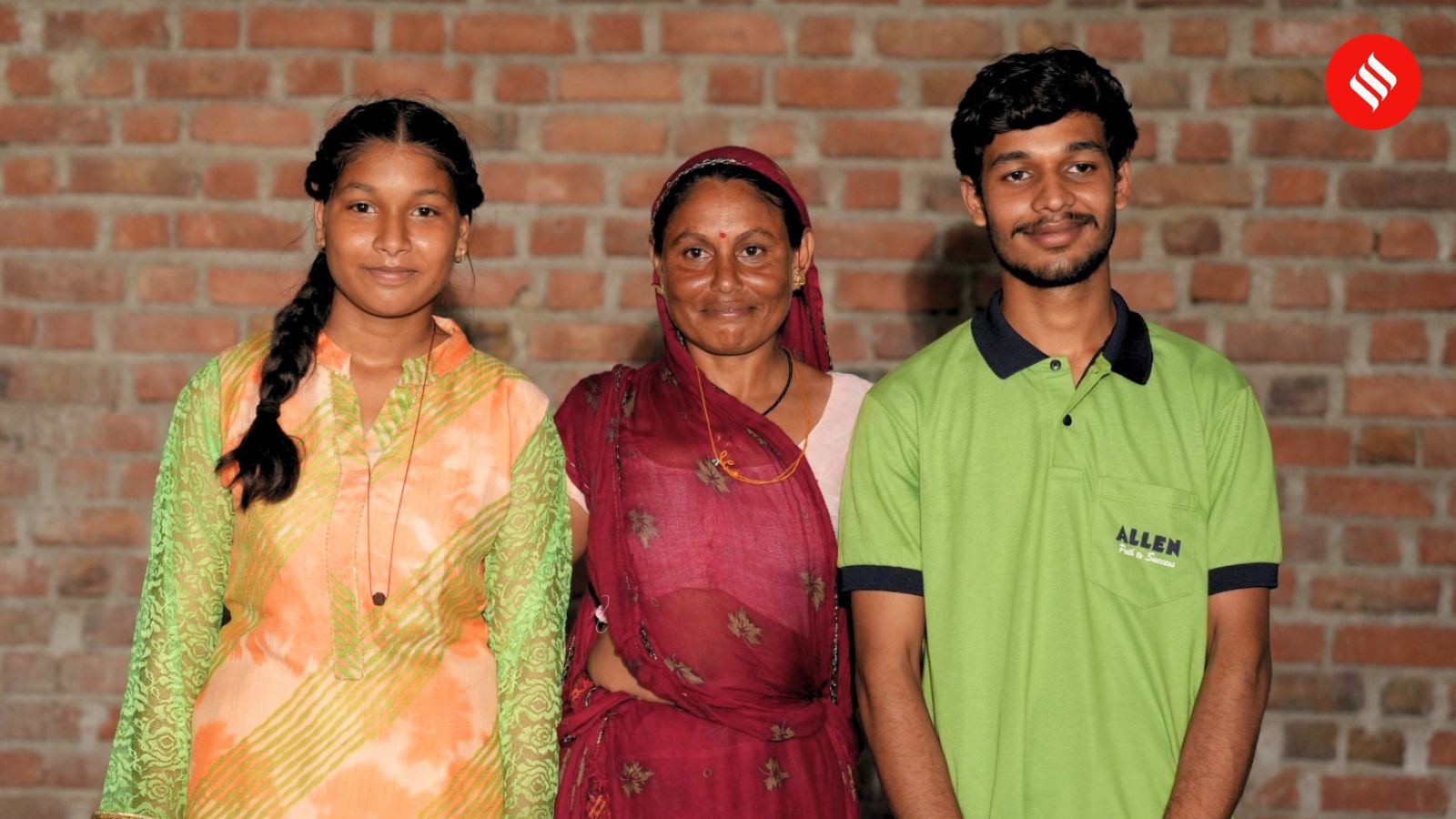
His mother, Ghisi Bai, worked as an agricultural labourer. The family’s financial condition meant that Suraj’s younger sister, Garima, had to discontinue her studies after Class 8 because there was no affordable way for her to continue schooling. She began accompanying their mother to work in the fields. It is one part of the family’s story that Suraj now hopes to change.
“This year she will continue Class 9,” he says. He wants to enrol her in a school in Kota so she can continue her education. For now, he has been helping her with whatever he can. “I’ve taught her normal things,” he says with a smile. “Things like finding square roots in maths.” Asked if he hopes she too will become a doctor someday, he refuses to answer for her. “I’ll tell her about it,” he says. “But she will have to make her own choice.”
Asked about life after MBBS, Suraj admits he has not thought that far ahead. “Maybe cardiology,” he said after a brief pause. “But I’ll think about it after MBBS.” For now, medical counselling is the immediate focus, and he believes his score should be enough to secure admission to a government medical college.
If there is one regret he carries from his own journey, it is starting late. That also shapes the advice he now gives younger students.
Story continues below this ad
“If someone wants to prepare for NEET, they should start from Class 11,” he says. “If they start then, they won’t have to put in extra effort later.” Beyond that, he believes success depends less on expensive resources than on consistency. “Finish NCERT properly. NEET doesn’t go beyond that in Biology. Physics and Chemistry also begin there,” he says. “And practise every day. Tests, question papers, whatever material is available. Daily practice has to be consistent.”
Asked what he would change if he had the chance to prepare all over again, the answer comes instantly. “If I had started from Class 11, I wouldn’t have spent two years trying to catch up.”