

Close Menu

    Subscribe to Updates

    Get the latest news information from worldwide businesses.

    What's Hot

    Study finds ChatGPT gets science wrong more often than you think

    May 12, 2026

    Business News Today: Stock and Share Market News, Economy and Finance News, Sensex, Nifty, Global Market, NSE, BSE Live IPO News

    May 12, 2026

    Client Challenge

    May 12, 2026
    Facebook Instagram YouTube LinkedIn X (Twitter)
    Trending
    • Study finds ChatGPT gets science wrong more often than you think
    • Business News Today: Stock and Share Market News, Economy and Finance News, Sensex, Nifty, Global Market, NSE, BSE Live IPO News
    • Client Challenge
    • AIADMK faction extends support to Vijay’s TVK; leader explains why DMK alliance talks collapsed | India News
    • Frontier Airlines jet collides with trespasser on Denver airport runway on video
    • Pentagon unveils trove of declassfied ‘UFO’ videos. How to see them all, from ‘a football-shaped body’ to ‘a misshapen and uneven ball of white light’
    • Celebrities at the NBA playoffs: Leonardo DiCaprio…
    • Opel Says This EV Is A True Hot Hatch. The Specs Back It Up
    Newspublicly
    • About Us
    • Advertise & Partner with us
    • Pitch Your Story
    • Contact Us
    Facebook Instagram LinkedIn X (Twitter)
    Subscribe
    • Home
    • World News
      • Asia
      • India
      • USA
      • UK & Europe
      • Middle East
    • Economy & Business
      • Global Economy
      • Corporate & Industry
      • Finance & Markets
      • Policy & Trade
    • Technology
      • Gadgets & Devices
      • Software & Apps
      • AI & Machine Learning
      • Robotics & Automation
    • Health & Medicine
      • Fitness & Nutrition
      • Research & Innovation
      • Disease & Treatment
      • Doctors, Clinics & Patient Care
    • Travel & Tourism
    • Automobile
      • Electric & Hybrid Vehicles
      • Auto Industry Insights
    • Sports
    • More
      • Education
      • Real Estate
      • Environment & Climate
      • Space & Astronomy
      • War & Conflicts
    Newspublicly
    Home»More»Space & Astronomy»NASA’s Artemis 2 commander and astrophotographer team up to capture breathtaking, never-before-seen shots of the moon’s far side
    Space & Astronomy

    NASA’s Artemis 2 commander and astrophotographer team up to capture breathtaking, never-before-seen shots of the moon’s far side

    Divya SharmaBy Divya SharmaMay 12, 2026No Comments6 Mins Read0 Views
    Share
    Facebook Twitter LinkedIn Copy Link WhatsApp


    Just weeks before the first Artemis 2 launch window, astrophotographer Andrew McCarthy had a last-minute idea: What if he could get the Artemis 2 astronauts to shoot the moon the same way he shoots the moon?

    So McCarthy slid into the DMs (direct messages) of Artemis 2 commander and NASA astronaut Reid Wiseman. He knew getting a response at such a late date was a long shot, but he couldn’t pass up the chance for a once-in-a-lifetime collaboration. And the long shot came through.

    “He was immediately onboard,” McCarthy told Space.com in an interview. “It was a dream come true, obviously, for me, but I saw it as this very unique opportunity.”


    You may like

    NASA’s Artemis 2 mission launched on April 1, flying four astronauts on a 10-day journey around the far side of the moon that captivated people across the world. The astronauts snapped breathtaking photos of the moon, which showed beautifully haunting views of the lunar far side that Artemis 2 crew member Christina Koch of NASA described as “the most ominous thing I’ve ever loved.”

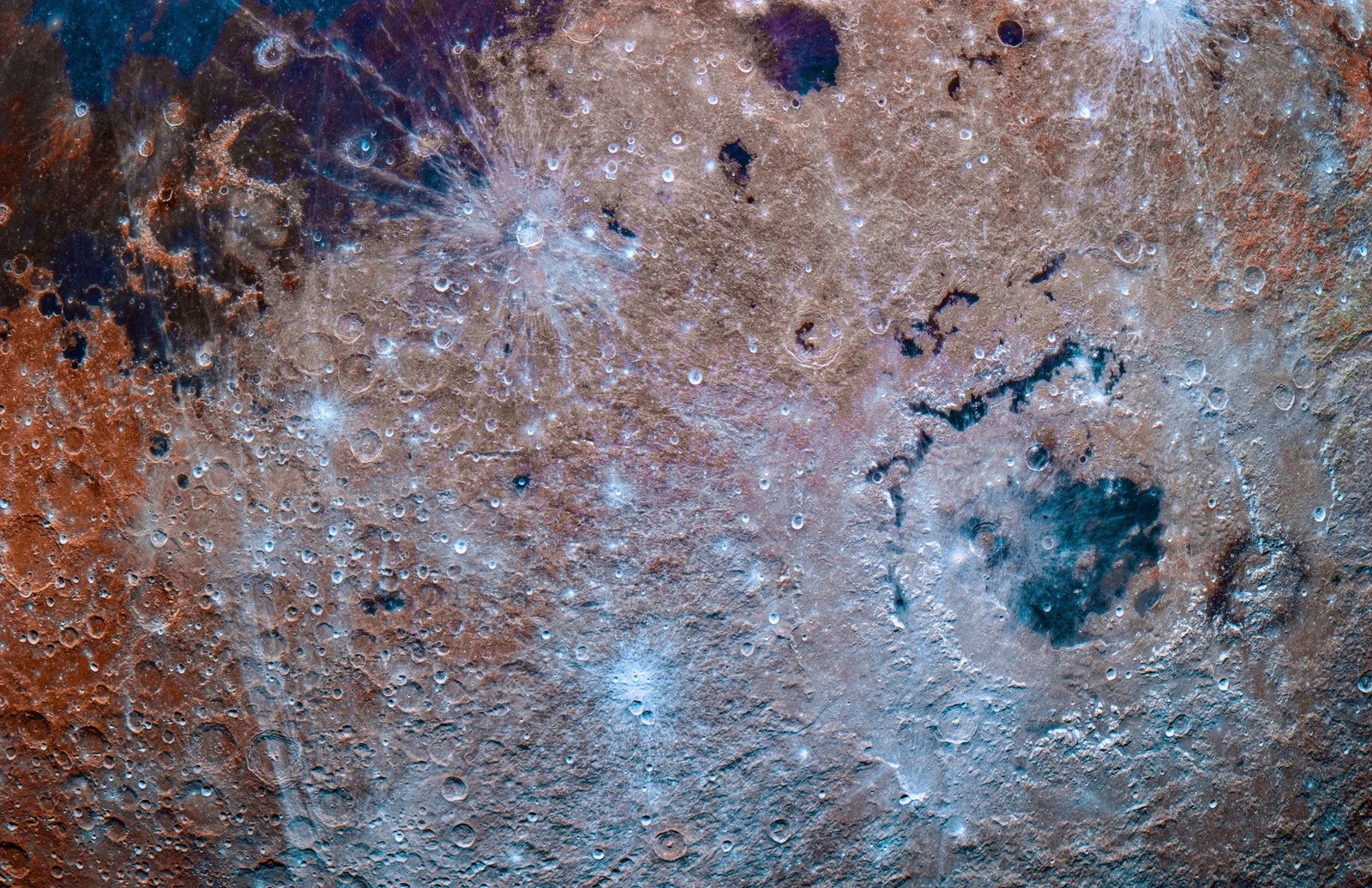
    On Earth, McCarthy combines hundreds to thousands of photos of the moon to bring out details you can’t see in a single image. The results are colorful landscapes that look more like paintings than the gray orb we’re used to seeing hang in the night sky, but the diversity he presents in his images come down to lunar spectroscopy rather than artistic interpretation.

    “It’s very true life in a sense that everything you’re seeing is real features on the surface that your eyes just simply don’t have the color sensitivity to make out on their own,” McCarthy said. He explained that his approach to astrophotography is all about showing you the things your eyes can’t see.

    “I don’t want to show you something the way your eyes see it. I want to show you something as if you had superhuman vision … I want to show you the moon as if you had cyborg eyes, because your cyborg eyes can actually pick out the color differences,” McCarthy said. “The camera becomes cyborg eyes for our vision.”

    Space

    “The color is naturally there, just much more subtle to your eyes,” he added. Some color differences on the moon are possible to see with your eyes, using binoculars or a telescope, and there are ways to trick your eyes into noticing more of the contrast than you realize.
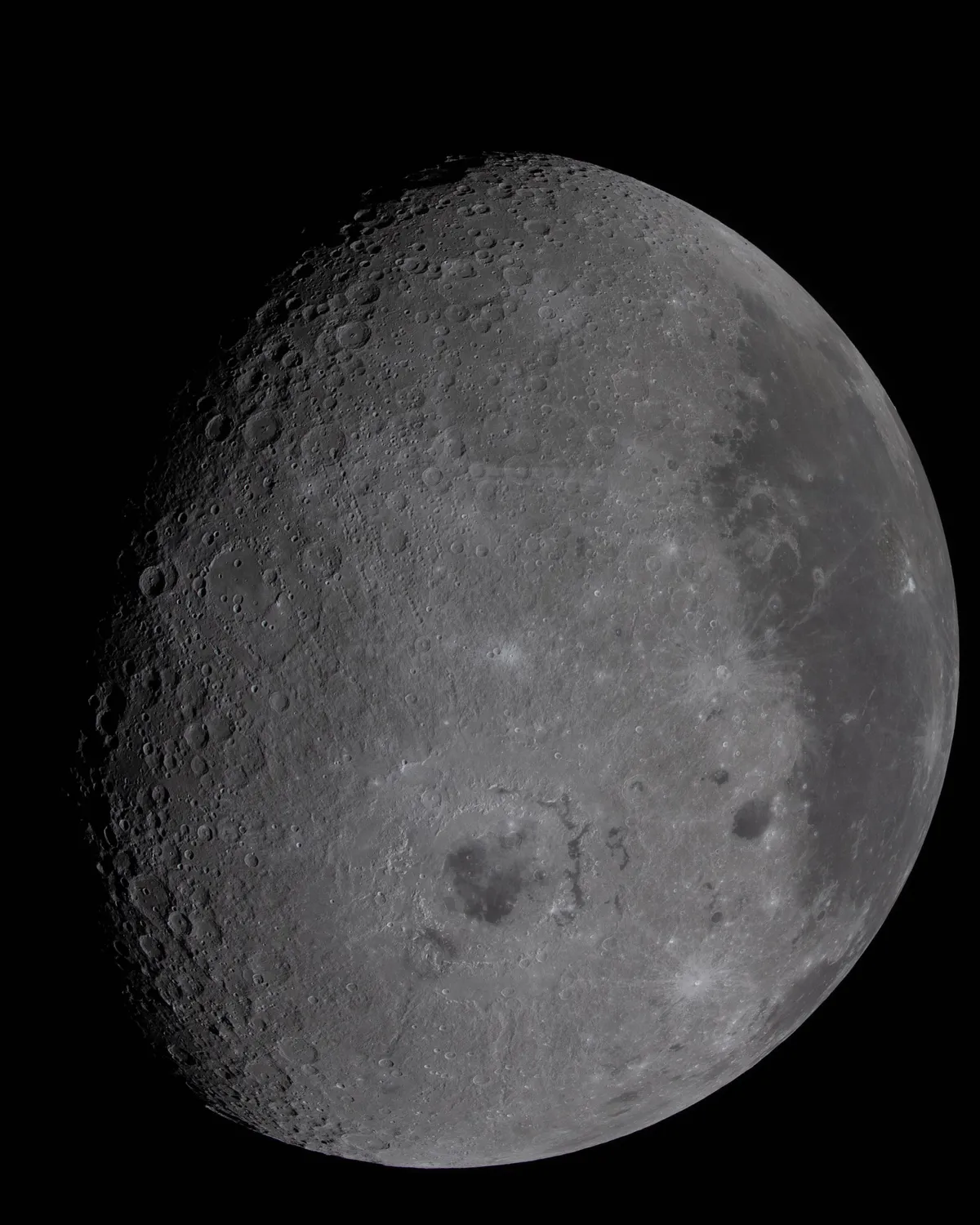
    a grey moon

    A single frame of the moon, Artemis 2 photo ART002-E-9680. (Image credit: NASA)

    “If you take a normal photo of the moon with a DSLR and just completely desaturate it, you can tell the difference,” McCarthy explained. “When you return it to regular saturation, it suddenly seems a little more colorful.”

    For his collaboration with Wiseman, McCarthy wanted to see if he could get the same colorful results with a camera from the lunar far side.


    What to read next

    “Usually you can’t get very high-fidelity color data from the far side of the moon,” McCarthy said. “We’ve got LRO [NASA’s Lunar Reconnaissance Orbiter], which has some color data, but … it’s too low fidelity to do the kind of saturation pumps that show the really granular geological differences in the regolith.”

    McCarthy outlined a plan with Wiseman and NASA’s lunar photography team, which was responsible for teaching the Artemis 2 crew how to use the cameras they brought aboard the Orion capsule during their mission. “They worked it in where he would shoot bursts in different exposures and different times, depending on where they were during the flyby,” McCarthy explained.

    Stacking is the key to McCarthy’s lunar imagery, enabling him to turn the subtle variations of color in an image of the moon into the rich browns and blues seen in his edits. The technique isn’t a new one in the astrophotography world, but no one had ever tried it before using photos from the far side of the moon.
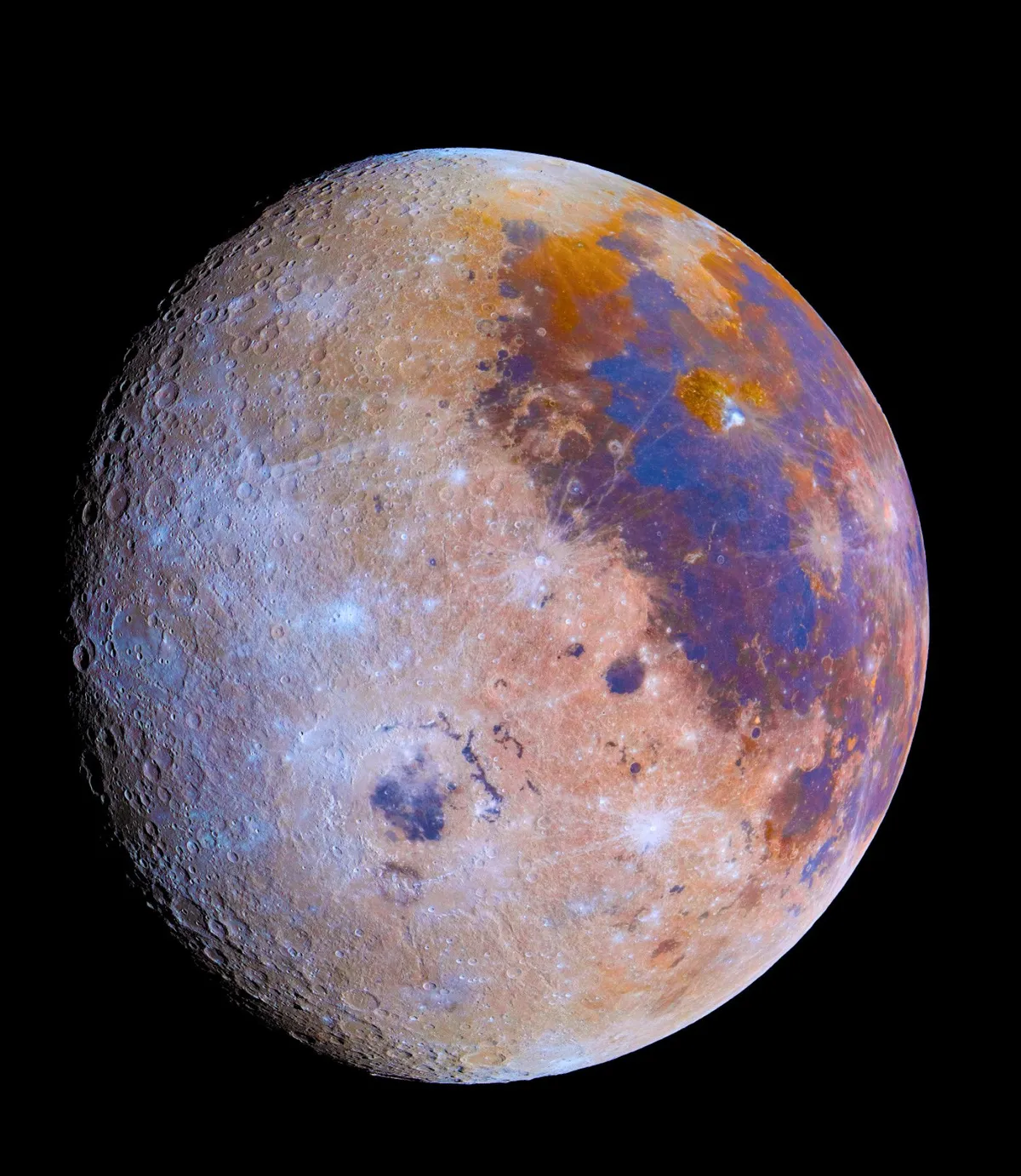
    a diversly colorful and detailed image of the moon

    A stacked photo compilation of the far side of the moon. (Image credit: Andrew McCarthy/cosmicbackground.io)

    The colors themselves indicate the diverse distribution of different minerals across the moon’s surface and reveal key information about chemical composition of the soil and rocks. Titanium-rich basalts, for example, take on a bluish hue, while iron-rich or older, weathered material can appear in shades of brown and red.

    “You can do it with a single photo, but it’s really, really low resolution from a noise standpoint,” McCarthy said. “What’s different about those different photos is the noise, because noise, by definition, is random. So, when I’m stacking those photos together, I’m able to average out that noise, and then that noise vanishes … That’s why you hear astrophotographers talk about the signal-to-noise ratio, because when you stack, the signal stays the same, but the noise diminishes.”

    NASA has published its own “mineral moon” photos in the past, like the one shot using the Jupiter-bound Galileo spacecraft as it swung by Earth for a gravity assist in 1992, but McCarthy said the quality of images from space probes can’t match the dynamics of a human with a good camera.
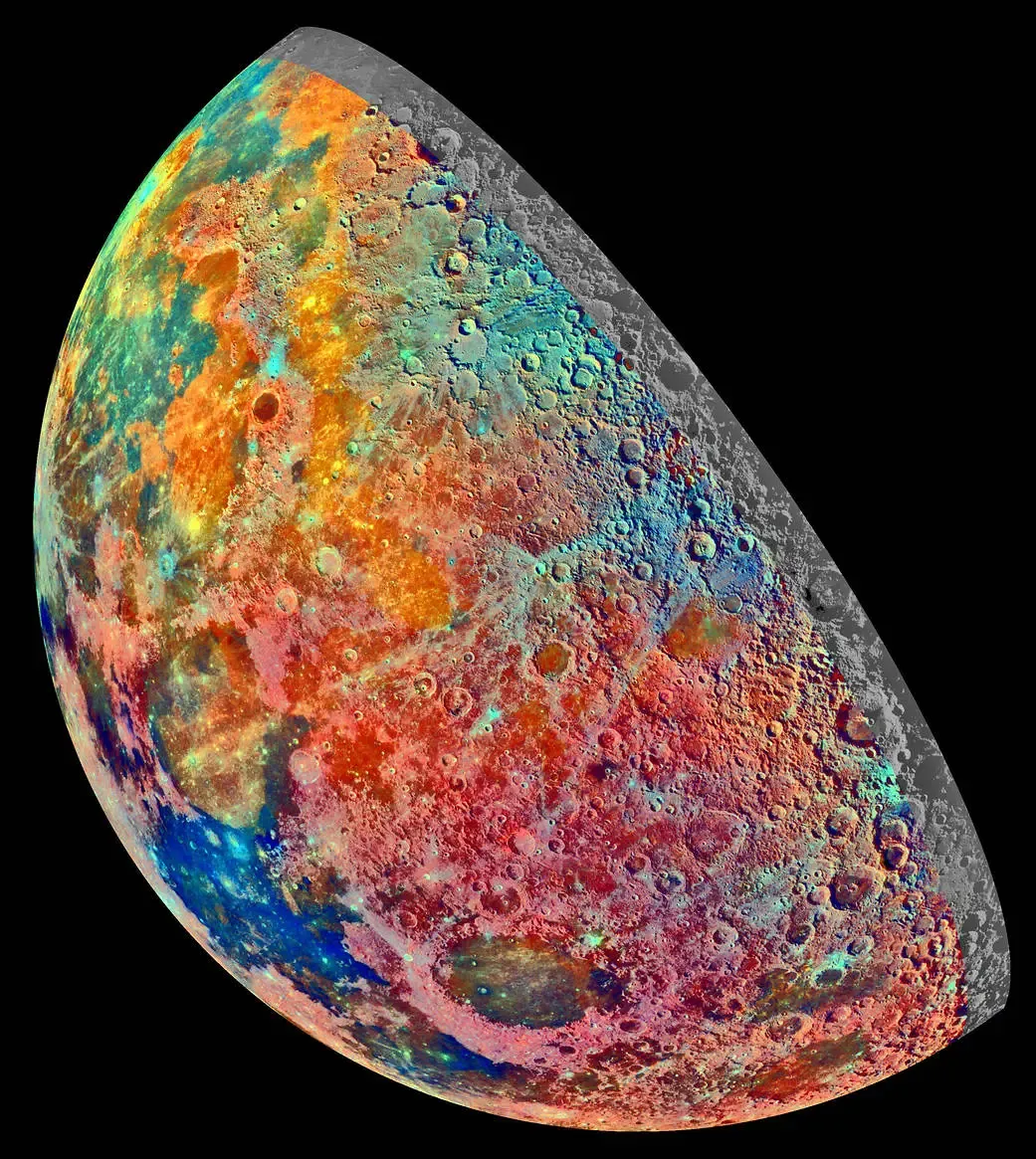
    an over saturated image of the moon with rainbow colors

    Mosaic of 53 images was recorded by the Jupiter-bound Galileo spacecraft as it passed near our own large natural satellite in 1992. The pictures were recorded through three spectral filters and combined in an exaggerated false-color scheme. (Image credit: NASA)

    “With the really, really high-fidelity image stacks from the stuff that Reid got, I’m able to bring out that saturation,” McCarthy said.

    McCarthy also noticed a huge difference in the quality of Wiseman’s individual photos compared to those McCarthy takes on the ground, pointing to the lack of a lunar atmosphere as a contributing factor.

    “On Earth, you’re dealing with atmosphere in the way, and atmosphere actually adds a color cast to the moon,” he said. “I’m often shooting 150 to 200 photos just to barely be able to get out the color …. It’s way more than that if I’m doing it with a mosaic — sometimes thousands of photos.”

    Comparatively, McCarthy found he needed to stack far fewer of the images Wiseman took from the lunar far side. “I was able to cut down the number of exposures used,” he said. “Maybe [Wiseman] shot 50 exposures. I only ended up using 10 to 15.”
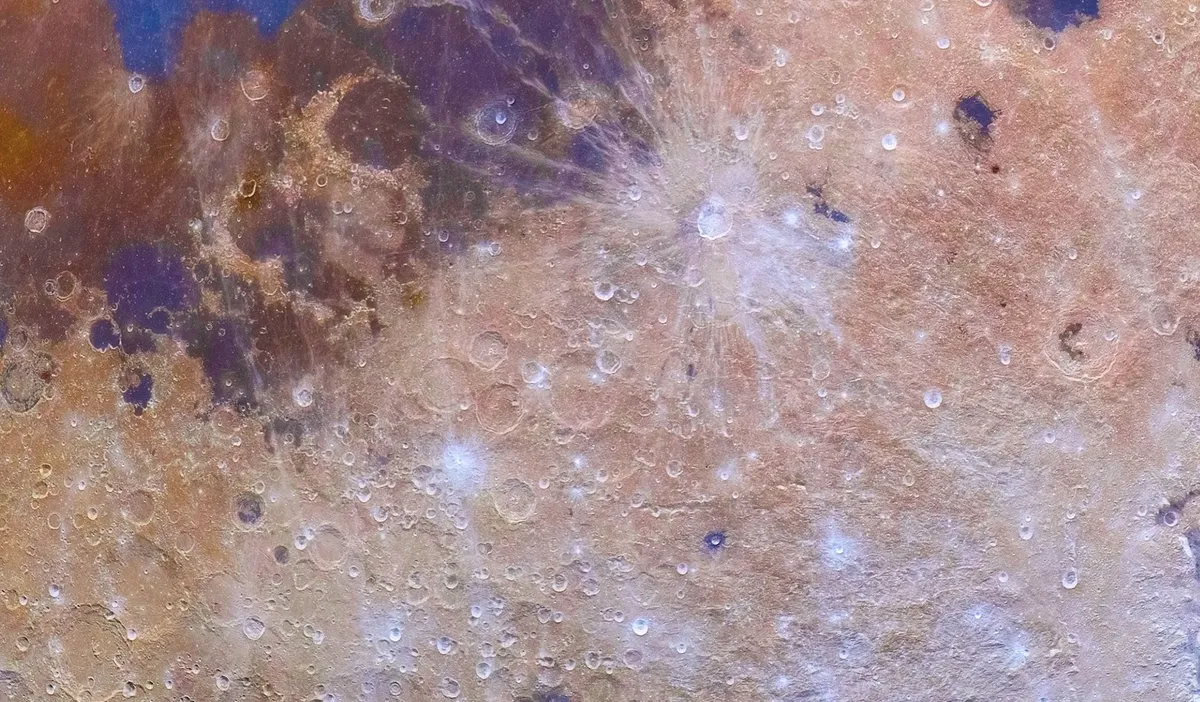
    a diversly colorful and detailed image of the moon

    A stack of about 20 images from the photo collaboration. (Image credit: Andrew McCarthy/cosmicbackground.io)

    “It’s been quite fun working this data, not only because of the features I’ve never seen before, but also, the data is just so clean,” McCarthy said. “It is phenomenally clean. It’s the best data I’ve ever worked.”

    Since Artemis 2’s April 10 splashdown, NASA has released more than 12,000 images taken by the astronauts during their flight around the moon. McCarthy says he’s only scratched the surface of how he wants to use the wealth of material, and he expects to release more edits in the future.

    “I’m just going to keep working the data. There are some close-up shots I haven’t worked or published yet. Nothing too crazy. I’m going to go into the highlands a little deeper,” McCarthy said.


    Source link

    Divya Sharma
    • Website

    Divya Sharma is a content writer at NewsPublicly.com, creating SEO-focused articles on travel, lifestyle, and digital trends.

    Related Posts

    Pentagon unveils trove of declassfied ‘UFO’ videos. How to see them all, from ‘a football-shaped body’ to ‘a misshapen and uneven ball of white light’

    May 12, 2026

    New James Webb Space Telescope images reveal how massive star clusters can reshape galaxies

    May 12, 2026

    See Artemis 2’s amazing views of Earth in timelapse video taken from 12,000-photo drop

    May 12, 2026
    Leave A Reply Cancel Reply

    Demo
    Top Posts

    “Inside Gemini Robotics 1.5: How Robots Learn to Reason & Act

    November 22, 202524 Views

    How US Tariffs Are Reshaping the Global Growth Landscape?

    November 21, 202518 Views

    Pakistani Journalist Laughing at Tejas Fighter Jet Crash at Dubai Airshow Sparks Massive Outrage Worldwide

    November 23, 202517 Views

    Vibe-Coding Boom: How Non-Coders Build Apps With AI Agents

    November 22, 202515 Views
    Don't Miss

    Study finds ChatGPT gets science wrong more often than you think

    May 12, 20264 Mins Read0 Views

    Washington State University professor Mesut Cicek and his research team repeatedly tested ChatGPT by giving…

    Business News Today: Stock and Share Market News, Economy and Finance News, Sensex, Nifty, Global Market, NSE, BSE Live IPO News

    May 12, 2026

    Client Challenge

    May 12, 2026

    AIADMK faction extends support to Vijay’s TVK; leader explains why DMK alliance talks collapsed | India News

    May 12, 2026
    Stay In Touch
    • Facebook
    • Twitter
    • Instagram
    • YouTube
    • LinkedIn
    • WhatsApp

    Subscribe to Updates

    Get the latest creative news from SmartMag about art & design.

    Demo
    NEWSPUBLICLY
    Facebook X (Twitter) Instagram LinkedIn

    Home

    • About Us
    • Leadership & Certification
    • Advertise & Partner With Us
    • Pitch Your Story
    • Media Kit & Pricing
    • Career
    • FAQs

    Guidelines

    • Editorial & Submission
    • Partnership
    • Advertising & Sponsor
    • Intellectual Property Policy
    • Community & Comment
    • Security & Data Protection
    • Send Your Opinion

    Quick Links

    • Cookie Policy
    • Payment & Billing Terms
    • Refund & Cancellation
    • Copyright Policy
    • Complaint & Support
    • Sitemap
    • Contact Us

    Subscribe Us

    Get the latest news and updates!

    Copyright © 2026 Newspublicly (DIGITALIX COMMUNICATION). All Rights Reserved.
    • Privacy Policy
    • Terms of Use
    • Disclaimer