

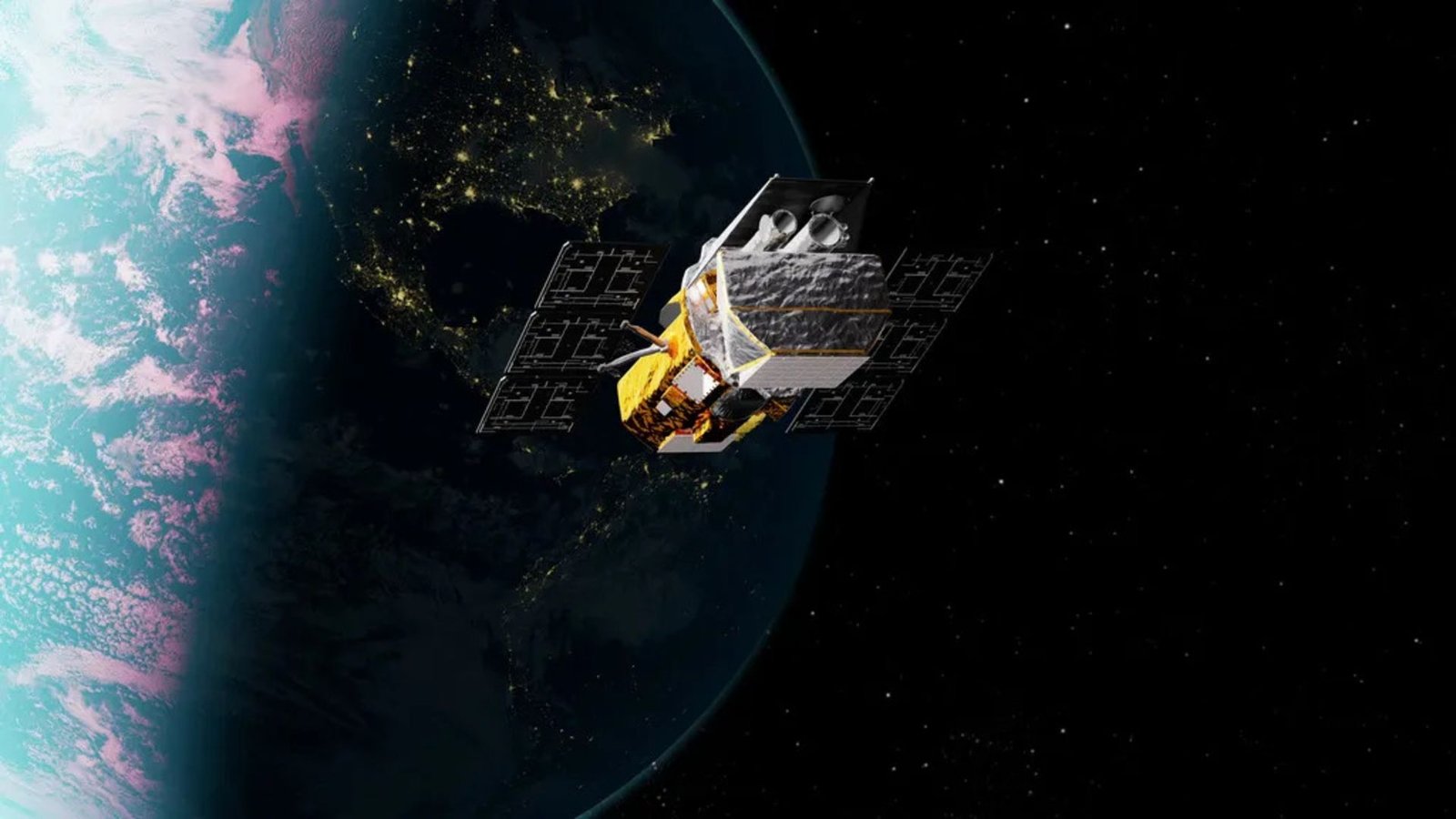
Close Menu

    Subscribe to Updates

    Get the latest news information from worldwide businesses.

    What's Hot

    Ferrari CEO says Luce EV is ‘clocking up orders’ despite design backlash

    May 28, 2026

    The Best Hotels in Kyoto, From Intimate Ryokans to Contemporary Escapes

    May 28, 2026

    Earth’s orbital wobble triggered rapid climate chaos during the dinosaur age

    May 28, 2026
    Facebook Instagram YouTube LinkedIn X (Twitter)
    Trending
    • Ferrari CEO says Luce EV is ‘clocking up orders’ despite design backlash
    • The Best Hotels in Kyoto, From Intimate Ryokans to Contemporary Escapes
    • Earth’s orbital wobble triggered rapid climate chaos during the dinosaur age
    • Sandoz Biosimilar Pricing Dispute Triggers Italian Investigation Into Biogen
    • Nintendo’s newest WarioWare is a weirdo smartphone app
    • Slate Auto will announce pricing and take preorders for its EV on June 24
    • India becomes world’s largest rice producer
    • Steel giants step on capex pedal
    Newspublicly
    • About Us
    • Advertise & Partner with us
    • Pitch Your Story
    • Contact Us
    Facebook Instagram LinkedIn X (Twitter)
    Subscribe
    • Home
    • World News
      • Asia
      • India
      • USA
      • UK & Europe
      • Middle East
    • Economy & Business
      • Global Economy
      • Corporate & Industry
      • Finance & Markets
      • Policy & Trade
    • Technology
      • Gadgets & Devices
      • Software & Apps
      • AI & Machine Learning
      • Robotics & Automation
    • Health & Medicine
      • Fitness & Nutrition
      • Research & Innovation
      • Disease & Treatment
      • Doctors, Clinics & Patient Care
    • Travel & Tourism
    • Automobile
      • Electric & Hybrid Vehicles
      • Auto Industry Insights
    • Sports
    • More
      • Education
      • Real Estate
      • Environment & Climate
      • Space & Astronomy
      • War & Conflicts
    Newspublicly
    Home»More»Space & Astronomy»NASA is hatching a ‘fast-paced plan’ to boost this space telescope. But first, they’ll have to find it
    Space & Astronomy

    NASA is hatching a ‘fast-paced plan’ to boost this space telescope. But first, they’ll have to find it

    AdminBy AdminMay 28, 2026No Comments4 Mins Read0 Views
    Share
    Facebook Twitter LinkedIn Copy Link WhatsApp


    It’s getting to be crunch time for a groundbreaking satellite-rescue mission.

    A private spacecraft called “Link” is set to lift off late next month to meet up with NASA’s Neil Gehrels Swift Observatory, which launched to low Earth orbit (LEO) in 2004 to hunt for powerful space explosions known as gamma-ray bursts.

    Swift is still working just fine. But atmospheric drag is pulling it down at an ever-increasing rate, and the telescope is powerless to resist; it doesn’t have a propulsion system. Link will be the scope’s savior, if all goes to plan, meeting up with Swift in LEO and boosting it to a higher altitude.

    You may like

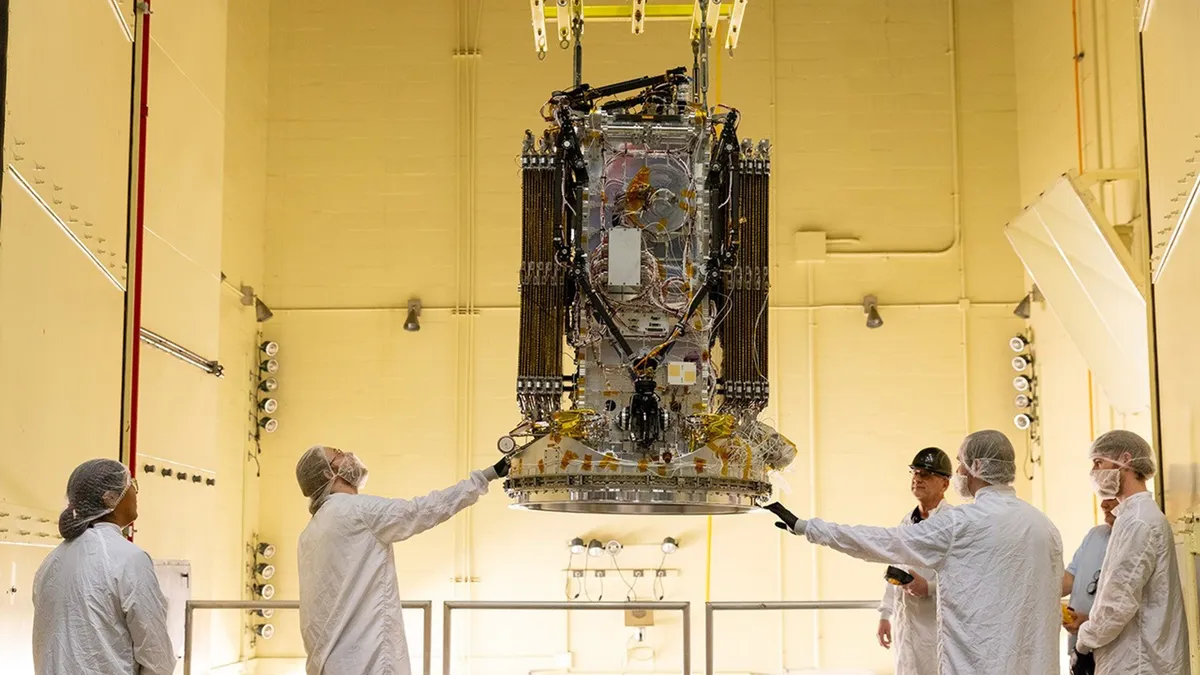
    five people wearing white protective equipment stand around a rectangular spacecraft, which is hanging from the ceiling of a white-walled clean rooom

    Engineers from Katalyst stabilize their LINK robotic servicing spacecraft as it moves into a vibration chamber at NASA’s Goddard Space Flight Center on April 15, 2026. (Image credit: NASA/Scott Wiessinger)

    This plan is bold and unprecedented. Link, built by Arizona-based Katalyst Space Technologies, aims to become the first private spacecraft ever to capture a robotic satellite operated by the U.S. government.

    Doing so will not be easy, especially since it’s unclear where exactly Swift will be in the coming months. That’s because Earth’s atmosphere — and therefore the drag it imposes on orbiting spacecraft — is not static. Our blanket of air expands when the sun is active and contracts during times of solar quiescence.

    Solar activity waxes and wanes on an 11-year cycle, the most recent of which peaked in 2024. That intense round of space weather put the Swift team on notice: Modeling work performed in early 2025 predicted that the telescope would reenter the atmosphere by the summer of 2026.

    That dire prognosis laid the groundwork for Link’s rescue mission, which NASA funded via a $30 million contract with Katalyst. The modeling work has continued, too, as NASA and the company flesh out their “fast-paced plan” to raise Swift’s orbit.

    Space

    “These predictions evolve over time, based on space weather forecasts and other factors like Swift’s current height and orientation,” Michael Shoemaker, deputy flight dynamics lead in SSMO (Space Science Missions Operations) at NASA’s Goddard Space Flight Center in Greenbelt, Maryland, said in a May 26 statement.
    a graph with a blue background showing lines in various shades of orange and green, all of which curve downward from top left to bottom right

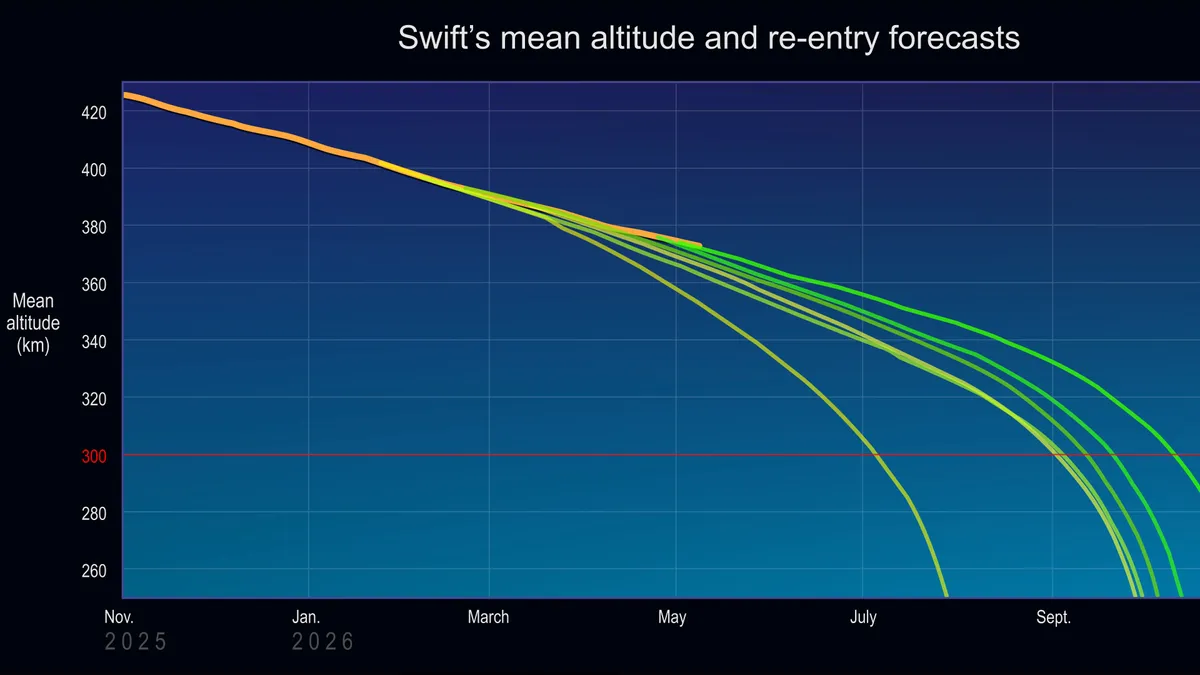
    Graph showing actual and predicted altitudes for NASA’s Neil Gehrels Swift Observatory. The thick orange line shows Swift’s mean altitude from November 2025 to early May 2026. The curves in various shades of green show altitude forecasts generated by the Space Science Mission Operations team at the agency’s Goddard Space Flight Center. (Image credit: NASA’s Goddard Space Flight Center/Michael Shoemaker and Francis Reddy)

    Shoemaker and his team aren’t doing this just for Swift; they make such predictions for a variety of satellites, both active and defunct. Their models incorporate a wide range of data, including details from each satellite team, tracking information collected by the U.S. Space Force and solar activity research from NASA and the National Oceanic and Atmospheric Administration’s Space Weather Prediction Center.

    Shoemaker and his colleagues are now generating weekly orbital predictions for Swift, which the mission team has used “to make decisions about when to halt science observations and how to steer the spacecraft to reduce drag as much as possible,” NASA officials said in the same statement.


    What to read next

    “This innovative new approach to operating Swift has allowed them to successfully slow its orbital decay,” they added.

    As a result, Swift will likely stay at least 185 miles (300 kilometers) above Earth — the “critical altitude” giving Link’s orbit-boosting mission the best chance of success, according to NASA — into early fall.

    That’s good news, but the modeling team still has work to do.

    “We’re also working on predictions for where Swift will be when Link is set to launch in June aboard a Northrop Grumman Pegasus rocket,” Russell Carpenter, the deputy project manager in SSMO, said in the same statement.

    “The project to re-boost Swift has generated intense interest across the flight dynamics community,” he added. “The Swift team is grateful that so many people have been willing to pitch in to help with refining these predictions.”


    Source link

    Author

    • Admin

      NewsPublicly.com is News & Articles Platform that creating SEO-focused articles on travel, lifestyle, and digital trends.

    Admin
    • Website

    NewsPublicly.com is News & Articles Platform that creating SEO-focused articles on travel, lifestyle, and digital trends.

    Related Posts

    James Webb Space Telescope discovers a black hole that formed before its host galaxy

    May 28, 2026

    How to catch the perfect full moonrise — just in time for the Blue Moon show on May 30

    May 28, 2026

    Astrophotographer spends 115 hours capturing Horsehead Nebula with backyard telescope

    May 28, 2026
    Leave A Reply Cancel Reply

    Demo
    Top Posts

    “Inside Gemini Robotics 1.5: How Robots Learn to Reason & Act

    November 22, 202525 Views

    How US Tariffs Are Reshaping the Global Growth Landscape?

    November 21, 202518 Views

    Pakistani Journalist Laughing at Tejas Fighter Jet Crash at Dubai Airshow Sparks Massive Outrage Worldwide

    November 23, 202517 Views

    525 pounds of cocaine seized after Nebraska K9 alerts troopers on I-80

    May 28, 202616 Views
    Don't Miss

    Ferrari CEO says Luce EV is ‘clocking up orders’ despite design backlash

    May 28, 20265 Mins Read0 Views

    Ferrari CEO Benedetto Vigna confirmed that the $640,000 Luce, the company’s first all-electric car, is…

    The Best Hotels in Kyoto, From Intimate Ryokans to Contemporary Escapes

    May 28, 2026

    Earth’s orbital wobble triggered rapid climate chaos during the dinosaur age

    May 28, 2026

    Sandoz Biosimilar Pricing Dispute Triggers Italian Investigation Into Biogen

    May 28, 2026
    Stay In Touch
    • Facebook
    • Twitter
    • Instagram
    • YouTube
    • LinkedIn
    • WhatsApp

    Subscribe to Updates

    Get the latest creative news from SmartMag about art & design.

    Demo
    NEWSPUBLICLY
    Facebook X (Twitter) Instagram LinkedIn

    Home

    • About Us
    • Leadership
    • Advertise & Partner With Us
    • Pitch Your Story
    • Media Kit & Pricing
    • Career
    • FAQs

    Guidelines

    • Editorial & Submission
    • Partnership
    • Advertising & Sponsor
    • Intellectual Property Policy
    • Community & Comment
    • Security & Data Protection
    • Send Your Opinion

    Quick Links

    • Cookie Policy
    • Payment & Billing Terms
    • Refund & Cancellation
    • Copyright Policy
    • Complaint & Support
    • Sitemap
    • Contact Us

    Subscribe Us

    Get the latest news and updates!

    Copyright © 2026 Newspublicly (DIGITALIX COMMUNICATION). All Rights Reserved.
    • Privacy Policy
    • Terms of Use
    • Disclaimer