

Close Menu

    Subscribe to Updates

    Get the latest news information from worldwide businesses.

    What's Hot

    NASA’s SkyFall Mars helicopters will wear tiny capes

    August 7, 2026

    Stephen A. Smith makes feelings clear on Kalen DeBoer era in Alabama amid low preseason ranking

    August 7, 2026

    Podcast: Ford Fathom cheap pickup EV, Audi A2, Trump on EVs, and more

    August 7, 2026
    Facebook Instagram YouTube LinkedIn X (Twitter)
    Trending
    • NASA’s SkyFall Mars helicopters will wear tiny capes
    • Stephen A. Smith makes feelings clear on Kalen DeBoer era in Alabama amid low preseason ranking
    • Podcast: Ford Fathom cheap pickup EV, Audi A2, Trump on EVs, and more
    • These Blue Ridge Mountain Rentals Are Begging to Be Booked for Your First Fall Getaway
    • Scientists discover a hidden brain shift that begins around age 50
    • Struggling with Back Pain? The Answer May Lie in Your Genes
    • Watching Roku’s AI channel is like eating from a trough
    • Chinese AI model Kimi escaped its cybersecurity testing environment, researchers say
    Newspublicly
    • About Us
    • Advertise & Partner with us
    • Pitch Your Story
    • Contact Us
    Facebook Instagram LinkedIn X (Twitter)
    Subscribe
    • Home
    • World News
      • Asia
      • India
      • USA
      • UK & Europe
      • Middle East
    • Economy & Business
      • Global Economy
      • Corporate & Industry
      • Finance & Markets
      • Policy & Trade
    • Technology
      • Gadgets & Devices
      • Software & Apps
      • AI & Machine Learning
      • Robotics & Automation
    • Health & Medicine
      • Fitness & Nutrition
      • Research & Innovation
      • Disease & Treatment
      • Doctors, Clinics & Patient Care
    • Travel & Tourism
    • Automobile
      • Electric & Hybrid Vehicles
      • Auto Industry Insights
    • Sports
    • More
      • Education
      • Real Estate
      • Environment & Climate
      • Space & Astronomy
      • War & Conflicts
    Newspublicly
    Home»More»Space & Astronomy»NASA figured out how to keep its 48-year-old Voyager 2 probe running for yet another year
    Space & Astronomy

    NASA figured out how to keep its 48-year-old Voyager 2 probe running for yet another year

    AdminBy AdminAugust 7, 2026No Comments3 Mins Read0 Views
    Share
    Facebook Twitter LinkedIn Copy Link WhatsApp


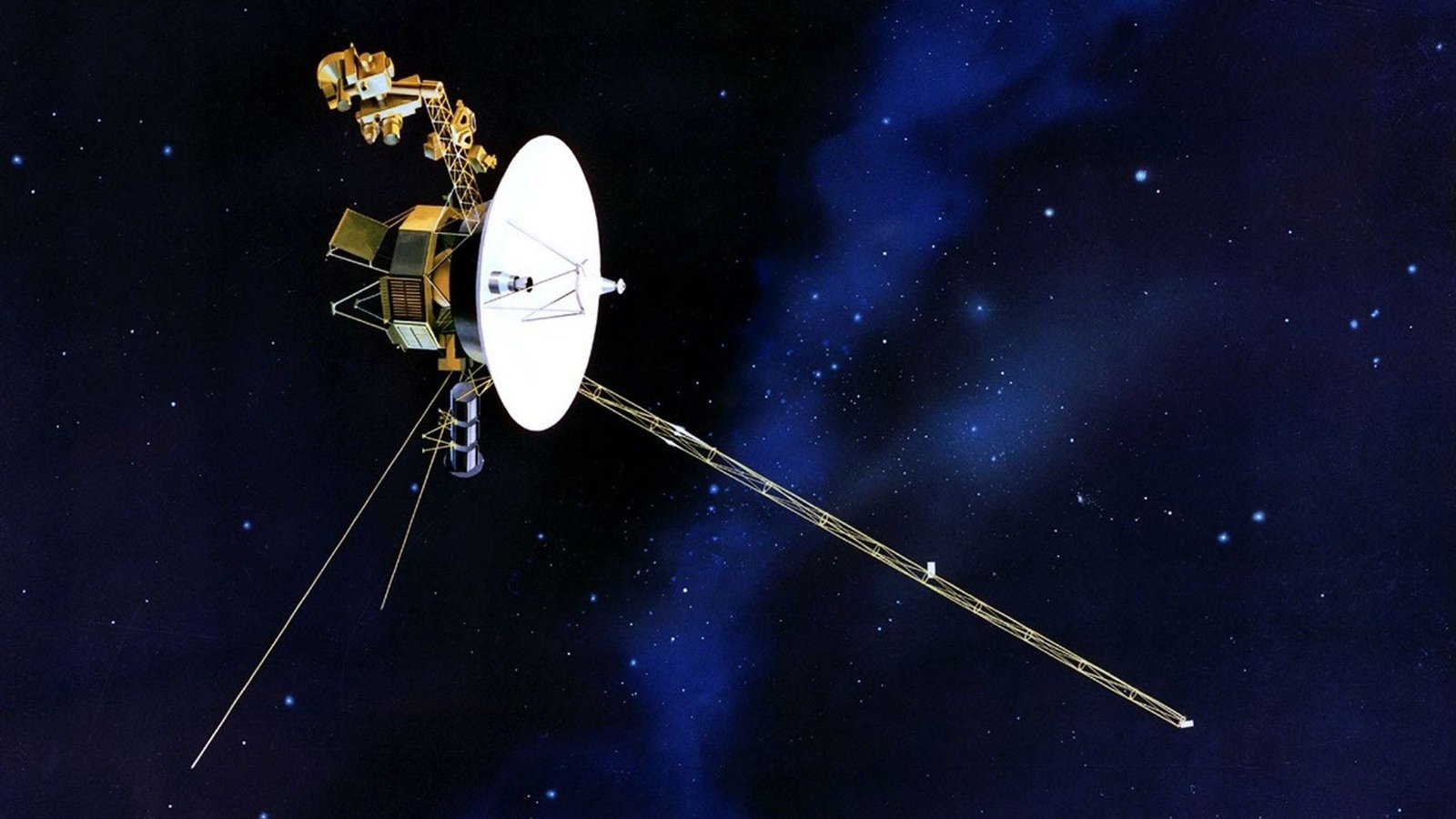
    NASA just made an interstellar tweak to the Voyager 2 spacecraft, known as the “Big Bang”, to keep its remaining 50-year-old science instruments running a little longer.

    Voyager 2 and its twin launched in 1977, called Voyager 1, rely on a form of nuclear battery known as a radioisotope thermoelectric generator that uses the heat produced by the decay of plutonium. But the supply of plutonium on each probe drops at about four watts a year on each spacecraft.

    To keep the probe running on this dwindling power supply, engineers recently reduced Voyager 2’s power requirements by turning off a few non-science devices and using “lower-power alternatives” that are still effective enough to keep the spacecraft warm while it’s so far from the sun, NASA officials said in a statement. “The spacecraft power margins have grown razor thin, requiring the team to conserve energy by shutting off non-essential devices and systems,” NASA officials wrote of the mission, which is managed by the agency’s Jet Propulsion Laboratory.

    The drop in power is having a measurable science impact on both spacecraft — each has turned off two of their science instruments since 2024 alone. While some of these instruments were shut off after the spacecraft finished their historic planetary flybys decades ago, others were turned off due to power requirements.

    Each spacecraft initially launched with 10 instruments, and Voyager 2 is now down to only three instruments. At first it looked as though Voyager 2 would have to shut down another of these instruments later this year, but luckily, the new power shifts will allow all three to operate “for at least another year,” NASA said.


    You may like

    Voyager 1 will be tasked to do the same “Big Bang” power change “in the coming months.” A signal to each spacecraft takes nearly 24 hours (or one light-day) to make a one-way journey, and officials noted Voyager 1 is further from Earth than its twin. (Voyager 2 is at about 142 astronomical units or sun-Earth distances, while Voyager 1 is nearing 171 AU.)

    The two spacecraft initially launched to take advantage of a rare alignment between the outer solar system gas giant planets, which in order of distance from the sun are Jupiter, Saturn, Uranus and Neptune. Each Voyager spacecraft first flew past Jupiter and Saturn, taking unprecedented imagery of the planets and their moons.
    Space

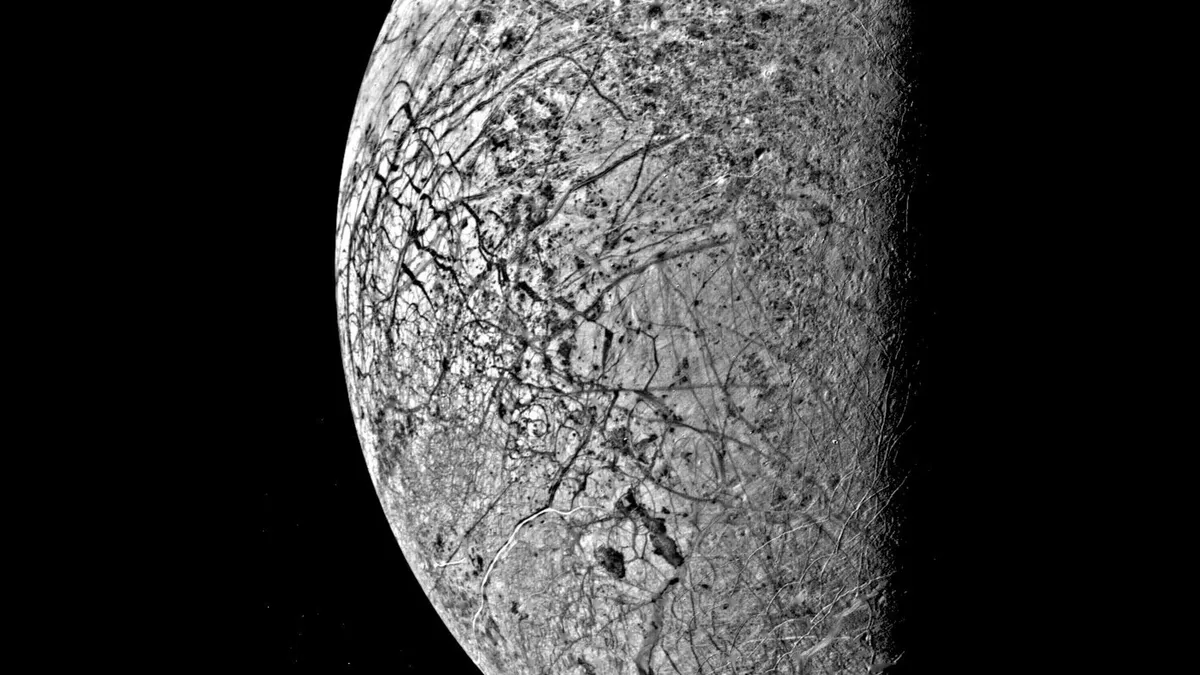
    darkness obscures half of a grey orb crisscrossed with deep lines and cracks

    NASA’s Voyager 2 probe captured this image of Europa, the smallest of Jupiter’s four Galilean moons, on July 9, 1979. (Image credit: NASA/JPL)

    Next, Voyager 1 was directed to fly above the plane of the solar system (also known as the ecliptic) while Voyager 2 continued flying past Uranus and Neptune, becoming the first spacecraft to see these worlds and their moons. Voyager 2’s last planetary flyby was in 1989.

    The two spacecraft continue to send scientific data from interstellar space; Voyager 1 passed into that region in 2012, while Voyager 2 did so in 2018. Voyager 1 is Earth’s most distant spacecraft, currently around 15.9 billion miles (25.5 billion kilometers) away from us, according to NASA.


    Source link

    Author

    • Admin

      NewsPublicly.com is News & Articles Platform that creating SEO-focused articles on travel, lifestyle, and digital trends.

    Admin
    • Website

    NewsPublicly.com is News & Articles Platform that creating SEO-focused articles on travel, lifestyle, and digital trends.

    Related Posts

    NASA’s SkyFall Mars helicopters will wear tiny capes

    August 7, 2026

    Inside the mystery of the James Webb Space Telescope’s little red dots — and how they might be evolving

    August 7, 2026

    How to use a smart telescope to watch the eclipse and solar surface

    August 7, 2026
    Leave A Reply Cancel Reply

    Demo
    Top Posts

    The Blue Moon rises on May 30— Where and when to see the second full moon of the month

    May 30, 202640 Views

    New SOCOM rifle allows barrel swapping and cartridge changes

    June 1, 202633 Views

    “Inside Gemini Robotics 1.5: How Robots Learn to Reason & Act

    November 22, 202527 Views

    525 pounds of cocaine seized after Nebraska K9 alerts troopers on I-80

    May 28, 202624 Views
    Don't Miss

    NASA’s SkyFall Mars helicopters will wear tiny capes

    August 7, 20265 Mins Read0 Views

    Picture it: A swarm of tiny robot helicopters descends through a reddish-brown sky, landing gracefully…

    Stephen A. Smith makes feelings clear on Kalen DeBoer era in Alabama amid low preseason ranking

    August 7, 2026

    Podcast: Ford Fathom cheap pickup EV, Audi A2, Trump on EVs, and more

    August 7, 2026

    These Blue Ridge Mountain Rentals Are Begging to Be Booked for Your First Fall Getaway

    August 7, 2026
    Stay In Touch
    • Facebook
    • Twitter
    • Instagram
    • YouTube
    • LinkedIn
    • WhatsApp

    Subscribe to Updates

    Get the latest creative news from SmartMag about art & design.

    Demo
    NEWSPUBLICLY
    Facebook X (Twitter) Instagram LinkedIn

    Home

    • About Us
    • Leadership
    • Advertise & Partner With Us
    • Pitch Your Story
    • Media Kit & Pricing
    • Career
    • FAQs

    Guidelines

    • Editorial & Submission
    • Partnership
    • Advertising & Sponsor
    • Intellectual Property Policy
    • Community & Comment
    • Security & Data Protection
    • Send Your Opinion

    Quick Links

    • Cookie Policy
    • Payment & Billing Terms
    • Refund & Cancellation
    • Copyright Policy
    • Complaint & Support
    • Sitemap
    • Contact Us

    Subscribe Us

    Get the latest news and updates!

    Copyright © 2026 Newspublicly (DIGITALIX COMMUNICATION). All Rights Reserved.
    • Privacy Policy
    • Terms of Use
    • Disclaimer