

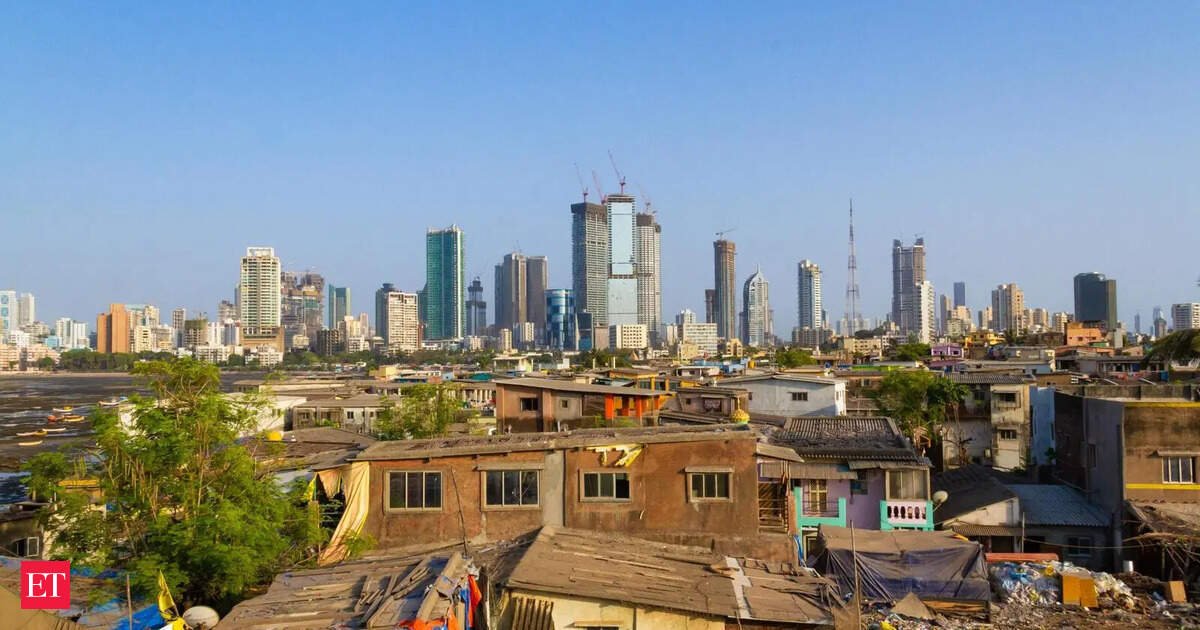
The exercise will pave the way for construction of around 75,000 rehabilitation tenements, nearly 30,000 housing units for MHADA and a sizeable saleable component for private developers.
“The large-scale urban renewal exercise, spanning about 925 acres across 11 projects, is expected to transform several ageing housing colonies and reshape some of Mumbai’s most densely populated neighbourhoods. The projects together are expected to benefit 80,747 residents and mark one of the country’s biggest public-private redevelopment initiatives,” Sanjeev Jaiswal, Vice President & Chief Executive Officer, MHADA, told ET.
The programme has gathered momentum as MHADA opened bids for three marquee cluster redevelopment projects including 34.33-acre Adarsh Nagar in Worli, 98.27-acre Bandra Reclamation and 73.89-acre Sardar Vallabhbhai Patel (SVP) Nagar in Andheri (West) that drew interest from some of India’s largest corporate names and real estate developers. These projects have received interest from Adani Group, Reliance Industries, Lodha Developers and JSW Group.
“What sets the C&DA model apart from conventional developer-led redevelopment is its unyielding focus on existing residents. The framework includes provisions for transit rent support for eligible families throughout the construction period, corpus funds to cover long-term maintenance of the new housing stock, and a firm commitment to delivering modern, well-equipped homes,” Jaiswal said.

According to him, the aim is to replace ageing housing stock with contemporary residential developments while minimising disruption to existing occupants.
The participation of large developers is being seen as a validation of C&DA model, under which private developers are appointed as Construction & Development Agencies to execute redevelopment projects while the housing authority retains oversight and responsibility for safeguarding the interests of existing residents.“Beyond the three projects, MHADA’s redevelopment pipeline includes Motilal Nagar in Goregaon, one of the country’s largest urban renewal projects spread across 143 acres, besides Kamathipura, Abhyudaya Nagar, Kannamwar Nagar, GTB Nagar and the PMGP cluster project in Jogeshwari. Projects in Khar’s Ramkrishna Nagar, Borivali’s MHB Colony, Gorai and Kandivali’s Charkop are also part of the redevelopment programme,” he said.
These projects are being planned as integrated neighbourhoods with upgraded infrastructure, open spaces, social amenities and structured parking, as MHADA looks to undertake a comprehensive facelift of Mumbai’s ageing residential precincts over the coming years.
Mumbai’s redevelopment push comes at a time when the city’s ageing housing stock, rising population density and scarcity of developable land are forcing policymakers to explore large-scale renewal models.
Urban planners have long argued that fragmented redevelopment has struggled to deliver meaningful transformation, with projects often delayed by financing constraints, regulatory hurdles and difficulties in securing residents’ consent.
The shift towards cluster-based redevelopment backed by institutional oversight is increasingly being seen as a way to unlock land value, improve infrastructure and create planned urban neighbourhoods while addressing the city’s chronic shortage of quality housing.