

Close Menu

    Subscribe to Updates

    Get the latest news information from worldwide businesses.

    What's Hot

    NASA’s Cold Atom Lab is creating one of the weirdest forms of matter in space

    June 23, 2026

    Quarantine comes to an end for the last of the hantavirus ship passengers in Nebraska

    June 23, 2026

    MP to hand over management of 18 Community Health Centres to private operators

    June 23, 2026
    Facebook Instagram YouTube LinkedIn X (Twitter)
    Trending
    • NASA’s Cold Atom Lab is creating one of the weirdest forms of matter in space
    • Quarantine comes to an end for the last of the hantavirus ship passengers in Nebraska
    • MP to hand over management of 18 Community Health Centres to private operators
    • The best Apple deals you can get during Prime Day
    • Delhivery expands green fleet with 1,500 Bajaj electric cargo vehicles
    • The AI market has become a ‘rubber band’ — the question now is how far it can stretch, says Goldman strategist
    • India has contingency plans in place amid 40% rainfall deficit, says Agriculture Commissioner
    • First round of US-Iran talks end with ‘encouraging progress’, mediators say
    Newspublicly
    • About Us
    • Advertise & Partner with us
    • Pitch Your Story
    • Contact Us
    Facebook Instagram LinkedIn X (Twitter)
    Subscribe
    • Home
    • World News
      • Asia
      • India
      • USA
      • UK & Europe
      • Middle East
    • Economy & Business
      • Global Economy
      • Corporate & Industry
      • Finance & Markets
      • Policy & Trade
    • Technology
      • Gadgets & Devices
      • Software & Apps
      • AI & Machine Learning
      • Robotics & Automation
    • Health & Medicine
      • Fitness & Nutrition
      • Research & Innovation
      • Disease & Treatment
      • Doctors, Clinics & Patient Care
    • Travel & Tourism
    • Automobile
      • Electric & Hybrid Vehicles
      • Auto Industry Insights
    • Sports
    • More
      • Education
      • Real Estate
      • Environment & Climate
      • Space & Astronomy
      • War & Conflicts
    Newspublicly
    Home»Health & Medicine»Research & Innovation»Meteorite reveals a lost moon-sized world from the dawn of the solar system
    Research & Innovation

    Meteorite reveals a lost moon-sized world from the dawn of the solar system

    AdminBy AdminJune 23, 2026No Comments4 Mins Read0 Views
    Share
    Facebook Twitter LinkedIn Copy Link WhatsApp


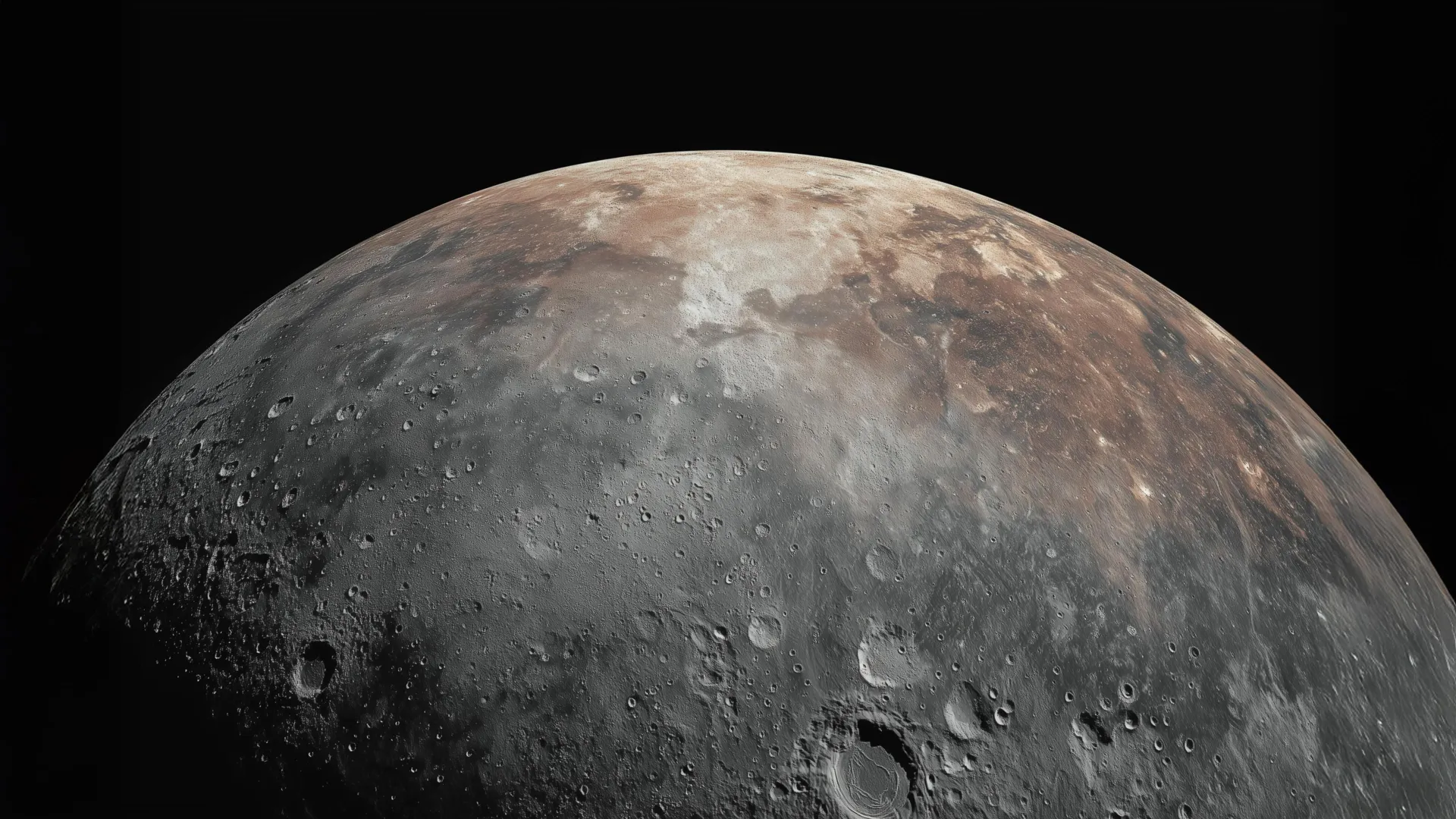
    More than 4.5 billion years ago, a huge world, potentially as large as the moon or even Mars, traveled around the young Sun before a violent collision shattered it into pieces.

    Scientists now say they have found the first direct evidence that this long-lost planetary embryo, known as a protoplanet, once existed. The discovery, described in the journal Earth and Planetary Science Letters, points to a type of planetary evolution unlike anything previously recognized.

    “It’s incredible to think there was once a world this large,” said Aaron Bell, an assistant research professor in the Department of Earth Science at the University of Colorado Boulder. “We only know it existed because a few fragments of it happened to land on Earth. These meteorites preserved evidence of a completely different pathway through which early planets developed.”

    Rare Meteorite Holds Clues to a Lost World

    The breakthrough came from a meteorite discovered in the Sahara Desert called Northwest Africa (NWA) 12774, an angrite meteorite.

    Angrites are among the oldest volcanic rocks known in the solar system. They formed only a few million years after the solar system emerged about 4.56 billion years ago. They are also extremely uncommon. Of the more than 80,000 meteorites found on Earth, just 68 belong to the angrite group.

    These meteorites have long puzzled scientists because of their unusual composition. Compared with Earth, Mars, and other rocky planets, angrites contain very little silicon dioxide, or silica, a key ingredient in nearly every known terrestrial planet.

    Because of that chemistry, researchers had assumed angrites originated from small asteroids with radii of less than 200 kilometers (124 miles).

    Evidence of Extreme Pressure Deep Inside a Planet

    While examining NWA 12774, Bell and his colleagues identified clinopyroxene, a mineral commonly found in Earth’s crust and mantle. The clinopyroxene in this meteorite contained exceptionally high levels of aluminum, an important clue that it formed under intense pressure deep within a larger body.

    The team then calculated the conditions required to produce the mineral.

    Their results were surprising. The aluminum-rich clinopyroxene would have needed at least 17.5 kilobars of pressure to form. By comparison, pressure at the bottom of the Mariana Trench, the deepest location on Earth, reaches only about 1 kilobar.

    Such extreme pressure could not have existed inside a small asteroid. Instead, the findings indicated that the parent body of the angrites must have had a radius of at least 1,000 kilometers (621 miles).

    A World Comparable to the Moon

    Additional evidence suggested an even larger source.

    The crystals within NWA 12774 still retain sharp edges and delicate chemical features. If they had formed deep inside a massive world, those details would likely have been erased over time. Their preservation suggests the crystals formed relatively close to the surface of the parent body.

    If that interpretation is correct, the original world would have needed to be much larger than the minimum estimate.

    According to the researchers, the angrite parent body may have exceeded 1,800 kilometers (1118 miles) in radius. That would place it in the same size range as Earth’s moon and potentially approaching the scale of Mars, which has a radius of 3300 kilometers (2050 miles).

    “There are many meteorites sitting in drawers that haven’t been thoroughly studied, so there were likely more of these protoplanets we don’t know about,” Bell said.

    A Different Path for Planet Formation

    Scientists still do not know exactly what happened to this ancient world. One possibility is that it was destroyed during a major collision in the chaotic early solar system. Its fragments may later have become part of other rocky planets, including Earth.

    “The materials that formed the angrite parent body are fundamentally different from the ingredients of Earth and Mars. It points to a distinct and separate evolutionary path in planetary formation in the early history of our solar system,” Bell said.


    Source link

    Author

    • Admin

      NewsPublicly.com is News & Articles Platform that creating SEO-focused articles on travel, lifestyle, and digital trends.

    Admin
    • Website

    NewsPublicly.com is News & Articles Platform that creating SEO-focused articles on travel, lifestyle, and digital trends.

    Related Posts

    NASA’s Cold Atom Lab is creating one of the weirdest forms of matter in space

    June 23, 2026

    Scientists open a million-year-old time capsule hidden beneath New Zealand

    June 23, 2026

    Scientists say most people need more protein than current guidelines suggest

    June 23, 2026
    Leave A Reply Cancel Reply

    Demo
    Top Posts

    The Blue Moon rises on May 30— Where and when to see the second full moon of the month

    May 30, 202640 Views

    New SOCOM rifle allows barrel swapping and cartridge changes

    June 1, 202633 Views

    “Inside Gemini Robotics 1.5: How Robots Learn to Reason & Act

    November 22, 202525 Views

    525 pounds of cocaine seized after Nebraska K9 alerts troopers on I-80

    May 28, 202624 Views
    Don't Miss

    NASA’s Cold Atom Lab is creating one of the weirdest forms of matter in space

    June 23, 20265 Mins Read0 Views

    NASA’s upgraded Cold Atom Lab is back in operation aboard the International Space Station, giving…

    Quarantine comes to an end for the last of the hantavirus ship passengers in Nebraska

    June 23, 2026

    MP to hand over management of 18 Community Health Centres to private operators

    June 23, 2026

    The best Apple deals you can get during Prime Day

    June 23, 2026
    Stay In Touch
    • Facebook
    • Twitter
    • Instagram
    • YouTube
    • LinkedIn
    • WhatsApp

    Subscribe to Updates

    Get the latest creative news from SmartMag about art & design.

    Demo
    NEWSPUBLICLY
    Facebook X (Twitter) Instagram LinkedIn

    Home

    • About Us
    • Leadership
    • Advertise & Partner With Us
    • Pitch Your Story
    • Media Kit & Pricing
    • Career
    • FAQs

    Guidelines

    • Editorial & Submission
    • Partnership
    • Advertising & Sponsor
    • Intellectual Property Policy
    • Community & Comment
    • Security & Data Protection
    • Send Your Opinion

    Quick Links

    • Cookie Policy
    • Payment & Billing Terms
    • Refund & Cancellation
    • Copyright Policy
    • Complaint & Support
    • Sitemap
    • Contact Us

    Subscribe Us

    Get the latest news and updates!

    Copyright © 2026 Newspublicly (DIGITALIX COMMUNICATION). All Rights Reserved.
    • Privacy Policy
    • Terms of Use
    • Disclaimer