

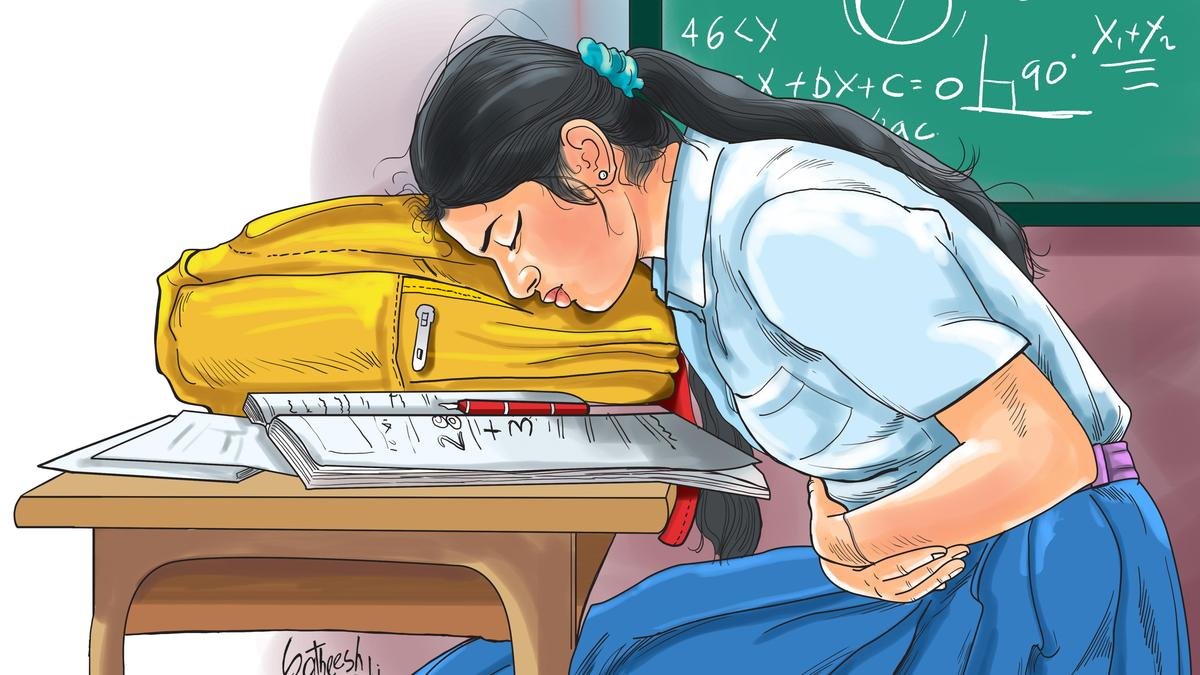
Menstrual pain, in varying degrees of severity, affects a majority of women worldwide. Yet, experts say the widespread tendency to normalise this pain has turned it into a health burden, delaying diagnosis and care for serious conditions. Additionally, many women in vulnerable and unorganised sectors are often left out of even basic conversations on menstrual health.

Pain that won’t go away
Goonj Verma, 38, a Delhi-based entrepreneur, did not have a history of painful periods in her early life. “I had always been active in sports, dancing and travelling,” she says, “That changed in 2017, during a prolonged period of personal stress and anxiety.” One night, during her period, she experienced excruciating pain that lasted nearly eight hours, requiring hospitalisation.
“After that, the pain kept increasing every month. I would stay awake the whole night because of the pain. Sometimes I would scream; it was unbearable. The painkillers stopped working,” she adds.
Even with repeated consultations, it was only in 2020, during a transvaginal ultrasound as part of fertility planning that she was diagnosed with endometriosis — a chronic condition where tissue similar to the uterine lining grows outside the uterus, causing pelvic pain, infertility, and inflammation. She went through multiple consultations, fertility treatments, and surgeries, including a cystectomy and a myomectomy, before she underwent specialised excision surgery in 2024.
Menstrual pain is among the most common health concerns among women. Studies indicate that between 50% and 80% of women experience dysmenorrhoea (severe abdominal cramping), with a significant proportion reporting symptoms that are severe, affecting daily life. Yet only a small proportion seek medical care. And within this, a range of underlying conditions contribute to severe pain.
Endometriosis affects about 1 in 10 women of reproductive age globally, while other conditions such as adenomyosis, uterine fibroids, and pelvic inflammatory disease also account for a substantial share of secondary dysmenorrhoea.
Doctors note that these conditions are often grouped under ‘period pain’, masking their complexity and delaying diagnosis.

When pain is a warning
“Pain is subjective, but typical menstrual cramps are usually bearable and begin around the onset of menstruation,” says G. Vishnu Vandana, senior consultant in obstetrics, gynaecology and reproductive medicine, Apollo Hospitals, Chennai. “Pain that starts a day or two before periods, worsens over time, or affects daily activities should not be ignored,” she adds.
Jaishree Gajaraj, head of Varam and senior consultant, department of obstetrics and gynaecology, Varam at MGM Healthcare, Chennai explains that dysmenorrhoea may be congestive (before menstruation) or spasmodic (during menstruation). She notes the differences between primary dysmenorrhoea, common cramps, and secondary dysmenorrhoea, which is linked to underlying conditions.
“Primary dysmenorrhoea usually lasts one to three days and responds to mild painkillers. Secondary dysmenorrhoea may begin earlier, last longer, and often, does not respond to usual medication,” she says. Warning signs include severe pelvic pain, pain during intercourse, painful bowel movements or urination during menstruation, heavy or irregular bleeding, and difficulty conceiving.

Causes of severe menstrual pain
While endometriosis is one of the most recognised causes, doctors emphasise that several other conditions can lead to severe menstrual pain. N. S. Saradha, senior consultant, obstetrics, gynaecology & IVF, SIMS Hospital, Chennai explains that adenomyosis, for instance, occurs when endometrial tissue grows into the muscular wall of the uterus. This can cause heavy bleeding, severe cramping, and an enlarged uterus.
Uterine fibroids, which are non-cancerous growths in the uterus are another common cause, often associated with heavy menstrual bleeding, pelvic pressure, and pain.
Also, Pelvic Inflammatory Disease (PID), usually caused by infections, can lead to chronic pelvic pain and painful periods. Other causes may include ovarian cysts, intrauterine device-related complications, and, in some cases, gastrointestinal or urinary conditions that mimic gynaecological pain.
Thendral K., clinical lead and senior consultant, obstetrics & gynaecology, Kauvery Hospital, Chennai, notes that distinguishing between these conditions requires careful evaluation. “A detailed menstrual history, symptom pattern, and appropriate imaging are key to identifying the underlying cause,” she says.
Among these conditions, endometriosis remains one of the most complex and underdiagnosed. “Tissue similar to the uterine lining grows outside the uterus and responds to hormonal cycles,” explains Dr. Vandana. “But the blood has no outlet, leading to inflammation, scar tissue, and adhesions.” This tissue can affect the ovaries, fallopian tubes, pelvic lining, bowel, and bladder. Dr. Saradha explains that the inflammation and adhesions irritate surrounding nerves, leading to severe and debilitating pain. It may also cause cysts, commonly known as chocolate cysts.

Diagnosis delays and evolving treatment
A patient from Gujarat describes her experience of severe pain and heavy bleeding from menarche onwards. “I would mostly just lie on my bed because the pain was really severe,” she says, adding that periods often meant skipping school as she could not sit for long hours, and always worried about heavy bleeding.
After marriage, the extent of her pain became clearer only when it began lasting well beyond her periods. “The pain would start 3 – 4 days before my periods, continue through, and last even 10 days after. That’s when we realised this wasn’t normal.” She describes pelvic, back, and leg pain, clotted bleeding, and years of coping with heat bags and rest. A diagnosis of endometriosis came more than a decade later, followed by laparoscopic surgery for a chocolate cyst and prolonged medication. “During periods, the pain was so bad I would just curl up on my bed; it was a really traumatic time,” she says, emphasising how it affected her schooling, work, and daily life. Over time, she adds, family understanding and acceptance have helped her cope better with the condition. She described that in her long journey of pain management, finding the right doctor and effective care was the most difficult part.
A key challenge in these conditions is that symptoms do not always match disease severity, leading to diagnosis delays for several years. “One of the main reasons is the perception that menstruation is always painful,” says Dr. Vandana. Doctors note that diagnosis can take 7 to 10 years, due to variability in symptoms and the need for specialised tests. Many women seek help only when symptoms become severe or begin to affect fertility.
Management depends on the underlying cause, as well as the patient’s age, symptoms, and reproductive goals. “Treatment begins with counselling and education,” says Dr. Gajaraj.
Medical options include pain relief and hormonal therapies, delivered through tablets, injections, or intrauterine devices. In severe cases, surgery may be required to remove fibroids, treat endometriosis, or address other structural causes, and therefore, treatment must be tailored to each patient. Lifestyle measures, including exercise, stress management, and diet may support overall well-being.
(This article was first published in The Hindu’s e-book, Pain and Relief: Demystifying the Science of Suffering)