

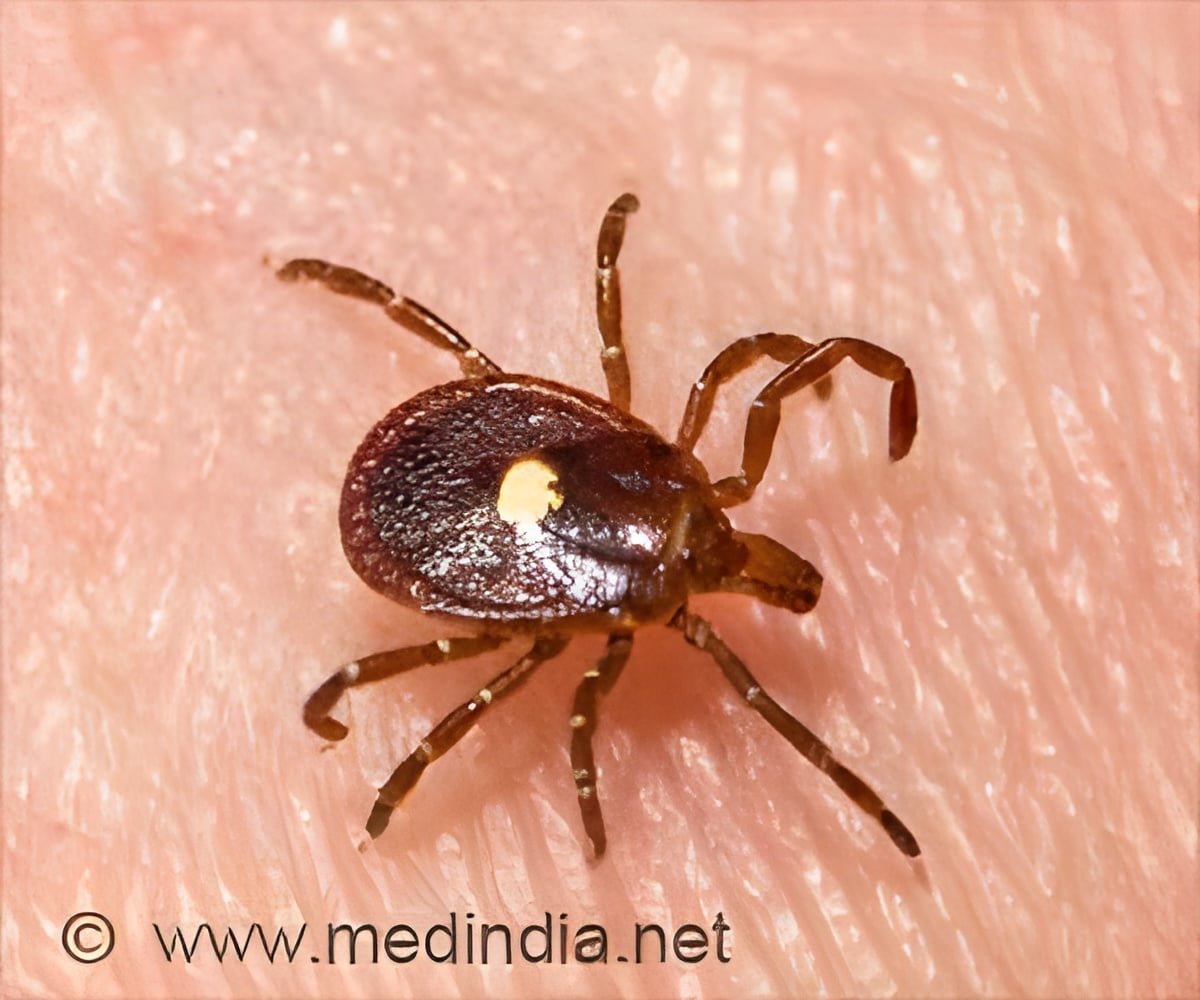
Martha’s Vineyard Hospital is conducting a two-year study of up to 300 residents exposed to lone star ticks to determine why some develop alpha-gal syndrome, a potentially life-threatening allergy to mammalian meat and related products.

Martha’s Vineyard Hospital has begun recruiting residents for what it describes as a first-of-its-kind study of alpha-gal syndrome, or AGS.
Researchers will follow up to 300 people for two years after exposure to lone star ticks. The aim is to determine how frequently AGS develops, which biological or environmental factors influence risk and how the immune system changes after a tick bite.
The study will also examine how the condition affects diet, daily activities, healthcare use and quality of life.
Unlike a one-time survey, a longitudinal study follows the same participants repeatedly. This allows investigators to compare immune markers and symptoms at different stages rather than relying entirely on memories of previous tick bites or allergic reactions.
The research is being led by infectious-disease specialist Dr Jacob Lemieux of Mass General Brigham and Dr Ellen McMahon, chief of medicine and ambulatory medical director at Martha’s Vineyard Hospital.
Advertisement
Researchers Want to Know Who Develops the Allergy—and Why
In the United States, AGS is most commonly associated with bites from the lone star tick. The tick’s saliva can trigger the immune system to produce immunoglobulin E, or IgE, antibodies against alpha-gal.
Alpha-gal—short for galactose-alpha-1,3-galactose, is a sugar molecule naturally present in most mammals but not in humans.(2✔ ✔Trusted Source
About Alpha-gal Syndrome
After sensitization, some people develop allergic reactions when they eat beef, pork, lamb, venison or other mammalian meat. Depending on individual sensitivity, reactions may also occur after exposure to dairy, gelatin, mammalian fat or certain medical and consumer products containing animal-derived ingredients.
However, not everyone bitten by a lone star tick develops alpha-gal antibodies, and not everyone with the antibodies develops clinical AGS. Understanding these differences is one of the study’s central goals.
Researchers hope to answer:
- Who becomes sensitized after lone star tick exposure?
- Which sensitized individuals develop allergic symptoms?
- Do repeated tick bites increase the risk or severity?
- Are particular immune or inflammatory markers predictive?
- Do age, health, environment or other demographic factors influence risk?
- How does sensitivity change over time?
Identifying reliable predictors could eventually help clinicians determine which recently exposed patients require closer monitoring.
Advertisement
Study Enrols 300 Martha’s Vineyard Residents
The study will enroll Martha’s Vineyard residents aged 15 or older who live on the island for at least three months each year. Pregnant individuals are eligible, although all participants must meet the study’s other inclusion criteria.
According to The Martha’s Vineyard Times, participants must have had a recent lone star tick or larval exposure supported by the tick’s appearance, bite characteristics, a photograph, a saved tick or a clinician’s assessment.
After an initial evaluation, participants will return at approximately three, six, twelve, eighteen and twenty four months. Additional visits may occur after suspected allergic reactions.
Assessments will include medical-history reviews, blood tests and other measurements designed to track immune responses, sensitization and symptoms.
Because the project follows participants for two years and requires later analysis, investigators caution that clinically useful results may take several years to emerge.(1✔ ✔Trusted Source
Martha’s Vineyard Hospital launches first study of alpha-gal syndrome following lone star tick exposure
Alpha-Gal Testing Has Increased Sharply on the Island
The study begins as clinicians report growing concern about lone star ticks and possible AGS on Martha’s Vineyard.
Hospital testing figures reported by The Boston Globe show how rapidly demand has increased. Martha’s Vineyard Hospital performed about 80 alpha-gal tests in 2021, compared with more than 1,600 in 2025. Approximately 44% of the 2025 tests were positive.
By July 31, 2026, the hospital had conducted more than 950 tests during the year, with nearly 60% producing positive results.
These figures signal substantial exposure and clinical concern, but they should not be interpreted as confirmed case counts. A positive antibody test does not by itself establish that a person has alpha-gal syndrome.
The hospital’s tick clinic, which opened in June, had already evaluated approximately 250 patients by late August, according to local reporting.(1✔ ✔Trusted Source
Martha’s Vineyard Hospital launches first study of alpha-gal syndrome following lone star tick exposure
Clinicians told WCVB that AGS had changed from a relatively rare diagnosis on the island to a condition encountered far more frequently over the past year.
Advertisement
A Positive Blood Test Does Not Always Mean Alpha-Gal Syndrome
Diagnosing AGS requires more than detecting alpha-gal-specific IgE antibodies.
The CDC states that diagnosis should combine:
- A detailed history of symptoms and possible triggers
- A physical and clinical assessment
- Blood testing for alpha-gal-specific IgE antibodies
- Additional allergy testing when appropriate
A person who has alpha-gal antibodies but no compatible allergic symptoms is considered sensitized rather than necessarily having AGS.
This distinction is important because unnecessary diagnosis can lead people to eliminate meat, dairy and other foods without a proven medical need.
A 2026 CDC analysis of blood donors found that alpha-gal antibodies were relatively common in some states with established lone star tick populations. However, the report stressed that only a small minority of antibody-positive individuals develop clinical AGS.
The Martha’s Vineyard study is designed to examine this gap directly by tracking people from tick exposure through later immune changes and possible symptoms.
Delayed Reactions Can Complicate Diagnosis
Alpha-gal reactions generally appear two to six hours after exposure to red meat, dairy or another mammalian product.
Symptoms may include hives, swelling, stomach pain, vomiting, diarrhoea, breathing difficulty, dizziness, low blood pressure or anaphylaxis.
Symptoms can begin weeks or months after the triggering tick bite and may vary between exposures, making AGS difficult to recognise.(1✔ ✔Trusted Source
Martha’s Vineyard Hospital launches first study of alpha-gal syndrome following lone star tick exposure
Severe Reactions Require Emergency Care
Breathing difficulty, throat or tongue swelling, faintness or other signs of anaphylaxis require immediate emergency assistance. Patients prescribed epinephrine should use it according to their emergency plan and still seek urgent medical care.
Repeated delayed reactions should be assessed by an allergist. People should not deliberately consume a suspected trigger to confirm the diagnosis because a previously mild reaction does not guarantee future safety.
Management Depends on Individual Triggers
There is currently no vaccine or established cure for AGS. Treatment focuses on avoiding mammalian meat and any additional products—such as dairy, gelatine, mammalian fat or certain medicines that cause reactions.
As sensitivity varies, dietary restrictions should be guided by a knowledgeable clinician.
Some patients who avoid further tick bites may eventually tolerate certain products again, but reintroduction requires medical guidance.
Preventing New Tick Bites Remains Essential
Additional tick bites may trigger sensitization, worsen an existing allergy or reactivate symptoms.
The CDC recommends using an EPA-registered repellent, treating clothing with permethrin, avoiding tall grass and brush, checking the body and pets after outdoor activity and showering after returning indoors.
A Second Study Will Compare Regional Exposure
Researchers will also analyze approximately 1,500 blood samples from Martha’s Vineyard, Nantucket and Boston to measure regional alpha-gal antibody prevalence.
The results, expected in 2027, may show whether sensitization is particularly common on the islands. However, positive antibodies do not necessarily mean a person has symptomatic alpha-gal syndrome.
The National Burden Remains Unclear
More than 110,000 suspected US cases were identified between 2010 and 2022, but the CDC estimates that as many as 450,000 people may have been affected.
Limited clinician awareness, missed diagnoses and the absence of national reporting make the true burden difficult to determine.
Increasing tick exposure and improved recognition may both be contributing to rising diagnoses.
Long-Term Research Could Improve Patient Care
By following people from tick exposure through sensitization and possible symptoms, the Martha’s Vineyard study may help identify those at greatest risk and prevent unnecessary dietary restrictions among people who are antibody-positive but symptom-free.
Until stronger evidence becomes available, the priorities remain preventing tick bites, recognizing delayed allergic reactions and obtaining a clinical evaluation rather than relying on a blood test alone.
References:
- Martha’s Vineyard Hospital launches first study of alpha-gal syndrome following lone star tick exposure- (https://www.eurekalert.org/news-releases/1141114)
- About Alpha-gal Syndrome- (https://www.cdc.gov/alpha-gal-syndrome/about/index.html)
Source-Medindia