

Close Menu

    Subscribe to Updates

    Get the latest news information from worldwide businesses.

    What's Hot

    Michigan man sentenced 30 years for killing best friend on wedding day

    May 13, 2026

    30-mile-high clouds of acid on Venus are made by the largest ‘hydraulic jump’ in the solar system

    May 13, 2026

    What It Takes to Design the Stage for Eurovision, According to the Set Designer Who Has Done It 10 Times

    May 13, 2026
    Facebook Instagram YouTube LinkedIn X (Twitter)
    Trending
    • Michigan man sentenced 30 years for killing best friend on wedding day
    • 30-mile-high clouds of acid on Venus are made by the largest ‘hydraulic jump’ in the solar system
    • What It Takes to Design the Stage for Eurovision, According to the Set Designer Who Has Done It 10 Times
    • Unitree will sell you a massive ‘transformable mecha’ for $650,000
    • Inflation in driver’s seat likely to stall discretionary spend
    • Uncertainty scars J&K’s economy and impacts banking, but resilience here is remarkable: Amitava Chatterjee, J&K Bank
    • Alphabet is the top holding of this five-star fund that is also finding 240% gains in the ‘unsexy’ side of the AI buildout
    • Some Climate Shocks Can Increase the Likelihood of War
    Newspublicly
    • About Us
    • Advertise & Partner with us
    • Pitch Your Story
    • Contact Us
    Facebook Instagram LinkedIn X (Twitter)
    Subscribe
    • Home
    • World News
      • Asia
      • India
      • USA
      • UK & Europe
      • Middle East
    • Economy & Business
      • Global Economy
      • Corporate & Industry
      • Finance & Markets
      • Policy & Trade
    • Technology
      • Gadgets & Devices
      • Software & Apps
      • AI & Machine Learning
      • Robotics & Automation
    • Health & Medicine
      • Fitness & Nutrition
      • Research & Innovation
      • Disease & Treatment
      • Doctors, Clinics & Patient Care
    • Travel & Tourism
    • Automobile
      • Electric & Hybrid Vehicles
      • Auto Industry Insights
    • Sports
    • More
      • Education
      • Real Estate
      • Environment & Climate
      • Space & Astronomy
      • War & Conflicts
    Newspublicly
    Home»More»Space & Astronomy»‘Like putting a microscope into the core of the sun’: World’s 1st space-based neutrino detector launches to orbit
    Space & Astronomy

    ‘Like putting a microscope into the core of the sun’: World’s 1st space-based neutrino detector launches to orbit

    Divya SharmaBy Divya SharmaMay 13, 2026No Comments5 Mins Read0 Views
    Share
    Facebook Twitter LinkedIn Copy Link WhatsApp


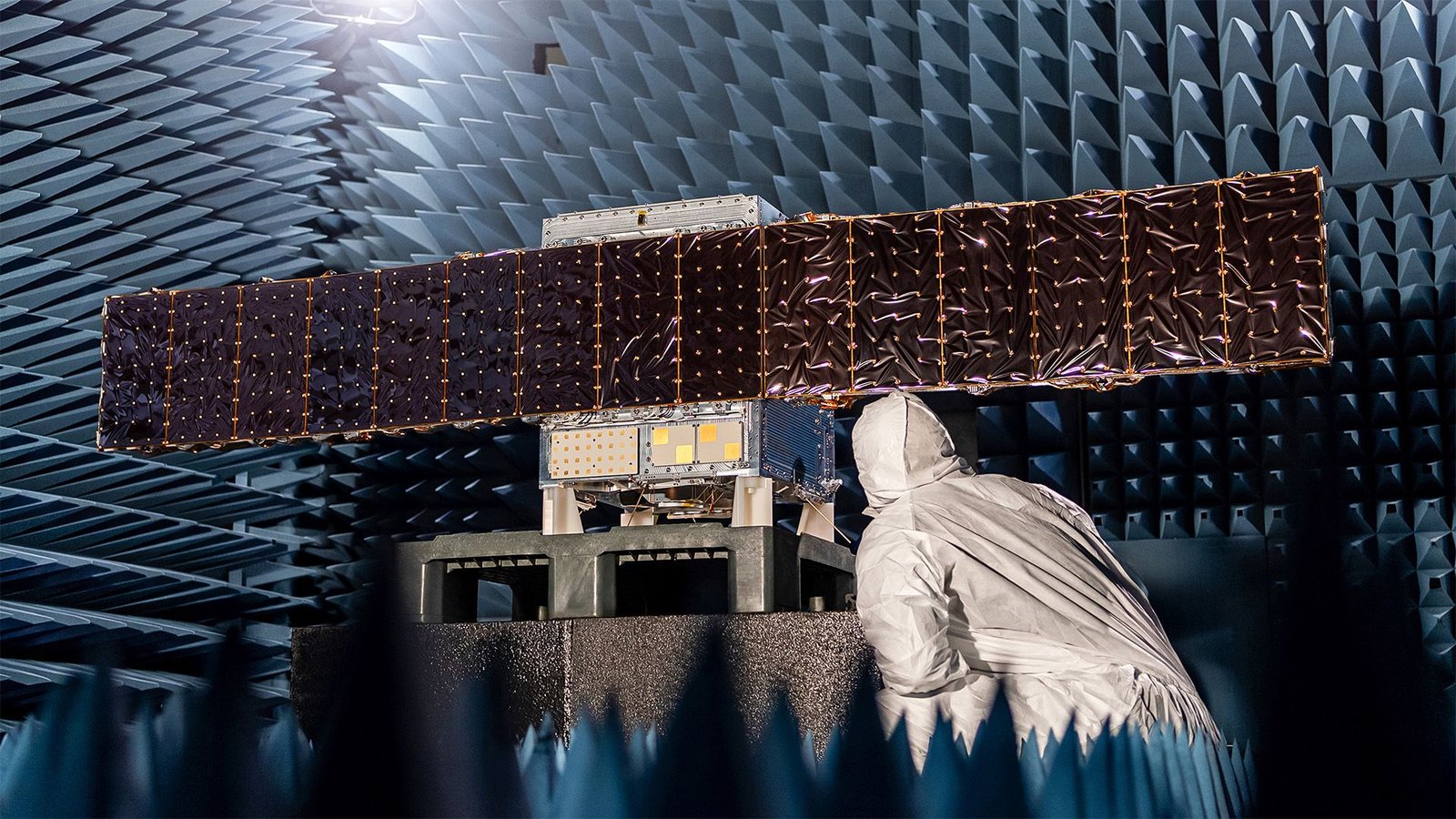
    The world’s first space-based neutrino detector launched to space last week to study elusive neutrino particles that constantly bombard Earth. The mission will test technology that could help researchers in the future to unravel hidden processes taking place deep inside the sun.

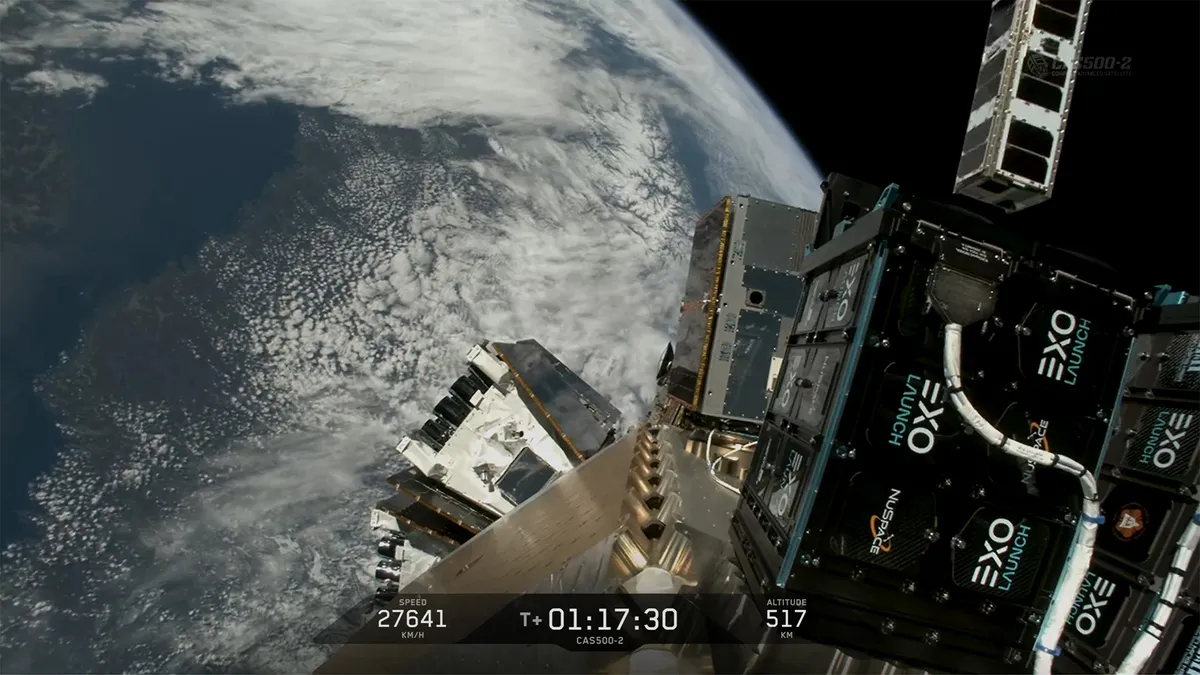
    The detector, made of crystals of gallium and tungsten, is embedded in a 3U cubesat (about 12 inches long and 4 inches wide, an equivalent to 30 and 10 centimeters), which will orbit the planet at the altitude of 310 miles (500 kilometers) for about two years. The small instrument rode to orbit on the SpaceX CAS500-2 rideshare mission on May 3.

    The project, called SNAPPY (for Solar Neutrino Astro-Particle PhYsic), was conceived by Wichita State University professor of physics and mathematics Nickolas Solomey. The project aims to validate the underlying technology for a future mission that could someday take a neutrino detector to the vicinity of the sun. “Neutrinos on Earth are pretty rare, so to detect neutrinos on Earth, you need very big detectors,” Solomey told Space.com. “But closer to the sun, the number of neutrinos is a thousand and more times larger than here on Earth, which means that a one kilogram detector that we launch on a spacecraft and put closer to the sun is going to act like a thousand-kilogram detector here on Earth.”


    You may like

    Neutrinos are near massless particles that emerge during natural nuclear decay, in nuclear fission reactions such as those taking place in nuclear reactors, and in nuclear fusion processes inside stars. Despite being the most abundant particles in the universe (tens of trillions of neutrinos pass through your body every second, according to the U.S. Department of Energy), neutrinos are notoriously difficult to detect.

    Their elusive nature is caused by their barely there mass and lack of electric charge. To register the presence of neutrinos on Earth usually requires massive detectors buried deep underground. The neutrino’s sparse reactions with matter are caused by the weak nuclear force, which guides the process of radioactive decay.

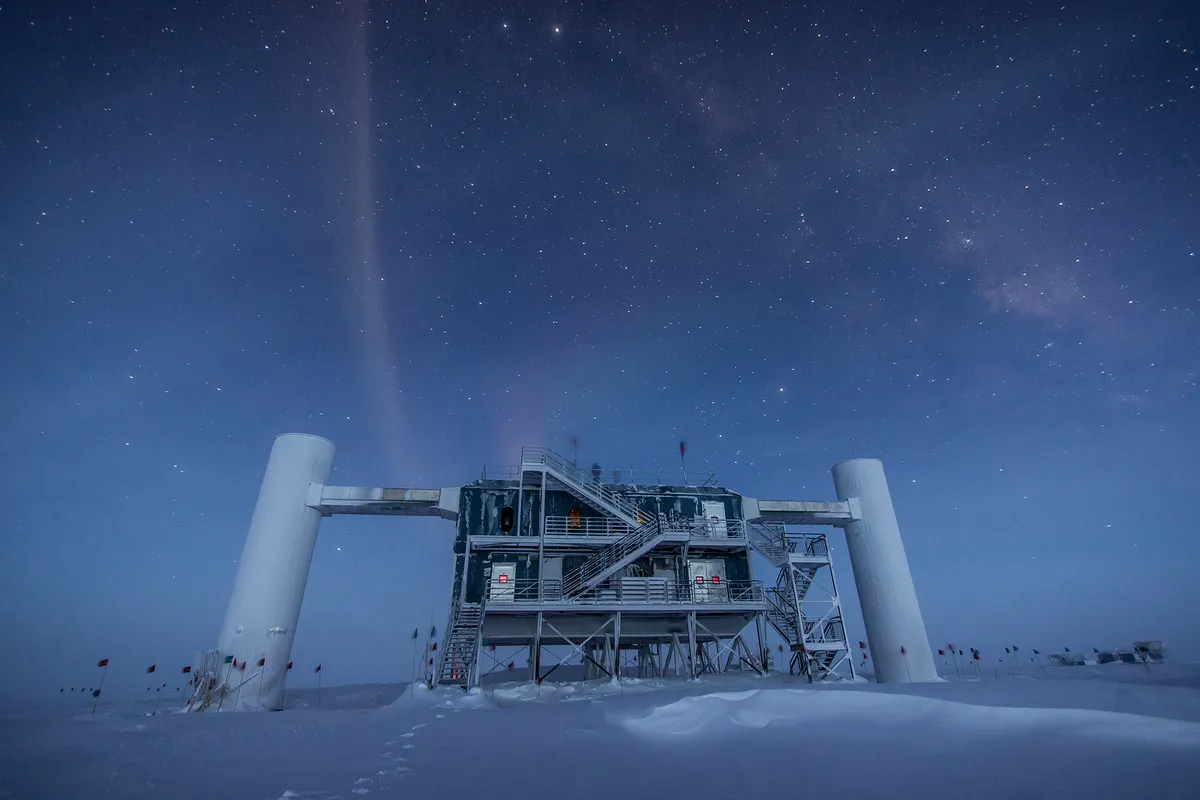
    When a neutrino interacts with the nuclei of atoms, it transforms into an electron and a couple of more exotic particles known as muons and tau particles. To make sure the muons and electrons detected by the detectors really come from neutrino interactions, the detectors need to be placed deep underground where other cosmic particles cannot reach. The world’s largest neutrino detector, China’s Jiangmen Underground Neutrino Observatory, is buried 2,300 feet deep (700 meters) underground. The IceCube Neutrino Observatory on the South Pole sits even deeper — between 4,750 and 8,040 feet (1,450 and 2,450 meters) deep in the ice sheet.

    The universe is awash with neutrinos that have been cruising through space since the Big Bang. But many also come from inside the sun. Yet, others reach our planet after being thrust into space in distant supernova explosions (the final blasts of stars that run out of fuel in their cores).
    Space

    an industrial-looking building covered in catwalks and stairwells sits on a snow-covered tundra

    The IceCube Neutrino Observatory in Antartica. (Image credit: Courtesy of IceCube Neutrino Observatory)

    The high concentrations of neutrinos near the sun is what interests Solomey. The Snappy detector, currently undergoing testing in orbit, has a simple purpose — to validate that neutrino detection in space works. The gallium-based detector aboard the cubesat is also more sensitive to neutrino impacts than the argon-based detectors mostly used on Earth.

    Solomey hopes that if the experiment proves successful, it might persuade NASA to place a neutrino detector on a possible future mission towards the sun.

    “We could do a huge amount of solar neutrino interaction detections, but we could also increase the position resolution to get the image of the solar fusion shells that are around the core,” Solomey explained. “We could study particle physics, the transport of the solar neutrinos as they get out of the sun and head towards deep space and some of them go towards Earth.”

    What to read next

    an illustration of a cube-shaped spacecraft with two wing-like solar panels

    The SNAPPY cubesat is deployed during SpaceX’s CAS500-2 rideshare mission on May 3. (Image credit: Kongsberg/NanoAvionics)

    Because of the exceptional sensitivity of the gallium-based detector, Solomey thinks the team might be able to catch even the less energetic neutrinos that evade Earth-based detection.

    Neutrinos come in different “flavors” based on the processes that created them. Solomey thinks that by analyzing en masse the neutrino flux streaming from the sun, researchers could open a unique window into the life-giving fusion processes that take place deep inside the star’s core, far away from the reach of any human-made scientific instruments.
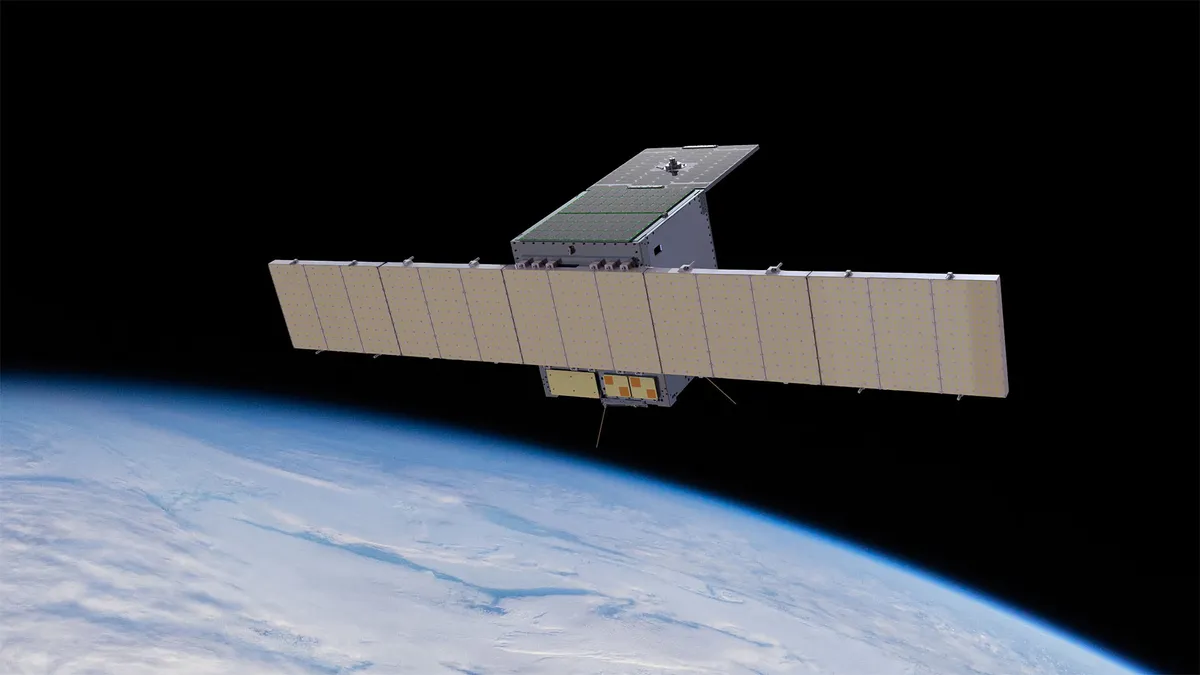
    an illustration of a cube-shaped spacecraft with two wing-like solar panels

    An illustration of the SNAPPY neutrino detector in orbit. (Image credit: Kongsberg/NanoAvionics)

    Because neutrinos barely interact with matter, they emerge from the immense depths of the sun within seconds of being born, said Solomey. On the other hand, scientists estimate that it takes some 100,000 years for the physical matter to bubble up the 435,000 miles (700,000 kilometers) from the sun’s core to its surface.

    “It’s like putting a microscope into the core of the sun,” said Solomey. “There are different types of fusion processes that occur in different layers away from the sun’s core, and we could look at and study the structure of the solar fusion core looking at these different kinds of neutrinos.”


    Source link

    Divya Sharma
    • Website

    Divya Sharma is a content writer at NewsPublicly.com, creating SEO-focused articles on travel, lifestyle, and digital trends.

    Related Posts

    30-mile-high clouds of acid on Venus are made by the largest ‘hydraulic jump’ in the solar system

    May 13, 2026

    Cost estimate for ‘Golden Dome’ missile defense system balloons to $1.2 trillion

    May 13, 2026

    ‘Star Wars: Galactic Racer’: Release date, trailers, gameplay & everything we know about the return of podracing

    May 13, 2026
    Leave A Reply Cancel Reply

    Demo
    Top Posts

    “Inside Gemini Robotics 1.5: How Robots Learn to Reason & Act

    November 22, 202524 Views

    How US Tariffs Are Reshaping the Global Growth Landscape?

    November 21, 202518 Views

    Pakistani Journalist Laughing at Tejas Fighter Jet Crash at Dubai Airshow Sparks Massive Outrage Worldwide

    November 23, 202517 Views

    Vibe-Coding Boom: How Non-Coders Build Apps With AI Agents

    November 22, 202515 Views
    Don't Miss

    Michigan man sentenced 30 years for killing best friend on wedding day

    May 13, 20263 Mins Read0 Views

    NEWYou can now listen to Fox News articles! A Michigan man will spend decades behind…

    30-mile-high clouds of acid on Venus are made by the largest ‘hydraulic jump’ in the solar system

    May 13, 2026

    What It Takes to Design the Stage for Eurovision, According to the Set Designer Who Has Done It 10 Times

    May 13, 2026

    Unitree will sell you a massive ‘transformable mecha’ for $650,000

    May 13, 2026
    Stay In Touch
    • Facebook
    • Twitter
    • Instagram
    • YouTube
    • LinkedIn
    • WhatsApp

    Subscribe to Updates

    Get the latest creative news from SmartMag about art & design.

    Demo
    NEWSPUBLICLY
    Facebook X (Twitter) Instagram LinkedIn

    Home

    • About Us
    • Leadership
    • Advertise & Partner With Us
    • Pitch Your Story
    • Media Kit & Pricing
    • Career
    • FAQs

    Guidelines

    • Editorial & Submission
    • Partnership
    • Advertising & Sponsor
    • Intellectual Property Policy
    • Community & Comment
    • Security & Data Protection
    • Send Your Opinion

    Quick Links

    • Cookie Policy
    • Payment & Billing Terms
    • Refund & Cancellation
    • Copyright Policy
    • Complaint & Support
    • Sitemap
    • Contact Us

    Subscribe Us

    Get the latest news and updates!

    Copyright © 2026 Newspublicly (DIGITALIX COMMUNICATION). All Rights Reserved.
    • Privacy Policy
    • Terms of Use
    • Disclaimer