

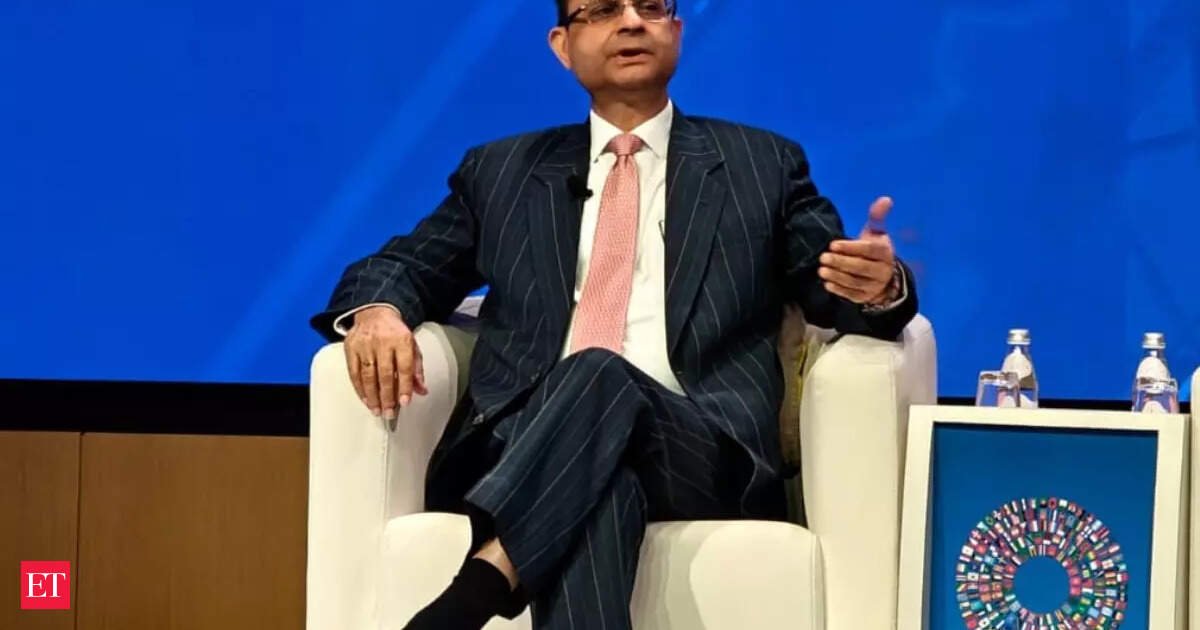
Malhotra said the RBI has been maintaining a neutral stance since June 2025, which gives it the flexibility to remain nimble in approach and respond judiciously to incoming data and information.
Also read: Rs 3 a litre fuel price hike cuts losses by 25 per cent; daily loss drops to Rs 750 crore
During a panel discussion titled ‘Monetary Policy in a Time of Heightened Uncertainty’ jointly organised by the Swiss National Bank (SNB) and the International Monetary Fund (IMF) in Switzerland last week, the governor said India is used to frequent supply shocks.
“In a supply shock, we generally try to ‘look through’ the first-round impact, if we believe that it is transitory and will dissipate quickly.

“However, if sustained increase in prices drives up wages, production and transportation costs (second-round effects) and leads to generalisation of inflation pressures, the ‘look through’ approach is no longer optimal, requiring tighter policy,” Malhotra said.
The wide tolerance band of 200 basis points around the inflation target of 4 per cent provides the necessary policy space to the RBI to accommodate supply shock-induced volatility in the short run, he said.At the same time, there is a focus on the medium-term objective of price stability, he added.
“…we are aware that the global situation is still fluid, and its macroeconomic implications are still unfolding.
Also read: India’s fertiliser subsidy bill for FY27 may rise by Rs 70,000 cr on West Asia crisis, official says
“We are keeping a close vigil on whether and when the supply shock can become embedded in the general price level that may warrant monetary policy action,” Malhotra said.
It is important that policy frameworks focused on price stability are flexible enough to allow central banks to look through transitory shocks while remaining agile and nimble, maintaining a broad policy stance, and avoiding making firm commitments on the future path of policy, the governor added.
In such circumstances, he said, a broad approach is to be even more data dependent and continuously reassess the balance of risks. Whether to look through or not depends on the duration of inflation and whether it is generalised in the economy.
Regarding the current energy shock, he said, the RBI clearly articulated in the MPC resolution of April 2026 that the economy is confronted with a supply shock, and it may be prudent to wait and watch the changing circumstances and the evolving growth-inflation outlook.
“We have been transparent and communicated the conditions which will necessitate the tightening of monetary policy,” a transcript released by the RBI on Monday quoted the governor as saying at the panel discussion.
The next meeting of the Monetary Policy Committee is scheduled for June 3 to 5, 2026.