

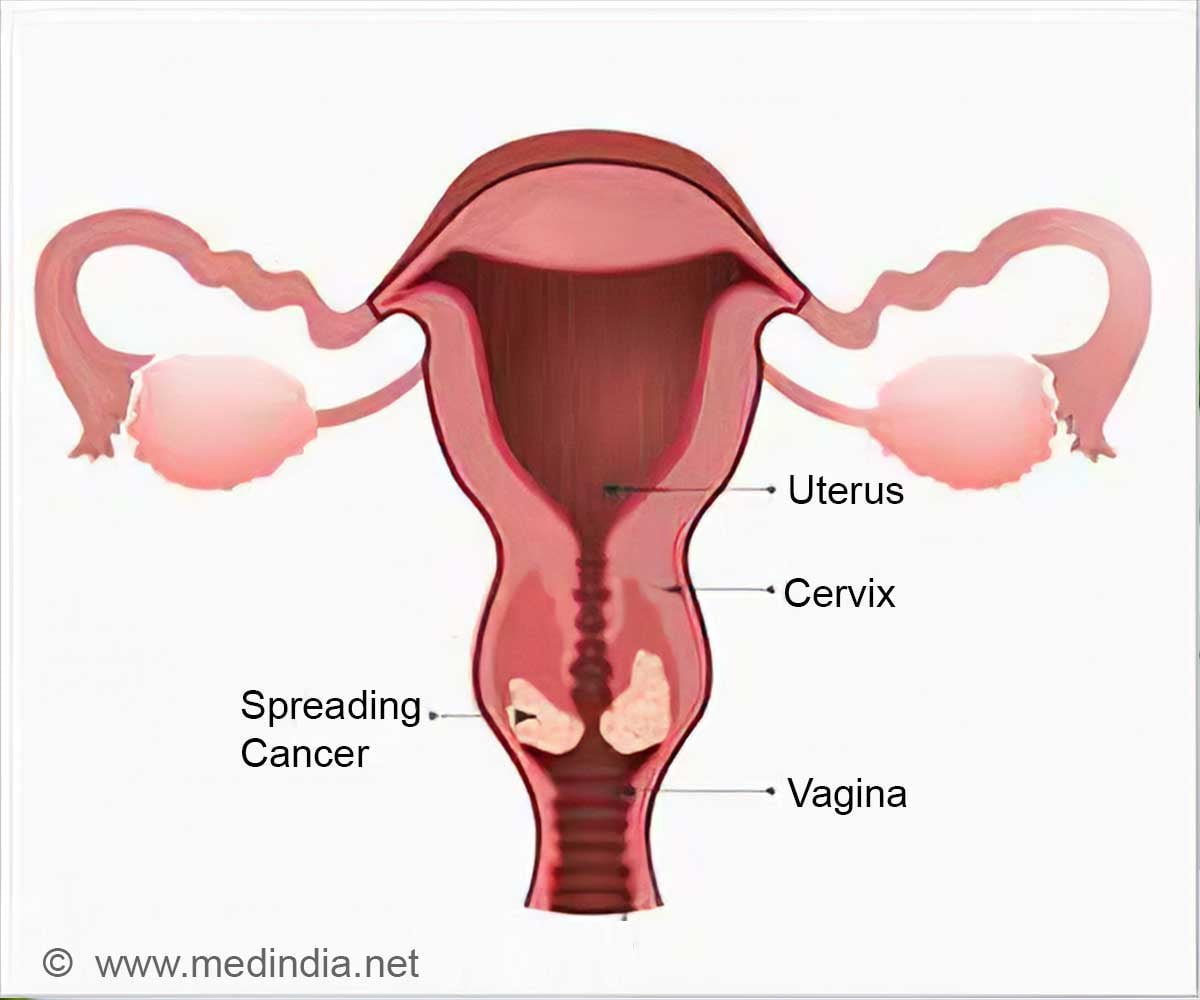
SHetA2 is India’s indigenous anti-HPV drug candidate for cervical precancer. Early studies are promising, and the drug is now in Phase I clinical testing.
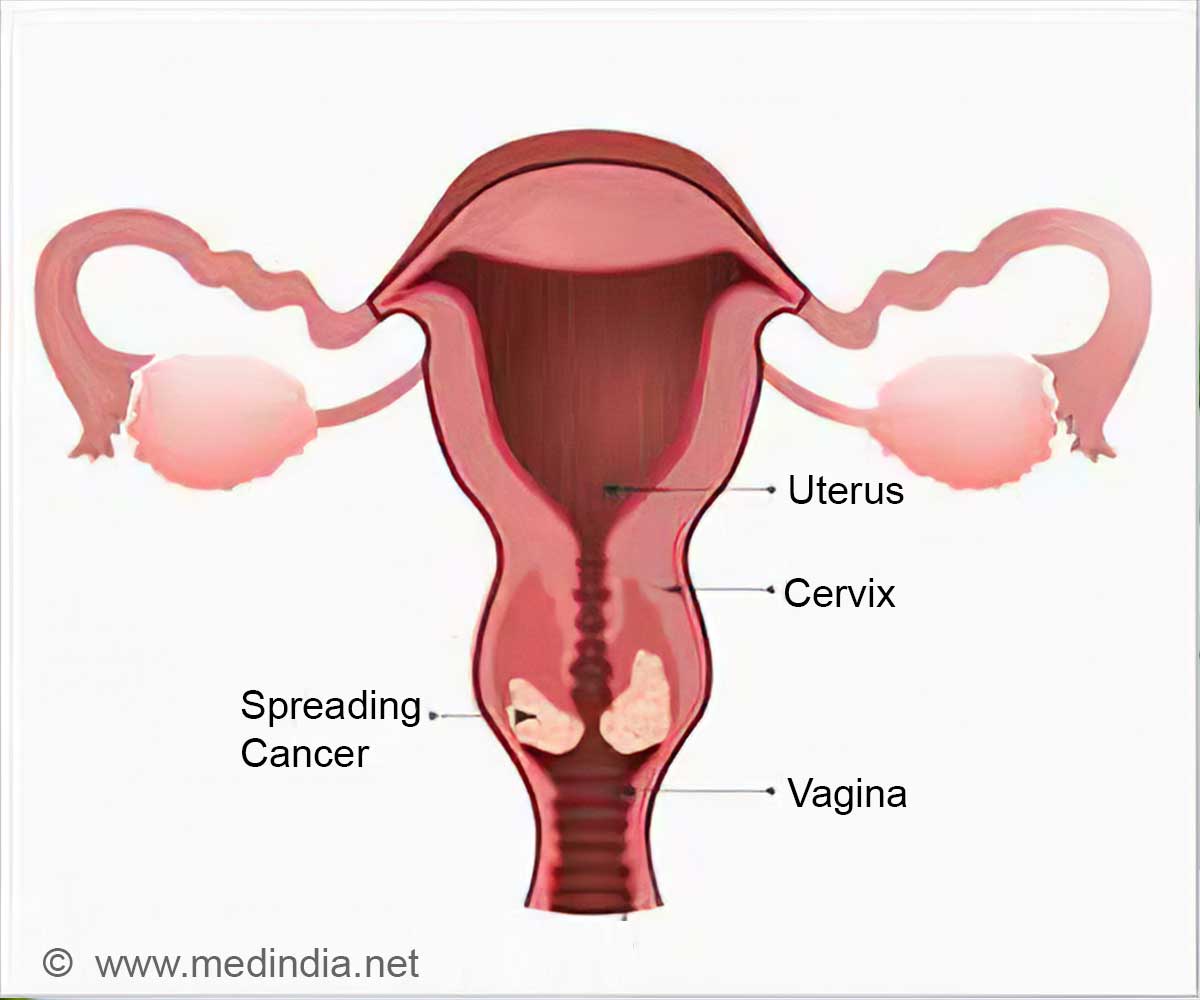
- SHetA2 is India’s first indigenous anti-HPV drug candidate
- The drug targets HPV-infected cells while sparing healthy tissue
- The drug candidate is currently being evaluated in a Phase I clinical trial
India’s fight against cervical cancer has entered a new phase with SHetA2, an investigational drug developed specifically to target human papillomavirus (HPV)-driven cervical disease (1✔ ✔Trusted Source
ICMR transfers three indigenous biomedical technologies to advance cancer and infectious disease solutions
).
According to the Indian Council of Medical Research (ICMR), SHetA2 is India’s indigenous anti-HPV therapeutic candidate for treating Cervical Intraepithelial Neoplasia (CIN)—a precancerous condition that can progress to cervical cancer if left untreated.
The drug has recently gained attention after ICMR licensed the technology to Emcure Pharmaceuticals Ltd. under its Medical Innovations Patent Mitra initiative, helping move years of publicly funded research toward large-scale development and future commercialization (2✔ ✔Trusted Source
Indo-US Clinical Trial of Investigational New Drug SHetA2 for Treatment of Cervical Intraepithelial Neoplasia Novel drug for anti-HPV therapeutics
SHetA2 was jointly developed by Dr. Showket Hussain of ICMR–National Institute of Cancer Prevention and Research (ICMR-NICPR) and Dr. Doris M. Benbrook of the Stephenson Cancer Center, University of Oklahoma, highlighting an important India-US scientific collaboration.
Advertisement
How Does SHetA2 Fight Cervical Cancer?
Unlike conventional treatments that remove or destroy abnormal cervical tissue, SHetA2 is designed to attack the biological processes that allow HPV-infected cells to survive and multiply.
According to the published mechanistic research study, SHetA2 selectively targets HPV-infected abnormal cells while causing minimal harm to healthy cells (3✔ ✔Trusted Source
Targeting HSP70-E7 Interaction with SHetA2: A Novel Therapeutic Strategy for Cervical Cancer
Nearly all cervical cancers are linked to persistent infection with high-risk human papillomavirus (HPV), especially HPV-16 and HPV-18.
According to a recent review, these viruses produce two proteins, E6 and E7, which disable the body’s natural tumor-suppressing proteins, allowing infected cells to grow uncontrollably and eventually develop into cancer (4✔ ✔Trusted Source
Recent advances in human papillomavirus vaccines and therapeutic strategies: Combating cervical and non-cervical cancers
SHetA2 interrupts this process through a different approach. The drug interferes with heat shock protein 70 (HSP70), a protein that helps stabilize the HPV E7 oncoprotein.
When this support is disrupted, the E7 protein breaks down, making it harder for HPV-infected cells to continue growing and survive.
Researchers also found that SHetA2 influences proteins involved in cell growth, metabolism, and programmed cell death (apoptosis). As a result, abnormal cervical cells stop dividing, lose their ability to multiply, and eventually die, while normal cervical cells are largely spared.
This targeted action is one of the reasons SHetA2 is considered a promising candidate for HPV-driven cervical disease.
Advertisement
What Makes SHetA2 Different from Current Cervical Cancer Treatments?
Most women diagnosed with high-grade cervical intraepithelial neoplasia (CIN) are treated using procedures such as loop electrosurgical excision (LEEP), cryotherapy, laser therapy, or conization (cone biopsy), which physically remove or destroy abnormal cervical tissue.
While these treatments are effective, they may affect healthy tissue and, in some cases, increase the risk of future pregnancy-related complications.
The table below highlights how SHetA2 differs from the current treatment options used for cervical precancer.
Advertisement
Comparison: Current Cervical Precancer Treatments vs SHetA2
| Feature | Current Treatments | SHetA2 (Investigational) |
|---|---|---|
| Main approach | Removes or destroys abnormal cervical tissue using procedures | Targets HPV-driven abnormal cells at the molecular level |
| What it acts on | Abnormal cervical tissue | HPV-infected cells and cancer-promoting pathways |
| Effect on healthy tissue | May remove or affect some surrounding healthy tissue | Designed to largely spare healthy cells |
| How it is given | Hospital or clinic-based procedures | Being developed as an oral medicine or vaginal suppository |
| Goal | Remove existing precancerous lesions | Stop HPV-infected abnormal cells from growing and progressing to cancer |
| Current status | Standard treatment used worldwide | Still undergoing Phase I clinical evaluation |
How Far Has SHetA2 Come in Research?
SHetA2 has progressed from laboratory research to animal studies and is now being tested in an ongoing Phase I clinical trial, marking an important step towards human use. However, researchers say larger clinical studies are still needed before the drug can become a standard treatment.
So far, researchers have found that SHetA2:
- Reduced the HPV E7 protein, helping slow the growth of HPV-positive cervical cancer cells.
- Triggered the death of abnormal cervical cells while largely sparing healthy cells.
- Reduced tumor growth in animal studies without major safety concerns.
- Advanced to a Phase I clinical trial to evaluate its safety and determine the appropriate dose in patients with advanced solid tumors, including cervical cancer.
If the ongoing trial continues to show positive results, SHetA2 could move into larger Phase II studies to evaluate how well it works in women with HPV-related cervical disease.
Why Does India Need Better Cervical Cancer Treatments?
India continues to shoulder one of the world’s highest cervical cancer burdens. The country recorded an estimated 127,526 new cervical cancer cases and 79,906 deaths, accounting for more than 65% of the cervical cancer burden in the WHO South-East Asia Region (5✔ ✔Trusted Source
Cervical cancer burden in India: A descriptive epidemiological study and policy insights
).
Despite being largely preventable, cervical cancer remains a major public health challenge because many women are diagnosed only after the disease has progressed.
Health experts say that HPV vaccination, regular cervical screening, and early treatment remain the most effective ways to reduce cervical cancer deaths. At the same time, innovative therapies are also needed for women who already have persistent HPV infection or precancerous cervical lesions that cannot be prevented by vaccination alone.
This is where SHetA2 could play an important role in the future. The indigenous drug candidate is being developed as a targeted therapy that may offer a less invasive treatment option for HPV-driven cervical disease.
If ongoing clinical trials confirm its safety and effectiveness, SHetA2 could complement—not replace—existing prevention strategies such as HPV vaccination and cervical cancer screening, particularly in countries like India where the disease burden remains high.
Frequently Asked Questions
Q: What is SHetA2?
A: SHetA2 is an investigational anti-HPV drug candidate developed to treat cervical precancer and help prevent its progression to cervical cancer.
Q: How does SHetA2, the cervical cancer drug candidate work?
A: It targets HPV-infected abnormal cells by disrupting the pathways that help them survive, while largely sparing healthy cells.
Q: Is SHetA2, the anti-HPV drug candidate approved for patients?
A: No. SHetA2 is still being studied and is currently undergoing a Phase I clinical trial.
Q: Can SHetA2 replace the HPV vaccine?
A: No. HPV vaccines help prevent HPV infection, while SHetA2 is being developed to treat women who already have HPV-related cervical disease.
Q: Who may benefit from SHetA2 in the future?
A: If approved, it may benefit women with HPV-related cervical precancer or early cervical disease.
Q: What is cervical intraepithelial neoplasia (CIN)?
A: CIN is a precancerous change in the cells of the cervix. If left untreated, it can develop into cervical cancer.
Q: Why is SHetA2 considered different from current cervical cancer treatments?
A: Unlike procedures that remove abnormal tissue, SHetA2 is designed to selectively target HPV-infected cells, making it a potential less invasive treatment.
References:
- ICMR transfers three indigenous biomedical technologies to advance cancer and infectious disease solutions – (https://www.pib.gov.in/PressReleasePage.aspx?PRID=2286902&lang=1®=48&)
- Indo-US Clinical Trial of Investigational New Drug SHetA2 for Treatment of
Cervical Intraepithelial Neoplasia Novel drug for anti-HPV therapeutics – (https://patentmitra.icmr.org.in/static/12May/One%20Pager%20Indo-US%20Clinical%20Trial%20of%20SHetA2_SH.pdf?) - Targeting HSP70-E7 Interaction with SHetA2: A Novel Therapeutic Strategy for Cervical Cancer – (https://pmc.ncbi.nlm.nih.gov/articles/PMC11633939/)
- Recent advances in human papillomavirus vaccines and therapeutic strategies: Combating cervical and non-cervical cancers – (https://www.sciencedirect.com/science/article/pii/S2352304225003691)
- Cervical cancer burden in India: A descriptive epidemiological study and policy insights – (https://www.sciencedirect.com/science/article/pii/S2590113325000513)
Source-Medindia