

The latest consumer price index (CPI) reading remained above the Reserve Bank of India’s medium-term inflation target of 4%. Inflation had crossed the central bank’s target in June after remaining subdued for a prolonged period.
RBI is mandated to maintain headline retail inflation at 4%, while allowing it to move within a tolerance band of 2% to 6%, for the five-year period from April 1, 2026, to March 31, 2031.
The August 5-7 Reuters poll of 40 economists had forecast retail inflation to rise to 4.50% in July from 4.38% in June.
July inflation also marked the highest reading since India adopted its revised CPI series with a new base year and updated consumption basket earlier this year.

Also Read: Indian companies are about to raise prices, putting RBI’s inflation outlook to test
Food inflation remains elevated
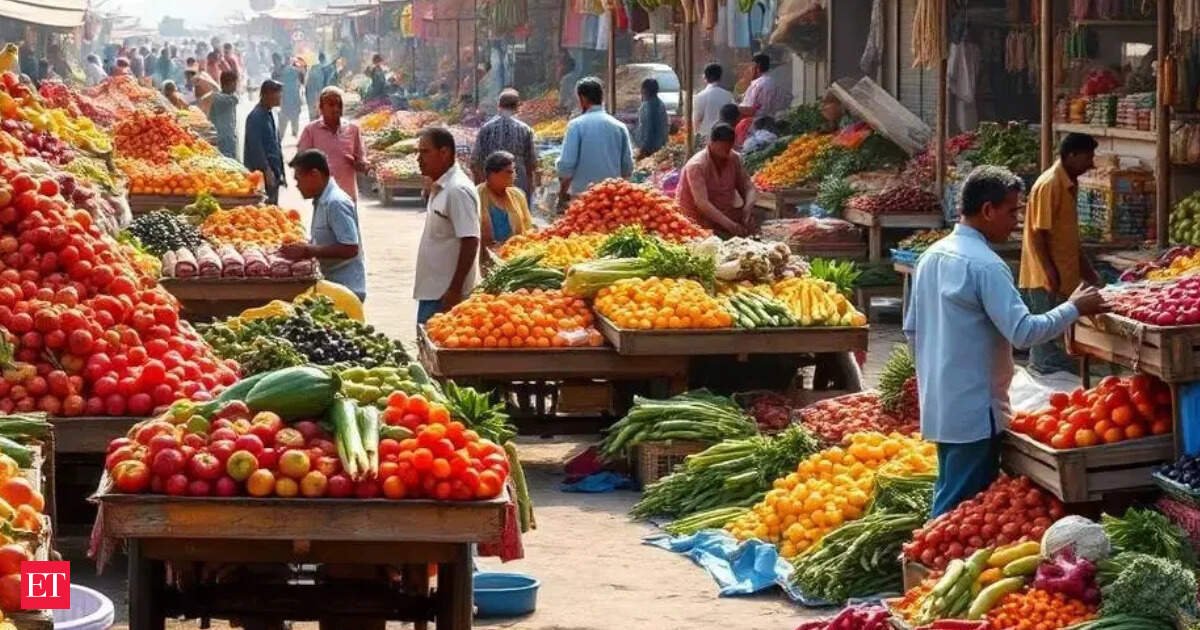
Food inflation, measured by the Consumer Food Price Index (CFPI), rose to 5.52% in July from 5.32% in June.Rural food inflation stood at 5.79%, while urban food inflation was lower at 5.05%.
The increase in food inflation was reflected in several key items. Inflation in onions rose to 22.54% in July from 4.73% in June, while garlic inflation climbed to 35.36% from 17.93%. Ginger inflation accelerated sharply to 83.62% from 50.41% in June.
At the same time, several vegetables recorded deflation. Potato prices fell 16.56% year-on-year in July, compared with a 20.34% decline in June. Lady’s finger inflation turned negative at 5.52%, compared with 5.54% inflation in June, while peas and tomatoes recorded deflation of 5.27% and 4.59%, respectively.
Other sectors
Transport inflation accelerated to 4.43% in July from 4.31% in June, while inflation in transport services for goods stood at 7.77%, compared with 7.70% in June.
Housing inflation stood at 2.22% in July, with rural housing inflation at 2.80% and urban housing inflation at 2.01%.
Among other major categories, inflation in restaurants and accommodation services stood at 7.72%, while clothing and footwear inflation was 3.38%.
Inflation in personal care, social protection and miscellaneous goods and services remained particularly high at 14.77%. This was driven in part by sharply higher prices for other personal effects, which recorded inflation of 43.54%.
Inflation in health stood at 1.34%, while education services inflation was 3.64%.
RBI FY27 inflation forecast
The Reserve Bank of India’s Monetary Policy Committee (MPC), at its August 5 meeting, trimmed its inflation forecast for FY27 to 5% from 5.1% projected in June, citing recent softening in global crude oil prices and easing supply-side pressures.
Quarter-wise, the RBI expects inflation at 4.1% in Q1, down from 4.2% earlier; 4.7% in Q2, revised from 5.1%; 5.9% in Q3, unchanged; and 5.5% in Q4, slightly higher than its earlier estimate of 5.4%.
The central bank said risks to the inflation outlook remain evenly balanced, with headline inflation expected to peak in the third quarter before moderating thereafter. The RBI also lowered its FY27 core inflation forecast to 4.3% from 4.7% projected earlier.
“The realised inflation for the first quarter, however, was marginally lower than projections, reflecting limited pass-through of cost pressures. The higher inflation is largely on account of food and fuel prices, with little sign of generalisation of price pressures so far.”
Core inflation, excluding precious metals, continues to remain benign, Malhotra said. “As projected earlier, headline inflation is expected to rise further in the near term and is likely to peak in the third quarter of this year, primarily due to food and fuel prices, before moderating thereafter. The underlying inflation, reflected in core inflation excluding precious metals, which has remained benign for some time, is expected to align with overall core inflation towards the end of the financial year.”
Malhotra last month said that inflation and price stability remain the RBI’s foremost priority. “Our primary mandate is inflation and price stability. Therefore, we will do whatever is required first to keep price stability and then, to see to what extent we can support growth,” he added.