

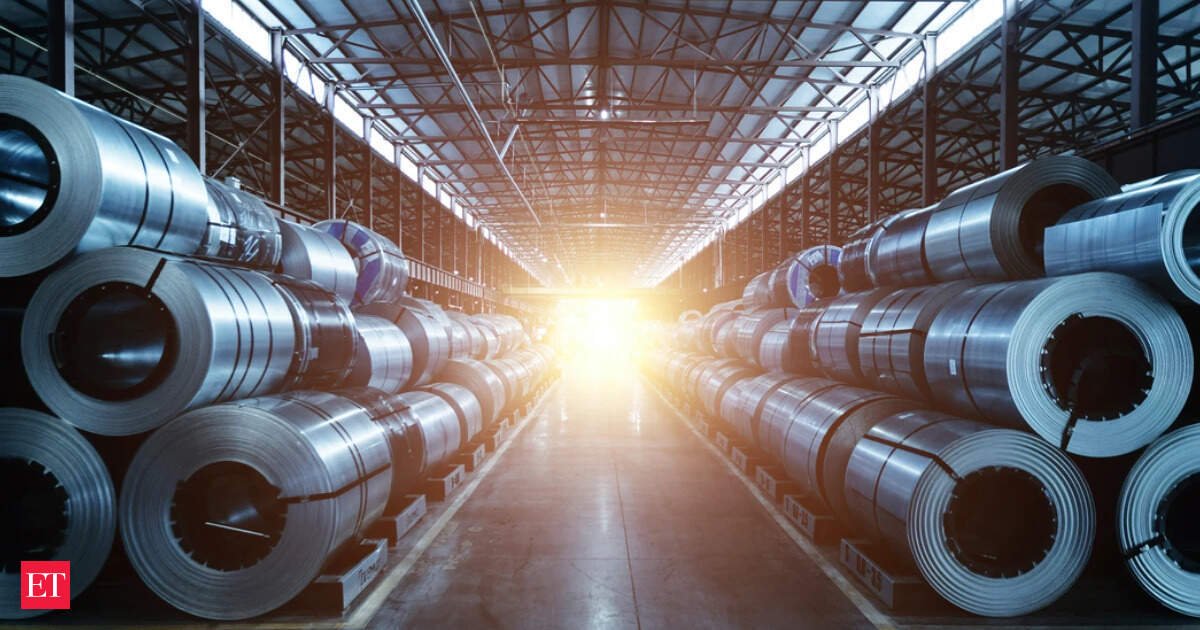
India, the world’s largest crude steel producer after China, ships roughly two-thirds of its steel to Europe, and the executives expect exports to the European Union and Britain to fall by as much as 40% this fiscal year after both markets tightened import rules.
The European Union unveiled quotas on June 30 to limit duty-free steel imports after introducing carbon charges in January on imports of steel and other emissions-intensive goods under its Carbon Border Adjustment Mechanism.
Britain also tightened tariff-free steel imports from July 1, although New Delhi says 85% of India’s exports to the country remain protected under their free trade agreement.
India shipped 6.6 million metric tons of finished steel in the fiscal year ended March 2026. Exports fell to 0.5 million tons in May, well below the average of the previous six months.

“With the UK, EU, US and several other markets tightening import quotas, and deploying tariffs and safeguard mechanisms, companies will have to place greater emphasis on markets where long-term demand visibility is more certain,” Abhyuday Jindal, managing director of Jindal Stainless, told Reuters.
Chinese steel is priced $52-$63 per ton below domestic grades, making it harder for Indian mills to absorb output diverted from export markets, the executives and analysts said.The government has launched an anti-dumping investigation into hot-rolled steel from China, Japan and Russia.
“The rise in low-priced and substandard imports, particularly from China or those of Chinese origin, is creating an uneven competitive environment for domestic manufacturers,” Jindal said.
A senior government official said India was the only major market where steel consumption remained strong.
Mills could seek anti-dumping measures to curb cheap imports, especially from China, said the official, who declined to be named because of the sensitivity of the matter.
Rapid economic growth and government infrastructure spending have prompted leading steel producers to continue expanding capacity. India aims to raise crude steel capacity to 400 million tons by 2035-36 from the current output of about 168 million tons.
“Tata Steel and JSW Steel are focusing the majority of their investments in India, which they see as a growth market,” said Hui Ting Sim, vice-president and senior analyst at Moody’s Ratings in Singapore. But she added that profit margins of Indian steelmakers were unlikely to improve unless there was a substantial hike in import duties.
Most of the new steelmaking capacity being added in India is based on expectations of domestic demand rather than exports, said Ravi Sodah, executive vice-president at Elara Capital in Mumbai.
Finished steel consumption has risen 55% over the past five years, outpacing the 42% increase in production, according to commodities consultancy BigMint.
Indian mills are also expected to target markets in East Asia and the Middle East to offset part of the decline in European shipments. In the Middle East they face growing competition from Chinese producers as well as local manufacturers, said Shankhadeep Mukherjee, principal analyst at London-based CRU Group.