

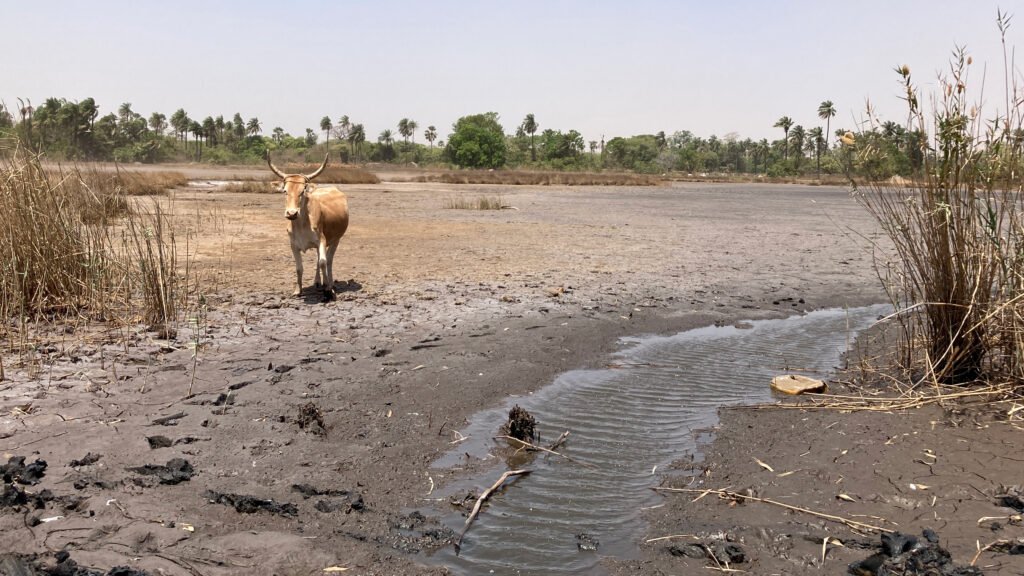
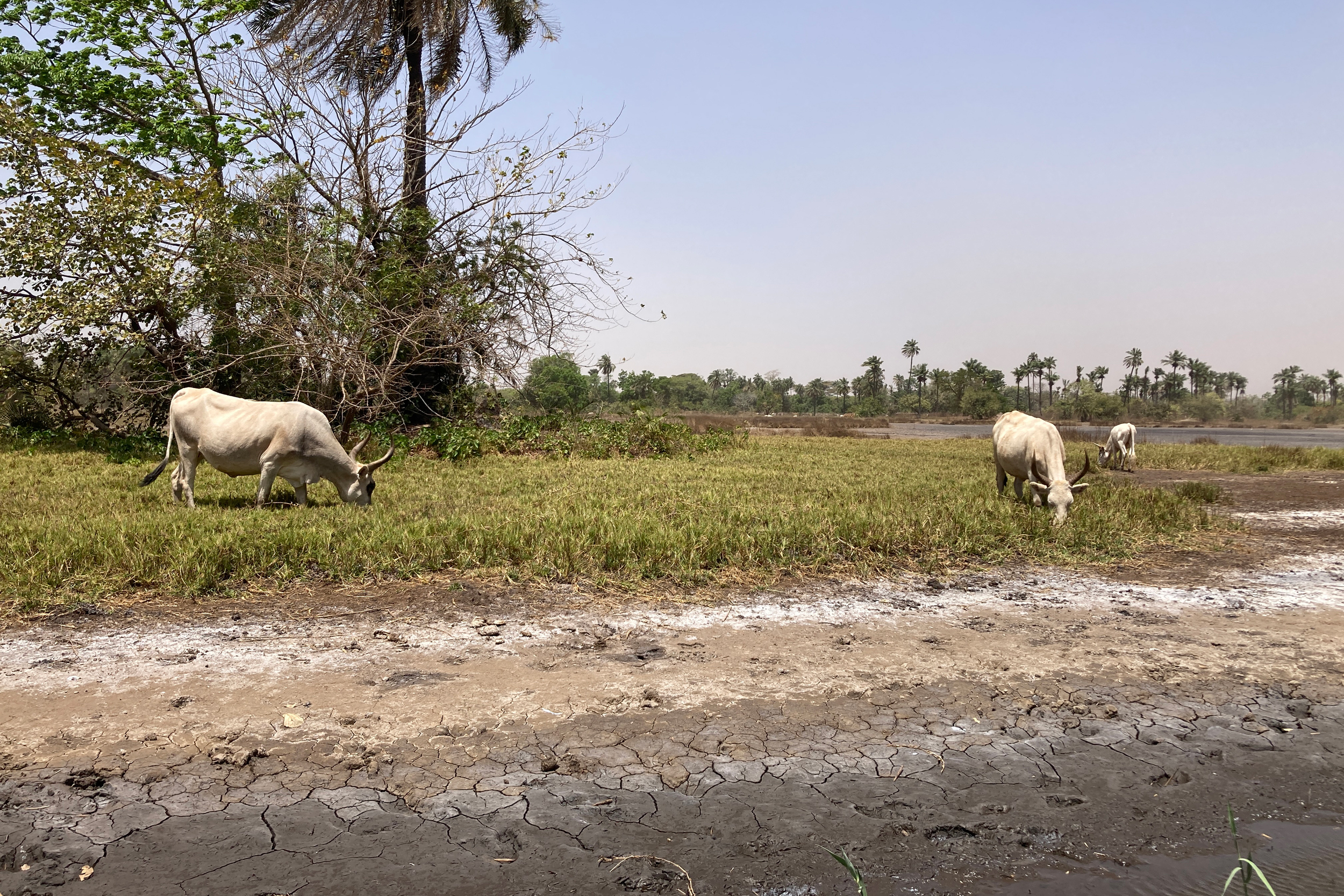
BANTANG KILLING, Gambia—In this little village in West Africa, Ebrima Nyan is watching his farmland slowly wither away. When Nyan, 47, was a teenager, the village grew all the rice it consumed, in a field alongside the Gambia River. Now that field lies dry and empty, after the river’s brackish water intruded, rainfall flagged and the soil became too salty for crops.
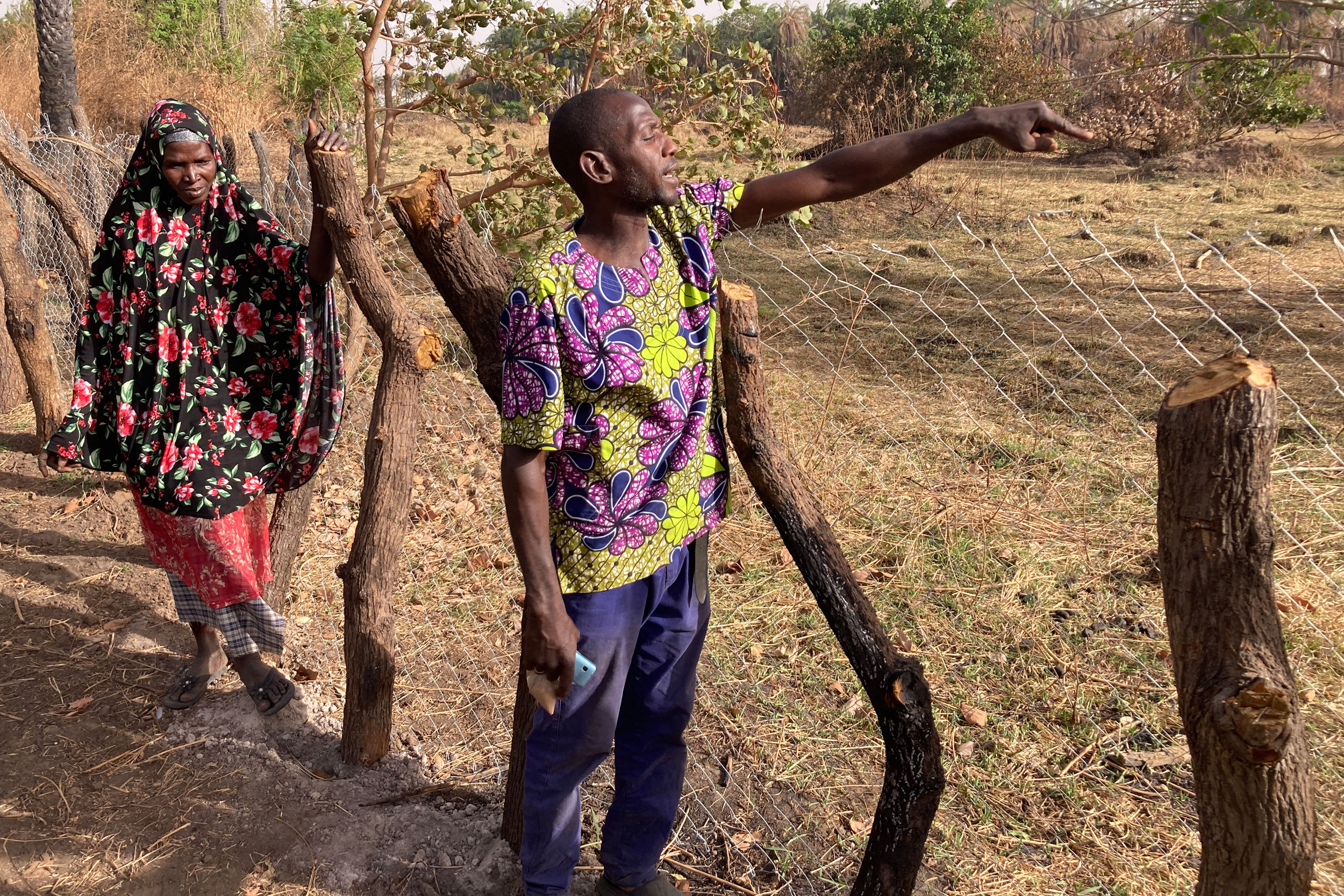
By the early 2020s, the salt problem had moved farther inland from the river, to a field where the village grew onions, peppers, cabbage and eggplant, Nyan said. Seeds rotted, leaves fell off, plants shriveled. Bantang Killing’s farmers decided to abandon the field five years ago, though they still hold out hope it could produce again, if the soil was treated and salt kept out.
“Even though you plant here, it will grow so small—not even grow to harvesting” size, Nyan said one spring afternoon, waving his arm at the fenced-off enclosure.
The Leading Edge of Climate Change
The little nation of Gambia is on the front lines of a global struggle with salt, as a combination of climate change and human activities push ocean waters further inland, threatening ecosystems, aquifers and agriculture.
Most of the salt intrusion is taking place along coastlines and deltas, where rising sea levels send saline water flooding ashore, seeping underground and changing the chemistry of nearby land. Droughts increase salinity too, since there is less rainfall to dilute the salt or flush it out. Both phenomena are expected to worsen with global warming.
Soil and aquifer salinity levels are also rising as the world’s coastal cities pump more fresh water out of the ground, in the process sucking ocean water in. In farming areas, the overuse of fertilizer can increase salt levels in soil as well.
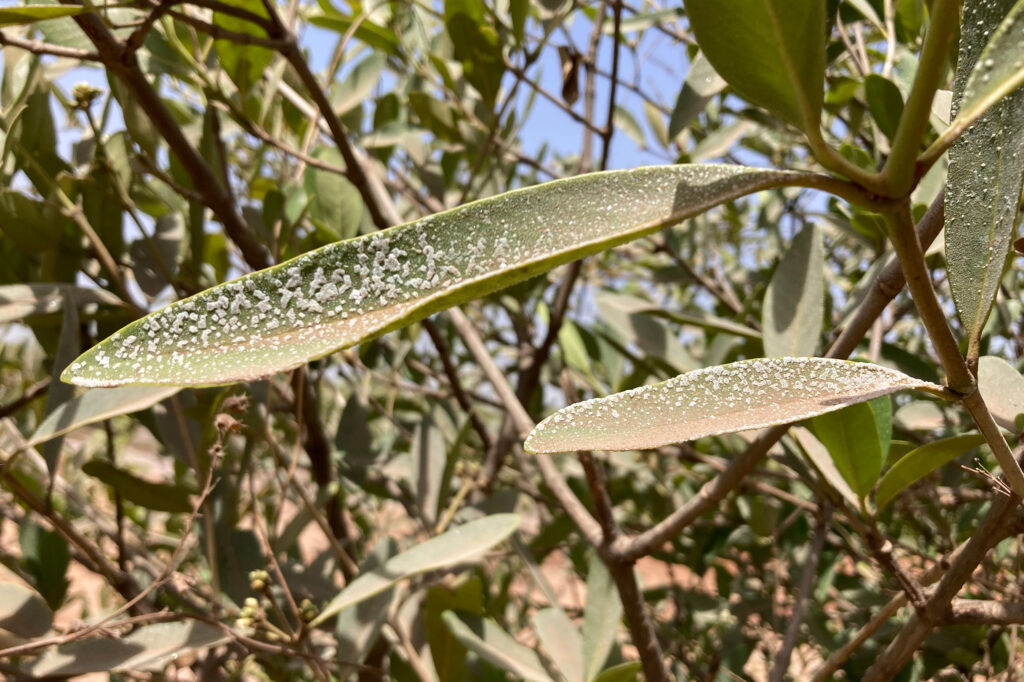
Sometimes the salt leaves streaks of white on the ground. But the encroaching salt front is often invisible, marked only by dying vegetation and denuded soil. It is an early indicator of sea-level rise and the depredations of climate change—stretching inland long before the ground submerges, said Kate Tully, an associate professor of agroecology at the University of Maryland who studies how to bolster agricultural ecosystems in the face of global warming.
“Saltwater intrusion is the leading edge of climate change,” she said. “When you see that salty patch, it may not be wet, but you know that there’s salt water around.”
From Farms to Salt Marshes
A high level of salt in the soil impedes the ability of plants to take in nutrients and water. It can kill microorganisms, reduce the amount of organic matter needed for vegetation to grow and harden the ground.
The effects of salt incursion are showing up around the world. Ghost forests—where seawater intrusion has killed off woodlands—stretch along the Atlantic coast of the U.S.; researchers have recently counted more than 10 million dead trees.
Salt is seeping into drinking water, leading to the closure of wells from Gambia to Mexico and Oman.
Coastal farmland is particularly hard hit: A 2025 study estimates that more than 3 percent of the world’s cropland—some 87 million hectares, or 215 million acres—could be affected by saltwater intrusion. In the U.S., Tully and other researchers found that saltwater intrusion had turned 20,000 acres of coastal farmland in Delaware, Maryland and Virginia into salt marshes between 2011 and 2017, with an estimated loss of $107.5 million per year in corn and $39.4 million in soybeans.
In the Netherlands, a combination of sea-level rise and drought has brought more salty water seeping under the nation’s famous dikes, posing a challenge for Dutch farmers. Several years ago, “if you would talk to a Dutch farmer that they would have to prepare for salinity, he would punch you in the nose,” said Bas Bruning, a specialist in saline agriculture at Amsterdam-based Salt Doctors, a group that helps farmers around the world deal with salty soils. “Today they know it is a problem.”
The Inland Coast
The problem is especially devastating in places like Gambia—poorer nations whose economies are heavily dependent on coastal agriculture.
The country was shaped in the 18th and 19th centuries, as Britain and France vied for control over West Africa—including the lucrative slave trade, for which the Gambia River served as a major artery. The area was the birthplace of Kunta Kinte, the enslaved villager and ancestor of author Alex Haley, whose history was depicted in the novel “Roots.”
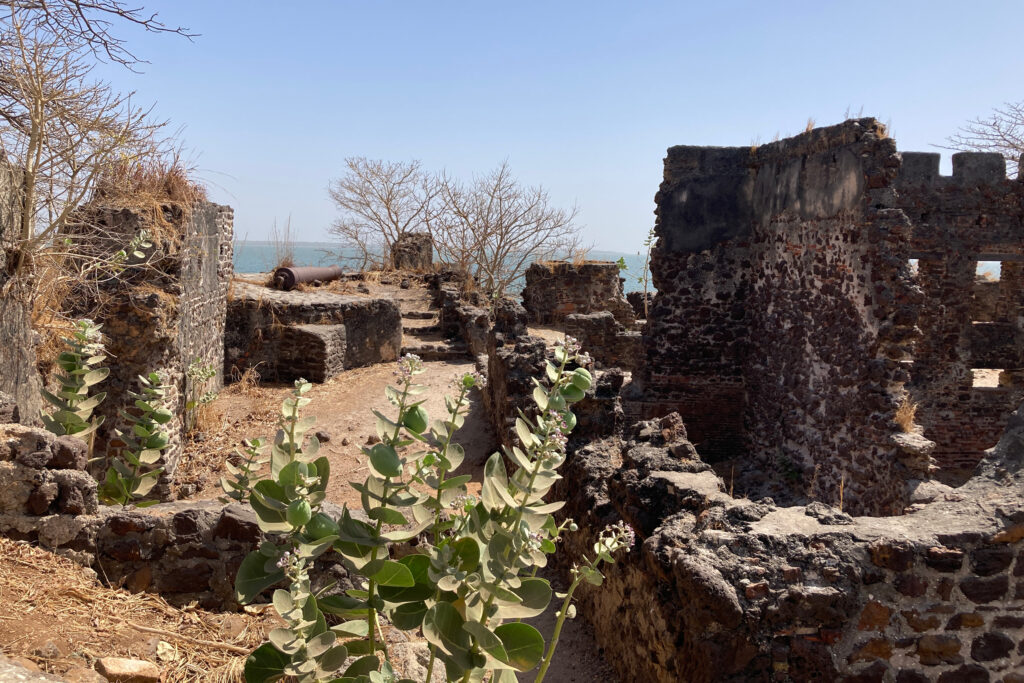
By the late 1800s, Britain dominated the river and its banks, while France controlled the surrounding lands, now Senegal. The resulting British territory—a thin strip of land that follows the river inland from the Atlantic Ocean for 480 kilometers—became Gambia, which was granted independence in 1970.
Today, the broad, flat, mangrove-lined Gambia River is still at the heart of the country that bears its name. Its banks provide several hundred kilometers of inland coast that host most of the country’s agriculture—both subsistence rice and vegetable farming, largely handled by women, and cash crops like peanuts, grown by men. Since agriculture accounts for a quarter of Gambia’s gross domestic product and 70 percent of employment, keeping the inland coast productive is supremely important.
“These river banks are essential land for agricultural production in The Gambia, especially in our drive to mitigate and fight against food insecurity,” said Jalamang Camara, a director at the country’s National Agricultural Research Institute, or NARI.
Wet Deserts
With climate change, the river and its banks are getting increasingly salty. The salt front—the boundary between mostly saline and mostly fresh water—is moving inland as rising sea levels push ocean water east and decreasing rainfall produces less fresh water to push back west.
Ebrima S. Njie, a senior lecturer at the University of The Gambia’s agriculture school who studies seeds and salt-resistent plants, recalled that when he was a child in the early 1990s, the rainy season started in June, and the salt front stopped around 150 kilometers from the river’s mouth. Now, rainfall often doesn’t begin until July and the salt front intrudes 300 kilometers or more, he said.
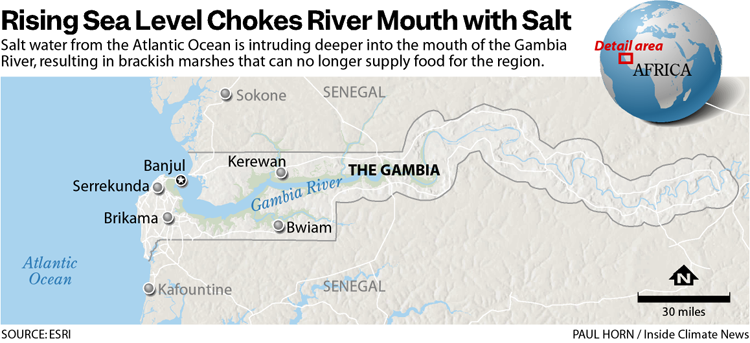
That shift has made more of the river predominantly saline, degrading neighboring fields as flooding deposits salt on the soil, while salt water seeps farther inland underground.
Rice has been particularly hard hit. Gambians eat more rice per capita than nearly anyone else in the world, and the government hopes to become self-sufficient by 2030. But the country currently imports more than 80 percent of what it consumes, and with increasing salinity, rice cultivation has been plummeting. One government-sponsored study estimated the area of rice under cultivation in Gambia had fallen 42 percent between 2009 and 2023 because of saltwater intrusion, and could fall another 30 percent by 2033 if current climate-change trends continue.
Near the village of Bakalarr, around nine kilometers northeast of Bantang Killing, farmers once grew all the rice they ate in a huge communal field that held moisture from the rains year-round. The field was far enough from the salty river that it could be shielded from seasonal flooding by a dirt embankment that doubled as a dike, said Suaaibou Darboe, the village leader. Ten years ago, floods washed out the dike and attempts by the villagers to rebuild it didn’t last.
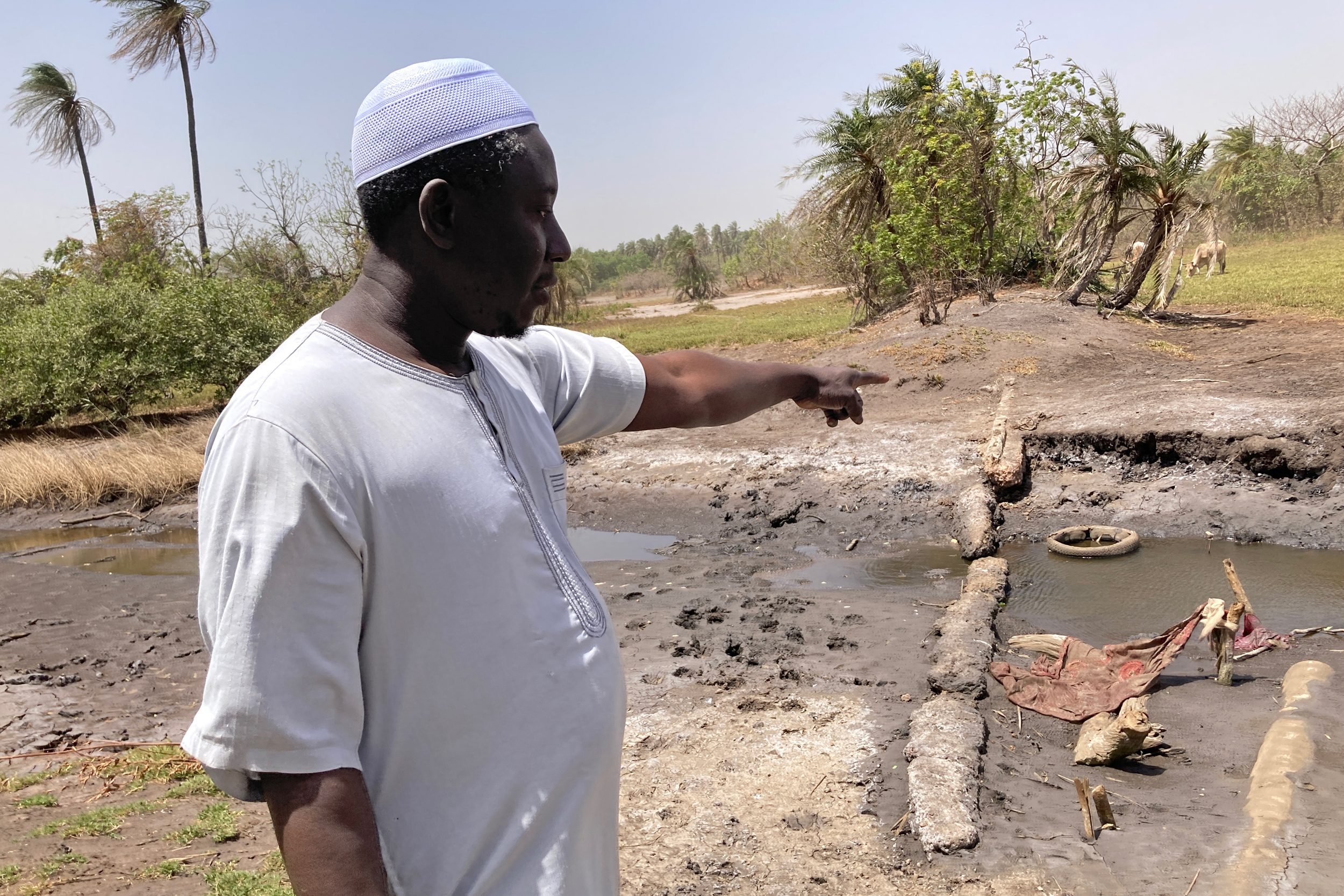
Today, the villagers have to buy most of their rice, and that former field is covered with a hard, cracked crust and completely barren—even in spots damp with water.
“We call it a ‘wet desert,’” said NARI’s Camara, describing that type of landscape, which now dots much of the Gambian countryside. “Even though there is water, this water is of no [use] to crops. So it kills the microbial activities, it kills the vegetation cover eventually leading to land degradation.”
River Coming Nearer
Camara and others say there are ways to reduce the impact of saltwater intrusion and even fix wet deserts, although most of them are out of reach for farmers like those at Bakalarr or Bantang Killing without financial and technical support. The recipe includes stronger dikes to keep out saline river water, steps to adjust soil chemistry and plant varieties that are more tolerant of salt.
The Salt Doctor’s Bruning, who worked on a project in Gambia, said some simple good-farming practices could also increase yields dramatically. Those include judicious irrigation and cultivating vegetables in elevated beds that could raise the roots out of the saltiest layer of soil.
Education is also important, said Ebrima Jarra, executive director of The Soil Solution, a Gambia-based NGO, which works with farmers, including at Bantang Killing, to improve soil quality. Jarra advocates organic farming practices and reduced use of fertilizer, as well as careful measurement of salinity and overall soil quality.
But it’s hard to explain soil chemistry in the countryside, he said: There is no word in the local languages for “hydrogen,” for instance. When crops start dying, some farmers are fatalistic, Jarra said. “They believe strongly that this soil is not productive because it is cursed by God,” he said. “But the reality is because the field has been intruded by salt.”
The Gambian government says it is helping. A host of government ministries in partnership with international aid groups are rolling out programs aimed at studying and mitigating soil salinity. Steps to support farmers and introduce new salt-resilient plant varieties are helping increase yields and reduce food imports, said Mustapha Drammeh, deputy director general of the Department of Agriculture.
Recent government statistics show rice imports fell in 2024 for the first time since the pandemic, while yields and production have been gradually rising.
In Bakalarr and Bantang Killing, Darboe and Nyan are still waiting. No government officials have shown up to help yet, they said.
“The river is coming nearer to us,” said Nyan. It’s not a good thing.
About This Story
Perhaps you noticed: This story, like all the news we publish, is free to read. That’s because Inside Climate News is a 501c3 nonprofit organization. We do not charge a subscription fee, lock our news behind a paywall, or clutter our website with ads. We make our news on climate and the environment freely available to you and anyone who wants it.
That’s not all. We also share our news for free with scores of other media organizations around the country. Many of them can’t afford to do environmental journalism of their own. We’ve built bureaus from coast to coast to report local stories, collaborate with local newsrooms and co-publish articles so that this vital work is shared as widely as possible.
Two of us launched ICN in 2007. Six years later we earned a Pulitzer Prize for National Reporting, and now we run the oldest and largest dedicated climate newsroom in the nation. We tell the story in all its complexity. We hold polluters accountable. We expose environmental injustice. We debunk misinformation. We scrutinize solutions and inspire action.
Donations from readers like you fund every aspect of what we do. If you don’t already, will you support our ongoing work, our reporting on the biggest crisis facing our planet, and help us reach even more readers in more places?
Please take a moment to make a tax-deductible donation. Every one of them makes a difference.
Thank you,