

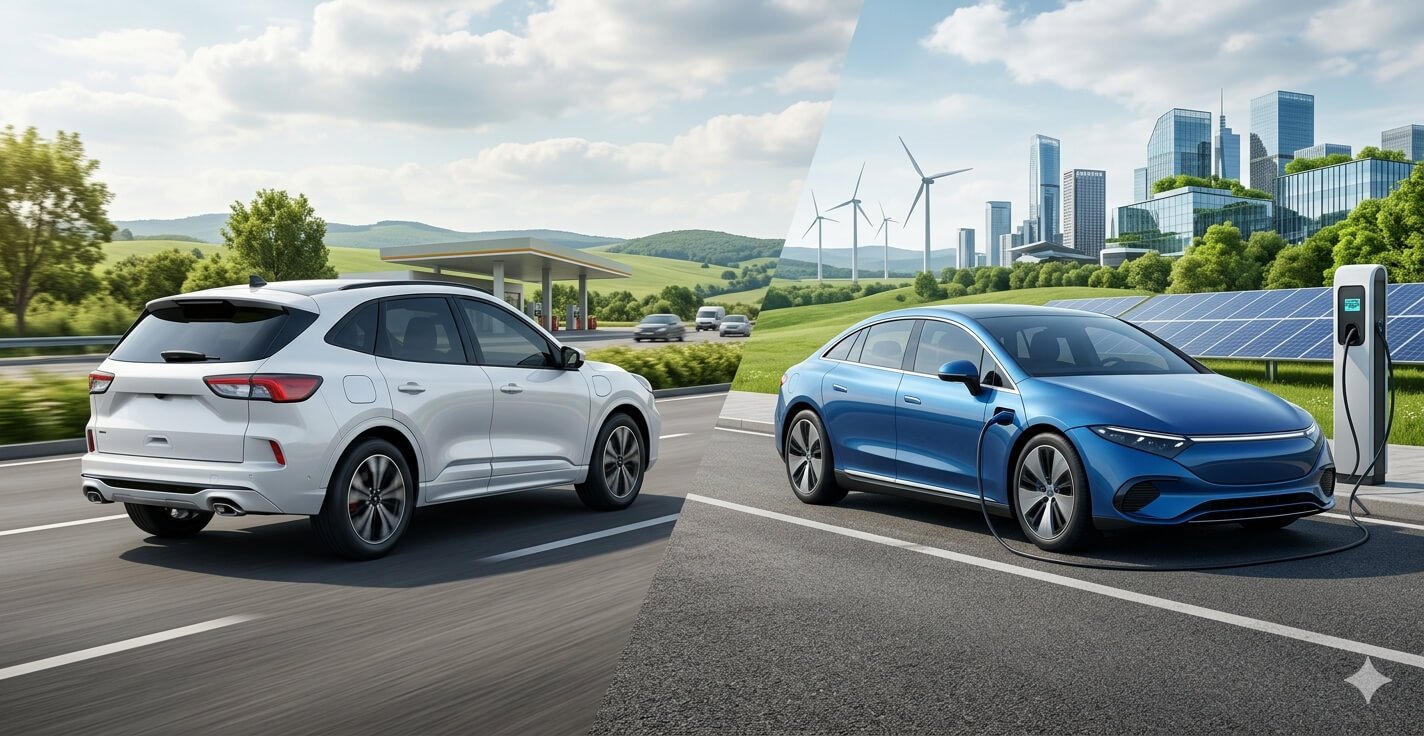
The automobile industry is going through a major transformation in 2026. With rising fuel prices, increasing environmental awareness, and strong government push for clean mobility, more people are shifting toward alternatives to traditional petrol and diesel cars. Two of the most popular options today are hybrid cars and electric vehicles (EVs).
But the big question remains:
Which one is the better choice in 2026—Hybrid or Electric?
Let’s break it down in a simple and practical way so you can make the right decision.
What Are Hybrid Cars?
Hybrid cars use both a petrol engine and an electric motor. These systems work together to improve fuel efficiency and reduce emissions.
There are mainly three types of hybrids:
- Mild Hybrid – Assists the engine but cannot run fully on electricity
- Strong Hybrid – Can run short distances on electric power
- Plug-in Hybrid (PHEV) – Can be charged and run longer on electric mode
Key Advantages of Hybrid Cars
- No need to worry about charging infrastructure
- Better fuel efficiency than petrol/diesel cars
- Lower emissions compared to traditional vehicles
- Smooth transition for first-time eco-car buyers
Limitations
- Still depends on fuel
- Not completely eco-friendly
- Maintenance can be complex due to dual systems
What Are Electric Cars?
Electric cars run entirely on electricity, powered by batteries instead of fuel engines. They produce zero tailpipe emissions, making them the cleanest option available.
Key Advantages of Electric Cars
- Zero emissions (environment-friendly)
- Lower running cost (electricity is cheaper than fuel)
- Less maintenance (fewer moving parts)
- Smooth and silent driving experience
Limitations
- Charging infrastructure still developing (especially in smaller cities)
- Higher upfront cost
- Charging time can be longer than refueling
- Range anxiety (fear of running out of battery)
Hybrid vs Electric Cars: Key Comparison
1. Cost (Initial vs Long-Term)
- Hybrid Cars: Lower initial cost than EVs but higher fuel expenses over time
- Electric Cars: Higher upfront cost but cheaper to run and maintain
👉 In 2026, EV prices are gradually dropping due to better battery technology and government subsidies.
2. Running Cost
- Hybrid cars still use petrol, so fuel costs remain
- Electric cars are much cheaper per km
👉 EVs clearly win in long-term savings.
3. Environmental Impact
- Hybrid: Lower emissions than petrol cars
- Electric: Zero emissions
👉 Electric cars are the best choice for reducing carbon footprint.
4. Infrastructure
- Hybrid: No charging needed
- Electric: Depends on charging stations
👉 In India and many countries, charging infrastructure is improving rapidly in 2026, but hybrids still have an edge in remote areas.
5. Performance
- Hybrid: Balanced performance with fuel efficiency
- Electric: Instant torque and smooth acceleration
👉 EVs offer a more modern and powerful driving experience.
6. Maintenance
- Hybrid: More complex (engine + battery system)
- Electric: Simpler (fewer parts, no engine oil, etc.)
👉 EVs are easier and cheaper to maintain.
🇮🇳 Hybrid vs Electric in India (2026 Scenario)
In India, the choice depends on your location and usage:
Choose Hybrid if:
- You live in a small city or rural area
- Charging stations are not easily available
- You want a safer transition from petrol cars
Choose Electric if:
- You live in a metro or urban city
- You have access to home or public charging
- You want long-term savings and eco-friendly driving
Future of Cars: What’s Coming Next?
The future clearly leans toward electric vehicles. Governments across the world are pushing EV adoption through:
- Subsidies and tax benefits
- Expansion of charging networks
- Bans on petrol/diesel vehicles in the coming years
However, hybrid cars will continue to play an important role as a bridge technology during this transition.
Final Verdict: Which Is Better in 2026?
Choose Hybrid Cars if:
- You want convenience and flexibility
- Charging infrastructure is a concern
- You prefer a gradual shift from fuel vehicles
Choose Electric Cars if:
- You want to save money in the long run
- You care about the environment
- You have access to charging facilities
Conclusion:
In 2026, electric cars are the future, but hybrid cars are still practical for many users. Your final choice depends on your lifestyle, budget, and location.
FAQs
1. Are electric cars cheaper than hybrid cars in 2026?
Electric cars have a higher upfront cost but are cheaper in the long run due to lower running and maintenance costs.
2. Which is better for long drives—hybrid or electric?
Hybrid cars are better for long drives due to no charging concerns.
3. Do electric cars require a lot of maintenance?
No, electric cars require less maintenance compared to hybrids and petrol vehicles.
4. Is charging infrastructure improving in India?
Yes, in 2026, charging stations are expanding rapidly, especially in metro cities.
5. Are hybrid cars eco-friendly?
They are more eco-friendly than petrol cars but not as clean as electric vehicles.
6. Should I buy an EV in 2026?
If you have access to charging and want long-term savings, buying an EV in 2026 is a smart choice.