

2 min readJul 30, 2026 03:54 PM IST
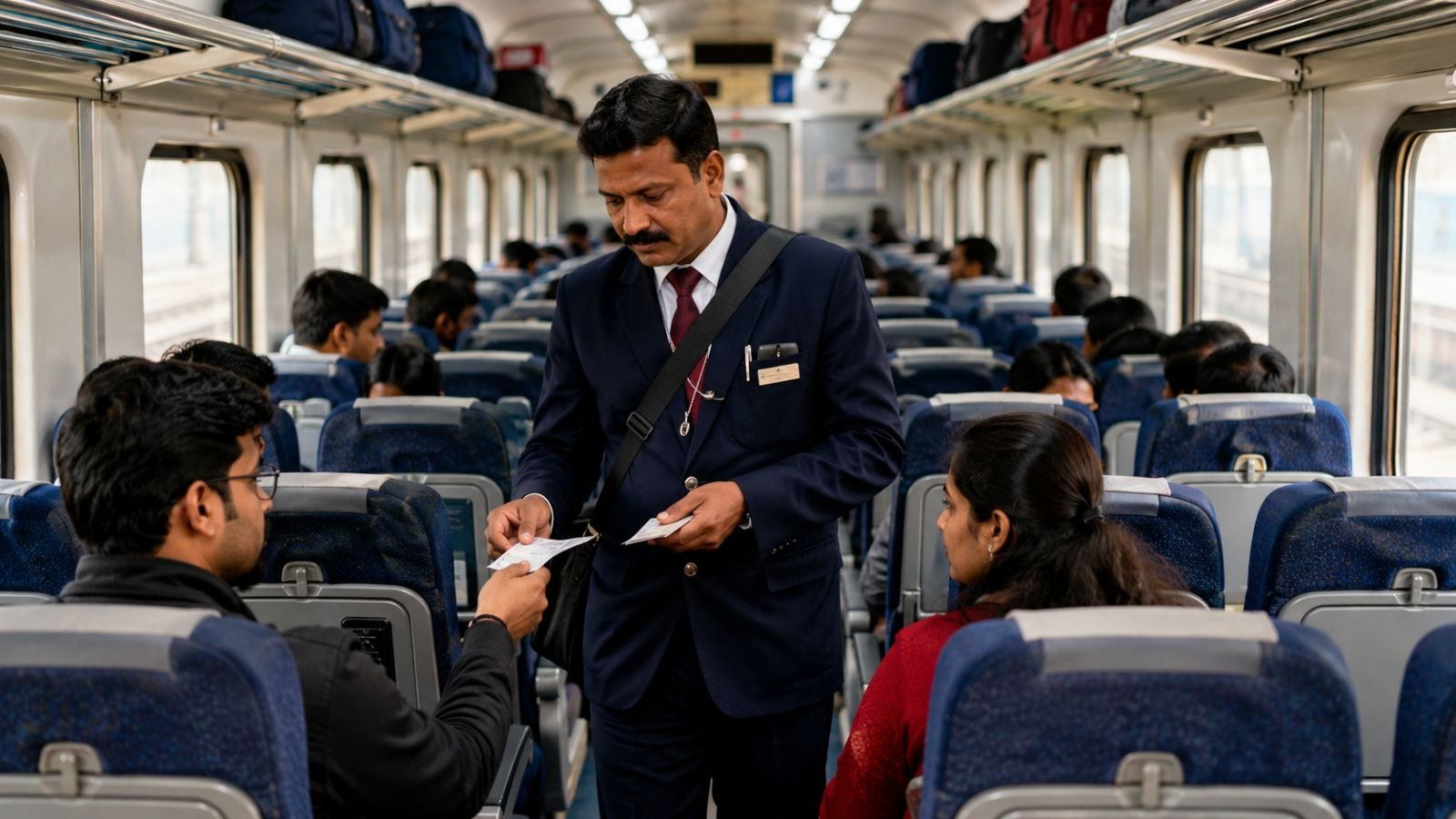
Indian Railways TTE Rules: In Indian Railways, a Train Ticket Examiner (TTE) is primarily responsible for ensuring that passengers travel with a valid ticket or pass and that any luggage exceeding the free allowance is properly charged. The TTE also prevents unauthorised travel and entry into coaches, including by platform ticket holders who are not permitted to travel.
Apart from checking tickets, TTEs have several other responsibilities. They are required to take action against passengers smoking in public areas, report the carriage of inflammable, dangerous or prohibited goods, and assist with onboard announcements to welcome passengers.

TTEs are also responsible for responding to medical emergencies. If a passenger or their companion reports a health problem requiring immediate attention, the TTE must inform the next railway station or control office so that medical assistance can be arranged at the nearest station with hospital facilities.
TTEs deployment rules on trains
According to Indian Railways, the number of TTEs deployed on a train depends on its coach composition. The deployment is planned to make the best use of available staff while ensuring effective ticket checking and passenger assistance. According to the latest Indian Railways guidelines:
- One TTE can be deployed for up to five AC coaches.
- One TTE can be deployed for up to three Chair Car or Sleeper coaches.
Duties of TTEs Assigned on Trains
12
Key duties of Travelling Ticket Examiners on board
Full List of Duties
1
Uniform & Identification
Wear a neat and clean uniform along with the TTE’s badge and the name badge while on duty.
2
Reservation Records
Obtain complete reservation particulars at the starting station and maintain entries of berth/seat occupation through the run.
3
Ticket Checking & Coach Access
Check tickets, guide passengers to berths/seats, and prevent unauthorized persons — including platform ticket holders seeing off passengers — from entering the coach.
4
Regulate Entry & Exit
Ensure the number of passengers travelling in the coach never exceeds its marked carrying capacity.
5
Fare Realization
Realize fare/surcharge/reservation charges wherever required from passengers to whom berths are allotted, and provide receipts.
6
Luggage Rules
Ensure passengers don’t carry luggage beyond prescribed weight/dimension in their compartments; assist transfer of excess luggage to the Luggage Van/Cabin.
7
Allotment at Intermediate Stations
Allot vacant berths/seats to passengers at intermediate stations on realization of fare/surcharge, on a first-come-first-served basis or per the waiting list priority.
8
Ladies’ Berths
Ensure berths/seats set aside for ladies are allotted only to ladies, and prevent male passengers from occupying such accommodation.
9
Coach Door Safety
Ensure coach doors stay latched when the train is moving, opening them only as needed for authorized passengers to board/alight.
10
Vestibule Doors at Night
Ensure end doors of vestibule trains are kept locked between 22:00 and 06:00 hrs to prevent outsiders entering the coach.
11
Unallotted Sleeper Berths
In Sleeper coaches, ensure un-allotted vacant berths stay folded up and hinged, opened only once allotted to a passenger.
12
FIR Forms for Theft Incidents
Carry blank FIR forms to make available to passengers in case of theft of luggage etc.; filled forms are handed over to the next GRP Post at the scheduled stoppage.
Measures taken by Indian Railways to optimise TTE deployment
Indian Railways has also issued administrative guidelines from time to time to its zonal railways to ensure the optimum use of available manpower. As part of these measures, the zones have been asked to adopt the following steps:
- Review the TTE links in coordination with adjacent Railways, if necessary.
- Extend the run of TTEs beyond Divisional/Zonal jurisdiction subject to Hours of Employment Regulation (HOER) norms, wherever feasible, so as to maximise manning of coaches.
- Rationalising the strength of ticket checking staff posted in the ticket checking squads so as to ensure increased availability of manpower to be deployed in the trains and at stations.