

Close Menu

    Subscribe to Updates

    Get the latest news information from worldwide businesses.

    What's Hot

    The Wizards have the No. 1 pick! Updated mock draf…

    May 11, 2026

    Business News Today: Stock and Share Market News, Economy and Finance News, Sensex, Nifty, Global Market, NSE, BSE Live IPO News

    May 11, 2026

    Sun unleashes colossal solar flare and coronal mass ejection, raising the chances of northern lights this week

    May 11, 2026
    Facebook Instagram YouTube LinkedIn X (Twitter)
    Trending
    • The Wizards have the No. 1 pick! Updated mock draf…
    • Business News Today: Stock and Share Market News, Economy and Finance News, Sensex, Nifty, Global Market, NSE, BSE Live IPO News
    • Sun unleashes colossal solar flare and coronal mass ejection, raising the chances of northern lights this week
    • Google tests Remy AI agent for Gemini as focus turns to user control
    • This new brain-like chip could slash AI energy use by 70%
    • Cracks in AIADMK out in open: Velumani camp moves to sideline EPS in Tamil Nadu assembly | India News
    • Discord launches Nitro Rewards, giving subscribers access to the base tier of Xbox Game Pass for no extra cost
    • Nitte University Expands Pharma Education Focus with Industry-Ready B.Pharm, M.Pharm Programs
    Newspublicly
    • About Us
    • Advertise & Partner with us
    • Pitch Your Story
    • Contact Us
    Facebook Instagram LinkedIn X (Twitter)
    Subscribe
    • Home
    • World News
      • Asia
      • India
      • USA
      • UK & Europe
      • Middle East
    • Economy & Business
      • Global Economy
      • Corporate & Industry
      • Finance & Markets
      • Policy & Trade
    • Technology
      • Gadgets & Devices
      • Software & Apps
      • AI & Machine Learning
      • Robotics & Automation
    • Health & Medicine
      • Fitness & Nutrition
      • Research & Innovation
      • Disease & Treatment
      • Doctors, Clinics & Patient Care
    • Travel & Tourism
    • Automobile
      • Electric & Hybrid Vehicles
      • Auto Industry Insights
    • Sports
    • More
      • Education
      • Real Estate
      • Environment & Climate
      • Space & Astronomy
      • War & Conflicts
    Newspublicly
    Home»More»Space & Astronomy»How long can the Voyager probes keep exploring interstellar space? NASA gearing up for ‘Big Bang’ maneuver to boost dwindling power levels
    Space & Astronomy

    How long can the Voyager probes keep exploring interstellar space? NASA gearing up for ‘Big Bang’ maneuver to boost dwindling power levels

    Divya SharmaBy Divya SharmaMay 11, 2026No Comments5 Mins Read0 Views
    Share
    Facebook Twitter LinkedIn Copy Link WhatsApp


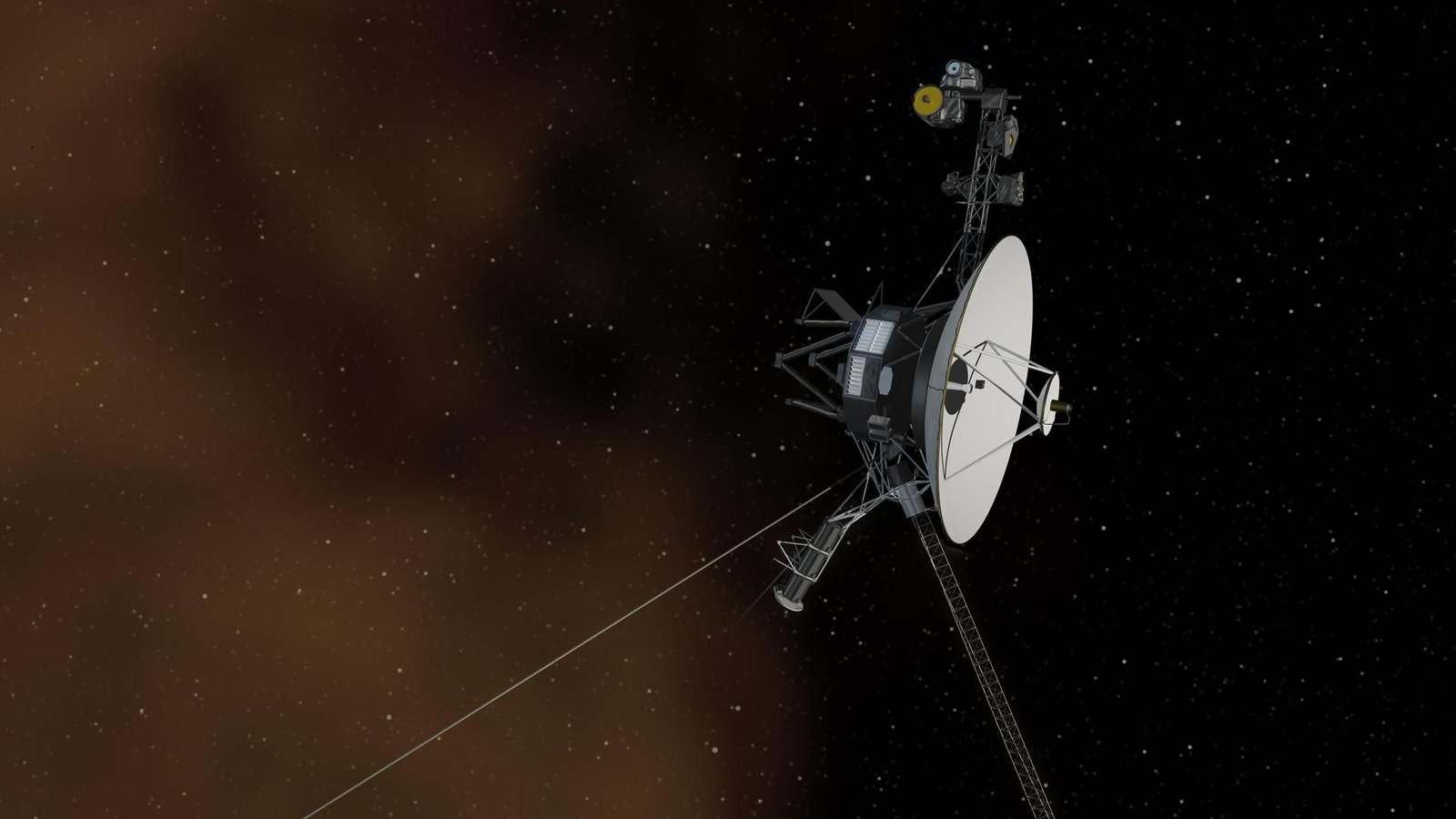
    The pioneering Voyager probes might only have a few years left to explore interstellar space, and that’s assuming a planned, risky maneuver in 2026 goes well.

    NASA’s twin Voyager 1 and Voyager 2 spacecraft, both running on nuclear power, now have access to just a portion of the 470 watts of energy that they generated immediately after their 1977 launches. Originally tasked with exploring the giant planets in our solar system, the pair have long passed their expected lifespans and are still transmitting data, far from home.

    Voyager 1 crossed into interstellar space in 2012, and Voyager 2 followed suit six years later. For years, NASA has been turning off the probes’ instruments one at a time as their power supplies dwindled. They still lose about four watts of power a year. But NASA’s Jet Propulsion Laboratory (JPL) in Southern California has an idea, which will be tested out soon, to give them a little more time.


    You may like

    What’s running? What’s not?

    Both Voyager probes launched with the same 10 operational instruments. Voyager 1 turned off its subsystem to look at cosmic rays (high-energy particles) in February, then did the same with its Low-Energy Charged Particles (LECP) instrument in April.

    Only two of Voyager 1’s instruments appear to be on at the moment, according to a JPL list: a magnetometer to look at magnetic fields, and a gas examination via its plasma wave subsystem instrument. Voyager 2 has three instruments running: the cosmic ray subsystem, the magnetometer, and the plasma wave subsystem.

    JPL’s list suggests that the other spacecraft instruments are off, or at least partially turned off, because of power requirements. The active instruments’ days are numbered, but a spokesperson told Space.com that the mission team aims to extend their operational lives soon.

    “An upcoming engineering activity — nicknamed the ‘Big Bang’ — on NASA’s twin Voyager spacecraft will continue the agency’s efforts to maximize the science output of the mission,” the spokesperson said in an email.

    Space

    “Voyager engineers will turn off three devices on the spacecraft that have been used to keep the thruster fuel lines from freezing — and turn on three other devices that will keep the fuel lines warm, but use a total of almost 10 watts less power,” the spokesperson continued.

    “If successful, this could delay the need to turn off a science instrument aboard each spacecraft by at least one year. The engineering team will test and implement the program on Voyager 2 in May and June. Based on the outcome, the mission plans to do the same on Voyager 1 sometime this summer.”

    JPL did not respond to follow-up questions about the possible impact on instruments that are partially shut off, the current wattage levels on both spacecraft, and how long each Voyager is expected to keep operating, among other power-related queries.


    What to read next

    How long could Voyager keep going?

    Each Voyager is so far away from Earth that it takes nearly a day to send a signal to the faraway spacecraft. Power continues to dwindle as the spacecraft approach their 50th anniversary in space next year, but it sounds like mission managers are expecting things to continue for a while.

    “We don’t know how long the mission will continue, but we can be sure that the spacecraft will provide even more scientific surprises as they travel farther away from the Earth,” Suzanne Dodd, project manager for Voyager at JPL, said in a 2022 statement from the lab.

    That same year, Dodd told Space.com that there were only five to six watts of power margin available on each spacecraft. Some of the basic equipment is also power-hungry: “It takes about 200 watts, approximately, to run the transmitter on the spacecraft, to be able to send signals back to Earth,” she said.

    Dodd added that she was impressed by how well the remaining instruments are performing in the cold of interstellar space. “If we got really lucky, maybe doing some operating below some thresholds, we might be able to go out to the 2030s,” she said.

    Alan Cummings, a co-investigator on Voyager, told an audience in October 2024 that, technically, the probes’ power will never run out because nuclear energy always has a half-life. But in terms of power to operate the spacecraft, he said it’s dwindling: The spacecraft might only have about 230 watts apiece to use, much of it gobbled up by the transmitting equipment.

    “It’s interesting because the Voyager is coming to an end in kind of a graceful way, in a sense, because there’s different things trying to kill it off,” he mused at a recorded event at the California Institute of Technology, where he is a senior scientist.

    The Voyagers’ thruster lines are close to freezing and getting clogged, he noted. Their telescopes, which already were “blasted” by radiation when flying near Jupiter‘s volcanic moon Io in the 1970s, continue to degrade as deep-space particles hit them. The computers have backups, but the backups are also aging.

    Cummings paid tribute to the original mission team for allowing the Voyagers to keep going for so long: “There is so much redundancy on these spacecraft. It is amazing, and they built that into it.”

    In August 2022, Dodd was asked during a JPL livestream how far she thought the Voyagers would go. She predicted each spacecraft would “definitely” make it to the 50th anniversary in 2027 — which still seems to be possible from the perspective of today — but added she has a “stretch goal” assuming that gets accomplished.

    Ideally, Dodd said she would love to see the spacecraft reach 200 astronomical units (AU; Earth-sun distances) from our planet, which would happen in about 2035. (At the moment, Voyager 1 is about 169.8 AU from Earth, and Voyager 2 is roughly 143.1 AU away.)

    “That’s going to take a lot of good luck and good fortune and good engineering,” she said. “But nobody would have thought that Voyager would last for 45 years [to 2022]. So what’s another 15?”


    Source link

    Divya Sharma
    • Website

    Divya Sharma is a content writer at NewsPublicly.com, creating SEO-focused articles on travel, lifestyle, and digital trends.

    Related Posts

    Sun unleashes colossal solar flare and coronal mass ejection, raising the chances of northern lights this week

    May 11, 2026

    This Week In Space podcast: Episode 209 — Astronauts for America

    May 11, 2026

    Does Dante’s Inferno from the 14th century depict an asteroid impact?

    May 11, 2026
    Leave A Reply Cancel Reply

    Demo
    Top Posts

    “Inside Gemini Robotics 1.5: How Robots Learn to Reason & Act

    November 22, 202524 Views

    How US Tariffs Are Reshaping the Global Growth Landscape?

    November 21, 202518 Views

    Pakistani Journalist Laughing at Tejas Fighter Jet Crash at Dubai Airshow Sparks Massive Outrage Worldwide

    November 23, 202517 Views

    Vibe-Coding Boom: How Non-Coders Build Apps With AI Agents

    November 22, 202515 Views
    Don't Miss

    The Wizards have the No. 1 pick! Updated mock draf…

    May 11, 20261 Min Read0 Views

    The Wizards, Jazz and Grizzlies have the top picks in the 2026 NBA draft. Here’s…

    Business News Today: Stock and Share Market News, Economy and Finance News, Sensex, Nifty, Global Market, NSE, BSE Live IPO News

    May 11, 2026

    Sun unleashes colossal solar flare and coronal mass ejection, raising the chances of northern lights this week

    May 11, 2026

    Google tests Remy AI agent for Gemini as focus turns to user control

    May 11, 2026
    Stay In Touch
    • Facebook
    • Twitter
    • Instagram
    • YouTube
    • LinkedIn
    • WhatsApp

    Subscribe to Updates

    Get the latest creative news from SmartMag about art & design.

    Demo
    NEWSPUBLICLY
    Facebook X (Twitter) Instagram LinkedIn

    Home

    • About Us
    • Leadership & Certification
    • Advertise & Partner With Us
    • Pitch Your Story
    • Media Kit & Pricing
    • Career
    • FAQs

    Guidelines

    • Editorial & Submission
    • Partnership
    • Advertising & Sponsor
    • Intellectual Property Policy
    • Community & Comment
    • Security & Data Protection
    • Send Your Opinion

    Quick Links

    • Cookie Policy
    • Payment & Billing Terms
    • Refund & Cancellation
    • Copyright Policy
    • Complaint & Support
    • Sitemap
    • Contact Us

    Subscribe Us

    Get the latest news and updates!

    Copyright © 2026 Newspublicly (DIGITALIX COMMUNICATION). All Rights Reserved.
    • Privacy Policy
    • Terms of Use
    • Disclaimer