

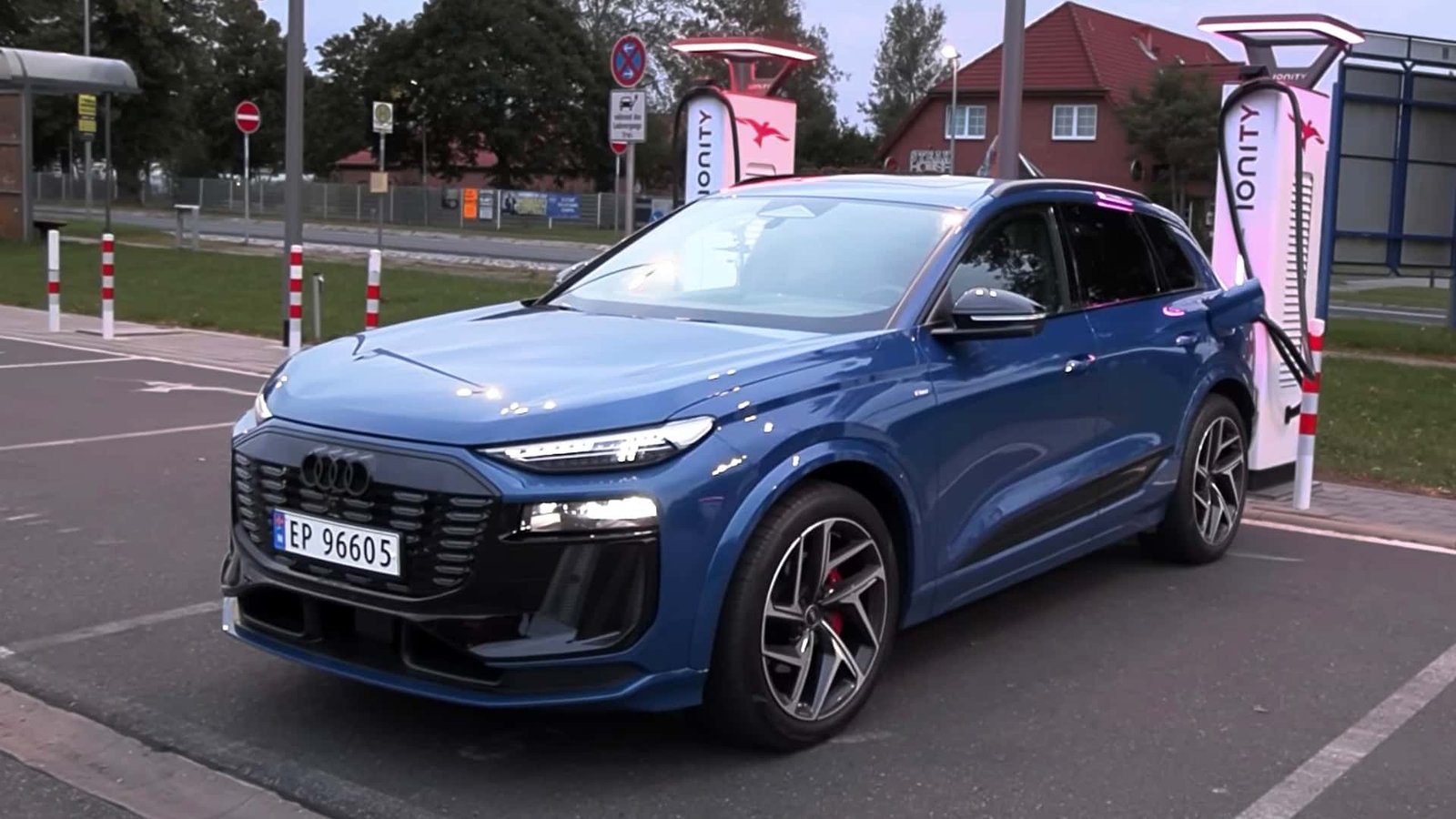
- Sustained 124-mph driving cut the Audi Q6 E-Tron’s estimated range to just over 100 miles.
- The battery handled the run well, with a noticeable power reduction only appearing at 3% charge.
- High-speed range loss is a real EV weakness, but mostly relevant on Germany’s unrestricted Autobahn.
We know driving at high speed kills EV range, but usually we’re dealing with tests conducted at 70 or 80 mph. What does range look like at 100 or 120 mph? In case you were wondering, a recent test on a stretch of Germany’s speed limit-free autobahn offers up some answers.
YouTuber Bjørn Nyland drove an Audi Q6 E-Tron in Germany at speeds that would get you arrested elsewhere to find out by how much its range shrinks. The vehicle is a Quattro dual-motor model with up to 455 hp when launch control is enabled, and a 100 kilowatt-hour battery pack with a usable capacity of 94.9 kWh.
Car & Driver tested the range of a Q6 E-Tron Quattro on the highway at a constant 75 mph (120 km/h) and found it could cover around 250 miles (400 km) on a full charge, which is similar to what Bjorn saw when in his range test test two years ago. Its estimated EPA range is 307 miles (494 km).

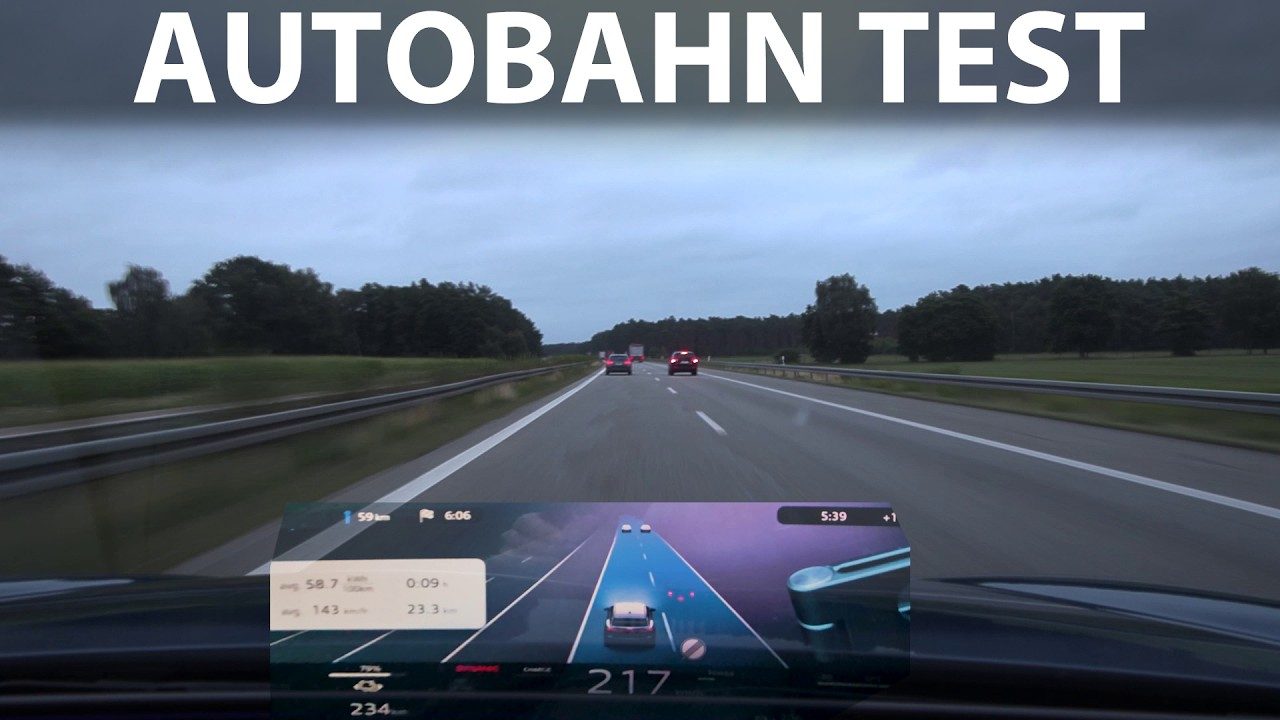
Bjorn began his test with the battery at 92% and hopped straight onto an unrestricted section of autobahn near Wittenberg. He drove at roughly 124 mph (200 km/h) measured through GPS, with the speedometer showing between 206 and 210 km/h. That’s very close to the vehicle’s top speed, which Audi officially lists as 130 mph (210 km/h).
Electricity consumption initially climbed to 1.1 miles/kWh (58.4 kWh/100 km) before settling around 1.1 to 1.2 miles/kWh (50 to 55 kWh/100 km). Heavy traffic and temporary speed restrictions prevented a perfectly constant-speed run, but he still spent much of the test at or near 124 mph.
The constant high-speed driving increased the battery temperature from around 102.2°F (39°C) to approximately 120.2°F (49°C), but the Audi showed no significant thermal limitation until the charge level dropped to around 3%. Bjorn estimated that roughly 5% of the battery’s available energy was lost as heat during the run.
He was able to maintain 124 mph until the battery had just 3% remaining, at which point he started feeling the available power level drop. By 2%, the car was predicting 0% on arrival, so he deliberately slowed for roughly the final 3 miles (5 km) to ensure it reached the charger he had set as the destination.
After accounting for losses and a slight discrepancy in the recorded distance, Bjorn calculated the actual consumption at approximately 1.17 miles/kWh (52.9 kWh/100 km). The car covered 96 miles (155 km) during the test. He estimated that he could’ve covered 104 miles (168 km) if he had set out with a full battery.
Sustained high-speed driving remains one of the clearest areas where EVs still trail combustion cars. Both become considerably less efficient as speed builds and aerodynamic drag rises, but an EV’s smaller energy reserve and longer refueling times makes the range penalty much more obvious.
In practice, though, this is largely a German problem. Practically anywhere else, if you tried to sit at 124 miles per hour for any extended amount of time, EV range would be the last of your concerns.