(In the weekly Health Matters newsletter, Ramya Kannan writes about getting to good health, and staying there. You can subscribe here to get the newsletter in your inbox.)
As we begin cataloguing the key happenings in yet another eventful health week, let’s first look at the regulatory changes that are significant to the country at large. Health policy regulation and course correction has to happen periodically in order to keep the practice of medicine current, and in tune with the evidence.
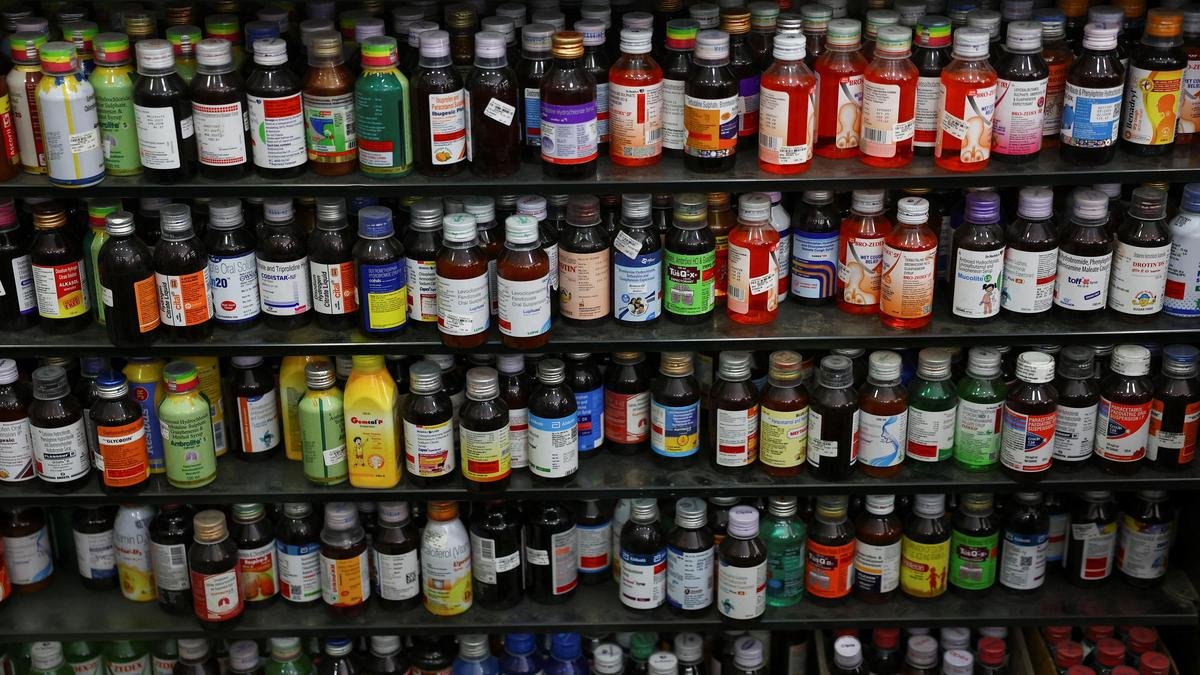
The Government, last week, made a doctor’s prescription mandatory to buy all medicinal syrups, including for cough. This means effectively, over-the-counter sales of these syrups will no longer be allowed. This comes after multiple fatalities caused by cough syrups adulterated with industrial solvents, including the deaths of at least 24 children in Madhya Pradesh last September. Cough syrups exported from India have also been linked to the deaths of more than 140 children in Africa and Central Asia since 2022. India’s drug regulator had inspected nearly 90% of the country’s cough syrup makers in January this year, and found compliance lapses.
Serena Josephine M.,takes this regulation a step beyond to understand what Tighter regulatory control over cough syrups means – drug quality concerns are back into focus. Probing further, Siddharth Kumar Singh marked how questions have arisen over Over the Counter enforcement of drug sales in the country, even as the health ministry’s diktat on cough syrups created a kerfuffle. Read here. Zubeda Hamid goes ahead with an In Focus Podcast, to tell you who needs to take cough syrups and how? For The Hindu’s edit on the subject do read: Lopsided solution.
Yet another key health regulation was ushered in by the government, reported Bindu Shajan Perappadan: Centre bans 16 fixed dose combination drugs, including antibiotics, painkillers, skin meds. Fixed dose combinations are medicines with two or more active drugs, combined in a fixed ratio in a single dosage; expert review shows that some pose safety risks or have unproven therapeutic effects. While they may have some benefits particularly to enforce treatment continuation in some chronic conditions, by reducing the pill burden, there is the flip side as well. This comes after a scientific review found these FDCs ineffective, but also harmful to patients. The Hindu’s edit on the subject urges the government to Stay with the evidence.
Since Ebola was hogging the limelight for a couple of weeks, here is a follow up: the Red Cross said that the Ebola outbreak in DR Congo could well last one year. Authorities also said that confirmed Ebola cases in Congo outbreak top 1,000 with 254 deaths.
Staying with the subject of infectious diseases, meanwhile, quarantine came to an end for the last of the hantavirus ship passengers in Nebraska.
In India, the Southwest monsoon has set over some parts of the country, and in others, a fierce summer still rages. Both seasons bring with them a full complement of infectious diseases and health managers are constantly on the watch for them. In Kerala, which had a case of Nipah and an outbreak of Shigellosis recently, C. Maya provides a perspective into Kerala’s battle with water-borne diseases. Rapid urbanisation and social development on the one side and inadequate attention paid to environmental health, water quality measures, poor sewage and sanitation infrastructure on the other, is threatening to undo the State’s reputation as a beacon of good public health. The explosion of water-borne diseases and zoonotic diseases in the State points to the system’s failure to pay attention to the social and environmental determinants of health, she writes. Do read The Hindu’s edit on On Kerala and Nipah.
Here is an update on Nipah control measures in Kerala (by A.S.Jayanth) and the Shigella outbreak.
Meanwhile, the National Health Mission confirmed seven Japanese encephalitis deaths in Assam this year. Again, a seasonal phenomenon, almost 62% of all Japanese encephalitis (JE) deaths in India since 2018 have been in Assam, according to national data, and outbreaks usually occur between May and October, peaking in July and August.
Athira Elssa Johnson argues why India needs to step up its game in terms of controlling food-borne infections. Some of the causes are Chemical contaminants, climate change and AMR and they are complicating the scenario, apparently. She also writes on how drug-resistant malaria poses growing challenge to treatment and elimination efforts.
This past week there was a lot of chatter on cancer, so we did our bit as well. Novartis India launches Pluvicto for prostate cancer treatment. Dr. Sultan Pradhan provided information on a very curious topic – how apart from tobacco, HPV is now emerging as a major risk factor for head and neck cancers in young Indians.
Afshan Yasmeen brought to us, a study that found pesticide residues in breast cancer tissues, and raises concerns over exposure risks. Dr. Parth Sharma and Dr. Senthil Kumar A.R. make a solid case for relooking the PCPNDT Act that guides the practice of Ultrasonography. Its needs have evolved, and so should India’s laws, they have argued, basing their arguments on wide-ranging applications in cancer diagnosis and care.
In this HealthWrap edition, we discuss the recent lung cancer breakthrough, was it a true breakthrough, will the early predictors of lung cancer work? In the same episode, we also spoke on Nipah and challenges in women’s health.
Talking about challenges to accessing healthcare in India, Yashweer Singh uses NFHS 6 numbers to show that India’s childbirth divide is about more than public vs. private. The institutional birth rate of 95.4%, as revealed by NFHS 6, in India is a real achievement, but beneath it lie questions of how women’s choices are shaped when it comes to choosing private over government healthcare institutions, and how institutions can shape outcomes.
Dr. Soumya Swaminathan and Rama Narayanan too use the NFHS-6 data to show how there has been progress amid nutrition challenges in the country. They argue that multisectoral convergence is critical to addressing child malnutrition, yet it remains weak. Child nutrition should be a standing agenda item in Gram Sabha and Panchayat discussions. Local planning must prioritise improvements in Anganwadi infrastructure, safe drinking water, and sanitation facilities, as these foundational services directly influence child growth and health.
Talking of health data, plenty of which is suddenly available in the public zone, Dr. Chandrakant Lahariya urges that Health data must drive action, not just headlines in this opinion piece.
Continuing our focus on mental health, we have gone this week into an area seldom tread on by mainstream media. In this piece, Dr. Sachin Barbde and Dr. Christianez Ratna Kiruba turn the focus light on to something rarely discussed: How young Adivasi people describe mental health distress and how unless we understand their vocabulary we might be missing signals of a great mental health crisis among them.
Dr. Mahalakshmi Ramamurthy expands on the relationship between vision and dyslexia, often missed, based on original research. Many roads to reading: she argues, here.
A shortage of psychiatric social workers has apparently gripped the mental healthcare system in Kerala’s government hospitals.
This is something we will be staying on and following up this week: A deadly industrial ammonia leak accident in Tamil Nadu’s Tiruvallur district left 9 women migrant labourers dead. Others are undergoing hospitalisation. If you want to know what ammonia poisoning entails, read this: What is ammonia poisoning?
Meanwhile a three member committee has been constituted to probe the leak at the seafood processing unit and a committee has also been appointed to inspect hazardous industries in Tamil Nadu.
In the tailpiece segment this week, we go straight to the celebration of the contributions of one woman to the practice of gynaecology. As part of the series acknowledging the role of neglected women in health care, Justice Delayed this week, I look at how Anarcha Westcott, an enslaved nurse, midwife helped perfect the technique of suturing extremely painful vesicovaginal fistulas. She was experimented on without consent, and yes, even anaesthesia. She was remembered belatedly by history, and we pay tribute to her contributions, and those of the other women used as guineapigs by surgeons.
Our heavy explainers section is where you will find answers to long pending questions. Read on…
Dr. Murugesan Arumugam says there are 213 million reasons India cannot ignore migraines
Take Dr. N. Ragavan’s word for this: Losing bladder control is not a normal part of ageing
With World Vitiligo Day coming up, Dr. Sabaresh Pandiyan has written on how Children with vitiligo face stigma and battle misinformation
Vasudevan Mukunth tries to answer the question: Why do recessive traits from older generations suddenly resurface in one individual?
Dr. Christianez Ratna Kiruba and Bhawesh Jha write on: The case for banning the pesticide paraquat in India
Listing here, a few links that you might want to hover your mouse over:
Socioeconomic disparities could be major predictors of antimicrobial resistance: Study
Sambavi Parthasarathy Why A.P.’s incentive for having more children is misplaced
V. Geetanath How snakebites push rural families deeper into poverty
For many more health stories, head to our health page and subscribe to the health newsletter here.