

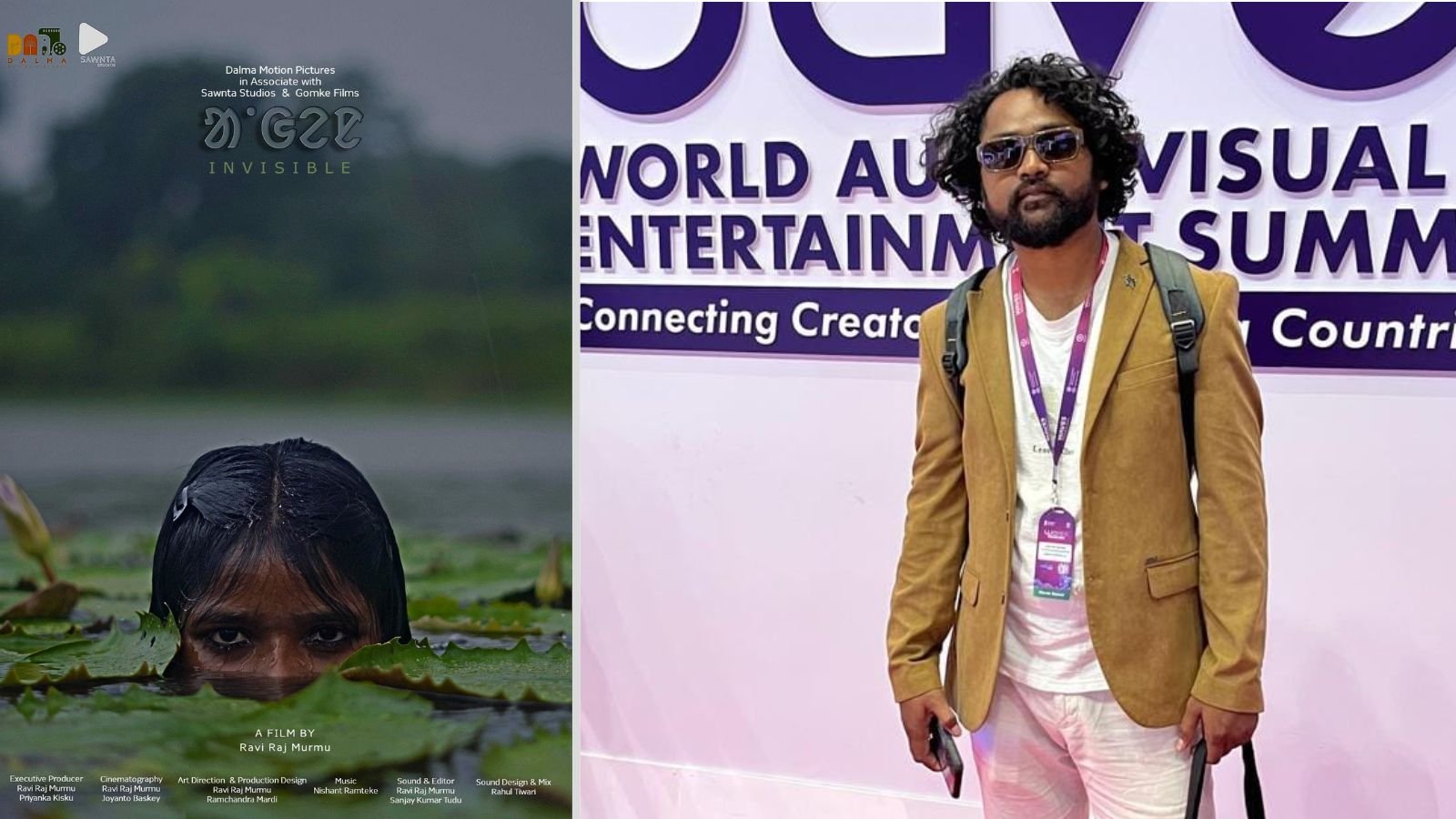
Growing up in a small Adivasi hamlet in Jharkhand’s East Singhbhum district, Ravi Raj Murmu remembers evenings when stories travelled not through books or television but through the voices of elders. Parents and grandparents narrated Santhali folktales, stories of bonga (spirits), forests, rivers and unseen worlds, keeping alive an oral tradition that has shaped generations of Adivasi communities.
Years later, one of those stories has carried Murmu to India’s highest cinematic stage.

Murmu (33), a Santhal filmmaker from Jharkhand, has won the Best Debut Film of a Director at the 72nd National Film Awards for his 12-minute Santhali short film, Angen, whose title loosely translates as “invisible”, “unseen” or “vanished”. While there is no direct English equivalent, Murmu says the word evokes something that exists but gradually slips out of sight.
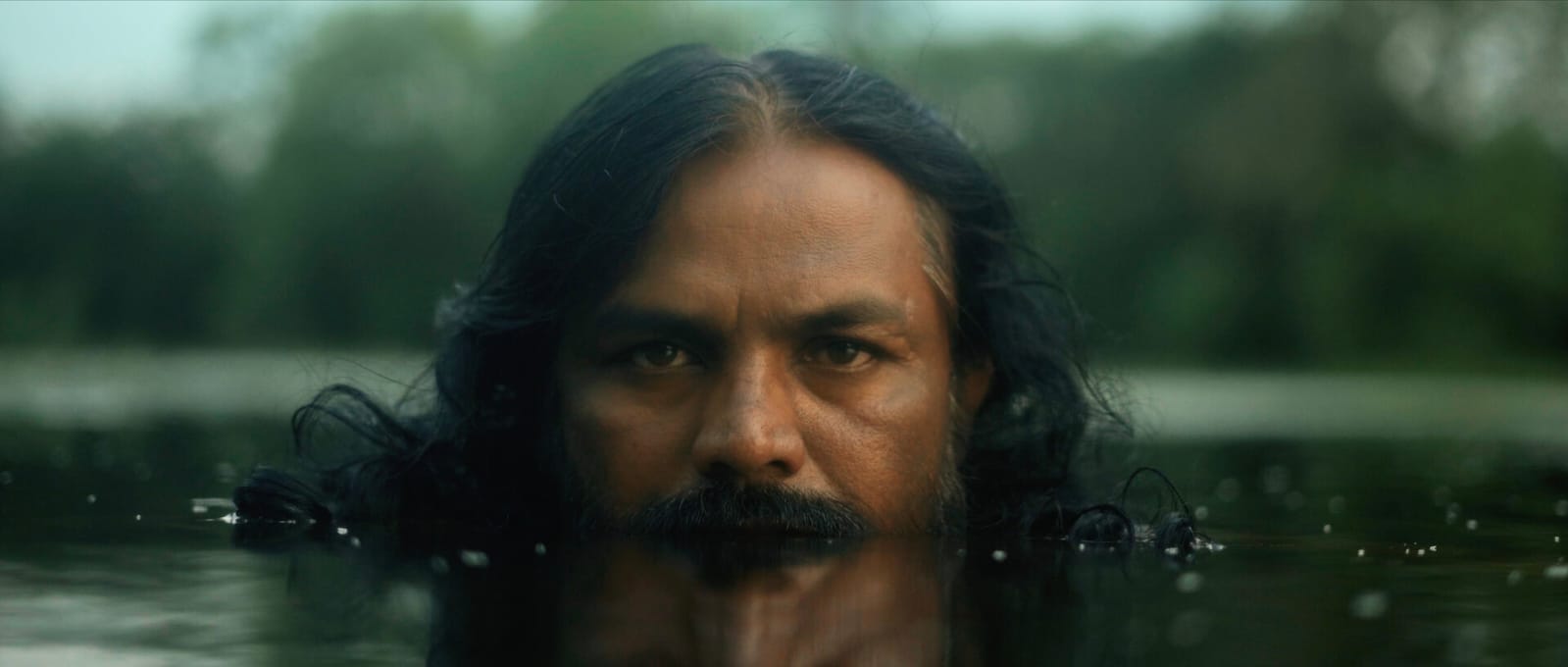 The film travelled through several festivals, including the Mumbai International Film Festival, before finding national recognition. (screenshot)
The recognition is significant. Angen is the first Santhali-language film to win a National Film Award and only the second fiction film made in an Adivasi language to be recognised at the stage. The first was Edpa Kana (Going Home), a Kurukh-language short film by Oraon filmmaker Niranjan Kujur, which won the Best Audiography award at the 63rd National Film Awards in 2016. Earlier National Award-winning films by Adivasi filmmakers had been made in Hindi.
For Murmu, the award is less about personal recognition than about the stories he has always wanted to tell. “Every story I write comes from Jharkhand,” he said. “They are rooted in Adivasi life. At one point, I realised that if I wanted to make those films honestly, I had to return home.”
After completing his schooling in his village, Murmu studied Mass Communication in Jamshedpur before joining the Film and Television Institute of India (FTII), Pune, where he specialised in editing from 2016 to 2019. He later worked in Mumbai on projects for OTT platforms, including Netflix, Amazon Prime Video, and JioCinema, as well as advertising films.
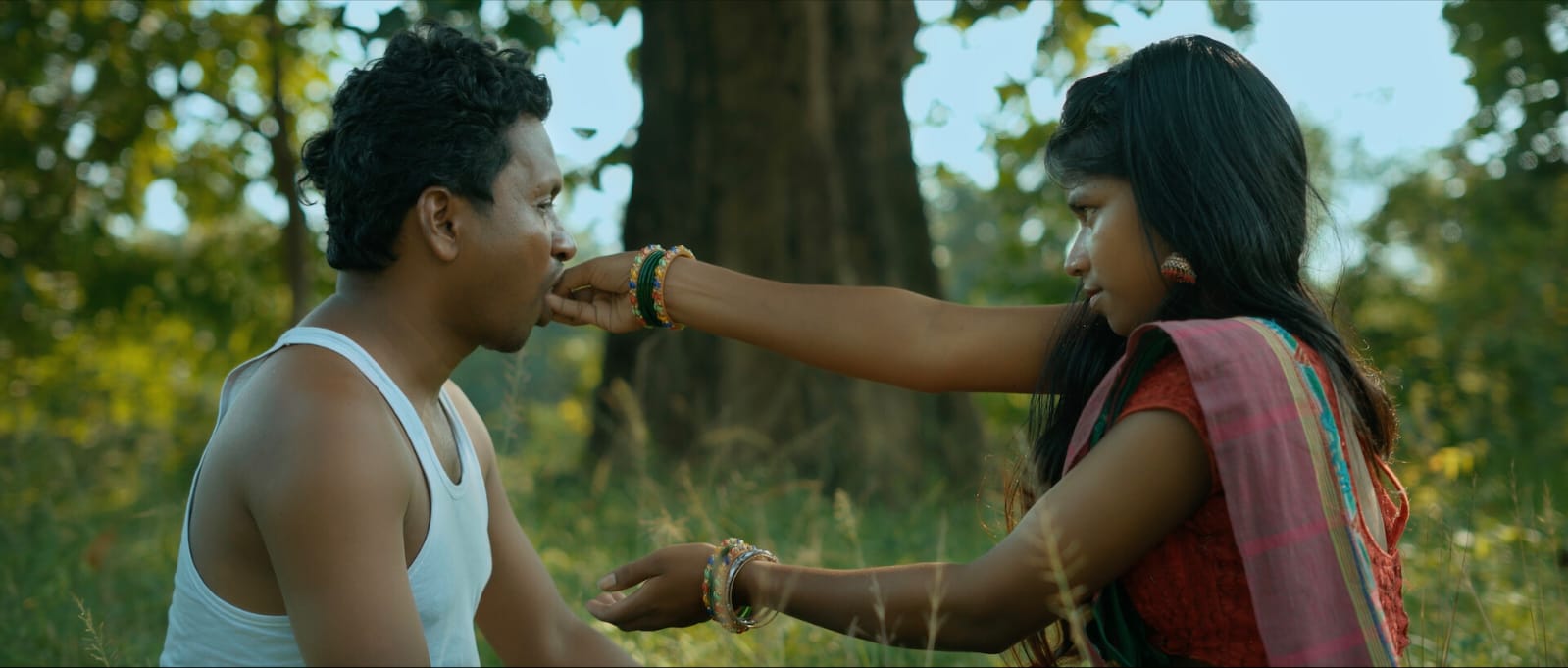 Beyond its mythical narrative, Angen reflects on the changing relationship between Adivasi-Indigenous people and their connected roots with nature. (screenshot)
But despite working in the mainstream industry, he found himself returning to the stories of his childhood. “I realised our own stories have immense strength,” he said. “For a long time we grew up watching other people’s stories. I wanted Santhali cinema to tell its own story.”
Story continues below this ad
Originally conceived as a feature-length film that Murmu has been writing for nearly seven years, Angen eventually took the form of a short film after he struggled to secure funding. “A feature would need an investment of around Rs 25-30 crore,” he said. “Since I couldn’t find producers, I decided to make a short film first to show people what the larger story could become.”
The film travelled through several festivals, including the Mumbai International Film Festival, before finding national recognition.
Adapted from a Santhali folktale, Angen follows Sukku, a flute player whose music enchants a goddess living in the spirit world. Drawn into her realm through water, which serves as a portal between the human and spiritual worlds, Sukku later realises he no longer belongs there and begins searching for his village.
“The search never truly ends,” Murmu said, adding that he deliberately leaves the film open-ended because the larger feature is still being developed.
Story continues below this ad
Beyond its mythical narrative, Angen reflects on the changing relationship between Adivasi-Indigenous people and their connected roots with nature. The movie quietly captures how rapid urbanisation reshapes landscapes once associated with Adivasi spiritual life.
Through metaphor, the film shows how, as urbanisation expands, forests disappear, natural spaces shrink, and even those spiritual spaces begin to vanish.
Water in the movie, Murmu said, was chosen consciously. “Science tells us life began with water. That’s why I made water the medium through which one world connects to another,” he said.
The title too carries layered meanings, he said. “There is no literal translation of Angen,” he said. “You can call it invisible, vanished or unseen, but none of those words fully express what it means.”
Story continues below this ad
The idea to show the disappearing world of Adivasis came after a visit home from Pune. Arriving at the Galudih bus stand near his village, Murmu failed to recognise the place after new infrastructure had transformed the landscape. “That made me realise how quickly places change,” he said. “If we don’t document our stories now, many of them may disappear.”
Made on a modest budget with the support of friends and theatre artists, the film stars NSD graduate Jitray Hansda as the older Sukku, Ramchandran Mardi as the younger Sukku and Saloni Soren in the lead female role.
“I worked with the people who believed in the project,” Murmu said. “Without them, this film wouldn’t have been possible.”
Even as Angen earns national recognition, Murmu has already resumed work on his first feature film, with shooting expected to begin soon.
Story continues below this ad
For an Adivasi filmmaker who grew up listening to stories around village homes, the journey from oral tradition to the National Film Awards marks more than a personal milestone. “It is also a reminder that Adivasi stories in their languages, long confined to memory and folklore, are now finding a place on India’s biggest cinematic stage… this is why representation matters,” he said.