







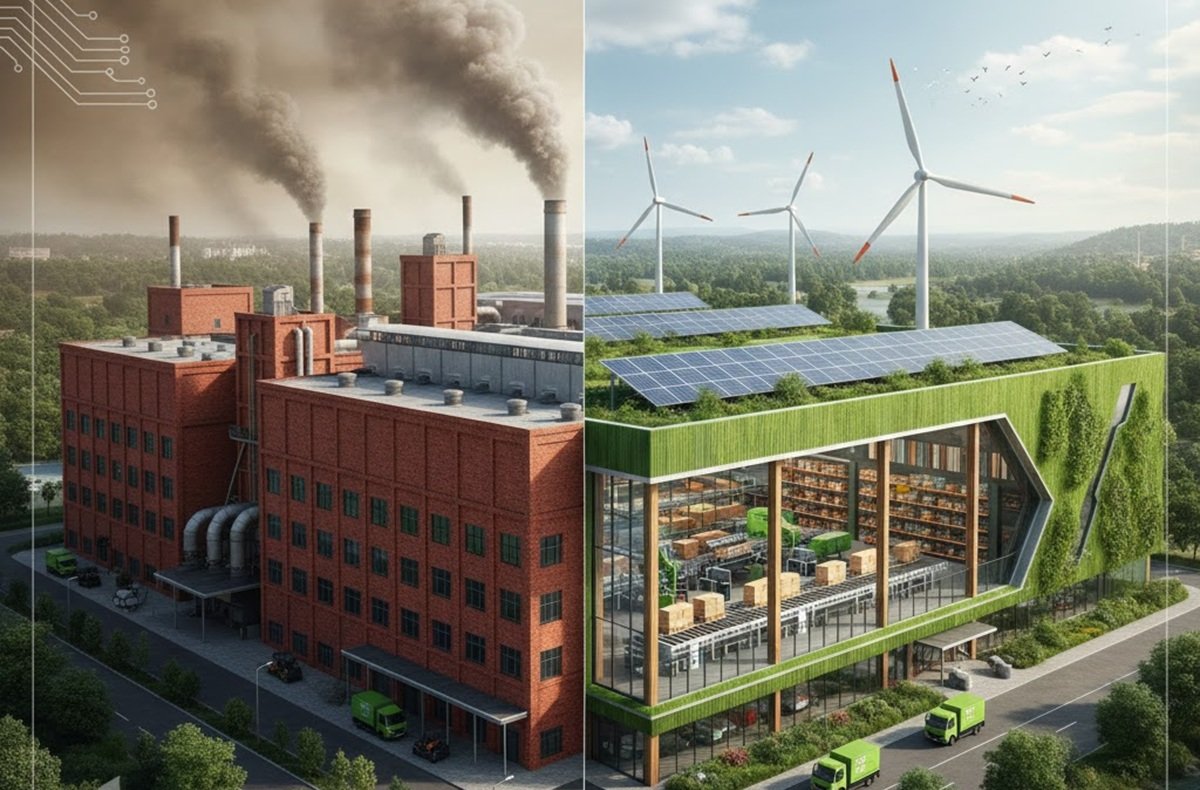
The manufacturing landscape in India is undergoing a major shift as industries move toward cleaner, more efficient, and responsible operations. With global markets demanding environmentally responsible products and supply chains, companies are increasingly embracing green warehousing as a strategic priority. More than just a trend, sustainable warehouses and eco-friendly supply chains are now shaping the future of Indian manufacturing, reducing costs, improving brand value, and helping businesses meet global sustainability benchmarks.
In an era where climate concerns, rising energy bills, and stricter compliance norms dominate conversations, green warehousing offers a win-win solution for industries looking to scale while reducing environmental impact.
What Is Green Warehousing?
Green warehousing refers to the adoption of eco-friendly design, energy-efficient technologies, and sustainable operational practices inside storage and distribution centers. It focuses on minimizing waste, reducing carbon footprint, and creating long-term efficiency in supply chains.
A green warehouse is not only environmentally responsible but also optimizes costs through better energy use, automation, and space utilization. This makes it especially crucial for Indian manufacturers seeking global competitiveness.
Why Green Warehousing Matters for India?
With India rapidly growing as a global manufacturing hub—supported by initiatives like Make in India and increasing export potential—the need for sustainable supply chain infrastructure is greater than ever.
1. Growing Regulatory Pressure
India is gradually moving toward stronger environmental mandates for industries. Compliance with ESG (Environmental, Social, Governance) norms is becoming essential, especially for manufacturers targeting Western markets. Green warehousing enables easier compliance with these norms.
2. Rising Operational Costs
Energy costs remain a substantial burden for companies. Implementing green warehousing practices such as solar-powered facilities, LED systems, and smart cooling technologies directly lowers long-term energy bills.
3. Customer Demand for Sustainability
Both B2B and B2C buyers prefer brands that operate responsibly. Sustainable warehousing can become a strong differentiator, enhancing brand image and trust.
4. Reducing Carbon Footprint
Logistics is a major contributor to emissions. A greener supply chain directly supports India’s net-zero emission goals.
Key Components of Green Warehousing
To understand how sustainable supply chains function, it’s essential to look at the core elements of green warehousing:
1. Energy-Efficient Infrastructure
- Solar panel installations
- LED lighting with motion sensors
- Natural ventilation systems
- High thermal-efficiency building materials
These solutions significantly reduce energy usage and lower carbon emissions.
2. Sustainable Material Handling
Eco-friendly practices include:
- Electric forklifts instead of diesel-powered ones
- Optimized picking routes using AI
- Lightweight reusable packaging
These not only reduce environmental harm but also boost efficiency.
3. Water Conservation Systems
Many modern warehouses now integrate:
- Rainwater harvesting
- Smart leakage detectors
- Recycled water flushing systems
Water-saving mechanisms reduce operational overhead and support sustainability.
4. Waste Reduction & Recycling
A major part of green warehousing involves:
- Recycling paper, plastic, pallets, and packaging
- Implementing zero-waste policies
- Using biodegradable materials
This supports cleaner operations and aligns with global environmental goals.
How Green Warehousing Strengthens Sustainable Supply Chains?
Indian supply chains are known for their complexities, widespread distribution networks, and cost challenges. Incorporating green warehousing directly supports supply chain sustainability in several ways:
1. Improved Energy Management
A warehouse that uses renewable energy and smart systems lowers dependence on non-renewable sources. This helps companies operate even during power disruptions while reducing utility costs.
2. Faster, Smarter Logistics
Automation, IoT sensors, and digital tracking systems improve:
- Inventory accuracy
- Delivery timelines
- Route planning
These upgrades create a more efficient and environmentally sustainable supply chain.
3. Reduced Packaging Waste
Warehouse-driven optimization helps lower excess packaging and transition to reusable alternatives. This reduces both cost and carbon emissions across the supply chain.
4. Better Compliance Across Partners
A warehouse that adopts green standards encourages suppliers, distributors, and logistics partners to follow suit, creating an integrated sustainable ecosystem.
The Role of Technology in Green Warehousing
Digital transformation plays a key role in enabling sustainable logistics. Technologies supporting this include:
- IoT for energy monitoring
- Warehouse Management Systems (WMS) for efficient storage
- AI and robotics for automated sorting
- Smart meters to track power and water usage
- Blockchain for transparent supply chain records
These tools reduce waste, optimize resources, and improve accountability.
Future of Green Warehousing in India
The next decade will witness rapid adoption of sustainable warehousing as companies prepare for greener, tech-driven supply chains. With government support, rising investor interest in ESG, and the increasing adoption of electric logistics vehicles, India is set to lead the next wave of sustainable manufacturing.
For forward-thinking manufacturers, investing in green warehousing is not merely an option—it is a strategic necessity for long-term growth.


