

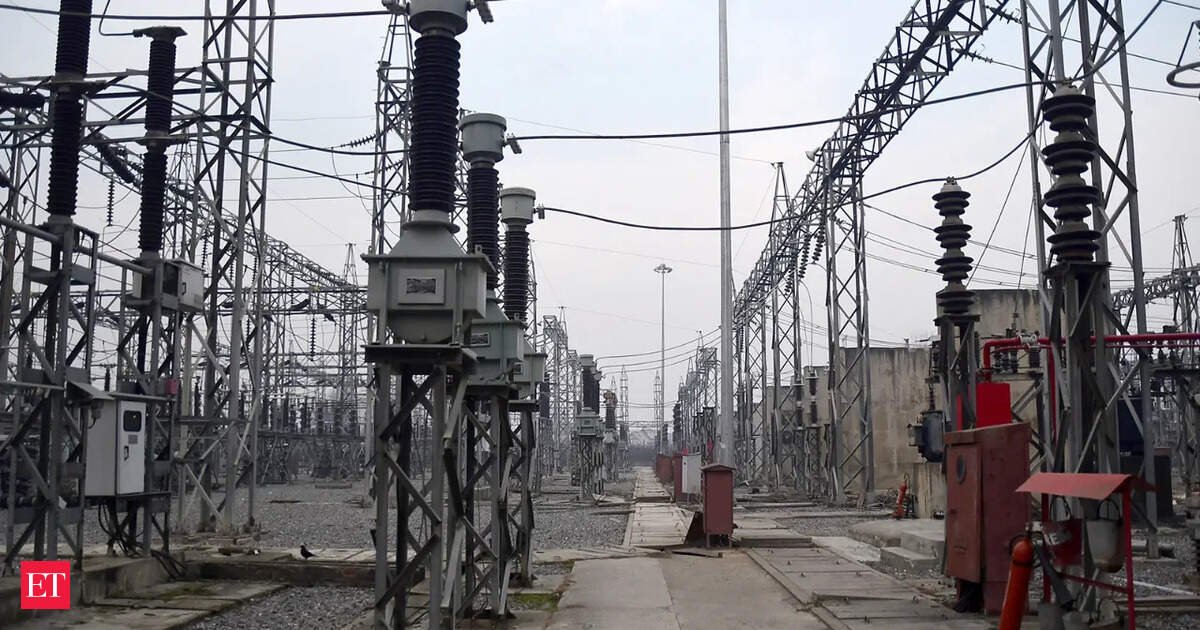
Transmission projects typically take 36-60 months to complete, while renewable energy projects are usually commissioned within 12-18 months.
The timelines, approved by the National Committee on Transmission, cover substations, transmission lines and high-voltage direct current (HVDC) systems. The committee is headed by the CEA chairperson and comprises representatives from ministries of renewable energy, power, Niti Aayog, Central Transmission Utility, Grid India and other experts.
Also read | Exports rise 18% to 6-month high in May; trade deficit widens
Under the framework, greenfield 765 kV and 400 kV substations will have a standard implementation timeline of 36 months, while greenfield 220 kV and 132 kV substations will have a 24-month timeline.

HVDC systems-transmission lines and substations-are expected to be completed within 48-54 months.
Direct current (DC) transmission lines of 765 kV will have implementation timelines ranging from 30 to 36 months, depending on route lengths. Similarly, 400 kV lines timelines are in the range of 24-30 months.Stakeholders have been advised to incorporate these schedules into generation planning, financial closure, equipment procurement and other project milestones to ensure transmission infrastructure is ready alongside upcoming power projects.
“Transmission projects timeline of 18-24 months is very difficult to achieve in most cases and need to factor in ‘right of way’ and land acquisition issues, among others,” a government official said.
Also read | Goldman Sachs cuts India’s 2026 CAD forecast to 1.3% of GDP
Developers, distribution companies and bulk consumers have also been advised to align investment plans and project schedules with the prescribed timelines to improve synchronisation with the associated transmission network.
“Setting up of standard timelines for various types of new transmission infrastructure, as per CEA’s recent office memorandum, will necessitate improved coordination between various stakeholders and timely initiation of transmission projects, especially in renewable energy-rich states,” said Anujesh Dwivedi, partner, Deloitte India.
Addressing Delays
According to a report by Ember, an assessment of major ISTS schemes scheduled for commissioning in FY27 showed project delays ranging from nil to more than three years.
The share of projects that remain on schedule is limited across regions, with about 25% of transmission schemes facing delays of at least one year on average, the report said.
Most delays range between four and 12 months.
Despite long-term planning, execution challenges persist, including right-of-way issues, rising land requirements for higher-voltage lines, fragmented land ownership, land acquisition for substations, and forest and environmental clearances.