

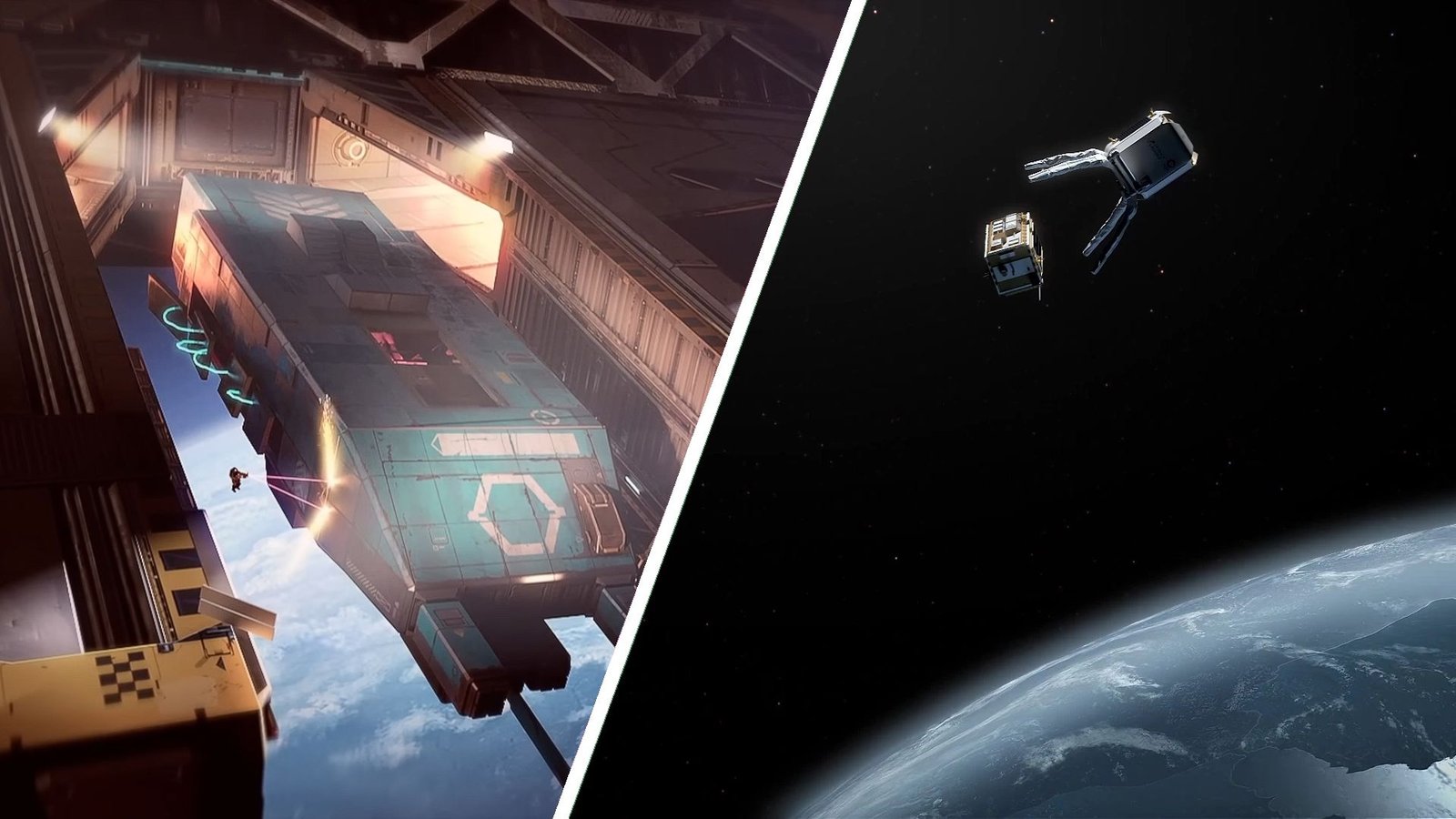
While Hardspace: Shipbreaker does an excellent job of capturing the dystopian perils of unchecked hypercapitalism, the real fun in this space game comes from carving up massive capital ships with space lasers and explosives.
Floating in zero gravity, players slice derelict spacecraft into salvageable chunks, while also contending with unruly physics, pressure, and profit margins. It’s a compelling fantasy: orbital blue-collar labor, where yesterday’s spacecraft become tomorrow’s raw materials.
As satisfying as the simulation is, the real-world challenge of space debris removal is both more constrained and more urgent.

Christian Steimle is the Project Manager of the European Space Agency‘s (ESA) ClearSpace-1 mission, the first ever aimed at removing a piece of debris (in this case, a satellite called PROBA-1) from low-Earth orbit.
We spoke to him to get a sense of how actual space junk removal will happen in the future, and how it stacks up to the representations we see in sci-fi games like Shipbreaker.
The fantasy of orbital demolition

Games like Hardspace: Shipbreaker, ΔV: Rings of Saturn, and other space cleanup simulators tend to emphasize three core ideas: that debris can be dismantled piece by piece, that tools can safely cut or break apart structures in orbit, and that salvage is economically driven and scalable.
While they may be necessary assumptions to make for engaging gameplay, they diverge pretty significantly from current realities.
The main issue is fragmentation. Breaking apart a defunct satellite, even under the most carefully controlled and monitored conditions, risks generating thousands of high-velocity fragments. Some of those generated would be too small to feasibly track, yet large enough to destroy operational spacecraft, satellites, or stations. This is the nightmare scenario behind the Kessler syndrome, a cascading chain of collisions that could render entire orbital pathways unusable.

As Christian Steimle, Project Manager for the European Space Agency’s ClearSpace-1 mission, explains, “The common agreement between all of these missions is that objects to be removed shall not be broken up or damaged… especially to avoid creating smaller debris which is more difficult to track.”
That means that the core mechanic of many space salvage games (cutting or exploding things into smaller bits) is precisely what real missions are designed to avoid.
How real debris removal works

ClearSpace-1 takes a more holistic approach. Instead of dismantling debris, the mission aims to capture PROBA-1 with as little initial damage as possible, then guide it to destruction in Earth’s atmosphere.
“ClearSpace-1 will be launched into a position slightly below PROBA-1 by a dedicated launch,” Steimle says. “After successful commissioning, the ClearSpace-1 servicer will inspect PROBA-1 in a number of fly-around manoeuvres.”
These inspection passes are not just reconnaissance. They validate visual navigation systems and analyze how the target object is tumbling so the capture vehicle can respond appropriately.
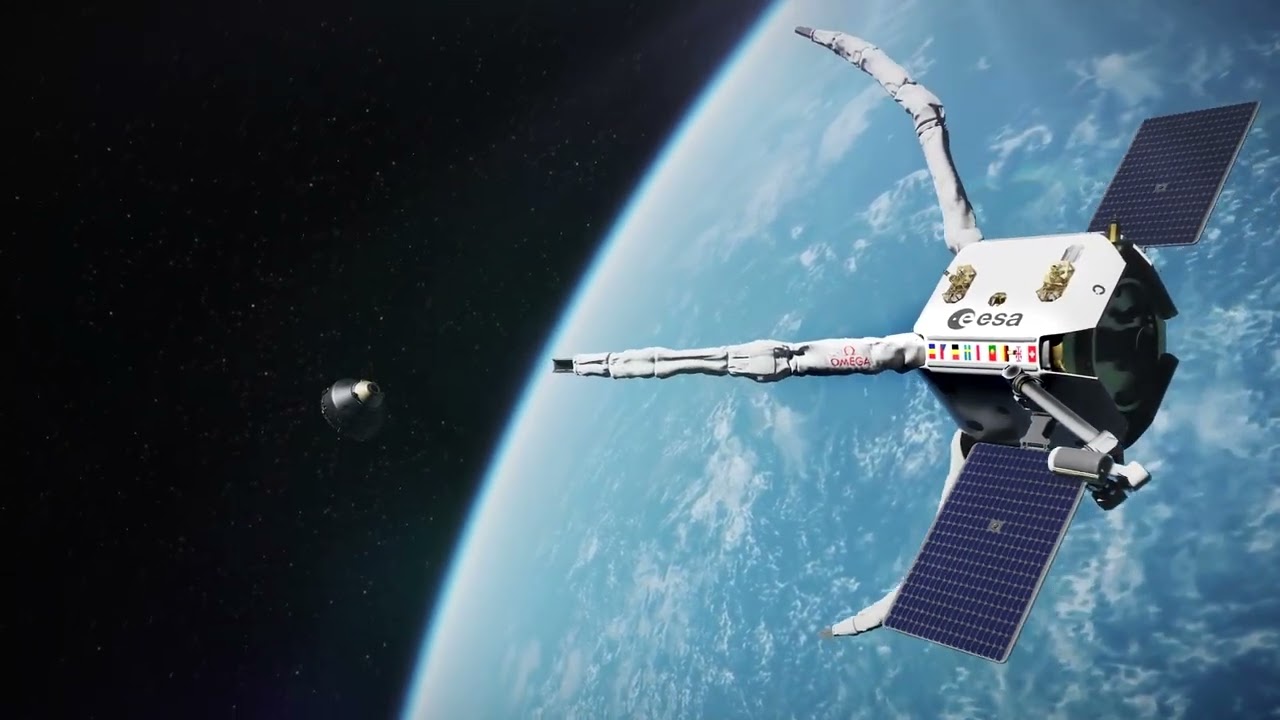
The capture itself is a delicate operation. “The ClearSpace-developed capture system will encompass the client satellite, first forming a cage around PROBA-1, then closing the cage carefully to avoid damaging the client,” Steimle explains.
Once secured, the combined spacecraft must be stabilized before any orbital change. Only then can the system lower its orbit, ensuring both objects burn up safely during re-entry. “ClearSpace-1 is designed to demise during re-entry, ensuring on-ground safety and disposal at the same time.”
The process more closely resembles a surgical extraction of potentially hazardous material than scrapyard demolition.
What games get right

Despite their liberties, space cleanup games do hit the mark in a number of areas. One is the importance of orbital mechanics. Many games emphasize inertia, momentum, and the difficulty of stopping or redirecting large masses. Real active debris removal (ADR) missions face similar constraints, where even small velocity mismatches can lead to mission failure or damage to the capture vehicle or target.
The danger of uncontrolled motion is also well represented. Tumbling objects are among the hardest targets in space operations. Synchronizing with them requires precise, multi-axis propulsion and control systems. As Steimle notes, future vehicles must “synchronise [their] motion with a potentially tumbling space object and apply the proper control to detumble.” One of the main challenges in games like Shipbreaker is avoiding being clobbered by moving debris, especially after you’ve detonated some explosives, or matching the speed of a rotating component long enough to cut it apart.
Third, specialization is key. Your toolkit and how you use it in games like Shipbreaker is key, and real missions rely on highly tailored capture systems. Each target may require a different approach, from robotic arms to nets, harpoons, or enclosure systems like ClearSpace’s.
Where the simulations fall short

The biggest gap between games and reality isn’t the tech, it’s risk tolerance.
In games, mistakes are recoverable. In orbit, a single error can generate long-lived debris fields traveling at roughly 7–8 kilometers per second, turning tiny fragments into deadly kinetic weapons.
Games also tend to assume an eventual salvage economy, where materials are recovered and reused in space. While in-orbit manufacturing and recycling are active areas of research, current debris removal efforts aren’t about profit. They’re about mitigation.
“The overarching requirement is to preserve the space environment around the Earth for use by future generations,” Steimle says. “Removing large objects before first collisions occur is key.”
There are also orbital regime differences that games rarely address. In geostationary orbit (GEO), for instance, debris is not deorbited but moved to a higher “graveyard orbit” due to the prohibitive energy cost of re-entry. This kind of orbital zoning has no real analogue in most gameplay systems.
The future of orbital cleanup
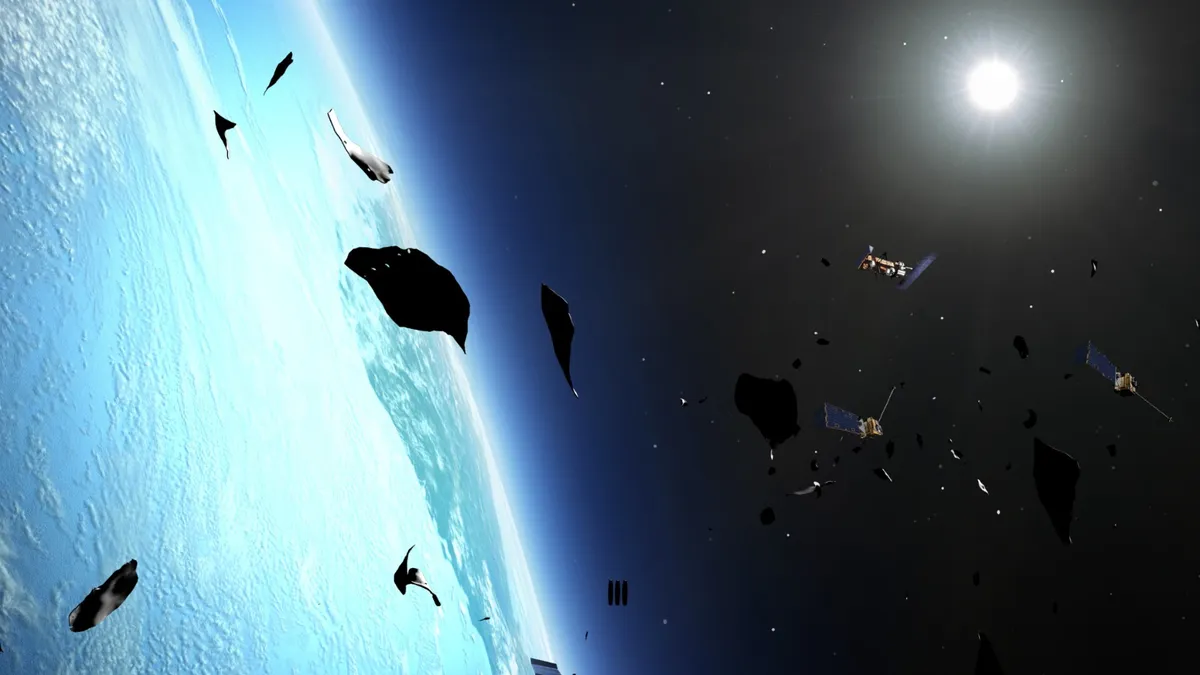
Looking ahead, the field of in-orbit servicing and debris removal is diversifying rapidly. Steimle says agencies and private companies across Europe, the United States and Japan are developing competing capture technologies and mission architectures.
Low-Earth orbit operations will likely favor agile, highly maneuverable vehicles capable of complex rendezvous and stabilization tasks. GEO missions, by contrast, will involve larger, less dynamic spacecraft performing long-duration servicing and relocation.
What remains consistent is the guiding principle: do no harm to the orbital environment. There’s little room for the improvisational cutting and explosive decompression you see in most space salvage games. Instead, the future of orbital cleanup will depend on autonomy, precision guidance, and tightly controlled interactions with fragile, often unpredictable objects.
Fiction vs. necessity
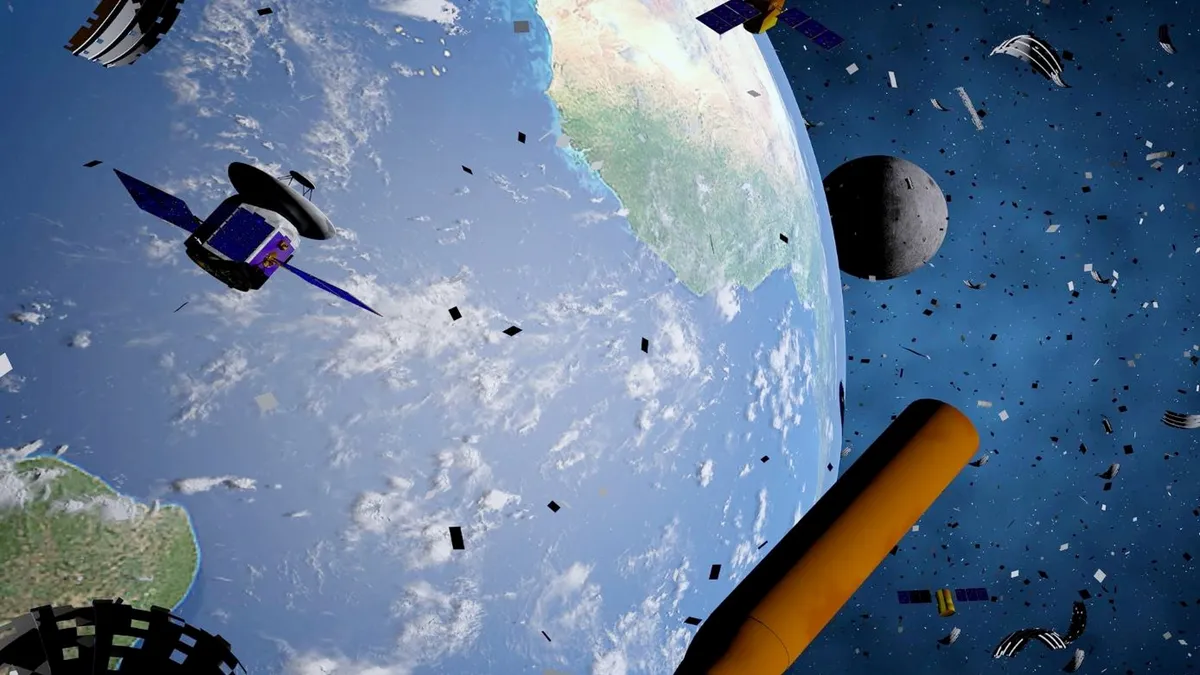
Perhaps tellingly, most space cleanup games focus on the economy of salvage. You’re tasked with generating profit, or feeding it into a progression system to purchase new tools or more efficient methods of destruction. In reality, the immediate challenge is more conservative and more urgent: preventing a runaway cascade of collisions that could close off access to space altogether.
If anything, the contrast highlights just how precarious Earth’s orbital environment has become. The fantasy is not that we can break things apart in space; it’s that we can continue to use space safely without cleaning up the vast constellations of trash we’ve already left behind.