

The queue outside the Primary Health Centre (PHC) in Perumbakkam, a neighbourhood on the southern outskirts of Chennai, begins forming early, before the sun climbs fully overhead and the concrete starts radiating heat. By 10.30 a.m., pregnant women occupy most of the verandah — some seated on benches, others leaning against walls, clutching medical files and water bottles that turn warm within minutes.
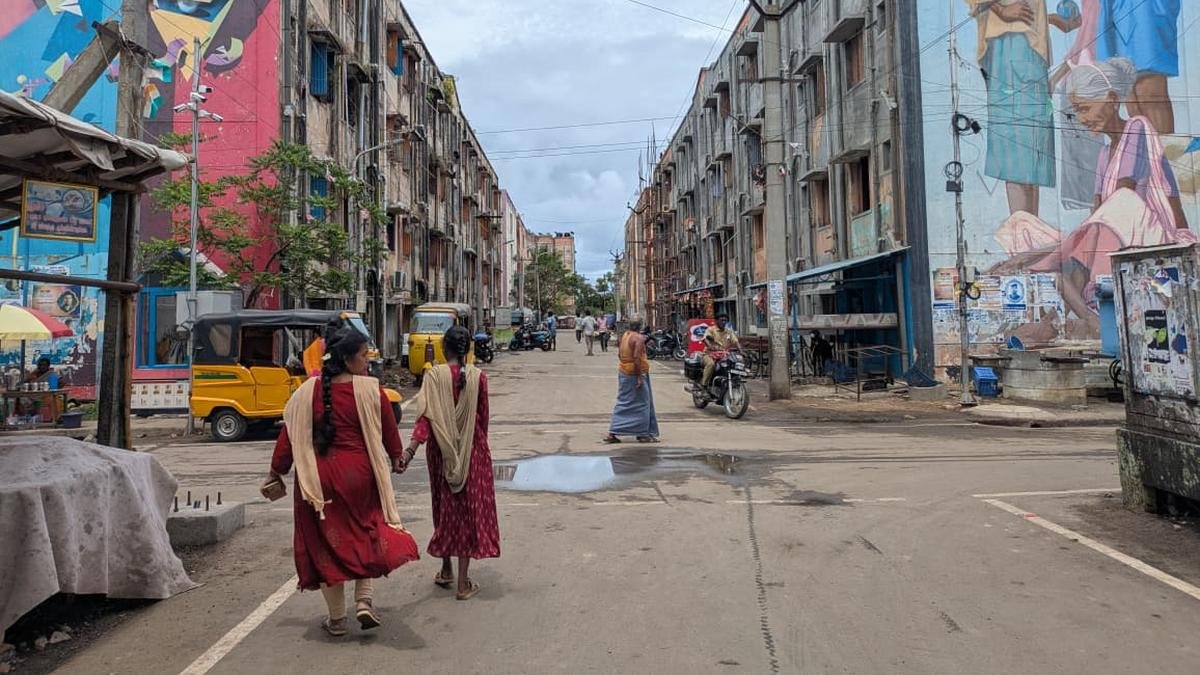
Ceiling fans push thick air around the room but offer little relief. Outside the PHC, row after row of grey tenements built by the Tamil Nadu Urban Habitat Development Board stand packed tightly together, their numbered blocks stretching into the distance, a maze of concrete. Between them are narrow passages, some strewn with debris and dirt, and almost no shade. There are few trees, barely any open ground, and little room for air to move.
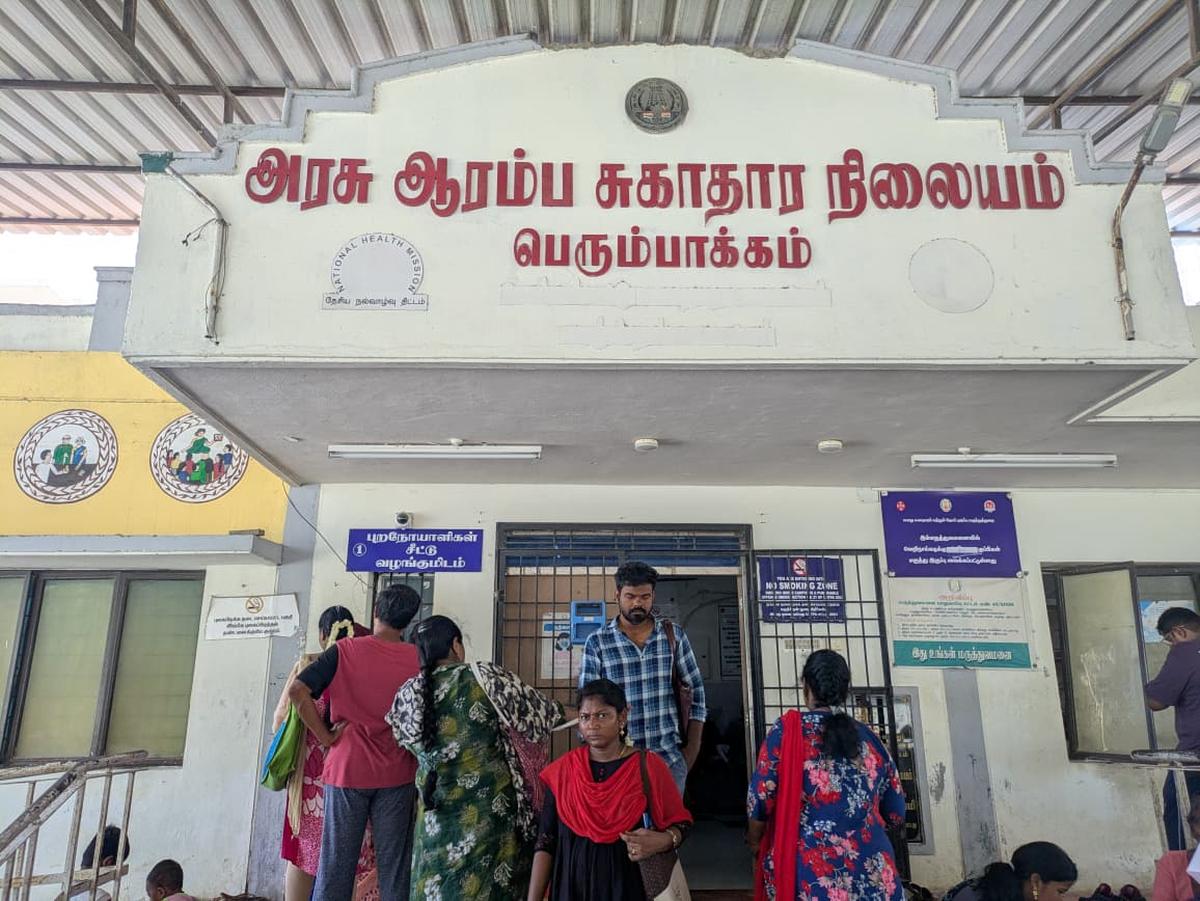
Pregnant women face higher physiological strain from heat, increasing risks of dehydration and exhaustion
| Photo Credit:
Geetha Srimathi
Pregnancy and heat
Twenty-four-year-old Priya has been here since morning. Five months pregnant with her second child, she shifts uncomfortably in her seat while keeping one eye on her four-year-old son, who darts between the benches and the doorway. She says the worst part of summer is not the daytime heat but the nights. “From midnight till almost 4 a.m., I don’t sleep properly,” she says. “It’s too stuffy inside our house.”
In the single-room apartment she shares with her family, the heat settles into the walls and lingers long after sunset. Sweat leaves rashes and pale patches across her hands and face. Doctors at the PHC tell her she is anaemic and underweight at 47 kg, and repeatedly advise her to drink more water, eat iron-rich foods and rest. But rest is difficult to come by.
Priya has also been diagnosed with a low-lying placenta and advised to avoid strain. Yet every morning she works cleaning discarded rubber medical equipment for a company, scraping dirt and residue from gloves and tubing using a knife. When she returns home, there is cooking, cleaning and caring for her family. Sleep comes in fragments between heat, discomfort and household responsibilities.
“I have to come again for another blood check-up,” she says. “It’s very difficult to come during the day in this heat. But I have no choice because there is work at home too.”
Around her, similar stories unfold in the waiting area outside the PHC.
Nilofer, another resident of the Perumbakkam tenements, waits for her third-month check-up. She says her earlier pregnancies felt easier. “For my first two children it wasn’t this bad,” she says, exhausted after the short walk to the PHC. “Now I feel tired just walking here.”
Across Chennai’s resettlement colonies such as Perumbakkam and Ezhil Nagar, families relocated from informal settlements into public housing now live in dense clusters of low-cost apartment blocks built by the State government.
In many buildings, narrow staircases trap heat through the day, corridors remain dim even at noon, and windows open into walls of neighbouring blocks rather than open spaces. In some apartments, a weak cross-breeze reaches the upper floors, but in many others the air feels stagnant.
The absence of green cover is striking. Concrete dominates the landscape — concrete roads, terraces and courtyards absorbing and radiating heat through the day and into the night. Children play in cramped corridors because there are few shaded outdoor spaces. Women spend most of their days indoors in poorly ventilated homes where temperatures remain high even after sunset.
A recent study by Climate Trends, which monitored indoor temperatures across 50 low- and middle-income households in Chennai between October 2025 and April 2026, found that homes remained dangerously hot through the night, with temperatures in many houses frequently exceeding 32°C and rarely dropping below 31°C even after sunset.
Researchers said concrete structures commonly used in urban housing absorbed heat during the day and released it slowly at night, while high humidity levels further intensified discomfort and disrupted sleep. The study highlights how poorly ventilated housing and heat-retaining buildings expose vulnerable groups, including pregnant women, to prolonged heat stress with little opportunity for physical recovery.
Costs of hydration
In one of the Ezhil Nagar blocks, 18-year-old Lakshmi (name changed), holding her eight-month-old child against her shoulder, says she rarely stepped outside during her pregnancy. “There’s no proper place to walk here,” she says. “My family was scared to let me go outside alone.” Even now, she says, feeding her child outdoors feels uncomfortable because of the lack of privacy and space.
Safety concerns repeatedly emerge in conversations with women here. Thirty-one-year-old Anandhi, pregnant with her fourth child, says she barely lets her daughters outside during the summer holidays. She recently stopped working at a canteen in an IT company because of exhaustion and health complications. Diabetic and dependent on insulin injections during pregnancy, she spends most days trying to manage fatigue, childcare and the heat.
“The doctor tells me to drink enough water and eat foods with more water content,” she says. But hydration itself becomes a challenge in neighbourhoods where heat is constant, electricity cuts are frequent during summer, and cramped living conditions leave little room for comfort. Most residents in the TNUHDB tenements rely on purchased drinking water cans, and many say they struggle to afford additional cans during the summer months, even as rising temperatures increase household water consumption and strain already tight budgets.
Jaishree Gajaraj, head of the department and senior consultant in obstetrics and gynaecology at Varam Women’s Superspeciality Centre, MGM Healthcare Chennai, says pregnancy naturally increases the body’s metabolic rate, which in turn raises sweating and the risk of dehydration during hot weather.
“When we talk about dehydration, we often think only about water loss, but the body also loses electrolytes,” she says, adding that fluids such as buttermilk, citrus fruits and traditional drinks with salt content can help replenish them.
Dr. Gajaraj says planned, moderate physical activity during pregnancy is important and should not be confused with routine household labour. “Walking around the house while doing chores is different from purposeful walking or exercise,” she says, explaining that structured movement helps improve circulation, regulate metabolism and support overall maternal health during pregnancy.

What happens to bodies
For 24-year-old Durga, however, even stepping downstairs has become difficult. Living on the third floor of a tenement in Ezhil Nagar, she underwent a cervical cerclage procedure during pregnancy and has been advised to limit movement. But confinement inside her apartment has its own consequences.
“My body feels hot all the time even though I don’t have a fever,” she says.
The staircase outside is steep, and she avoids climbing down unless absolutely necessary. A table fan runs continuously in the corner of the room, but the air barely circulates. “There’s not much breeze inside the house,” she says.
Dr. Gajaraj says the body usually regulates its core temperature despite external heat or cold, but prolonged exposure to extreme temperatures can overwhelm this mechanism. “When the body is unable to maintain its normal core temperature, that is when problems arise,” she says.
A 2024 study published in the journal BJOG by researchers from Sri Ramachandra Institute of Higher Education and Research, Chennai found that pregnant women exposed to high temperatures faced significantly higher risks of miscarriage, preterm birth, low birthweight and intrauterine growth restriction. The study followed 800 pregnant women in Tamil Nadu between 2017 and 2022 and found that nearly half were exposed to unsafe heat levels. Researchers also recorded higher levels of dehydration and physiological heat strain among women exposed to heat.
Vidhya Venugopal, who led the study, says the risks are particularly severe for women living in informal settlements and overcrowded housing. “Heat stress impairs the body’s ability to regulate temperature during pregnancy, restricts blood flow to the placenta and reduces oxygen to the foetus,” she says. “The risk of preterm delivery rises with every degree increase in ambient temperature.”
For women already vulnerable because of anaemia, undernutrition, poor housing and demanding work, extreme heat compounds existing risks. “These women cannot stop working when temperatures peak because losing even a day’s wages is not an option,” Prof. Venugopal says. “After spending hours in dangerous heat, they return to homes that trap warmth and allow no recovery. Their bodies never get the chance to recuperate.”
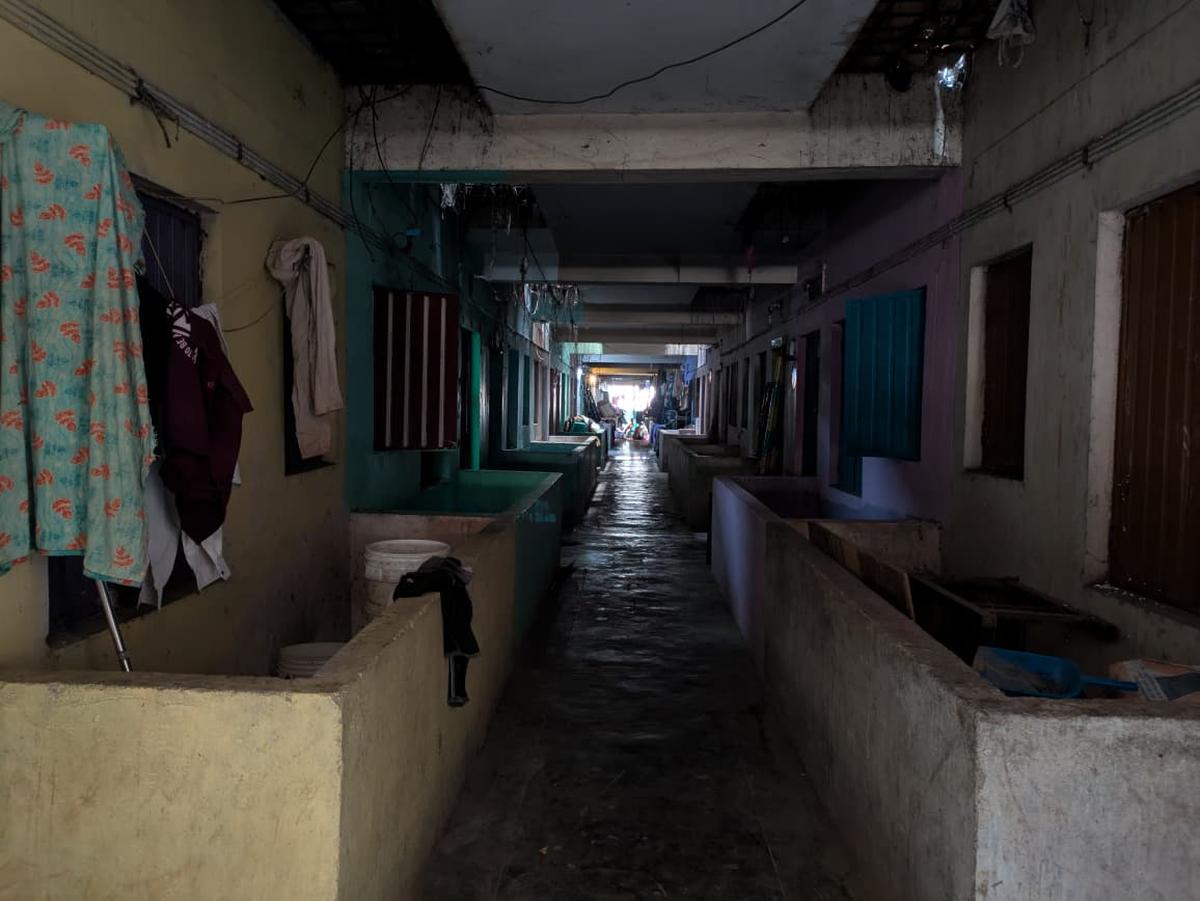
Poorly ventilated housing and heat-retaining buildings expose vulnerable groups, including pregnant women, to prolonged heat stress with little opportunity for physical recovery
| Photo Credit:
Geetha Srimathi
For women without permanent housing, the realities are harsher still. Along the crowded stretch of Rattan Bazaar in north Chennai, traffic noise mixes with the smell of flowers, and food frying in roadside stalls.
Twenty-seven-year-old Abirami sits beneath a tree with her three children beside her, arranging flowers for sale. The patch of shade beneath the branches is temporary; as the sun shifts, so does the family. “In the morning we sit under that tree,” she says, pointing down the road. “In the afternoon we move here.” She is waiting for allotment of a TNUHDB house. Until then, pavements and patches of shade are all she has.

State measures
The Union Ministry of Housing and Urban Affairs has directed States and Union Territories to ensure regular supply of drinking water, oral rehydration solutions and cooling facilities such as fans and ventilation systems, while also improving sanitation and mosquito control in shelters under the Deendayal Antyodaya Yojana-National Urban Livelihoods Mission (DAY-NULM). However, there is limited awareness about these shelters and many people living on the streets remain reluctant to move into them because of concerns around safety, poor accessibility, and the fear of being separated from family members.
The Ministry also urged cities to activate helplines, form rescue teams, geo-tag shelters for easier access during emergencies, and expand shelter capacity to prepare for rising demand during extreme weather events.
Abirami says she survives summer with the help of roadside water points and buttermilk stalls. But even those have become fewer in recent years. “Sometimes nearby shops give us buttermilk. Otherwise we manage somehow,” she says.
A 2021 policy paper by non-governmental organisations Okapi Research and Advisory and Information and Resource Centre for the Deprived Urban Communities (IRCDUC) called for a more comprehensive approach to protecting Chennai’s homeless population from heat and other disasters. It stressed the need for street-level heat interventions such as water, buttermilk and cooling stations, stronger disaster preparedness systems, early warning communication, public awareness campaigns and closer coordination between government agencies and NGOs.
Tamil Nadu’s own policy documents increasingly recognise heat as a public health threat. The Tamil Nadu State Planning Commission, in its Heat Mitigation Strategy report, identifies pregnant women among the groups most vulnerable to extreme temperatures.
The report notes that nearly 74% of the State’s population is exposed to temperatures exceeding 35°C and warns that prolonged heat exposure can worsen cardiovascular and respiratory illnesses while posing serious risks to pregnant women, children and the elderly.
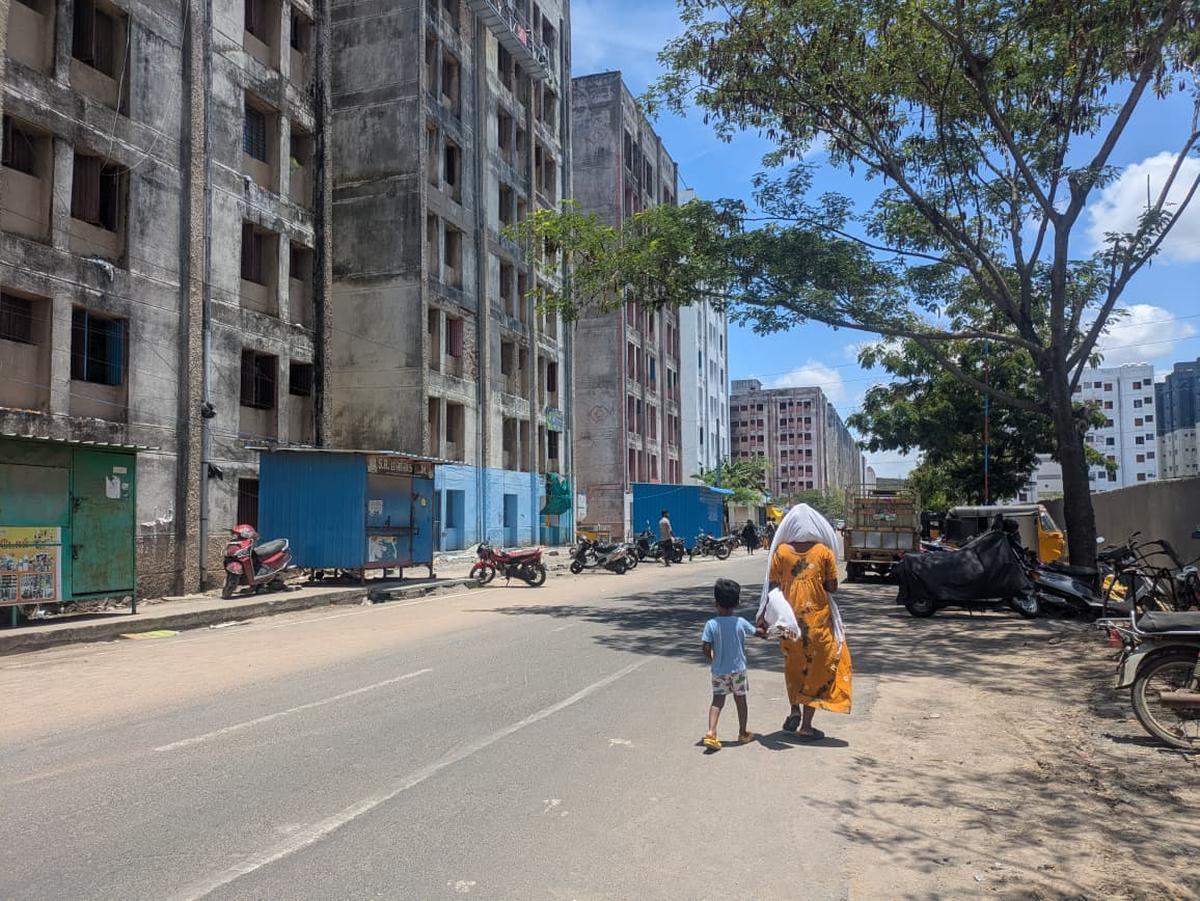
The Tamil Nadu State Planning Commission’s Heat Mitigation Strategy report officially designates pregnant women as a highly vulnerable group, as extreme heat heavily strains maternal cardiovascular and thermoregulatory systems
| Photo Credit:
Geetha Srimathi
Designing for heat
Urban planners and housing activists argue that the design of many resettlement colonies worsens heat stress. A policy document by the TNUHDB itself acknowledges that public housing in the State has historically prioritised cost and efficiency over residents’ lived experiences. The document calls for climate-resilient and people-centric housing with better ventilation, social amenities, mixed-use planning and improved green cover.
Yet implementing such ideas remains difficult.
Vanessa Peter, founder of IRCDUC, says public housing in Tamil Nadu has evolved after years of advocacy. Earlier tenements lacked even basic amenities such as in-house water supply and adequate living space. But she says current housing projects continue to struggle with density and climate resilience.
“In places like Perumbakkam, the density is far higher than ideal, which restricts airflow,” she says, adding that the resilience of people should not be taken for granted.
Financial limitations shape many of these decisions, she adds. While the Union government contributes part of the funding for housing schemes, States must bear a substantial portion of the cost, which forces a compromise between affordability and liveability.
A 2025 advisory by the National Disaster Management Authority recommends identifying and mapping heat-vulnerable settlements and populations; improving access to shaded spaces, cooling centres, drinking water and emergency shelters; promoting affordable cooling solutions such as cool roofs, ventilation, insulation and reflective materials; increasing green cover through trees, urban forests and water-sensitive planning; strengthening heat action plans and early warning systems; and integrating heat resilience into housing schemes, urban planning and building standards.
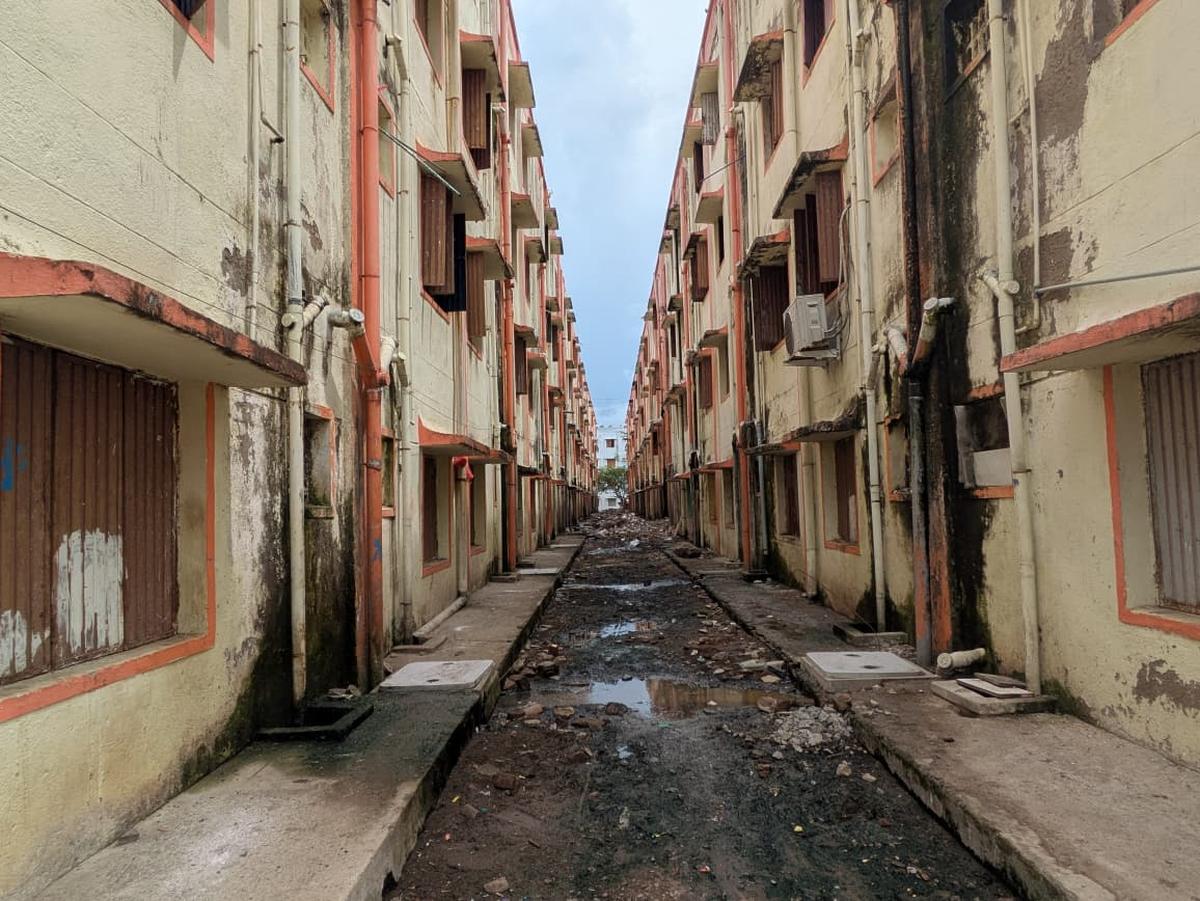
Mapping heat risks, deploying passive cooling tech, increasing green cover, and updating building codes are vital interventions to protect vulnerable populations
| Photo Credit:
Geetha Srimathi
By evening in Perumbakkam, the heat begins to soften outdoors but remains trapped inside the tenements. Women return from hospitals, work shifts and water queues to kitchens that feel like ovens. Children continue playing in dark corridors because the apartments are too cramped. Fans whirl endlessly above beds where sleep arrives late and disappears quickly.
Inside her apartment, Priya watches her son run across the room as darkness settles outside the block. Soon another night of interrupted sleep will begin. Tomorrow morning, she will wake up and do it all over again.
(This story is part of the Asian College of Journalism’s Climate Change Media Hub Mentorship Programme.)