

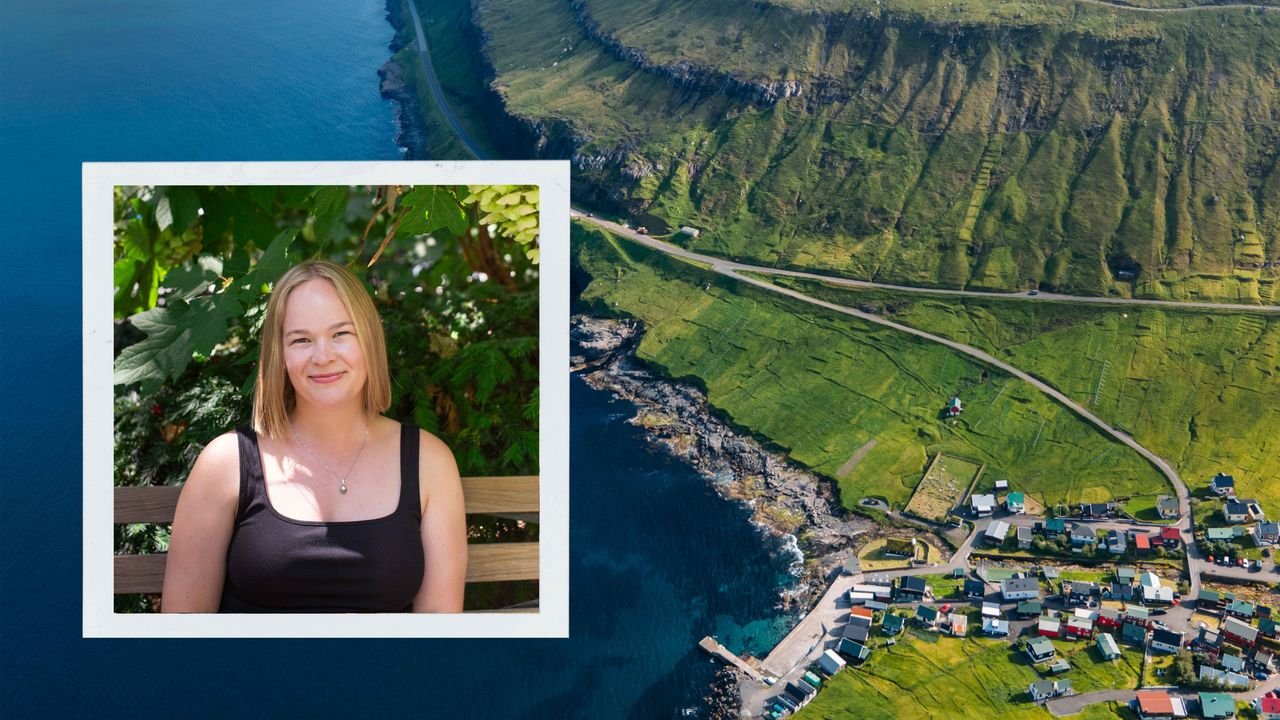
Then there was the actual process of finding and buying a house in the Faroes. I spent years constantly checking Faroese real estate websites for available properties. At one point we were pretty desperate, and a house came along. We went to go and see it, we found it was infested with termites and even my partner, who is extremely skilled in building and construction, was like, this is beyond repair. During the visit, we asked the real estate agent if they had other houses coming on the market soon in the next few weeks while we were in the Faroes. He said yes, and we eventually went to see this house in Funningur, which is one of the first inhabited villages in the Faroe Islands and has this historic church, so it’s a tourist stop in the Faroes circuit. The house was great: It ticked off all the boxes in terms of size, price, and location. It was a bit 1970s, but my partner and I felt good about our ability to fix it up to our tastes. To buy the house, we got into a bidding war with other potential buyers and had about three rounds of counter bidding before finally getting it. It was one of the most exciting and scariest ordeals of my life!”
How did you build community or meet new people?
“Building a community in the Faroes has been really organic because we live in a very small village. Funningur’s population is only about 40 people, so when we moved in, everyone was extremely curious about us two foreigners who were able to buy a house. They were like, ‘Why did you choose Funningur? Why the Faroe Islands?’ And we were just honest about who we were and what we love about the Faroes. I deeply respect the culture and the islands, and I think our new neighbors saw that. Since last October, everyone has been incredibly welcoming and generous. Someone even brought over a giant leg of lamb, like from us livestock they had just slaughtered the week before.
We also very quickly made friends with our neighbor, who is a single Faroese woman in her mid-thirties who lives there year-round. She regularly comes over for dinner a few times a week, and we dine at her house too. She helped us a lot with our renovations and lent us a ton of tools. We’re even in business with her: Now that the house is all fixed up, we rent it out on Airbnb whenever my partner and I are away traveling so that visitors can experience the beauty of the Faroes too, and our neighbor manages the property.
I can’t emphasize enough how warmly we were welcomed in Funningur. During a local festival in February, there was this big feast that brought in people from all over the Faroes. At one point the guy who organized it stood up and thanked everyone for coming, called out people by name to say thanks. He also named me and my partner, welcoming us to the village, saying how happy he and the other villages were that we chose their community to be a part of. I almost cried. Making a good impression and being part of the local scene was a big concern of mine, and luckily we didn’t have to worry about it at all.”
Share a brief description of your typical weekday.
“In the Faroes, my typical day starts with waking up, making a coffee, and sitting in front of my huge picture windows that frame the fjord and the mountains around Funningur. Then I drive to my gym, work out, come home, and start work on my laptop. After that, I’ll sometimes take a walk around my village in the afternoon or go for a hike nearby—which I can do nearly at any time in the summer because of all the hours of sunlight the Faroe Islands get thanks to its high latitude. The archipelago has a perpetual civil twilight during summer nights, but we also get next to no light in the winter. For dinner, my partner cooks dinner and we like to wind down by watching movies. Life in the Faroe Islands is quiet and peaceful and that’s why I love it.”