

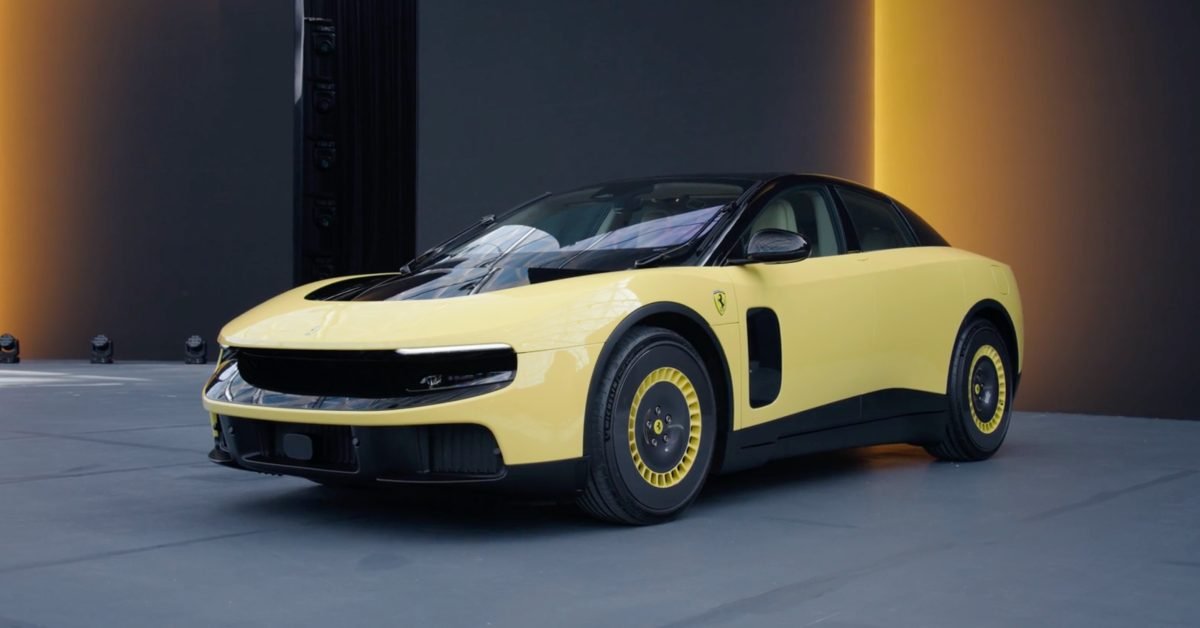
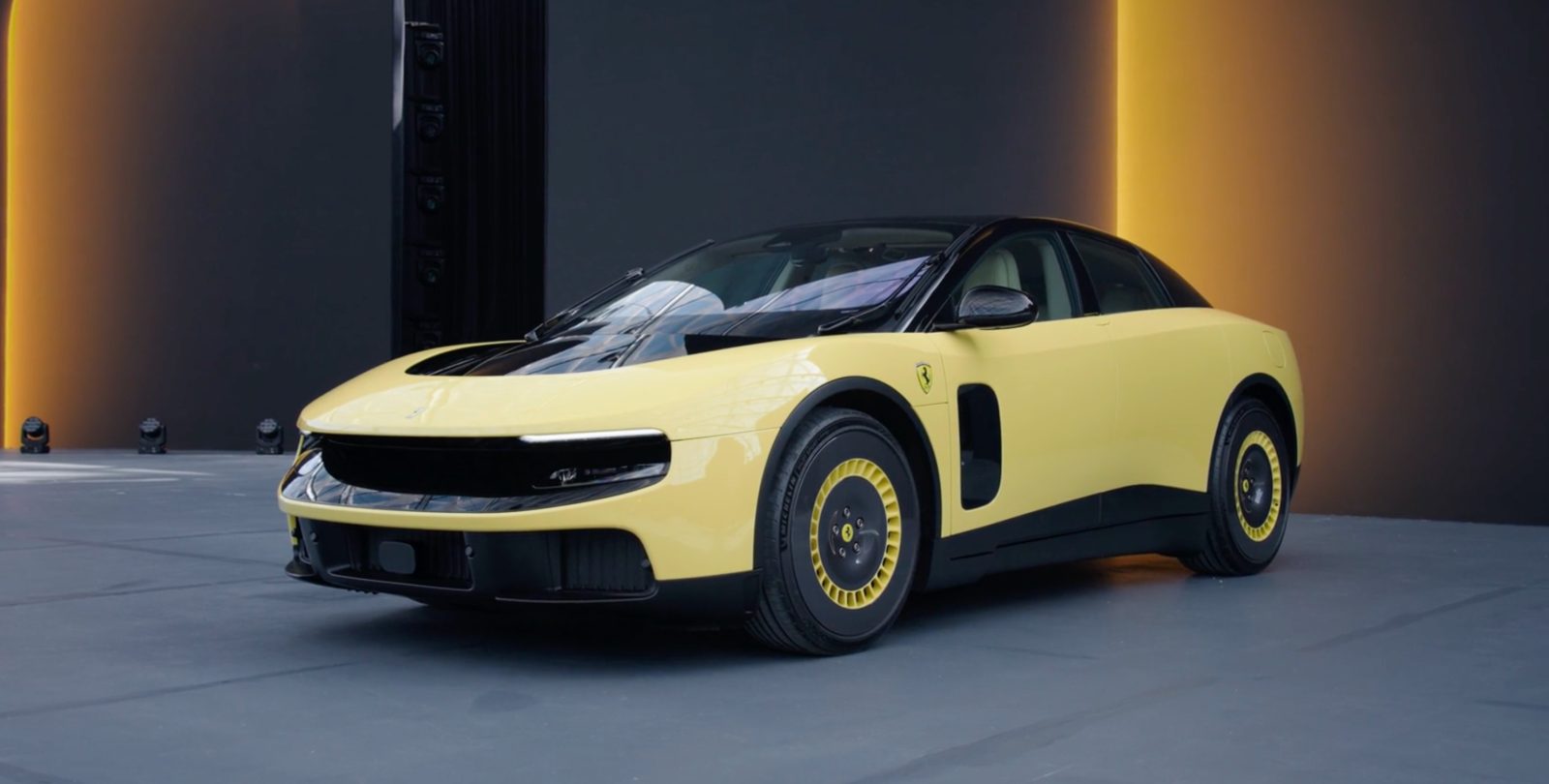
Ferrari has already sold every Luce it plans to build in 2026. The automaker’s first electric car hit its full-year sales target — just under 500 units — in less than two months, the Financial Times reported.
That’s despite a brutal wave of design criticism and a €550,000 (~$640,000) starting price that lands the EV near the top of Ferrari’s lineup.
A rough launch that didn’t dent demand
The Luce launched in Rome on May 25, and the reception was ugly. Ferrari (RACE) stock dropped 6% in the days around the reveal, and the design got torn apart online. Former Ferrari boss Luca di Montezemolo went as far as telling Italian media the company should “at least take the prancing horse off.”
None of it mattered to the people writing the checks. Ferrari cleared its entire 2026 order allocation before a single customer car has been delivered. Deliveries don’t even start until October.
The company declined to comment on the sales figures and said it will give a fuller update on the Luce’s market reception at its half-year results on July 30. A senior Ferrari executive told the FT the car’s unconventional look was driven by aerodynamic requirements and needs to be “digested” before it’s understood.
China led the buying
The demand is coming heavily from China, the same market where we reported the Luce was an instant sellout in June. Back in May, CEO Benedetto Vigna already said the car was “clocking up orders” from both existing and new customers, with the order book stretching toward the end of 2027.
Priced at €550,000, the Luce is a four-door, five-seat car designed by former Apple designers Jony Ive and Marc Newson through their LoveFrom studio. It’s not a supercar. It’s a family Ferrari, and that alone was enough to set off the purists, but it does have supercar performance.
The hardware is the real story
Under the styling fight sits a serious EV. When Ferrari revealed the then-called Elettrica’s specs last October, it laid out over 1,000 hp from four independent motors, a 122 kWh battery on an 880-volt architecture, 350 kW charging, more than 530 km (330 miles) of range, and a 0-100 km/h time of 2.5 seconds.
Ferrari developed a lot of that in-house: motors using Halbach array rotors, silicon carbide inverters running at 93% efficiency, and an active electric suspension that reads the road with one-millisecond latency. This isn’t a badge on someone else’s skateboard.
The volume is tiny on purpose. Just under 500 cars for a partial 2026 is a rounding error against mass-market EV output, and it fits Ferrari’s model. The company cut its 2030 EV sales target roughly in half last year. Ferrari doesn’t sell volume. It sells scarcity, and scarcity just sold out.
Electrek’s Take
Here’s the thing about the design outrage: it doesn’t matter. I have to admit, it was the craziest negative response to a car release I had ever seen. But again, it doesn’t matter.
You can hate how the Luce looks. I’m not going to argue with you. But Ferrari didn’t need you to like it. It needed a few hundred people with more than half a million dollars to spend, and it found them in under two months. The people screaming about the prancing horse being desecrated online were never the customers.
What I’m actually excited about has nothing to do with the styling. This keeps Ferrari’s EV effort alive at a moment when a lot of the industry is quietly walking its electric plans back. And in the process, Ferrari built real expertise — its own high-rpm motors, an 880-volt architecture, silicon carbide power electronics, an active suspension that’s ahead of most of what’s on the road. That’s the valuable part.
Because a €550,000 four-seater is not where this ends. It’s where the powertrain and the electric architecture get proven and paid for by people who don’t blink at the price. The interesting question is what Ferrari does with that expertise next, when it applies it to something a lot more attainable and a lot easier to love. That car is the one I want to see. T
If you’re eyeing any EV — a $640,000 Ferrari or something in the real world — powering it with home solar is the cheapest fuel you’ll ever buy. With electricity rates up almost 10% last year and expected to keep climbing, going solar is one of the best ways to protect yourself against rising costs. And with lease and PPA options, you can do it with zero upfront cost and start saving immediately. If you want to find the best deal, check out EnergySage. It’s a free service with hundreds of pre-vetted installers competing for your business, so you save 20 to 30% compared to going it alone. No sales calls until you pick an installer. Get your free quotes here.


FTC: We use income earning auto affiliate links. More.