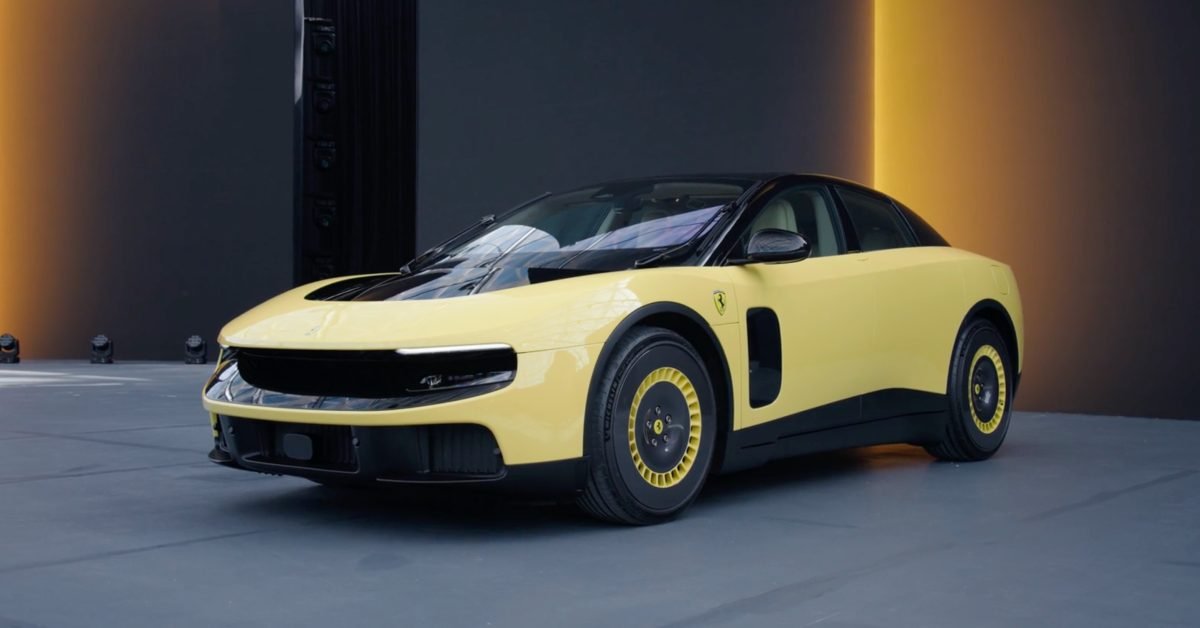
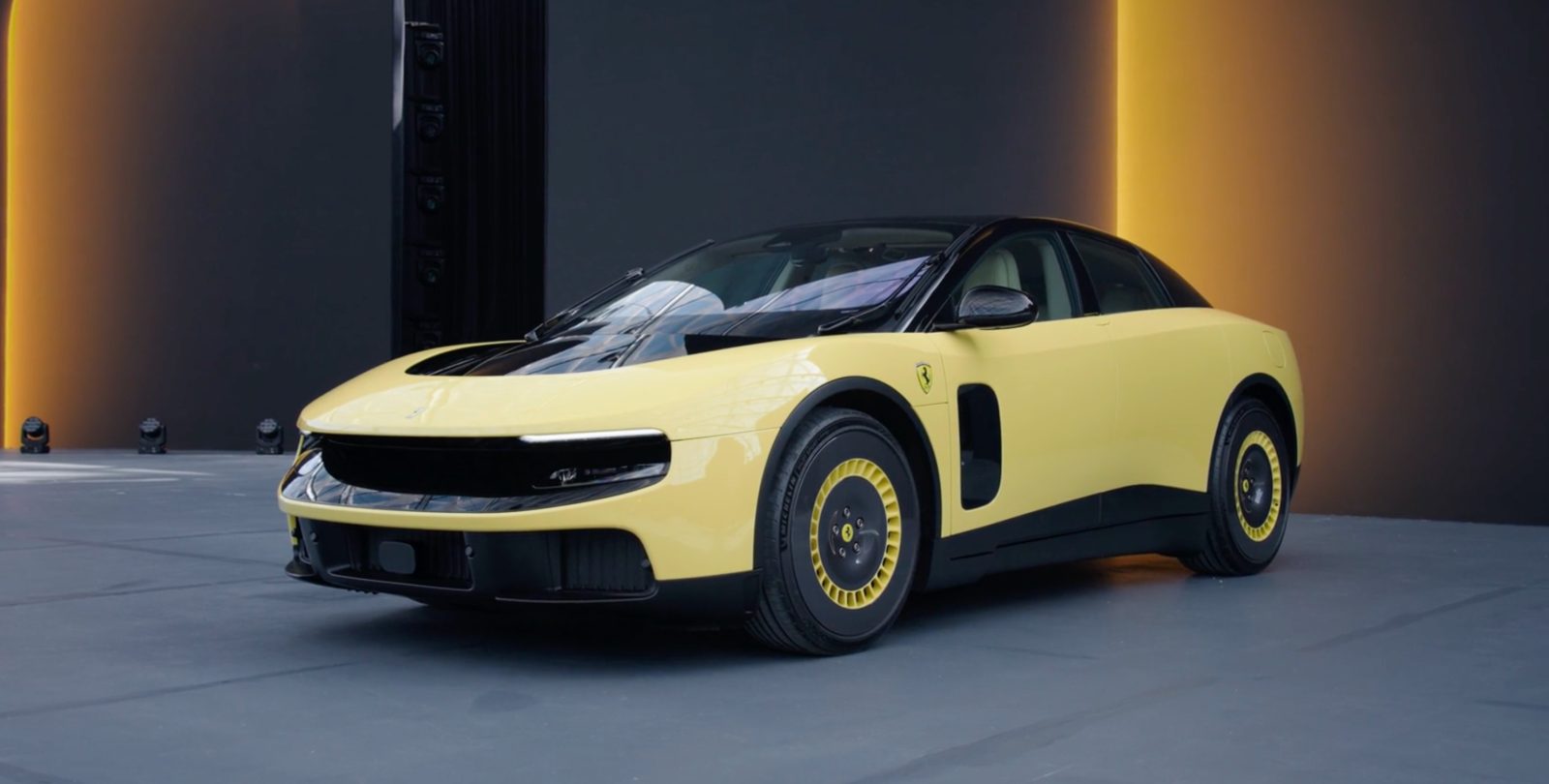
Ferrari unveiled the Luce today in Rome, completing a three-act reveal that started with specs last October and continued with the Jony Ive-designed interior in February. The Italian automaker flew me to Rome for the launch, and I got about 30 minutes to explore the vehicle up close, though I couldn’t drive it.
What I found was a car that challenges just about every assumption of what a Ferrari should look like, who should sit in it, and how it should sound, while being unmistakably, stubbornly Ferrari in the ways that matter most: emotions.
A Ferrari that takes a second to register
The first time you see the Luce in person, it takes a few seconds to register the fact that you’re looking at a Ferrari. If it weren’t for the Prancing Horse badge and the unmistakable Rosso Corsa paint option, I doubt one in three people would guess the brand correctly.
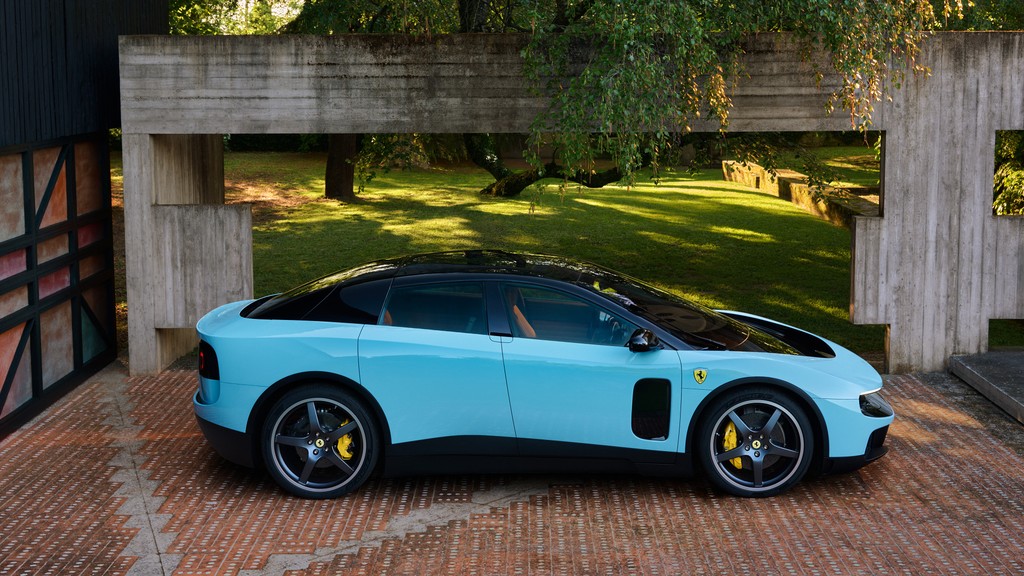
That’s not because it’s the legendary marque’s first electric vehicle. The fact that this is Ferrari’s first five-seater and its first sedan — if you can even call it that — has far more to do with the cognitive dissonance. It’s also the first Ferrari co-designed by LoveFrom, the design firm led by Jony Ive and Marc Newson, and notably their first time designing a vehicle of any kind.
Generally, when giving my first impressions of a new car, I don’t spend too much time on exterior design beyond functional elements. Design is subjective, and you can form your own opinions. But I share mine when it’s strong, and here it is: I think the Luce’s design is going to be polarizing.
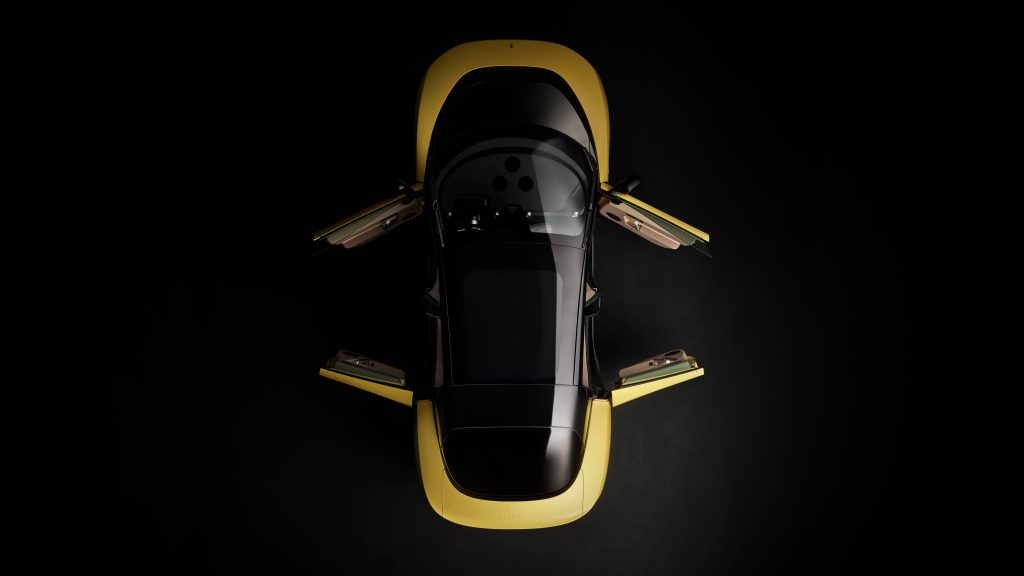
The front is dominated by the S-duct, a feature borrowed from Ferrari’s racing DNA. Beyond its aerodynamic function, it creates a fascinating visual trick — the black indentation housing the air intake and headlights creates an illusion that makes the front overhang appear much shorter than it actually is. It feels like they were trying to give a supercar front end to a sedan, and they pulled it off.
That black element flows uninterrupted from the lower hood all the way to the rear, establishing a two-tone design language that runs the entire length of the car.
That two-tone treatment serves a practical purpose too: it helps the eye digest Ferrari’s traditionally bold color palette by driving contrast. You can almost think of the Luce’s body as two distinct elements — the main chassis and glass house forming one shell, with the painted skirt wrapping around the lower section like armor.
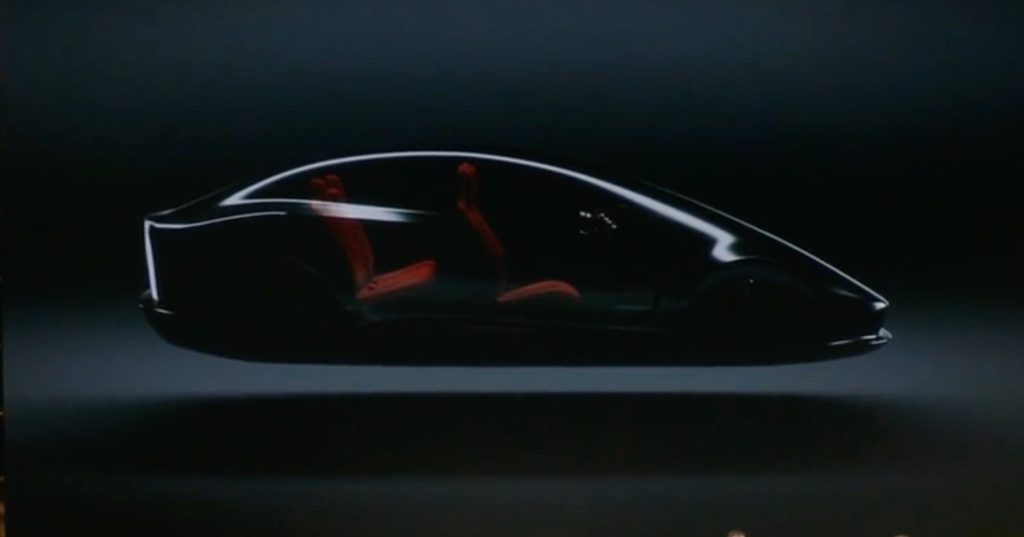
No one can blame any design controversy on this being Ferrari’s first electric car. It’s hard for anyone to imagine what a five-seat hatchback sedan from Ferrari would look like because it has never existed. Well, now it does.
I’m genuinely curious to see people’s reactions, but personally, I think it works.
The interior is where LoveFrom earned its keep
If the exterior is polarizing, the interior is the opposite. It’s the part of the Luce that will win over even the skeptics.
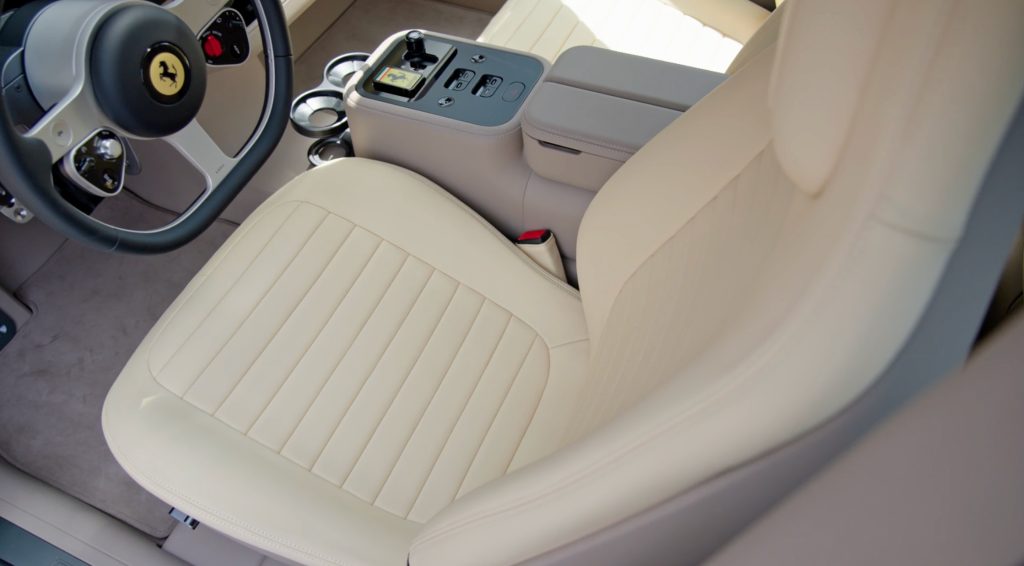
The front seats are understated. Simple, beautiful, and elegant. They were comfortable for the short time I sat in them, wrapped in premium leather with seat controls that are refreshingly simple and intuitive. Every interaction point, every knob, every toggle, every fan control, is clean, minimalist, and deeply satisfying to use. Most of them are machined from single pieces of metal, and you can feel it in every click and rotation.
The steering wheel is absolutely stunning. A three-spoke design machined from 100% recycled aluminum with anodized finish, glass elements, and leather grip. It houses the binnacle, torque-control paddles, and the iconic Manettino — all moving together as one assembly. It is one of the finest steering wheels I’ve ever seen in any car.
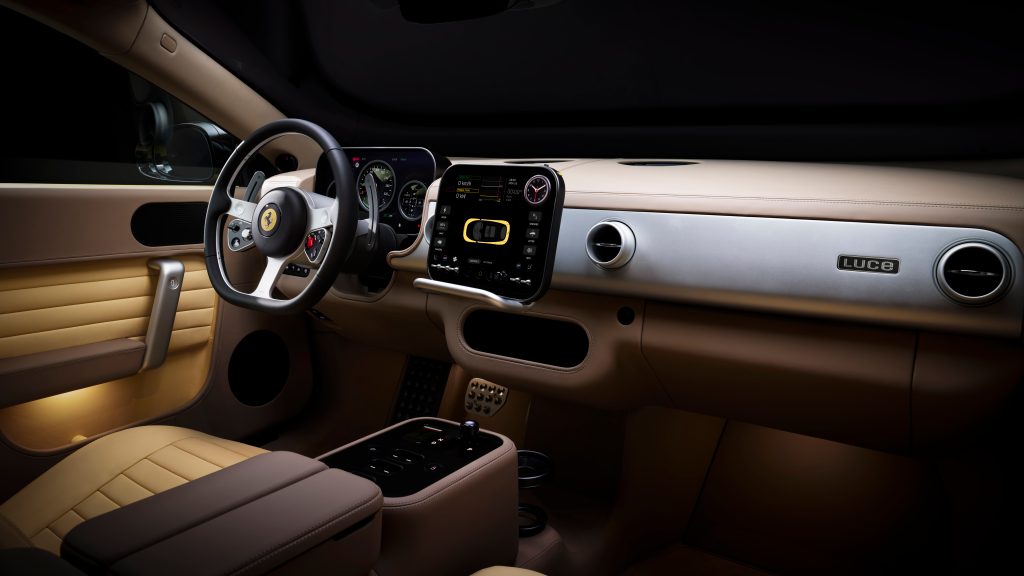
Kudos to LoveFrom — it genuinely feels like a tremendous amount of design effort was spent not just on the overall aesthetic, but on each specific component that the driver and passengers will interact with. The E Ink key that changes color when docked, the mechanical dials encased in precision-machined aluminum housing, the custom OLED displays developed exclusively by Samsung — every element suggests a team that obsessed over details in a way that I haven’t seen in years.
Where most design studios might have defaulted to larger screens and digital interfaces following industry convention, LoveFrom pushed back hard. The result is a cockpit that feels like the anti-Tesla, the anti-touchscreen movement, but without going to the extreme of not having a touch interface at all, as it is obviously useful for more in-depth settings. The whole design is executed at a level that justifies the approach entirely. Precision-engineered mechanical buttons, dials, toggles, and switches are combined with digital displays only where they genuinely serve the driving experience.
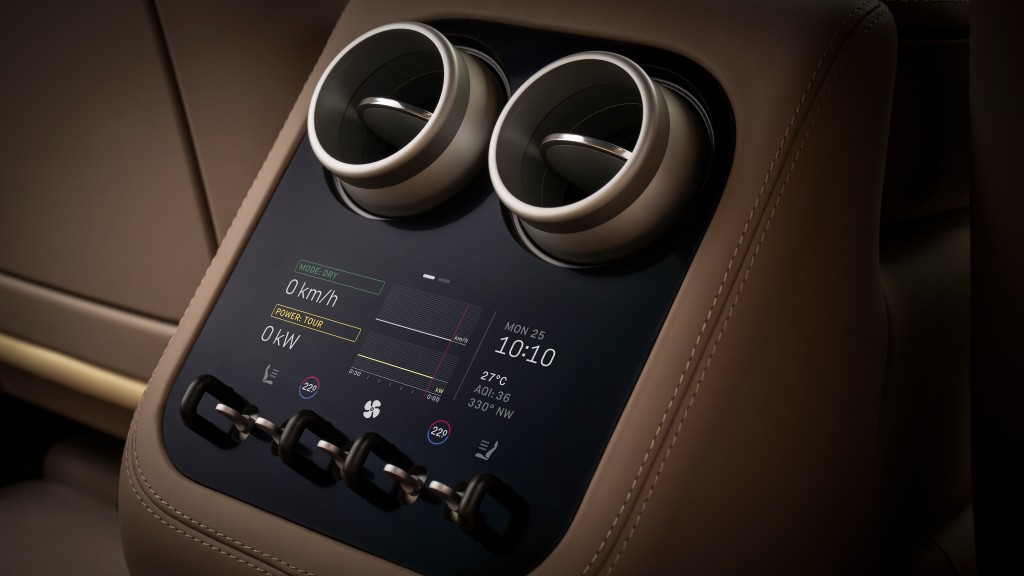
The one area where I have a real criticism is the back seat. With those giant suicide doors placing a huge emphasis on the rear compartment, I expected more. There’s plenty of legroom — way too much for me at six feet tall. But if I put my head on the headrest, I literally touch the roof. The seats aren’t deep enough, leaving legs at an non-optimal angle.
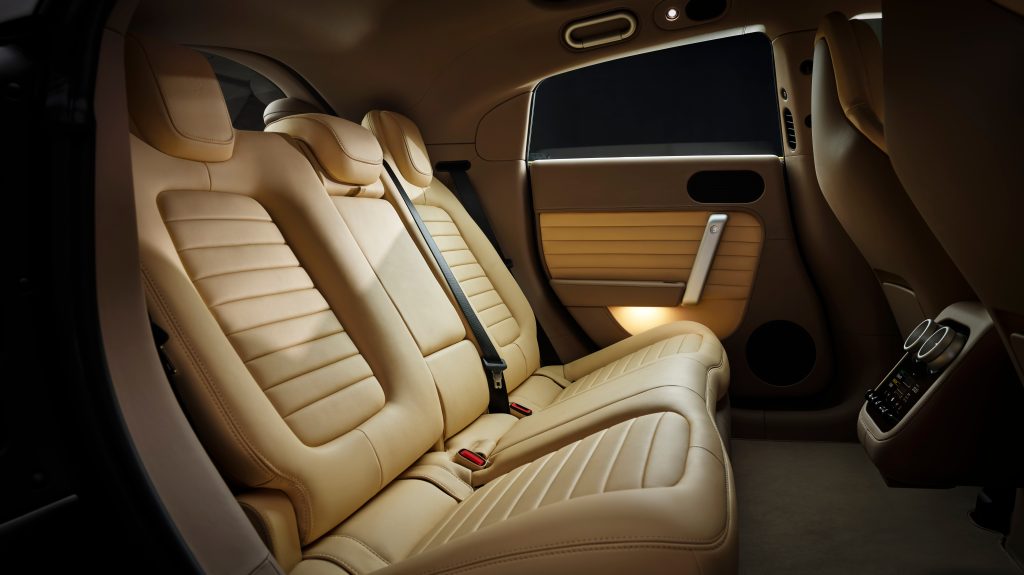
I think I would have traded a couple of inches of legroom to bring the rear seat forward and gain an inch of headroom. That would have also resulted in a bigger trunk, though at 597 liters, it’s already the largest trunk in any Ferrari ever.
But let’s be honest: the back seat is not where you want to be in a Ferrari. It’s about the driving experience, and everything in the front of this car is designed to make the driver feel like they’re sitting in something extraordinary.
1,050 horsepower and a novel approach to sound
Under the Luce’s shell sits a bespoke platform with a 122 kWh battery pack built entirely in Maranello from 210 cells co-developed with SK On. Four F80-derived permanent magnet synchronous engines — one at each wheel — deliver a combined 830 kW. The rear engines alone produce 620 kW, spinning at up to 25,500 rpm. The front pair adds 210 kW at 30,000 rpm.
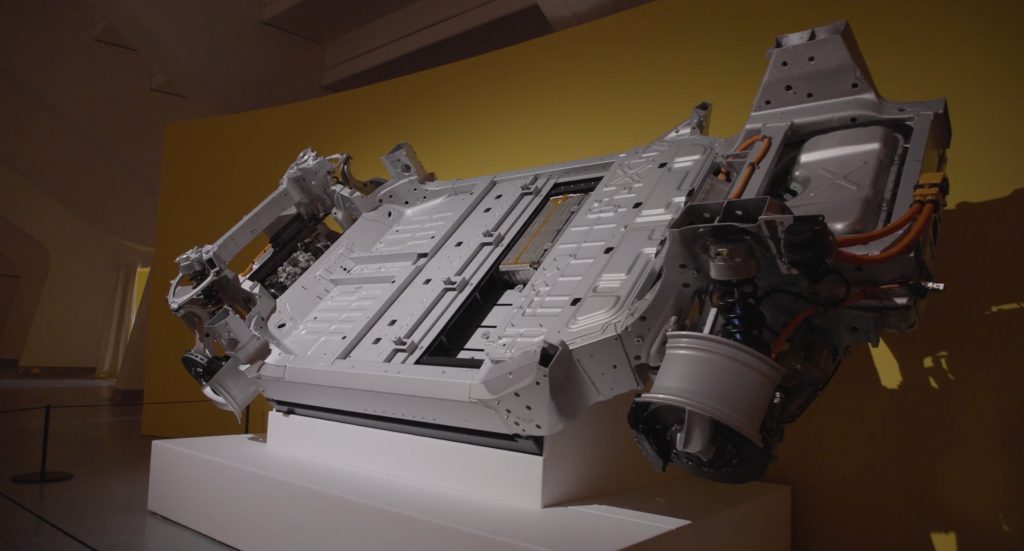
The numbers are staggering: 0-100 km/h in 2.5 seconds, 0-200 km/h in 6.8 seconds, a top speed of 310 km/h, and over 530 km of range. The 800V architecture supports fast charging up to 350 kW, and the whole package weighs 2,260 kg — contained in part by extensive use of recycled aluminum alloys and zero steel in the body.
Ferrari’s new Vehicle Control Unit, making its debut on the Luce, manages all four motors independently — updating actuation targets 200 times per second through the new Side Slip Control X system. Each wheel gets independent torque vectoring, active suspension control, and, on the rear axle, independent steering. The center of gravity sits 95 mm lower than the Purosangue, and the yaw moment of inertia is 15% lower, giving the Luce handling characteristics equivalent to a car weighing 400 kg less than it actually does.
I couldn’t drive it, so I can’t speak to how all of this translates on the road. But I can say that the Torque Shift Engagement system — which gives the driver five power levels on the right paddle and five engine-braking levels on the left — is one of the most intriguing ideas I’ve seen in an electric car. It doesn’t simulate gear changes. It creates an entirely new torque language controlled by the driver, introducing an active decision-making element to trajectory management that sounds like it could restore the kind of driver engagement that many enthusiasts fear EVs have lost.
That’s one of the two main elements that Ferrari made sure to address in order to retain a higher level of communication between the car and the driver. But communication goes both ways. The car needs to talk back. Hence why the second element for communications, and ultimately, emotions, which is a word that Ferrari abundantly repeated during the Luce unveiling, is the sound.
This is where Ferrari may have genuinely innovated.
The Luce’s sound system doesn’t generate artificial noise. Instead, a precision accelerometer mounted at the center of the rear axle captures the actual vibration of the rotating electric components. That signal is then filtered, equalized, and amplified — essentially working like an electric guitar’s amplifier. The result is a sound that’s rooted in the real physics of the machinery, not synthesized from a speaker library.
It’s optional, which I think is always a must when it comes to any kind of “fake sounds” from an electric car. Although, in this case, I don’t think it’s fair to call it “fake” as it is no more fake than the sound of an electric guitar.
The approach itself is brilliant; the sound retains a continuous harmonic structure with micro-variations that keep it from ever feeling artificial or repetitive. Ferrari spent five years and 40,000 km of dedicated track testing developing it.
Ferrari’s message to the industry
During the launch event, Ferrari put enormous emphasis on the idea that the Luce isn’t the company getting on board with EVs — it’s Ferrari seeing an opportunity to create a new kind of vehicle that happened to require an electric powertrain.
John Elkann, Ferrari’s executive chairman, framed it as a proactive choice rather than an industry concession: Ferrari is “not going electric as a response to change, but as a decision to lead what comes next.” Enrico Galliera, Chief Marketing Officer, reinforced the positioning bluntly: “This is not another electric car, it’s a Ferrari.”
There was a lot of this kind of messaging, and I think it matters — not because the talking points are novel, but because of who is saying them. Ferrari carries cultural weight that extends far beyond its production numbers. When Maranello says that to build the car it envisioned, electrification was the only path that made sense, that message lands differently than when any other automaker says it.
I don’t think Ferrari is inventing anything entirely new in electric vehicle technology here. But they are applying their legendary automotive engineering to push every top-tier EV component to its absolute limit and packaging it together with the latest and best established technologies, such as their active suspension derived from the F80, torque vectoring derived from years of Formula 1 development, an 800V architecture with motors spinning at 30,000 rpm. The project includes more than 60 new patents.
What they are doing is making a comprehensive, uncompromising case that electric powertrains aren’t just adequate for high-performance sports cars — they’re superior. A five-seat sedan with over 1,000 horsepower distributed through individual motors at each wheel, combined with independent active suspension and rear-wheel steering, simply couldn’t exist with a combustion engine.
Electrek’s Take
This is an important moment for electric vehicles, and it goes beyond what will happen in Ferrari’s order books after today.
The Luce is going to be an extremely expensive vehicle. It will not move the needle for EV adoption in terms of delivery volume — Ferrari’s entire annual production is about 14,000 cars. But that’s not the point.
The point is that Ferrari, a brand that has built its legend on the visceral scream of naturally aspirated V12s, on the mechanical poetry of combustion, has looked at electric powertrains and concluded that to build the car it wanted to build, electrification wasn’t a compromise. It was a prerequisite.
When a legendary performance brand launches an all-electric vehicle and says that to make such a great car, it had to be electric, that’s a big deal for the industry. It should help convince some hardcore petrolheads to give electric powertrains a genuine shot. Ferrari’s influence on automotive culture has always been disproportionate to its sales numbers, and the Luce could do more for EV perception in certain circles than a million affordable hatchbacks ever would.
I can’t wait to get behind the wheel. What Ferrari can do with over 1,000 hp distributed through individual motors at each wheel, combined with independent active suspensions and rear-wheel steering — the performance potential is extraordinary. First deliveries are expected in October 2026.
For now, the Luce stands as the most ambitious performance electric vehicle any legacy automaker has attempted, and possibly the strongest endorsement of electrification that a performance legacy brand has ever received.
If you’re considering an EV — whether it’s a Ferrari or something more down to earth — powering it with home solar is one of the smartest ways to lock in low fuel costs for years to come. With electricity rates climbing nearly 10% last year, home solar protects you against future rate increases. And with lease and PPA options, you can go solar with zero upfront cost and start saving immediately. If you want to find the best deal, check out EnergySage. It’s a free service with hundreds of pre-vetted installers competing for your business, so you save 20 to 30% compared to going it alone. No sales calls until you pick an installer. Get your free quotes here.


FTC: We use income earning auto affiliate links. More.