

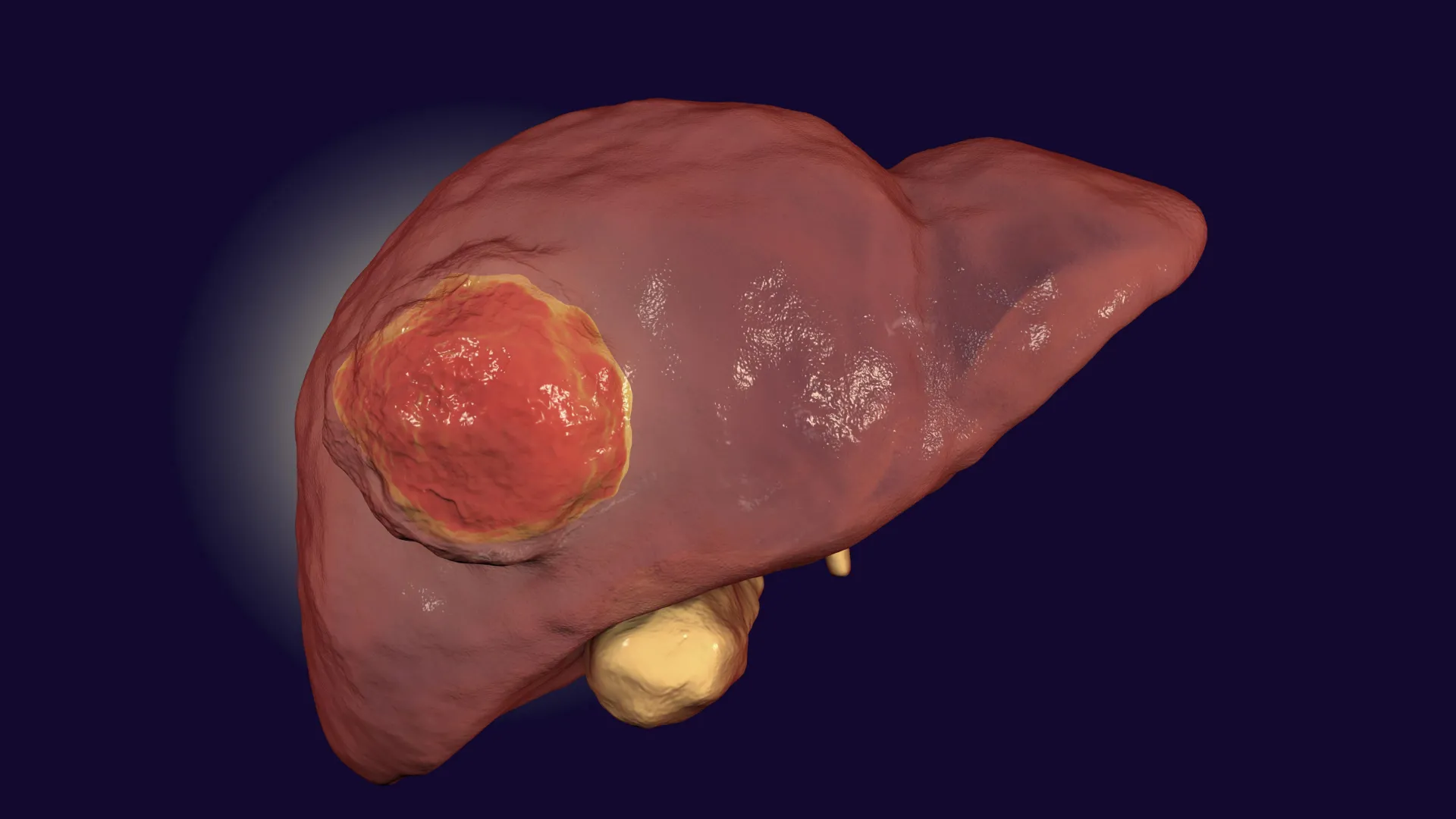
A rare and aggressive form of liver cancer has long resisted immunotherapy, a treatment that helps the body’s own immune system attack cancer cells. Now, researchers have identified a potential way to overcome that resistance using an FDA-approved drug that is already available for another medical condition.
The findings suggest a possible new treatment strategy for fibrolamellar carcinoma, a rare liver cancer that primarily affects children and young adults.
Fibrolamellar carcinoma makes up about 2% of all liver cancer cases. There is currently no cure, and the disease is often discovered only after it has spread to other parts of the body, leaving many patients with limited treatment options and poor survival prospects.
How Fibrolamellar Carcinoma Evades the Immune System
The study, published in the journal Gastroenterology, sheds light on why immunotherapy has struggled against this cancer.
Researchers found that fibrolamellar tumors alter their surrounding environment in a way that prevents immune T cells from reaching the cancer. Instead of moving into the tumor and attacking cancer cells, the T cells become trapped elsewhere. This process, known as T-cell exclusion, effectively keeps the immune system from carrying out its normal cancer-fighting role.
The team also discovered that AMD3100, a drug already approved by the U.S. Food and Drug Administration for another disorder, can disrupt this process. By preventing tumors from trapping T cells, the drug allows those immune cells to reach and attack the cancer.
“Our results provide among the first indications of why a type of immunotherapy called immune checkpoint inhibition hasn’t worked well in these patients, and even if this particular drug isn’t the end-all-be-all, it teaches us that this T-cell exclusion phenomenon is an important one to tackle in fibrolamellar carcinoma,” said Praveen Sethupathy ’03, professor of physiological genomics and chair of the Department of Biomedical Sciences in the College of Veterinary Medicine.
Sethupathy served as co-senior author of the study alongside Dr. Venu Pillarisetty, a surgical oncologist at the University of Washington.
Advanced Technology Reveals the Tumor Environment
To better understand what was happening inside these tumors, researchers used a powerful technique known as single-nucleus transcriptomics.
This technology allowed the team to isolate the nucleus of individual cells within tumor tissue and determine which genes were active in each cell. The approach provided an unprecedented view of the tumor microenvironment and the interactions taking place inside it.
“It wasn’t until we were able to use this technology that the picture of the tumor microenvironment began to clear up for us,” said Andreas Stephanou, a co-first author on the study and a Cornell graduate student co-mentored by Sethupathy and Iwijn de Vlaminck, associate professor in the Meinig School of Biomedical Engineering in the Duffield College of Engineering.
Why Immunotherapy Sometimes Fails
Immune checkpoint inhibitors work by activating the body’s own T cells and encouraging them to move into tumors where they can destroy cancer cells.
These therapies have produced major benefits in several cancers, including liver, lung, kidney, and bladder cancers, as well as melanoma. However, many other cancers, including pancreatic, prostate, and brain cancers, often do not respond well to these treatments.
The researchers say that features of the tumor microenvironment, including T-cell exclusion, may help explain why some cancers remain resistant to immune checkpoint inhibitors.
The Role of Fibrous Bands in Tumors
Fibrolamellar carcinoma gets its name from the thick fibrous bands that run throughout the tumors.
“Despite all of the recent advances in the study of this cancer, we still haven’t pinpointed how these fibrous bands contribute, if at all, to the tumor’s progression,” Stephanou said.
The researchers found that these bands are produced by stellate cells, which are normal liver cells that become altered by the cancer. Once changed, the stellate cells release fibrous proteins that build the characteristic bands within the tumor.
Using single-cell technology, the team discovered that these altered stellate cells also send signals to nearby T cells. Those signals direct the immune cells away from cancer cells and toward the fibrous bands, where the T cells become trapped.
AMD3100 Restores Immune Cell Access
“So, then we asked, what if we were to block this signaling in T cells with a compound?” Sethupathy said.
To test that idea, researchers in the Pillarisetty laboratory at the University of Washington used slices of patient tumor tissue and treated them with AMD3100.
The results showed that the drug successfully guided T cells back into the center of the tumors. When AMD3100 was combined with immune checkpoint inhibition, T-cell activation increased even further, resulting in a significant rise in tumor cell death.
The researchers are now seeking liver cancer specialists interested in launching clinical trials to evaluate the treatment approach in patients.
“A compelling feature of this work is that AMD3100 is already FDA-approved, which can reduce risks and potentially speed up timelines for clinical trials in fibrolamellar carcinoma,” Sethupathy said.
Co-first authors of the study were Jason Carter and Lindsey Dickerson, both members of the Pillarisetty laboratory at the University of Washington. Bo Shui, a senior research associate in the Sethupathy laboratory, was also a co-author.
The research was supported by funding from the Fibrolamellar Cancer Foundation.