

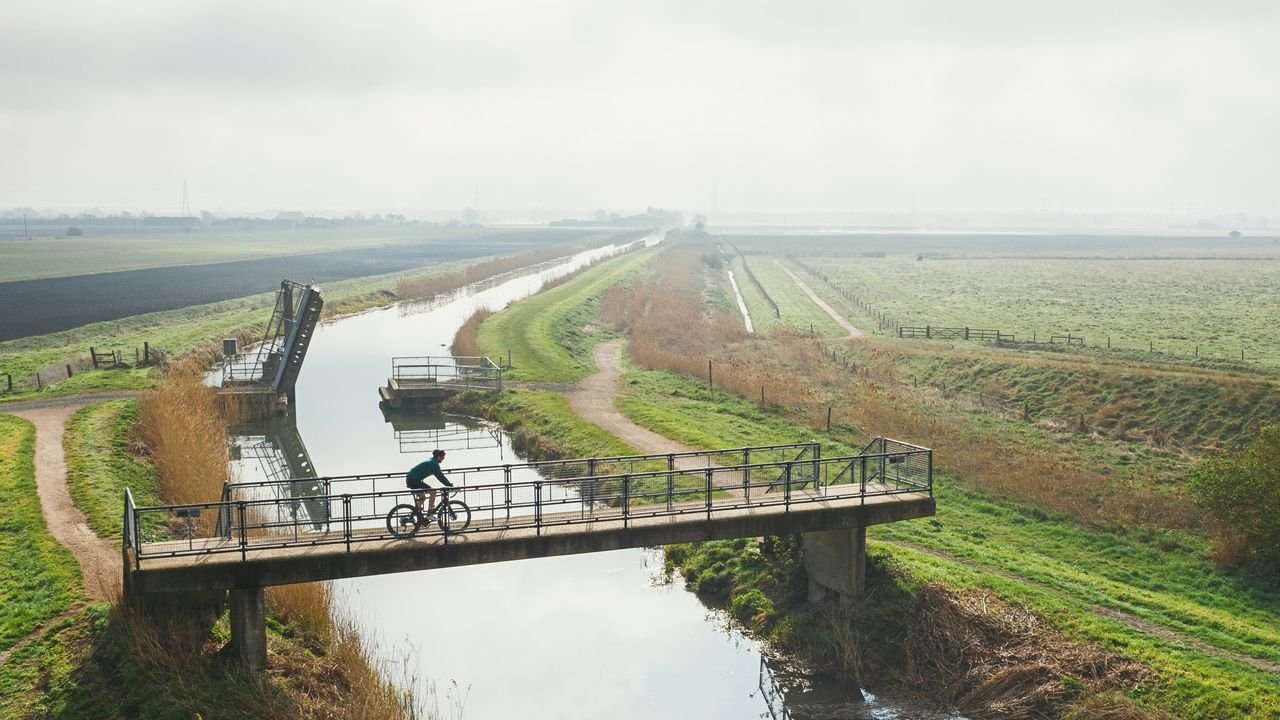
The landscape enveloping me as I wandered around the deserted station was one of black fields, ruler-straight ditches, and skies so wide they seemed to have been rolled out like a faded tapestry. The soil is peat dark, friable, and gravid with potatoes, onions, sugar beet, lettuce, maize, and wheat that moves in dry, whispering sheets.
I immediately struggled to get any accurate measure of distance or time. A line of Lombardy poplars in the distance didn’t seem to get any closer, no matter in which direction I turned. If there was anyone to ask, then I would have enquired about why on earth there’s a railway station anywhere remotely near this landscape.
But there wasn’t a soul. So I was forced to resort to the history book in the back seat of the car, which told me that Shippea Hill station opened in 1845 and was built primarily as a freight depot for produce rather than a passenger stop.
One long-standing, though possibly apocryphal, explanation for the station’s existence is that potatoes grown on the lighter soils around Shippea Hill commanded better prices than those labeled as coming from the nearby, far less flavorsome place name of Burnt Fen. Maps from the early 20th century show tramways pushing out from the station yard into the fields, hauling the produce of this engineered landscape towards the wider world.
Engineered is the key word here; as this surreal, forlorn, and oddly captivating Fenland looks as it does due to drainage, sluices, embankments, pumps, and the long-running human argument with water.
After the last Ice Age, rising seas and poor drainage helped create wetlands and peat. For centuries, this was a world of reeds, sedge, eels, wildfowl, mist, and danger. Then came the improvers, adventurers, and engineers, including the Dutchman Cornelius Vermuyden in the 17th century, determined to turn wetness into acreage.
