

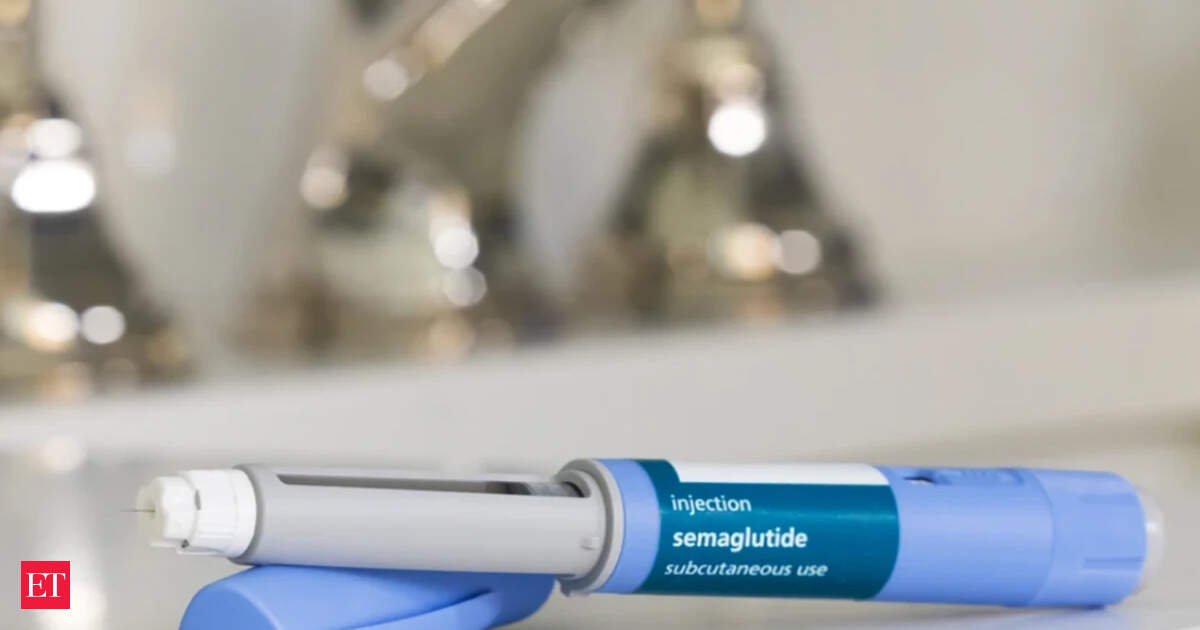
CEO Erez Israeli said that the impacted batches of the drug were never shipped and affirmed that the product available in the market is safe for use.
Semaglutide is used for treating type 2 diabetes and for promoting weight loss.
“There is no patient safety impact associated with the product already supplied to the market. People who took the product are safe,” Israeli said. “To support the growing demand of semaglutide injections globally we scaled up the synthetic API manufacturing process at our API facility with the intent of increasing the API output.” Certain batches of semaglutide were found to be out of specification due to an issue associated with the API used in the product. “We are investigating the root cause and taking appropriate measures to ensure product quality. Until the issue is resolved, commercial supplies of the product will be delayed for a certain period of time,” Israeli said. However, there will be no impact on patient safety or on the product’s existing global regulatory filings, he said. Meanwhile, Torrent Pharmaceuticals Ltd and USV Ltd, which source some of their semaglutide products from DRL, are said to be recalling parts of their generic semaglutide batches owing to quality concerns.
Torrent Pharma and USV source their semaglutide pens — Usema and Semalix, respectively — from the Hyderabad-based drugmaker.

A Torrent Pharma spokesperson confirmed the development, while USV did not respond to ET’s queries.
“Torrent is implementing a recall only for select batches of disposable pens manufactured by DRL. DRL has advised for a recall for technical evaluation as a precautionary measure,” said the spokesperson. “In this case, a recall up to distributor level is advised by DRL.”

The Torrent Pharma spokesperson further said, “There is no impact on patient safety. Further, all other SKUs (stock keeping units) being sold by Torrent including the oral formulation remain completely unaffected.”
Israeli said there may be a temporary delay in semaglutide supplies. “We believe if we take appropriate action we remain committed to resolving the issue with urgency,” he said. “After we complete the validation, we will commence supply and we will be on track to supply 6-7 million pens between Q3 and Q4 of FY27. Our manufacturing facility continues to operate in compliance with regulatory requirements.”
However, there has been no impact on supplies of semaglutide oral tablets, which used separate API source, said the DRL chief executive.
If the products never reached patients, patient safety may not have been compromised but the pause in supplies can still impact confidence, said doctors. “For a molecule as important as semaglutide, perception often influences prescribing and adoption just as much as scientific evidence,” said diabetologist Rajiv Kovil.