

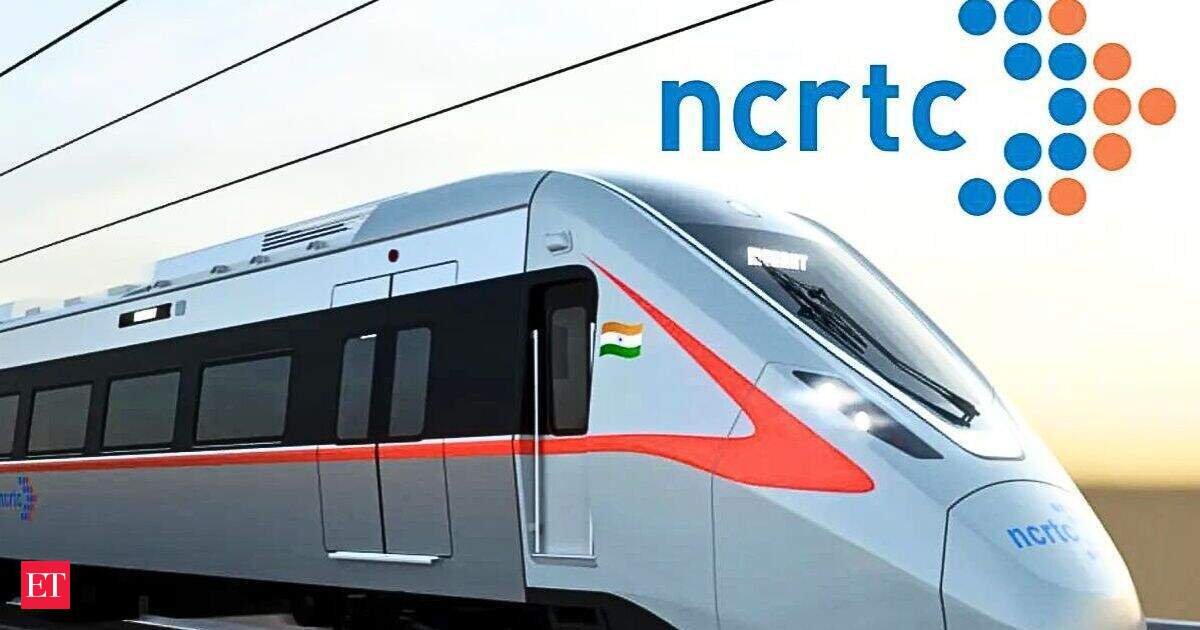
The development was disclosed in Parliament on Monday, when Union Minister of State for Housing and Urban Affairs Tokhan Sahu informed the Rajya Sabha in a written reply that the DPRs are currently under consideration and will undergo detailed technical and financial appraisal before any funding decision is taken.
The four corridors on the table
The four proposed corridors are Delhi-Karnal, Delhi-Bawal, Bawal-Behror and Ghaziabad-Noida International Airport.
Each of these routes targets a specific connectivity gap in the wider NCR region. The Delhi-Karnal corridor would extend rapid rail reach into Haryana’s northern belt, a stretch currently served only by road and conventional rail. The Ghaziabad-Noida International Airport corridor is particularly significant given that the Noida airport at Jewar is expected to become one of the busiest aviation hubs in north India once it opens, and seamless rapid rail access to it would be central to how the region handles passenger movement.

The Delhi-Bawal and Bawal-Behror corridors, meanwhile, would push connectivity further south into Haryana, filling in what has long been a gap in high-speed commuter access between the capital and towns along that belt.
Where this fits in the bigger picture The NCR Planning Board had, in its Functional Plan on Transport for NCR-2032, identified eight RRTS corridors to improve high-speed rail connectivity among major towns in the region. Those eight corridors were,
- Delhi-Gurugram-Rewari-Alwar,
- Delhi-Ghaziabad-Meerut,
- Delhi-Sonipat-Panipat,
- Delhi-Faridabad-Ballabhgarh-Palwal,
- Delhi-Bahadurgarh-Rohtak,
- Delhi-Shahdara-Baraut,
- Ghaziabad-Khurja,
- Ghaziabad-Hapur.
Of these, a task force set up by the erstwhile Planning Commission, now NITI Aayog, had prioritised three for early implementation: Delhi-Ghaziabad-Meerut, Delhi-Gurugram-Alwar and Delhi-Panipat.
The Delhi-Ghaziabad-Meerut corridor, the first to be sanctioned, has already crossed the finish line. The 82.15-kilometre stretch was sanctioned by the Centre in March 2019 and is now fully operational, running as the country’s first Namo Bharat rapid rail line and carrying tens of thousands of commuters daily between Delhi, Ghaziabad, and Meerut.
What happens next
The four new proposals are not yet approved or funded. The minister was careful to note that Namo Bharat projects involve substantial investments and go through a detailed appraisal process before the Centre commits financial assistance.
That process matters because RRTS projects are jointly funded by the Centre, the state governments involved, and international financing bodies, meaning multiple stakeholders have to align before a corridor moves from a report to a construction site.
For commuters in the corridors being proposed, that means the wait continues for now. But the submission of DPRs moves these routes from long-term planning documents into active government consideration.
(With PTI inputs)