

Close Menu

    Subscribe to Updates

    Get the latest news information from worldwide businesses.

    What's Hot

    Pat McAfee doesn’t mince words after Argentina’s controversial win over Switzerland in World Cup quarter finals

    July 12, 2026

    This Chinese Micro EV Makes The Fiat Topolino Look Bare-Bones

    July 12, 2026

    This ultrasound treatment may help stop arthritis before it starts

    July 12, 2026
    Facebook Instagram YouTube LinkedIn X (Twitter)
    Trending
    • Pat McAfee doesn’t mince words after Argentina’s controversial win over Switzerland in World Cup quarter finals
    • This Chinese Micro EV Makes The Fiat Topolino Look Bare-Bones
    • This ultrasound treatment may help stop arthritis before it starts
    • Prenatal Acid-Suppressive Drug Exposure Not Clearly Linked to Childhood IBD: JAMA
    • Apple’s self-driving car program left a legacy of powerful AI chips
    • TechCrunch Mobility: A robotaxi ultimatum
    • NTPC approves Rs 20,457 crore investment for 1,600 MW Lara Stage-III project
    • The No. 1 decision for aging retirees: Stay at home or move into a senior community?
    Newspublicly
    • About Us
    • Advertise & Partner with us
    • Pitch Your Story
    • Contact Us
    Facebook Instagram LinkedIn X (Twitter)
    Subscribe
    • Home
    • World News
      • Asia
      • India
      • USA
      • UK & Europe
      • Middle East
    • Economy & Business
      • Global Economy
      • Corporate & Industry
      • Finance & Markets
      • Policy & Trade
    • Technology
      • Gadgets & Devices
      • Software & Apps
      • AI & Machine Learning
      • Robotics & Automation
    • Health & Medicine
      • Fitness & Nutrition
      • Research & Innovation
      • Disease & Treatment
      • Doctors, Clinics & Patient Care
    • Travel & Tourism
    • Automobile
      • Electric & Hybrid Vehicles
      • Auto Industry Insights
    • Sports
    • More
      • Education
      • Real Estate
      • Environment & Climate
      • Space & Astronomy
      • War & Conflicts
    Newspublicly
    Home»Health & Medicine»Research & Innovation»Deep-sea life has a secret food source scientists never expected
    Research & Innovation

    Deep-sea life has a secret food source scientists never expected

    AdminBy AdminJuly 12, 2026No Comments4 Mins Read0 Views
    Share
    Facebook Twitter LinkedIn Copy Link WhatsApp


    Scientists have uncovered an unexpected source of food in the deep ocean that could change how researchers understand both marine ecosystems and Earth’s carbon cycle. A new study from the University of Southern Denmark (SDU) suggests that deep ocean microbes are not living in such a nutrient-starved environment after all.

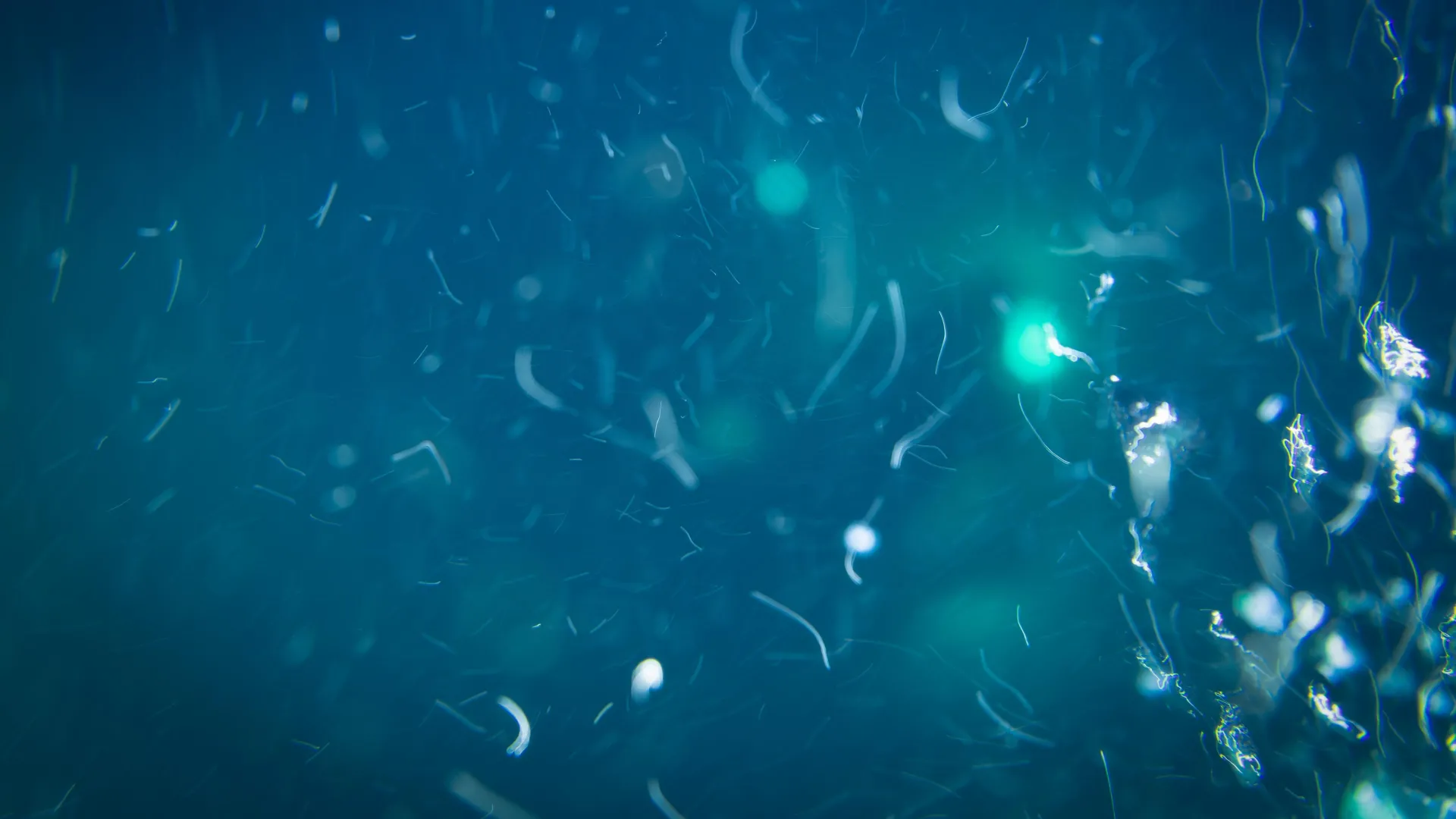
    The research found that tiny sinking particles known as marine snow release dissolved carbon and nitrogen as they descend into the deep sea. Those leaked nutrients become an immediate food source for microbes living in the surrounding seawater.

    Deep ocean pressure unlocks hidden nutrients

    Marine snow is made up of tiny clumps of dead algae, microbes, and other organic material drifting through the ocean. According to the study, once these particles reach depths of about 2 to 6 kilometers, the enormous hydrostatic pressure begins forcing dissolved organic matter out of them.

    “The pressure acts almost like a giant juicer,” says first author of the study, biologist and Associate Professor Peter Stief from research centers Nordcee and Danish Center for Hadal Research, “It squeezes dissolved organic compounds out of the particles, and microbes can use them immediately.”

    The findings were published in Science Advances in the paper, “Hydrostatic pressure induces strong leakage of dissolved organic matter from ‘marine snow’ particles.”

    The researchers estimate that sinking marine snow can lose as much as 50% of its original carbon and between 58% and 63% of its original nitrogen during its descent through the deep ocean.

    Discovery could reshape understanding of the carbon cycle

    The results also have important implications for Earth’s carbon cycle.

    Scientists have long assumed that much of the carbon carried by marine snow eventually becomes buried in deep ocean sediments. However, if large amounts of carbon leak out before the particles reach the seafloor, less carbon may be permanently stored in sediments than previously believed.

    Instead, much of that dissolved carbon remains suspended in deep ocean waters, where it can stay for hundreds or even thousands of years before gradually returning to the surface ocean and eventually the atmosphere. Carbon that does become buried in seafloor sediments, by contrast, can remain locked away for millions of years, accumulating over vast stretches of time. Much of the oil and natural gas extracted today formed through this long-term burial process.

    “This process affects how much carbon the ocean can store and for how long,” says Peter Stief, “It’s relevant for understanding climate processes and for improving future models.”

    Simulating marine snow under extreme pressure

    To investigate the process, the researchers recreated marine snow in the laboratory using diatoms, microscopic algae that naturally clump together as they sink through the ocean.

    The team placed these artificial particles inside specially designed rotating pressure tanks that kept the marine snow suspended instead of allowing it to settle. This setup allowed the researchers to measure how much carbon and nitrogen escaped under conditions similar to those found in the deep ocean.

    Their experiments showed that up to half of a particle’s carbon content leaked out while sinking. Most of the released material consisted of proteins and carbohydrates that free-living deep ocean microbes can readily consume.

    Microbes respond almost immediately

    The leaked nutrients quickly fueled microbial growth.

    Within just two days, bacterial abundance increased 30-fold, while respiration rates rose dramatically. These results indicate that dissolved organic matter released from marine snow provides a rapid and valuable energy source for microbes living at great depths.

    The researchers also observed the same leakage pattern across multiple species of diatoms, suggesting that this mechanism is likely widespread throughout the world’s oceans.

    Next stop: The Arctic Ocean

    The next phase of the research will move from the laboratory to the open ocean.

    The team plans to search for molecular fingerprints of this process in both surface and deep waters during a future expedition to the Arctic aboard the German research vessel Polarstern. Detecting those signatures in nature would help confirm that the pressure driven leakage observed in the laboratory is occurring throughout the deep ocean.

    The study, “Hydrostatic pressure induces strong leakage of dissolved organic matter from “marine snow” particles,” was authored by Peter Stief, Jutta Niggemann, Margot Bligh, Hagen Buck-Wiese, Urban Wünsch, Michael Steinke, Jan-Hendrik Hehemann, and Ronnie N. Glud.

    The research was supported by the Danish National Research Foundation, the European Union’s Horizon 2020 Research and Innovation program, and the Independent Research Fund Denmark.


    Source link

    Author

    • Admin

      NewsPublicly.com is News & Articles Platform that creating SEO-focused articles on travel, lifestyle, and digital trends.

    Admin
    • Website

    NewsPublicly.com is News & Articles Platform that creating SEO-focused articles on travel, lifestyle, and digital trends.

    Related Posts

    This ultrasound treatment may help stop arthritis before it starts

    July 12, 2026

    Physicists recreate black hole energy extraction in the lab

    July 12, 2026

    Alzheimer’s tau protein has a surprising secret role in memory

    July 12, 2026
    Leave A Reply Cancel Reply

    Demo
    Top Posts

    The Blue Moon rises on May 30— Where and when to see the second full moon of the month

    May 30, 202640 Views

    New SOCOM rifle allows barrel swapping and cartridge changes

    June 1, 202633 Views

    “Inside Gemini Robotics 1.5: How Robots Learn to Reason & Act

    November 22, 202525 Views

    525 pounds of cocaine seized after Nebraska K9 alerts troopers on I-80

    May 28, 202624 Views
    Don't Miss

    Pat McAfee doesn’t mince words after Argentina’s controversial win over Switzerland in World Cup quarter finals

    July 12, 20263 Mins Read0 Views

    Argentina’s World Cup quarterfinal clash with Switzerland on Sunday didn’t come without its own drama,…

    This Chinese Micro EV Makes The Fiat Topolino Look Bare-Bones

    July 12, 2026

    This ultrasound treatment may help stop arthritis before it starts

    July 12, 2026

    Prenatal Acid-Suppressive Drug Exposure Not Clearly Linked to Childhood IBD: JAMA

    July 12, 2026
    Stay In Touch
    • Facebook
    • Twitter
    • Instagram
    • YouTube
    • LinkedIn
    • WhatsApp

    Subscribe to Updates

    Get the latest creative news from SmartMag about art & design.

    Demo
    NEWSPUBLICLY
    Facebook X (Twitter) Instagram LinkedIn

    Home

    • About Us
    • Leadership
    • Advertise & Partner With Us
    • Pitch Your Story
    • Media Kit & Pricing
    • Career
    • FAQs

    Guidelines

    • Editorial & Submission
    • Partnership
    • Advertising & Sponsor
    • Intellectual Property Policy
    • Community & Comment
    • Security & Data Protection
    • Send Your Opinion

    Quick Links

    • Cookie Policy
    • Payment & Billing Terms
    • Refund & Cancellation
    • Copyright Policy
    • Complaint & Support
    • Sitemap
    • Contact Us

    Subscribe Us

    Get the latest news and updates!

    Copyright © 2026 Newspublicly (DIGITALIX COMMUNICATION). All Rights Reserved.
    • Privacy Policy
    • Terms of Use
    • Disclaimer