

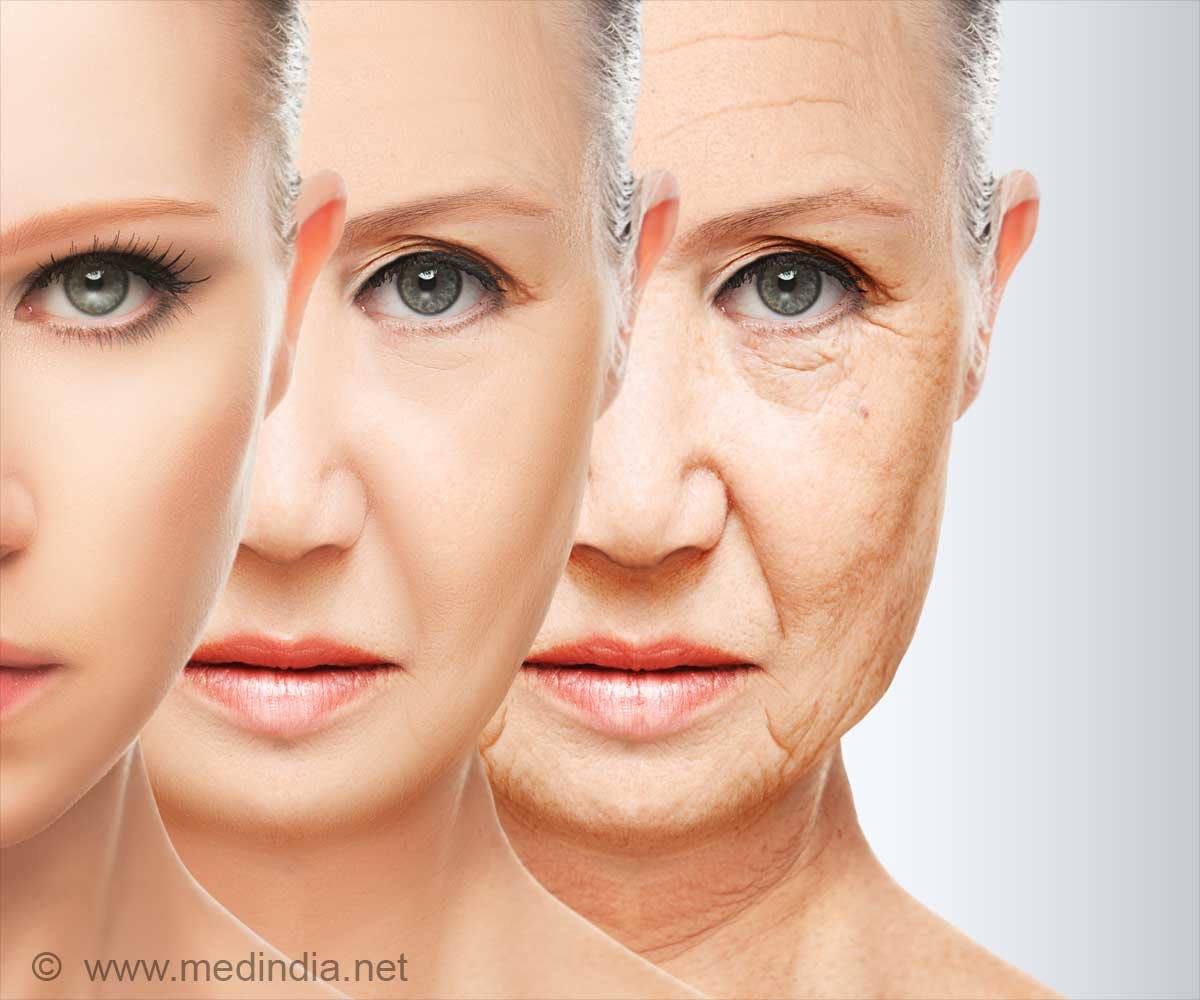
Skin aging involves more than wrinkles, with new research highlighting the role of skin nerves and collagen in the aging process.
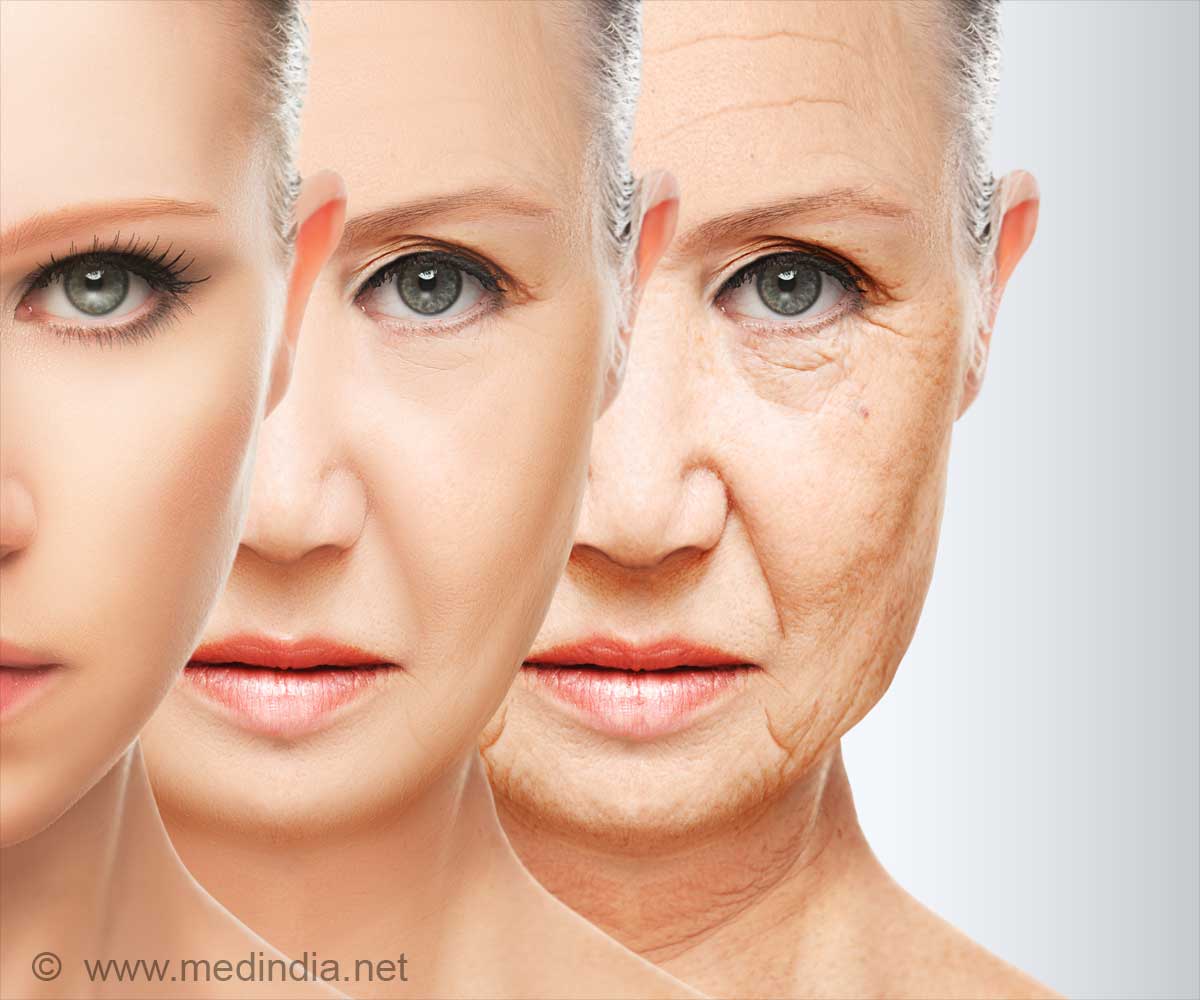
- Skin aging was associated with declines in Nefh, glutamate, Slc1a3, and collagen
- Human skin samples from 148 participants revealed age-related molecular changes
- Skin nerve signaling may influence collagen-producing cells during aging
Skin aging is a natural process influenced by genetics, sunlight, lifestyle, and biological changes inside the body. Researchers are increasingly discovering that aging is not controlled by a single organ or cell type.
A new peer-reviewed study published in Cell suggests that communication between skin nerves and collagen-producing cells may also play a role in age-related skin changes. The study combined findings from a human skin aging cohort and experimental skin models to better understand how the skin changes over time (1✔ ✔Trusted Source
Skin-innervating glutamatergic neurons modulate aging
).
Skin is the body’s largest organ and serves as a protective barrier throughout life. While factors such as sunlight, pollution, smoking, and genetics contribute to skin aging, scientists are increasingly discovering that communication between different tissues may also play an important role.
Advertisement
What Causes Skin Aging and Collagen Loss Over Time?
Skin aging is influenced by both intrinsic and extrinsic factors. Intrinsic aging refers to natural biological changes that occur over time, while extrinsic aging is driven by environmental factors such as ultraviolet (UV) exposure, tobacco use, and air pollution.
One of the hallmarks of aging skin is the gradual loss of collagen, a protein that helps maintain the skin’s strength, elasticity, and structure. Understanding why collagen decreases with age remains an active area of research.
Advertisement
What Did Scientists Discover About Skin Nerves and Aging?
Researchers analyzed skin samples from a human cohort comprising 148 participants divided into five age groups: 17–29 years, 30–44 years, 45–59 years, 60–84 years, and 85 years or older. They reported age-associated reductions in Nefh, glutamate, Slc1a3, and collagen levels (1✔ ✔Trusted Source
Skin-innervating glutamatergic neurons modulate aging
).
The study also found that Nefh, a protein predominantly expressed in Vglut2-positive glutamatergic neurons, declined with age. According to the authors, these neurons appear to communicate with dermal fibroblasts, the cells responsible for producing collagen (1✔ ✔Trusted Source
Skin-innervating glutamatergic neurons modulate aging
Importantly, the findings identify an association between these molecular changes and aging. They do not establish that changes in skin nerves directly cause skin aging in humans.
Advertisement
How Do Skin Nerves Help Maintain Collagen in the Skin?
The researchers proposed a pathway involving Hecw1, Nefh, Cdk5, Vglut2, and glutamate signaling. Aging was associated with increased Hecw1 and reduced Nefh expression, which in turn was linked to reduced Cdk5 stability, decreased Vglut2 activity, and lower glutamate signaling (1✔ ✔Trusted Source
Skin-innervating glutamatergic neurons modulate aging
).
In experimental models, fibroblasts expressing the glutamate transporter Slc1a3 were associated with collagen production and lower markers of cellular senescence, including p16 and SA-β-gal (1✔ ✔Trusted Source
Skin-innervating glutamatergic neurons modulate aging
These findings suggest that communication between skin nerves and fibroblasts may contribute to maintaining skin homeostasis during aging.
Key Findings: Skin Nerves, Collagen, and Aging at a Glance
| Finding | Observation |
|---|---|
| Human cohort (1✔ ✔Trusted Source Skin-innervating glutamatergic neurons modulate aging ) |
Included 148 participants aged 17 years to ≥85 years. |
| Age-related changes (1✔ ✔Trusted Source Skin-innervating glutamatergic neurons modulate aging ) |
Nefh, glutamate, Slc1a3, and collagen levels declined with age. |
| Proposed biological pathway (1✔ ✔Trusted Source Skin-innervating glutamatergic neurons modulate aging ) |
Hecw1 → Nefh → Cdk5 → Vglut2 → Glutamate signaling. |
| Experimental findings (1✔ ✔Trusted Source Skin-innervating glutamatergic neurons modulate aging ) |
Slc1a3-mediated glutamate signaling was associated with collagen production and lower senescence markers in skin models. |
Why This Skin Aging Discovery Matters for Healthy Aging
Healthy aging is becoming increasingly important worldwide as populations continue to live longer. Scientists now recognize that aging is not confined to a single organ or cell type; rather, it reflects ongoing interactions between tissues throughout the body (2✔ ✔Trusted Source
Ageing and health
).
Although the mechanistic experiments in this study were performed primarily in experimental skin models, the findings provide a valuable framework for understanding how skin health changes over time. They do not support the use of glutamate supplements, medications, or cosmetic interventions to prevent or reverse skin aging (1✔ ✔Trusted Source
Skin-innervating glutamatergic neurons modulate aging
For readers, the most important message remains reassuringly familiar:
- Protect your skin from excessive sun exposure.
- Avoid smoking and tobacco products.
- Eat a balanced diet rich in fruits and vegetables.
- Stay physically active and prioritize overall health.
These evidence-based habits continue to be among the most effective ways to support healthy skin throughout life (3✔ ✔Trusted Source
What Do We Know About Healthy Aging?
).
The Future of Skin Aging Research Looks Promising
Aging remains one of biology’s greatest mysteries, and studies like this remind us that the body functions as an interconnected system rather than a collection of separate parts. While much remains to be learned, the discovery of a potential link between skin nerves and age-related skin changes adds an important new chapter to the science of healthy aging.
For readers, the takeaway is both simple and encouraging: caring for your overall health is still one of the best investments you can make for your skin. As scientists continue to uncover how different tissues communicate during aging, each new discovery brings us closer to understanding how the body maintains resilience across a lifetime.
Frequently Asked Questions
Q: What causes skin aging?
A: Skin aging is caused by a combination of natural biological changes, genetics, sun exposure, smoking, and environmental factors that affect collagen and skin structure over time.
Q: Do skin nerves change as people get older?
A: According to a recent Cell study, certain skin nerve-associated molecules, including Nefh and glutamate, were found to decline with age.
Q: Why does collagen decrease with age?
A: Collagen production naturally declines as people age because collagen-producing cells become less active and undergo age-related changes.
Q: Can this discovery help prevent wrinkles?
A: No. The study did not evaluate treatments for wrinkles or skin aging and does not support any specific therapy or supplement.
Q: What can I do to keep my skin healthy as I age?
A: Protecting your skin from UV exposure, avoiding tobacco, maintaining a balanced diet, and staying physically active are evidence-based ways to support healthy skin.
References:
- Skin-innervating glutamatergic neurons modulate aging
– (https://pubmed.ncbi.nlm.nih.gov/42468523/) - Ageing and health
– (https://www.who.int/news-room/fact-sheets/detail/ageing-and-health) - What Do We Know About Healthy Aging? – (https://www.nia.nih.gov/health/healthy-aging/what-do-we-know-about-healthy-aging)
Source-Medindia