

Is there life on Mars … in clay? Scientists think that the minerals in clay could be the key to finding signs of ancient life on the Red Planet.
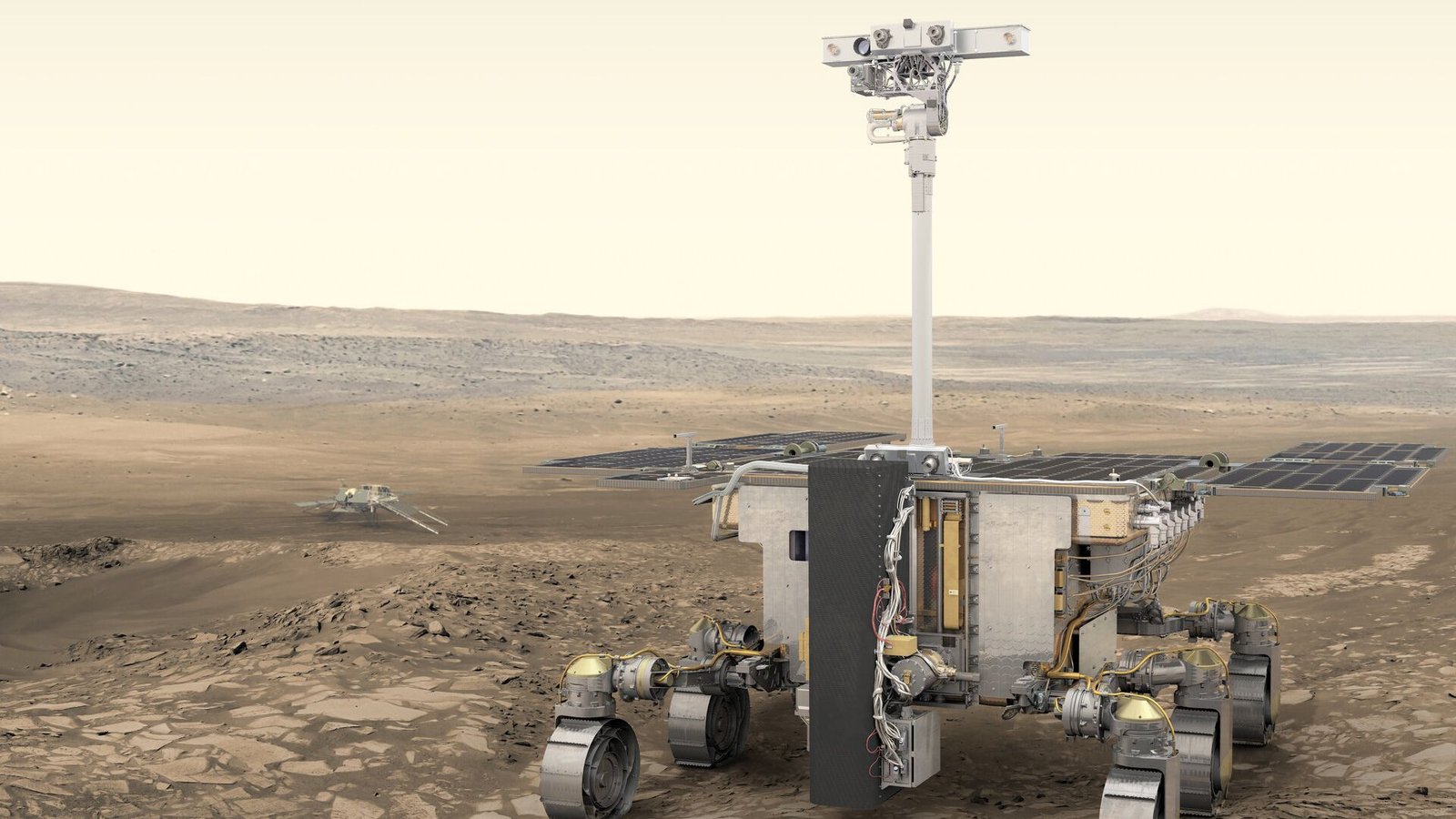
The European Space Agency is still working toward launching its ExoMars Rosalind Franklin rover to Mars to search for signs of life. And, according to a statement from the space agency, the rover is now aiming to land at Oxia Planum, a depression on the Martian surface where it’s thought that water was once plentiful. There, scientists think that they might find major clues in the hunt for life in the basin’s clay, according to a new paper.
“We will use the instruments on board to ground truth the discoveries made from orbit, learn about the ancient environment in which they formed, and if they preserve any evidence of Martian life. Warmth and nutrients on an early martian seabed could have provided habitats for early life,” ExoMars deputy project scientist Elliot Sefton-Nash added in the statement.

Scientists have spent years searching for signs that life once existed on Mars. It’s thought that water on Mars evaporated around three billion years ago, but before then the planet likely had a more substantial atmosphere and water flowing in rivers and into lakes all across its surface. Because of the planet’s history, many scientists think that it’s most likely that at some point in the ancient past, the planet must have supported life. While this has yet to be confirmed, last year scientists found what is currently thought of as the strongest possible biosignature, or physical evidence of life, on Mars.

In a new study, researchers have found extensive clay deposits at Rosalind Franklin’s proposed landing site. They found this clay to reach roughly 186 miles (300 kilometers) outward from Oxia Planum, stretching as far as a Martian valley called Mawrth Vallis. To spot the clay, they first studied the planet from orbit.
Researchers used the OMEGA instrument on ESA’s Mars Express orbiter and NASA’s Mars Reconnaissance Orbiter to explore the minerals and rock layers on Mars between Oxia Planum and Mawrth Vallid, finding mineral layers at both sites as well as markers showing changes in water chemistry over time. These observations add to other studies pointing to water on ancient Mars.
With ESA’s upcoming rover, some scientists think that the clues to life on Mars could be hiding in this clay in the Oxia Planum region.
“By landing at Oxia Planum, we’ll uncover a large-scale process that shaped ancient clays across Mars,” lead author Inés Torres Auré of the University of Lyon in France said in the statement.
Scientists think that it’s possible that the area of Oxia Planum could have once been home to a body of water as big as an ocean or the region could possibly have experienced incredible flooding some four billion years ago, according to the statement.
“Because the area is so large, we are not talking about a localised occurrence, but rather a regional or global process that would have required immense amounts of water. We are targeting the oldest deposits in the sequence, which makes the potential implications for the geology and early climate of Mars very relevant for the Rosalind Franklin mission in its search for life,” ExoMars project scientist Jorge Vago explained in the statement.
While we have never confirmed life off-Earth and it could be different from the life we know, as far as life on Earth is concerned, water is a necessary ingredient.
ESA’s Rosalind Franklin rover is projected to launch to the Red Planet in 2028. The rover will be part of ESA’s ExoMars program alongside the agency’s Trace Gas Orbiter which is already traveling around Mars. Rosalind Franklin will have a drill, allowing it to explore below the planet’s surface as the pair work together from orbit and on the Martian surface to hunt for signs of ancient life.
This work was described in a study published in the journal Science Direct.