

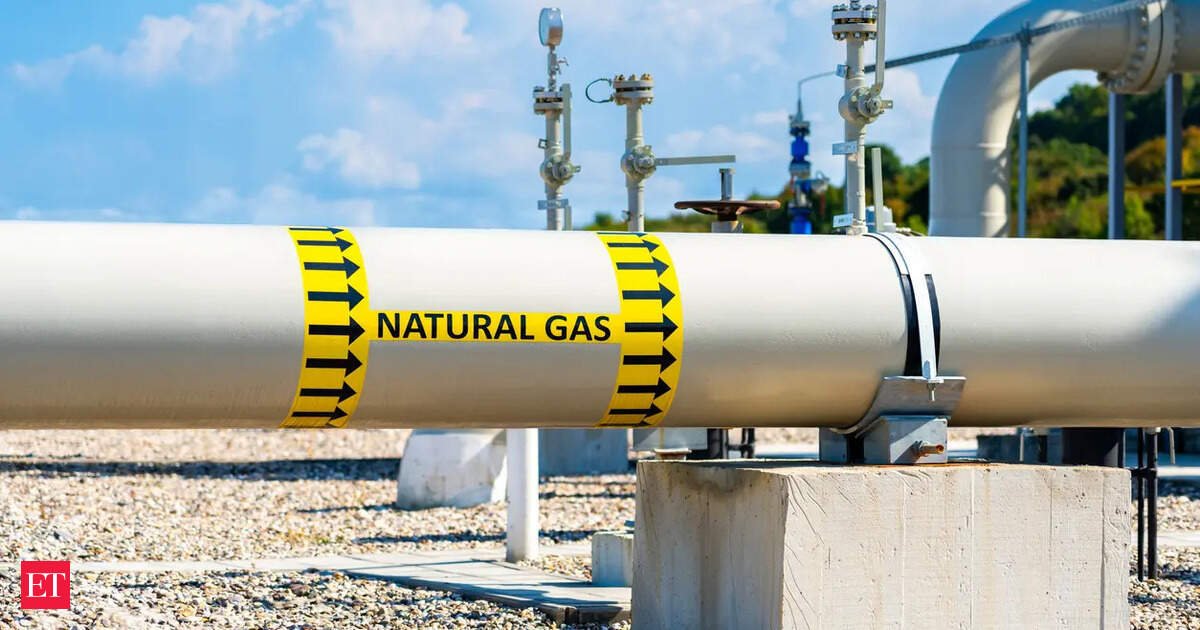
Around 14 million metric standard cubic metres per day (MMSCMD), nearly 15% of country’s domestic gas output from the Northeast, is lying idle and not utilised, even as India imports 95 MMSCMD of LNG at $19-20 per mmbtu. The foreign exchange drain amounts to nearly $500 million annually.
Three pipelines in the northeast-Duliajan-Numaligarh Pipeline, Assam Gas Company Ltd network and Indradhanush Gas Grid Limited (IGGL) regional line-terminate within 100 metres of the Numaligarh Refinery but cannot legally connect under the PNGRB rules. Producers say a temporary regulatory waiver would take six weeks to implement and could unlock around 8 MMSCMD of gas sitting idle in upper Assam region.

Kapil Garg, chairman and managing director of Oilmax Energy, told ET that the solution is straightforward. “We have requested the PNGRB to temporarily allow connection of the common carrier pipeline with the other pipelines. This will take only six weeks and around 6-8 MMSCMD of gas can be put to use immediately, which will help India at this critical time,” he said.

ONGC and OIL did not respond to requests for comment. Queries sent to Vedanta Oil and Gas did not elicit a response till press time.
The upper Assam region has been producing gas since 1889. Its recoverable reserves stand at 200 billion cubic metres. Key fields at Duliajan operated by Oil India, Lakwa and Geleki by ONGC and the Agartala Dome in Tripura have fed refineries, power plants and fertiliser units for decades. Yet today five state capitals-Shillong, Imphal, Kohima, Aizawl and Gangtok-have no pipeline gas connection. The three networks that do exist are isolated.
While the long-term solution, the Indradhanush Gas Grid, a 1,670-km open-access pipeline designed to connect all eight Northeastern states is under construction. The first section from Guwahati to Numaligarh is operational. The rest is being tested, with gas-in targeted for the end of 2026. But full completion is at least two years away.
IGGL CEO Subrata Das told ET, “There was no proper forecasting initially and no planning. The entire upper Assam region was left out of demand surveys. When domestic gas prices were low, exploration companies felt the costs were too high. Now the gas is there, around 8 MMSCMD idle in Duliajan alone, but there is no evacuation line. Even if we start laying pipes today, it will take two more years.”
Besides, in Bihar’s Barauni, where the NE grid meets GAIL’s national Urja Ganga pipeline, a compressor must be built to bridge pressure difference between the two systems. Without it, gas from Assam and Tripura physically cannot enter the national grid. For now, around 8 MMSCMD of gas needs only six weeks and one regulatory decision to start flowing. That decision sits with the PNGRB and each passing day costs India about $1.4 million in avoidable LNG imports.