

Close Menu

    Subscribe to Updates

    Get the latest news information from worldwide businesses.

    What's Hot

    Doctors warn this popular vitamin may quietly disrupt cancer care

    May 13, 2026

    FDA approves early warning system for sepsis

    May 13, 2026

    This is what some of the world’s largest banks of malware look like stacked as hard drives

    May 13, 2026
    Facebook Instagram YouTube LinkedIn X (Twitter)
    Trending
    • Doctors warn this popular vitamin may quietly disrupt cancer care
    • FDA approves early warning system for sepsis
    • This is what some of the world’s largest banks of malware look like stacked as hard drives
    • A single beam of light runs AI with supercomputer power
    • Planing 500 delegations, outreach to 1,600 industry chambers to boost FTA utilisation: Piyush Goyal
    • Assassin’s Creed Hexe protagonist image reportedly leaked before being deleted
    • What does a diabetic skin rash look like?
    • Hantavirus outbreak: Full list of cases by nationality
    Newspublicly
    • About Us
    • Advertise & Partner with us
    • Pitch Your Story
    • Contact Us
    Facebook Instagram LinkedIn X (Twitter)
    Subscribe
    • Home
    • World News
      • Asia
      • India
      • USA
      • UK & Europe
      • Middle East
    • Economy & Business
      • Global Economy
      • Corporate & Industry
      • Finance & Markets
      • Policy & Trade
    • Technology
      • Gadgets & Devices
      • Software & Apps
      • AI & Machine Learning
      • Robotics & Automation
    • Health & Medicine
      • Fitness & Nutrition
      • Research & Innovation
      • Disease & Treatment
      • Doctors, Clinics & Patient Care
    • Travel & Tourism
    • Automobile
      • Electric & Hybrid Vehicles
      • Auto Industry Insights
    • Sports
    • More
      • Education
      • Real Estate
      • Environment & Climate
      • Space & Astronomy
      • War & Conflicts
    Newspublicly
    Home»Technology»Robotics & Automation»Chimps shock scientists by changing their minds with new evidence
    Robotics & Automation

    Chimps shock scientists by changing their minds with new evidence

    Divya SharmaBy Divya SharmaMay 13, 2026No Comments4 Mins Read0 Views
    Share
    Facebook Twitter LinkedIn Copy Link WhatsApp


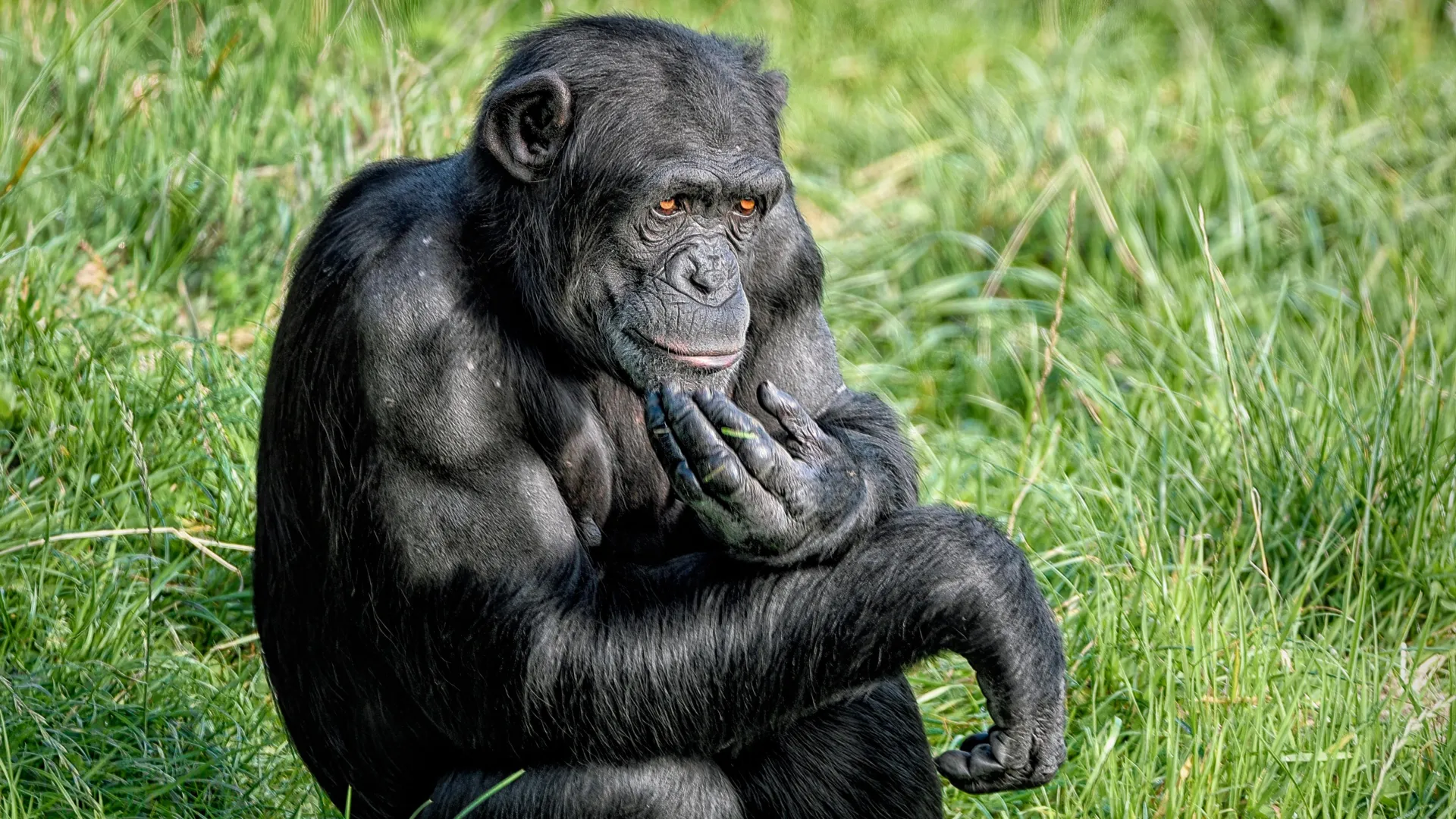
    Chimpanzees may share more with human thinkers than researchers once realized. A new study published in Science presents compelling evidence that chimpanzees can revise their beliefs in a rational way when they encounter new information.

    The study, titled “Chimpanzees rationally revise their beliefs,” was carried out by an international team that included UC Berkeley Psychology Postdoctoral Researcher Emily Sanford, UC Berkeley Psychology Professor Jan Engelmann and Utrecht University Psychology Professor Hanna Schleihauf. Their results indicate that chimpanzees, similar to humans, adjust their decisions based on how strong the available evidence is, which is a central component of rational thinking.

    At the Ngamba Island Chimpanzee Sanctuary in Uganda, the researchers designed an experiment involving two boxes, one of which contained food. The chimps were first given a hint about which box held the reward. Later, they received a clearer and more convincing clue that pointed to the other box. Many of the animals changed their choice after receiving the stronger information.

    “Chimpanzees were able to revise their beliefs when better evidence became available,” said Sanford, a researcher in the UC Berkeley Social Origins Lab. “This kind of flexible reasoning is something we often associate with 4-year-old children. It was exciting to show that chimps can do this too.”

    Testing Whether Chimps Are Reasoning or Acting on Instinct

    To confirm that the animals were truly engaging in reasoning rather than reacting on impulse, the researchers used tightly controlled experiments combined with computational modeling. These methods helped rule out simpler explanations, such as the chimps favoring the most recent clue (recency bias) or simply responding to the easiest cue to notice. The modeling showed that their decisions followed patterns consistent with rational belief revision.

    “We recorded their first choice, then their second, and compared whether they revised their beliefs,” Sanford said. “We also used computational models to test how their choices matched up with various reasoning strategies.”

    This work challenges long-held assumptions that rationality, defined as forming and updating beliefs based on evidence, belongs only to humans.

    “The difference between humans and chimpanzees isn’t a categorical leap. It’s more like a continuum,” Sanford said.

    Broader Implications for Learning, Childhood Development and AI

    Sanford believes these findings may influence how scientists think about a wide range of fields. Learning how primates update their beliefs could reshape ideas about how children learn and even how artificial intelligence systems are designed.

    “This research can help us think differently about how we approach early education or how we model reasoning in AI systems,” she said. “We shouldn’t assume children are blank slates when they walk into a classroom.”

    The next phase of the project will apply the same belief revision tasks to young children. Sanford’s team is now gathering data from two- to four-year-olds to see how toddlers handle changing information compared to chimps.

    “It’s fascinating to design a task for chimps, and then try to adapt it for a toddler,” she said.

    Expanding the Study to Other Primates

    Sanford hopes to broaden the work to additional primate species, creating a comparative view of reasoning abilities across evolutionary branches. Her previous research spans topics from empathy in dogs to numerical understanding in children, and she notes that one theme continues to stand out: animals often demonstrate far more cognitive sophistication than people assume.

    “They may not know what science is, but they’re navigating complex environments with intelligent and adaptive strategies,” she said. “And that’s something worth paying attention to.”

    Other members of the research team include: Bill Thompson (UC Berkeley Psychology); Snow Zhang (UC Berkeley Philosophy); Joshua Rukundo (Ngamba Island Chimpanzee Sanctuary/Chimpanzee Trust, Uganda); Josep Call (School of Psychology and Neuroscience, University of St Andrews); and Esther Herrmann (School of Psychology, University of Portsmouth).


    Source link

    Divya Sharma
    • Website

    Divya Sharma is a content writer at NewsPublicly.com, creating SEO-focused articles on travel, lifestyle, and digital trends.

    Related Posts

    A single beam of light runs AI with supercomputer power

    May 13, 2026

    AI creates the first 100-billion-star Milky Way simulation

    May 13, 2026

    Scientists uncover the brain’s hidden learning blocks

    May 13, 2026
    Leave A Reply Cancel Reply

    Demo
    Top Posts

    “Inside Gemini Robotics 1.5: How Robots Learn to Reason & Act

    November 22, 202524 Views

    How US Tariffs Are Reshaping the Global Growth Landscape?

    November 21, 202518 Views

    Pakistani Journalist Laughing at Tejas Fighter Jet Crash at Dubai Airshow Sparks Massive Outrage Worldwide

    November 23, 202517 Views

    Vibe-Coding Boom: How Non-Coders Build Apps With AI Agents

    November 22, 202515 Views
    Don't Miss

    Doctors warn this popular vitamin may quietly disrupt cancer care

    May 13, 20265 Mins Read0 Views

    Hair loss is one of the most upsetting side effects of cancer treatment, and many…

    FDA approves early warning system for sepsis

    May 13, 2026

    This is what some of the world’s largest banks of malware look like stacked as hard drives

    May 13, 2026

    A single beam of light runs AI with supercomputer power

    May 13, 2026
    Stay In Touch
    • Facebook
    • Twitter
    • Instagram
    • YouTube
    • LinkedIn
    • WhatsApp

    Subscribe to Updates

    Get the latest creative news from SmartMag about art & design.

    Demo
    NEWSPUBLICLY
    Facebook X (Twitter) Instagram LinkedIn

    Home

    • About Us
    • Leadership
    • Advertise & Partner With Us
    • Pitch Your Story
    • Media Kit & Pricing
    • Career
    • FAQs

    Guidelines

    • Editorial & Submission
    • Partnership
    • Advertising & Sponsor
    • Intellectual Property Policy
    • Community & Comment
    • Security & Data Protection
    • Send Your Opinion

    Quick Links

    • Cookie Policy
    • Payment & Billing Terms
    • Refund & Cancellation
    • Copyright Policy
    • Complaint & Support
    • Sitemap
    • Contact Us

    Subscribe Us

    Get the latest news and updates!

    Copyright © 2026 Newspublicly (DIGITALIX COMMUNICATION). All Rights Reserved.
    • Privacy Policy
    • Terms of Use
    • Disclaimer