

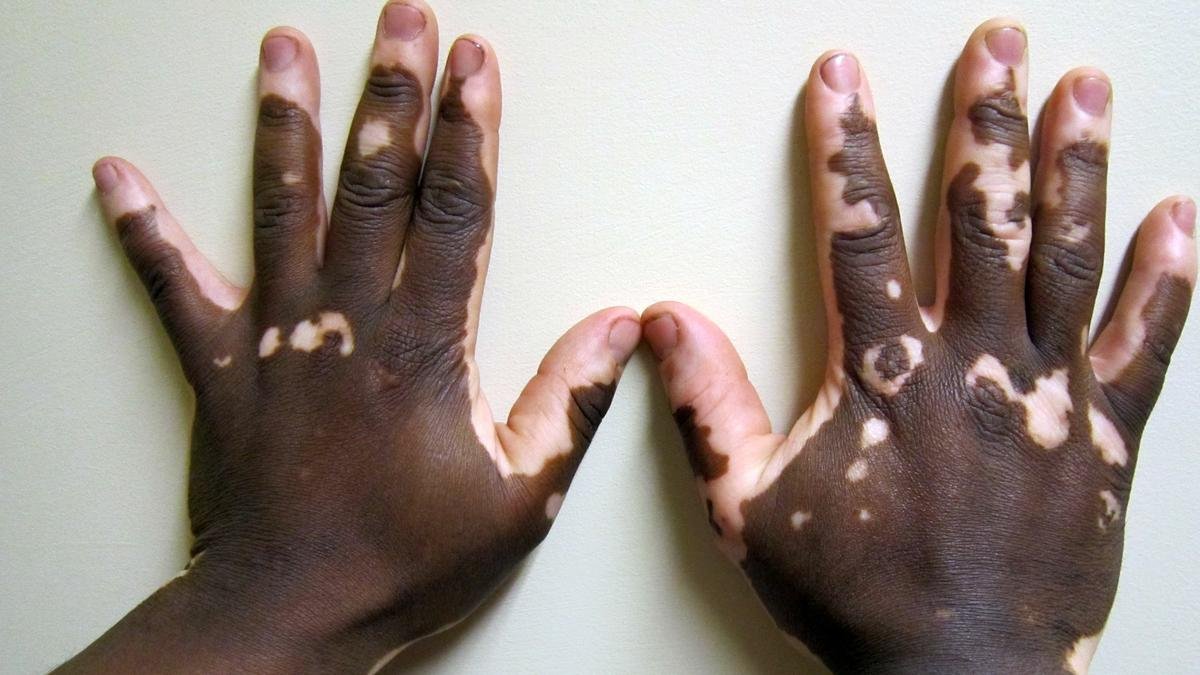

Vitiligo is a medically harmless, non-contagious condition. Misunderstandings and stigma about it, however, persist.
| Photo Credit: By James Heilman, MD – Own work, CC BY-SA 3.0, https://commons.wikimedia.org/w/index.php?curid=10313925
When a child walks into a classroom, their biggest worry should not be whispers, stares or insensitive jokes about their skin. Yet, for thousands of children living with vitiligo — a chronic condition where patches of skin tend to lose pigment — this is a reality.
Vitiligo is a medically harmless, non-contagious condition. Misunderstandings and stigma about it, however, persist. While children may have completely normal health even with the condition, what is often overlooked, is the impact it has on their mental well-being. Beyond the visible patches lies, there is a mental health burden that many young patients carry silently.

Self-esteem dents
Childhood is a period of development, where self-esteem is developed, confidence is built and a social identity is created. Children suffering from vitiligo tend to be very conscious of their appearance at an early age: this either happens when their classmates begin to ask them questions about their condition or when the child starts noticing changes in their skin and compares it with those of their classmates.
Unlike adults, children may not fully understand the condition themselves, and therefore are less equipped to navigate the curiosity it invokes, or dispel misconceptions and the social scrutiny that comes with it: they may not have developed the emotional tools to deal with society’s view of the condition.

Everyday impacts
Many children tend to feel ‘different’ from their friends and peers. Sometimes this can lead to non-participation in school events and a preference for clothing that covers their entire body, even in the hot weather to avoid drawing attention and unwanted questions.
These challenges are often underestimated. Bullying and name-calling is one of the significant concerns faced by children with vitiligo, followed by exclusion from peer groups, and repeated questioning or comments, even they are harmless. This takes a psychological toll and can leave an emotional scar on children. The result could be that the child withdraws socially.

Long-term issues
The emotional impact of vitiligo tends to extend far beyond the classroom for a child. Issues such as developing a negative body image, becoming extremely self-conscious, and worrying about what they look like can arise from the children not fitting into ‘accepted’ social standards of appearance.
This heightened awareness about their appearance may lead to chronic stress as well as anxiety, causing the child to experience loneliness, mood changes, and to exhibit symptoms of depression. Adolescents are significantly more vulnerable as during their teenage years, they are more susceptible to concerns of appearances, belonging and acceptance.

What needs to change
Widespread awareness in the community is what matters most when it comes to vitiligo, since the greatest challenge faced by children with the condition is misinformation. The condition is often assumed to be caused by poor hygiene or believed to be contagious: neither fact is true.
Simple initiatives inside the classroom can make a difference, as when children understand that vitiligo is an autoimmune disease and poses no health risk to others, the stigma and fear related to it will reduce substantially.
Teachers and parents play an important role here in identifying signs of emotional distress, declining academic performances or reluctance to attend school — in children with vitiligo, this must not be assumed to be ordinary phases of childhood. It is very important to provide children with emotional support and to be positive role models to demonstrate that vitiligo must not define a person’s ability, future or worth.
The true burden of vitiligo is rarely found in the skin itself: it is found in the silent stigma that children face. Our collective goal must be that no child feels different, or less worthy, due to the skin they live in.
(Dr. Sabaresh Pandiyan is a consultant in psychiatry at Rela Hospital, Chennai.drsabaresh@relainstitute.com)
Published – June 16, 2026 04:56 pm IST