

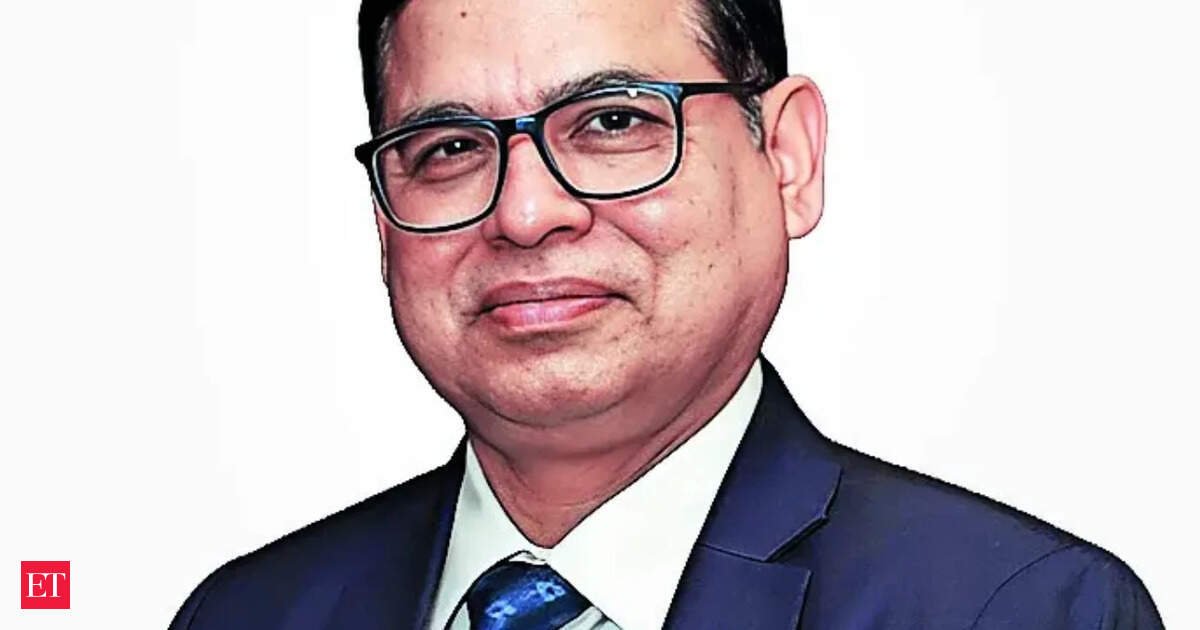
What are your priorities?
My first priority is to drive business from our own network-we have 4,585 branches and every outlet must contribute to growth. Alongside growth, the focus is on capability building-preparing people, strengthening systems, processes and technology, and improving credit underwriting and monitoring so asset quality is protected.
Which new business areas are you looking to build out?
On newer business lines, we have four key initiatives: credit cards, wealth management, a stronger NRI business, and building a dedicated sales and marketing team (about 500 officers are being inducted). We are also building platforms like cash management services (CMS) and upgrading forex capabilities-these are critical to attracting and retaining corporate current accounts. Additionally, we have received the license for GIFT City.

A majority of your loan book is A and above rated corporates where margins are thin. Does this mean Central Bank has become extremely risk averse?
In our corporate loan book, about 83% is A and above at present. But that does not mean we are risk averse. If we were risk averse, 14.5% corporate growth would not have been possible. The context is important: post PCA, the bank had to rebuild risk-taking ability, underwriting capability, and strengthen processes. We are doing that systematically-training, hiring specialists and building process controls. Also, it’s not that we do only A and above-we do BBB as well. The key is whether our teams can underwrite properly while protecting asset quality. On returns, our yield on advances is 8.21%; in corporate, yield is around 7.5%, while MSME is 8.63% and retail about 8.10%. Even with a large part of the book linked to external benchmarks, we have stayed stable on core earnings.CASA is 47% but the current account is only about ₹20,000 crore-loyal individuals, not corporates. How will you fix this?
At 47%, CASA is a strength of this bank and the guidance is 48% (plus/minus 1%). We have 4,585 branches, and 2,900+ branches have CASA above 50%. Our network is heavily located in rural and semi-urban, which supports strong savings balances. On current accounts, corporates and businesses need a different proposition-cash management services, bulk payments/collections, mandate management, and strong digital platforms. These are being built. We plan to start cash management services from August.
Your LCR is about 210%, far above the 100% requirement. Does that imply banks prefer to invest in government securities rather than lend?
When I joined, the credit-deposit (CD) ratio was 66%, and the LCR was over 220%. Over the last six months, we have improved the CD ratio to around 73.80, but the LCR is still about 210.35%. The key point is: liquidity and resources were not a challenge for us. We did not take even a single rupee of high-cost bulk deposits. The focus has been to avoid deploying money blindly; instead, we are building the enablers-people capability, technology, underwriting, and monitoring-so credit growth is sustainable. As these capabilities mature, we will be better positioned to deploy liquidity more meaningfully. The bank is “blessed” in terms of deposit stability and liquidity; the job now is to ensure our teams are ready and processes are robust so growth happens without “accidents.”
You have given guidance of 65% RAM and 35% corporate loans. Are there fewer opportunities in lending to corporates?
Currently, it is around 69% RAM and 31% corporate. We will broadly maintain the guidance because this is our strength. Over 65% of branches are in rural and semi-urban India. Our teams have deep skill sets in these segments. Our retail loan rose more than 25%, agriculture about 17.06%, MSME about 17.6% and RAM overall has grown over 20%. That said, corporates will also grow. We are building the enablers corporate customers expect-centralised forex, cash management services, and a stronger corporate delivery model.