

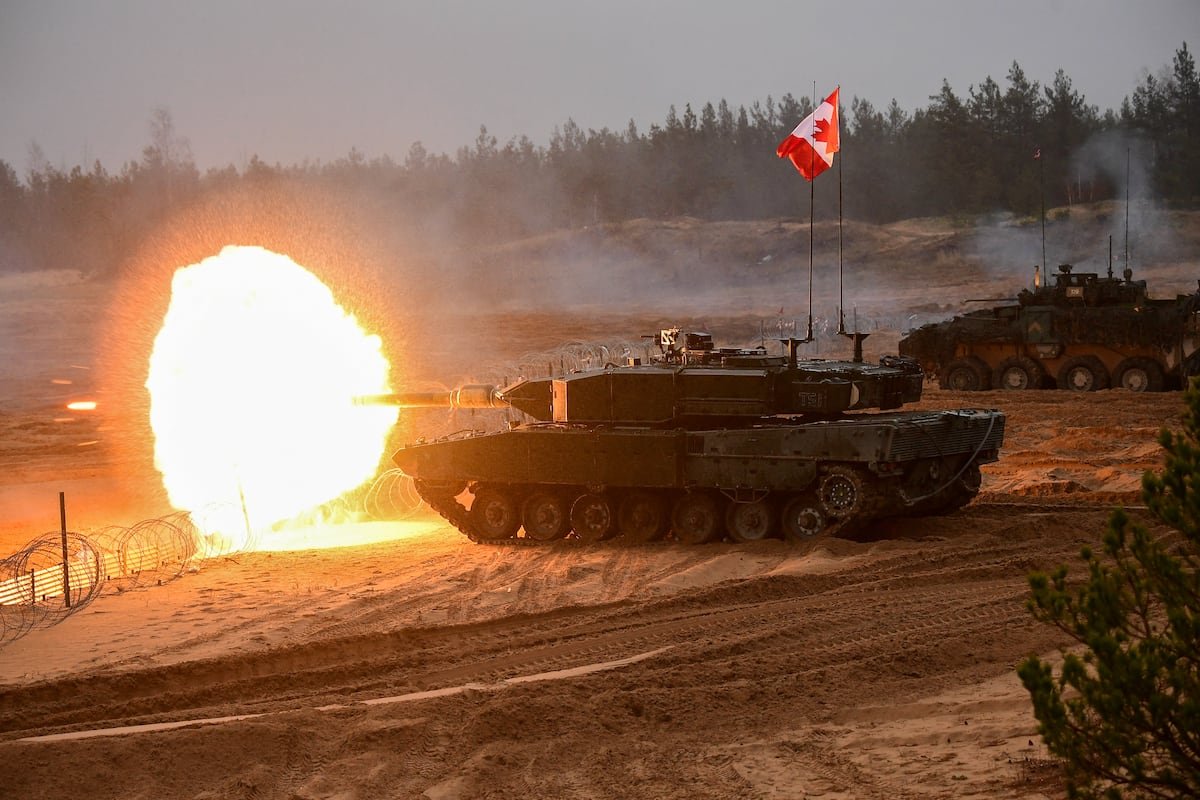
RIGA, Latvia — The Canada-led NATO brigade in Latvia has moved beyond its original “tripwire” deterrence posture and is now focused on mounting a credible defense of the Baltic country bordering Russia, according to its commander, Col. Kris Reeves.
Reeves said the shift towards what he described as “tactical credibility” has meant establishing forward locations and stationing troops near Latvia’s eastern border, in the terrain where they would actually fight in the event of a conflict, the Canadian commander told Defense News.
“Right now I have a brigade, there is nothing on the other side of the border that can take out this brigade,” Reeves said in an interview at the Sēlija training range in central Latvia this week. “And when there’s something that can take out this brigade, NATO’s going to put more forces here, I’m confident in that.”
Canada has about 2,000 troops in Latvia, and its contribution to the NATO Multinational Brigade there represents its largest overseas deployment. Alliance doctrine on the eastern flank defended by Canadian troops has shifted following Russia’s invasion of Ukraine, and while the tripwire logic still exists, it’s now backed militarily by forces expected to actively hold ground rather than just trigger a response and await reinforcements.
NATO agreed in 2016 to establish multinational battlegroups in the Baltic countries and Poland as part of what it called enhanced forward presence, with Canada the framework nation for Latvia. After the invasion of Ukraine, Canada in June 2022 agreed to scale up the battlegroup to a brigade.
From a single garrison in a training area, the Canadian forces are now based in four different areas, with forward locations along the eastern flank providing familiarity with the terrain and improved readiness, according to Reeves.
“And even more important than that, the local population out there is now beginning to trust us and understand us, because they’re going to support us when we fight,” Reeves said. “We are, to use your term, still the tripwire force, but we’ll be even more effective by being out there quicker and understanding the terrain out there even more, and having more support.”
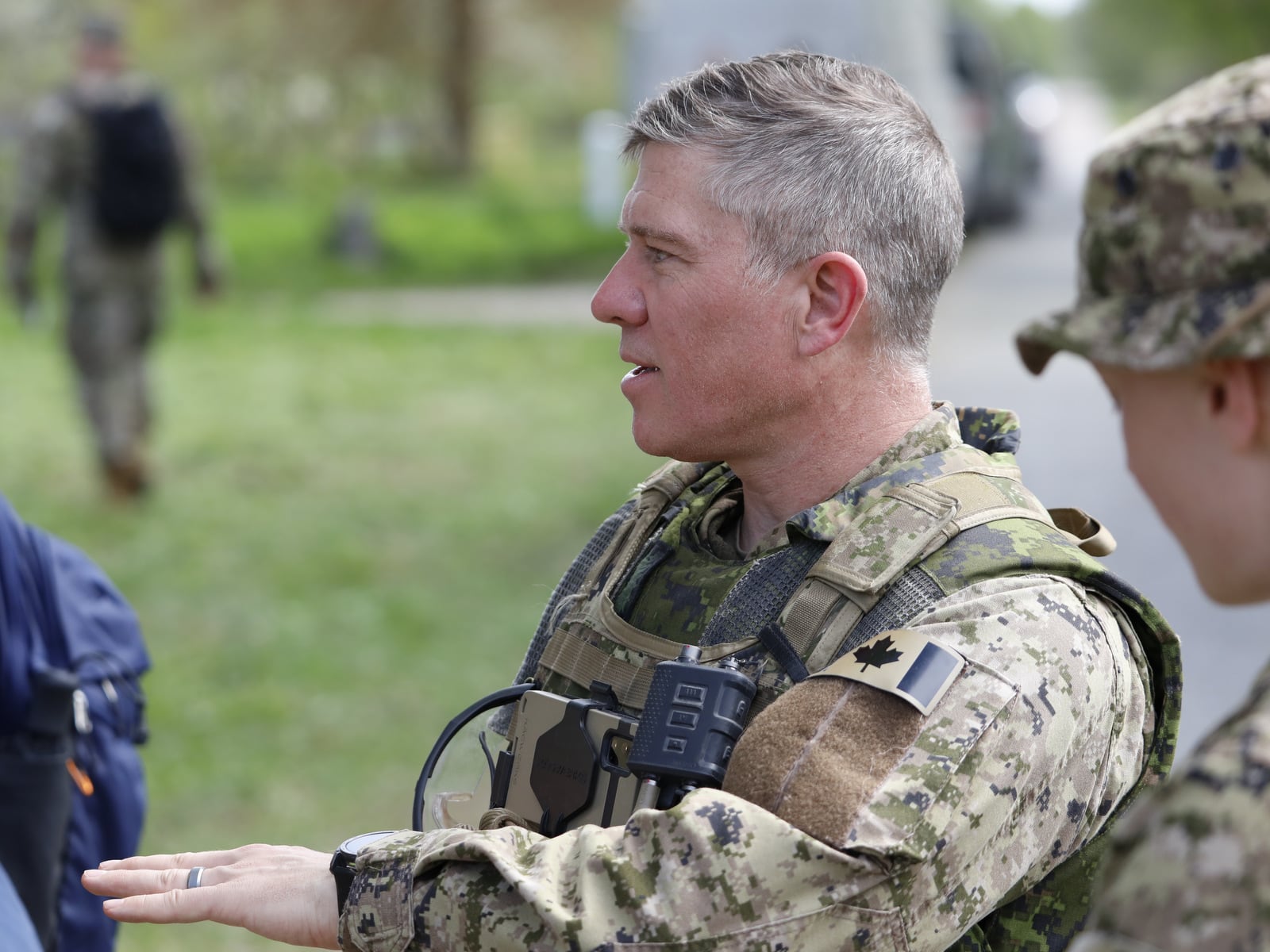
The brigade operates under NATO’s Multinational Division North alongside Latvia’s Mechanized Infantry Brigade.
“I want to see, and I see, signs of the Canadian Army understanding NATO better,” Reeves said. “We haven’t operated in an operational theater with NATO since Afghanistan. Now we’re here, working again in an operational theater with our NATO partners, and we can see where we’re interoperable and where we’re not, and we’re working on that.”
With the brigade actively operating and training every single day, Reeves said soldiers bring lessons identified in Ukraine back to Canada and other NATO countries. “When soldiers leave an operational theater, one of their first tasks is to teach. So now they’re teaching, after having six months or a year of experience trying to learn from the Ukrainian theater.”
The multinational brigade includes troops from 14 nations, and while Reeves said the goal is to have fewer nations at the unit level “because it’s very hard to be perfectly seamlessly interoperable at the lowest level,” he said there’s value in NATO diversity at the brigade headquarters, “because we see problems differently and we see different solutions.”
Lt. Col. Dan Richel, the Canadian deputy commander of Latvia’s Mechanized Infantry Brigade, likewise highlighted the value of different perspectives, in a separate interview. He said the six Canadians embedded in the national formation “definitely learn just as much from the Latvian side that we’re able to bring back home as well.”
He said that the approach of the Latvian brigade as a relatively small formation tends to be practical and time-efficient, able to integrate new equipment and techniques “without worrying about waiting for somebody else to develop that doctrine.”
“The Latvians are definitely very proactive and take a lot of initiative,” Richel said.
Rudy Ruitenberg is a Europe correspondent for Defense News. He started his career at Bloomberg News and has experience reporting on technology, commodity markets and politics.