

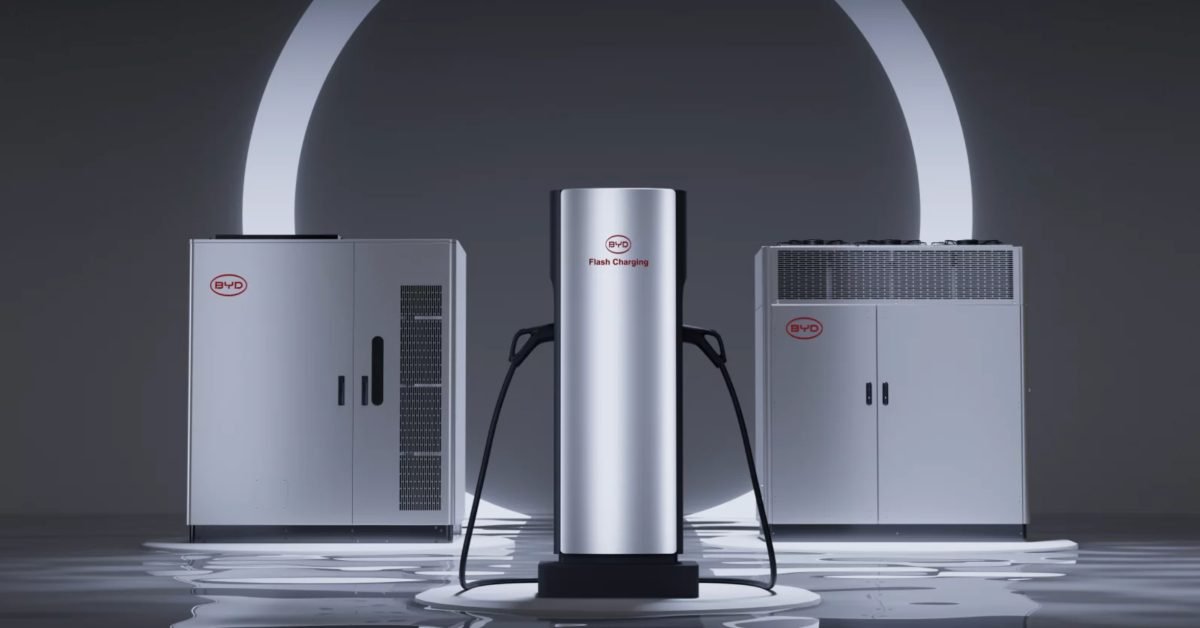
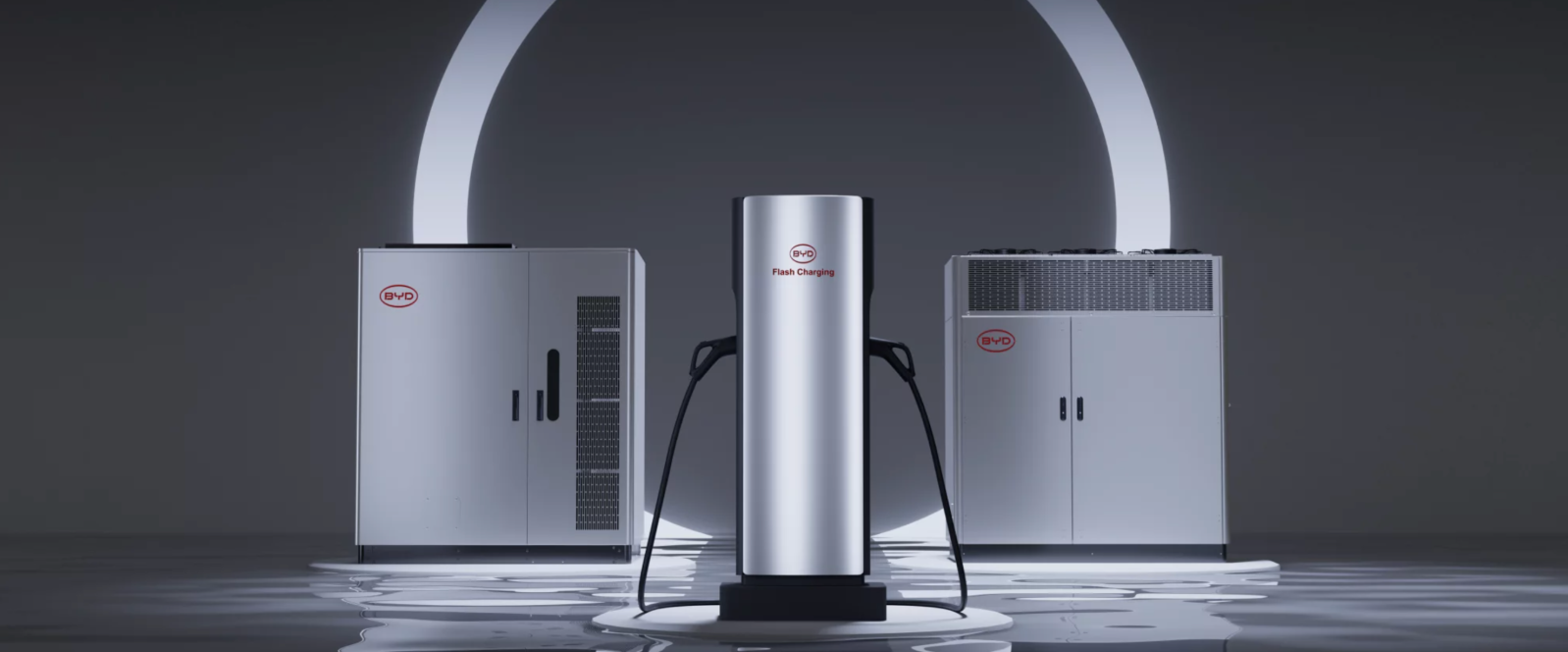
BYD is preparing to bring its megawatt “Flash Charging” network, which can add about 250 miles (400 km) of range in 5 minutes, to Canada – the first confirmed deployment in North America.
The plan was revealed through a new BYD job posting in Toronto for a manager tasked with executing “BYD’s flash charging network expansion strategy and business growth across Canada.”
BYD unveiled its 1,000 kW Flash Charging system alongside the 1,000-volt Super e-Platform in March 2025, and it has already upgraded it to 1,500 kW with the second-generation Blade battery earlier this year – more than 3 times the power of anything deployed in North America today.
The automaker has built over 5,700 Flash Charging stations in China in about a year, and as we reported earlier today, it is now deploying 2.4 times more charging power per month than Tesla adds to its Supercharger network.
But when BYD announced its overseas Flash Charging rollout in March, the list covered Europe, Latin America, the Middle East, Africa, and Asia-Pacific. North America was nowhere to be found.
That just changed.
BYD is hiring to build a Flash Charging network in Canada
BYD North America posted a job listing this week for a “Flash Charging Business Development Manager” based in Toronto, where the company has been assembling its Canadian launch team with more than 10 management roles posted in the last week alone.
The posting leaves little room for interpretation. The role is responsible for executing “BYD’s flash charging network expansion strategy and business growth across Canada,” including:
- Building cost and profit models for flash charging in Canada, including subsidy policies
- Developing local partners for “power grid upgrades, equipment installation, and on-site operation services”
- Formulating “a reasonable network plan for flash charging stations”
- Managing station construction projects in coordination with BYD headquarters
- Jointly operating the stations with local partners
BYD is asking for candidates with at least 5 years of experience in commercial charging stations or energy storage, and an electrical engineering background.
In short, BYD isn’t just shipping cars to Canada – it’s planning to build and operate its own charging infrastructure, taking a page from Tesla’s original Supercharger playbook.
Built for Canadian winters
The timing makes sense. Canada slashed its tariff on Chinese EVs from 100% to 6.1% in January under a quota system, and BYD has since confirmed plans for 20 Canadian dealerships, starting in Toronto.
The second-generation Blade battery is also a particularly good fit for the Canadian market. BYD claims it can charge from 10% to 70% in about 5 minutes even at -20°C (-4°F) – directly addressing the winter charging slowdowns that remain one of the top barriers to EV adoption in Canada.
For comparison, Tesla’s new V4 Supercharger cabinets top out at 500 kW for cars, and most North American EVs can’t sustain more than 350 kW. BYD’s Flash Charging stations are designed around 1,000-volt vehicles drawing up to 1,000 amps, and the company pairs them with integrated battery storage to limit the impact on the local grid – which is exactly why the Canadian job posting emphasizes partners for “power grid upgrades.”
Electrek’s Take
This is a significant development. Canada is about to leapfrog the US on charging speed.
While American drivers are stuck with a de facto ceiling of 350-500 kW, and US tariffs keep BYD out entirely, Canadians are now likely to get megawatt-class charging alongside some of the cheapest EVs on the market. The contrast at the border is going to become embarrassing fast.
It’s also smart strategy from BYD. The company understands that charging anxiety, especially winter charging anxiety, is the biggest objection it needs to overcome as a new brand in Canada. Tesla solved that problem in 2012 by building the Supercharger network before anyone asked for it, and it became its single biggest competitive moat for a decade. BYD is now running the same play, except with 3 times the charging power.
The big questions are scale and timing. BYD’s Canadian vehicle launch has reportedly slipped toward 2027 due to the import quota system, and a charging network needs to be in the ground before the cars arrive. Grid connections and permitting in Canada don’t move at Shenzhen speed, even with battery-buffered stations. But the fact that BYD is hiring for this now, before selling a single car in the country, tells you how serious it is.
Now we get to see whether 5-minute charging at -20°C does for BYD in Canada what the Supercharger did for Tesla.
If you’re thinking about going electric, pairing your EV with home solar is the cheapest way to charge it – no matter how fast public chargers get. With electricity rates climbing nearly 10% last year, home solar protects you against future rate increases. And with lease and PPA options, you can go solar with zero upfront cost and start saving immediately. If you want to find the best deal, check out EnergySage. It’s a free service with hundreds of pre-vetted installers competing for your business, so you save 20 to 30% compared to going it alone. No sales calls until you pick an installer. Get your free quotes here.


FTC: We use income earning auto affiliate links. More.