

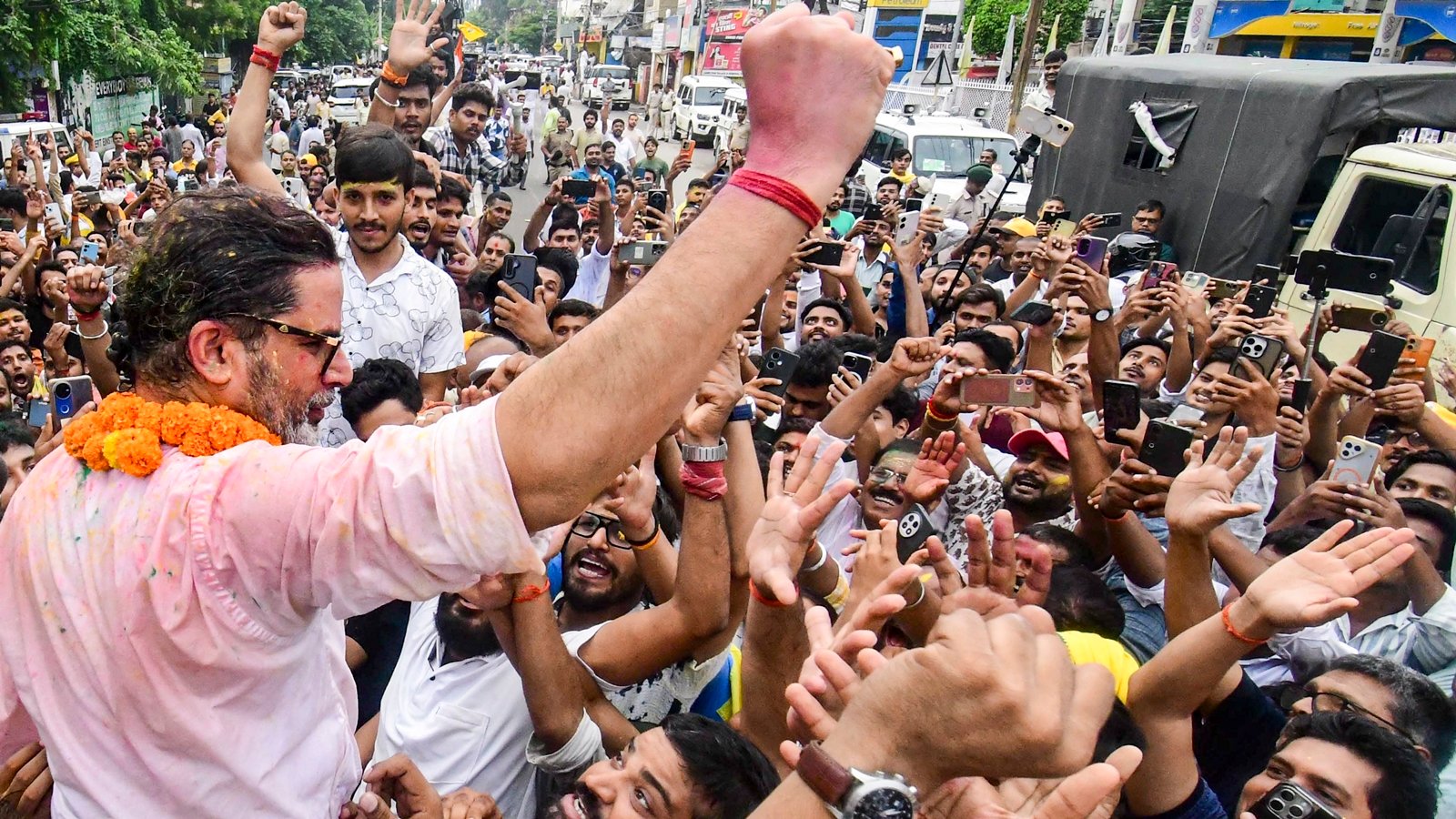
Bringing the BJP’s three-decade-run in Patna’s Bankipur Assembly constituency to an end, Jan Suraaj Party (JSP) founder Prashant Kishor wrested the seat from the ruling party in an Assembly bypoll on Monday. Kishor defeated his nearest rival Neeraj Kumar of the BJP by 19,324 votes. In first comments after the win, Kishor said the BJP’s “30-year fortress has collapsed in just 30 days”.
The political strategist-turned-JSP leader had framed this election as a “referendum” on the tenure of Chief Minister Samrat Choudhary, who assumed office in April. Kishor said the BJP-led ruling alliance should have appointed a CM “with an unblemished image”.

The loss is a setback for the BJP since its national president Nitin Nabin, and before him his late father Nabin Kishore Prasad Sinha, were the dominant figures in this urban constituency. In 2008, Bankipur was primarily carved out of the Patna West seat that Nabin Kishore Sinha won from 1995 until his death in 2006. Nitin won Patna West in a subsequent bypoll and in 2010 won from the newly created Bankipur seat that he retained till earlier this year, when he moved to the Rajya Sabha after being elected the BJP’s national president.
“I thank the people of Bankipur, both those who voted for me and those who did not,” Kishor said as it became all but apparent that he would win. “This election was not merely about electing one MLA; it was about sending a clear message to Prime Minister Narendra Modi and Union Home Minister Amit Shah. When the people of Bihar have entrusted you with a majority of 202 MLAs (now 201), you ought to appoint a Chief Minister with an unblemished image.”
Kishor, who is popularly referred to as PK, expressed hope that the BJP’s central leadership would take “concrete steps” for Bihar’s development before the 2029 Lok Sabha elections. “I am confident the BJP’s central leadership will understand the message sent by the people and Modi ji and Amit Shah ji will take concrete steps to improve governance, create jobs, strengthen education and healthcare, attract industries and address migration in Bihar. Governance cannot be limited to distributing five kilograms of free foodgrains.”
The BJP’s “30-year fortress” had collapsed in just 30 days because people no longer want votes to be sought solely in the name of caste, religion or free ration, but want to cast them on issues such as education, healthcare, jobs and development, the Jan Suraaj leader said, adding, “If governments fail to address education, employment and migration, they should expect similar electoral verdicts in the future.”
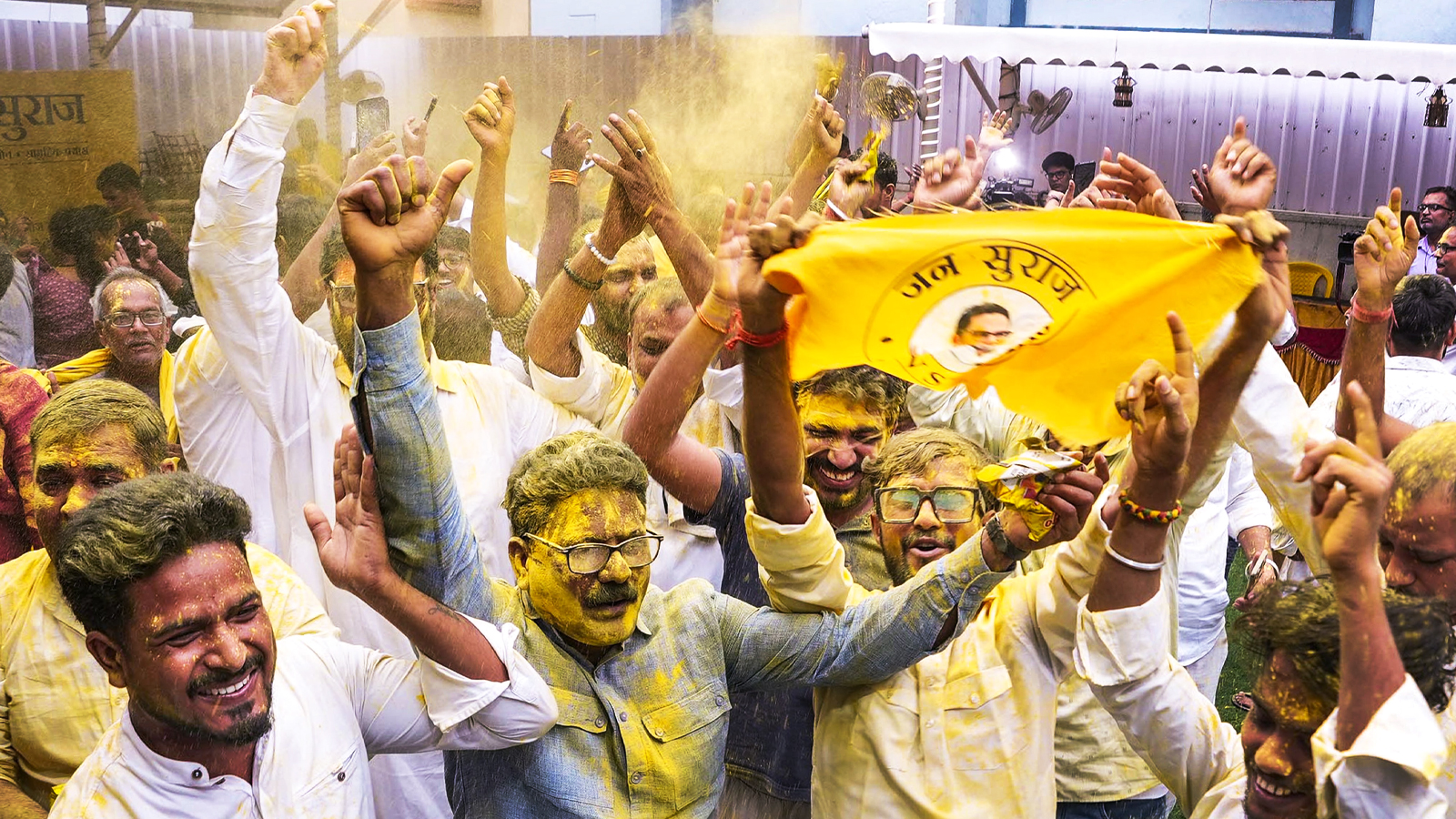 Jan Suraj Party supporters celebrate as party chief Prashant Kishor wins Bankipur Assembly by-election. (PTI)
Asked about his immediate priorities, Kishor cautioned against unrealistic expectations. “My becoming an MLA will not turn Bankipur into Bengaluru. But people will certainly see improvements in the next two or three months wherever it is possible for us to make a difference,” he said.
Story continues below this ad
Conceding defeat, the BJP said it would introspect while Choudhary congratulated Kishor on his win. Leader of Opposition Tejashwi Prasad Yadav, whose party RJD finished a distant third, said that “winning and losing are part of democracy”. RJD candidate Rekha Kumari had finished second in the 2025 election.
Takeaways from PK’s win
First, it revives the political fortunes of the JSP, which had secured just 3.44% of the votes in its debut election in November 2025 despite a high-pitched campaign. Kishor is now set to assume the role of an active Opposition leader in the Assembly. As one voter remarked during the campaign, “Kishor’s presence in the House could be like a camel standing out among 100 elephants (referring to the NDA’s majority).”
Second, the outcome shows that traditional divisions of caste and religion disappeared because of Kishor’s broad appeal across demographic groups. Despite an overall low turnout, noticeable enthusiasm among Muslim voters could sound alarm bells for the RJD. Similarly, the BJP, which relied heavily on its traditional urban base of upper-caste and Other Backward Class (OBC) voters, faces tough lessons.
Story continues below this ad
An official in Bihar said two reasons were decisive locally. First, BJP candidate Neeraj Kumar, a last-moment replacement, was seen as lacking the profile to become MLA. On the campaign trail, Kishor raised this point repeatedly, telling voters, “The BJP believes that even a dog or cat can win on its ticket from here. You have to prove them wrong.”
Second, there was apparent upper-caste discontent about choosing Choudhary, who is from the OBC Kushwaha community, as CM to succeed Nitish Kumar. This puts the BJP in a quandary as any attempt to meet the demand of upper castes may eat into the party’s OBC and Extremely Backward Caste (EBC) votes in the absence of Nitish, who was the glue between the upper castes, OBCs, and EBCs. The BJP can, however, take some heart from the fact that the shift has been towards Kishor, a Brahmin whose party still does not pose a pan-Bihar challenge, and not towards the RJD. This, however, may not constitute a trend and his shift could very well reverse in future elections.
The BJP could not leverage voters’ fear of Lalu Prasad or “jungle raj,” given that the bypoll outcome carries no risk to the NDA’s majority in the Assembly. The election demonstrated that the BJP’s famed election management and booth-level presence fell short against Kishor’s strategy of personal connection built through direct outreach in narrow lanes, parks, and small neighbourhood meetings. Living up to his reputation as a master poll strategist, Kishor successfully mobilised voters, whereas the BJP — despite deploying over 200 leaders for campaign management — failed to drive turnout in its favour.