

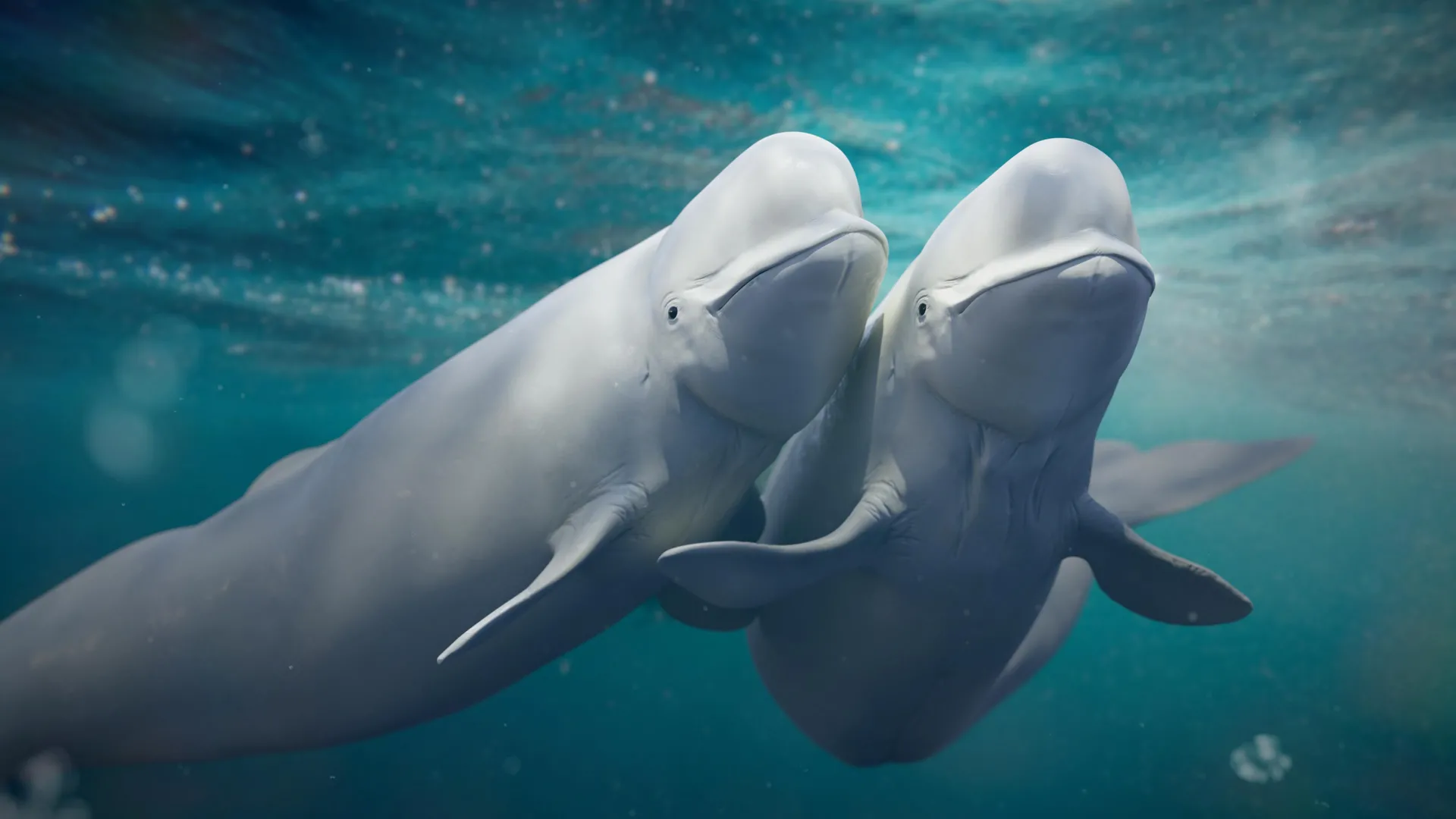
Beluga whales are among the most challenging marine mammals to study. Much of their lives are spent beneath Arctic waters and sea ice, making direct observation difficult. Now, a long-term DNA study has provided rare insight into how a population of belugas in Bristol Bay, Alaska, forms family connections and maintains genetic health.
The findings suggest that both male and female belugas reproduce with multiple partners over the course of their lives. Researchers believe this behavior may help this relatively small and isolated population avoid inbreeding and preserve genetic diversity.
“We still know very little about beluga whales, despite their immense popularity,” said Dr. Greg O’Corry-Crowe of Florida Atlantic University, lead author of the paper in Frontiers in Marine Science. “The primary reason for this is the difficulty of studying a species that lives beneath the waves in the cold and often frozen north. But this is the challenge that makes discovery, when it happens, more exciting.”
Using DNA to Study Elusive Arctic Whales
Over a period of 13 years, researchers collected small tissue samples from 623 beluga whales. The project involved scientists from Florida Atlantic University, the Alaska Department of Fish and Game, and Alaska Native subsistence hunters from Bristol Bay.
Because little was known about mating patterns in wild belugas, the team developed predictions based on evolutionary theory and what scientists already knew about the species. For example, male belugas are noticeably larger than females, and females typically produce only one calf every few years.
“We predicted that beluga whales had a polygynous mating system where a few of the most competitive and possibly largest males secure most of the matings within a season or even across a few seasons, and that they provide little or no parental care,” said O’Corry-Crowe.
At the same time, belugas live in large social groups that regularly break apart and come back together. Researchers thought this social structure could give females access to many different potential mates over time. As a result, they predicted that females might reproduce with multiple males across different breeding seasons.
DNA Reveals Unexpected Mating Patterns
The genetic analysis produced a surprising result. Both males and females were found to have offspring with different partners over the years. When calves had siblings, they typically shared only one parent rather than both.
Although all whales produced relatively few offspring, there was greater variation among males. Some males fathered more calves than others, but the difference was not as extreme as researchers had expected.
“Beluga males were indeed polygynous, but, surprisingly, only moderately so,” said O’Corry-Crowe. “The three-dimensional aquatic environment likely limits a male’s ability to successfully court or corral multiple females. However, a long life may also be key. Belugas can live 90 years, possibly more. Male beluga whales may, therefore, play a long game of securing a few matings each year over a very long reproductive life!
“The female story is just as fascinating. The genetic profiling revealed that female belugas regularly switch mates across breeding seasons, also over a long reproductive life. This could be a bet-hedging strategy to limit the risk of mating with low-quality males.”
High Genetic Diversity in a Small Population
One of the most unexpected discoveries involved the population’s genetic health.
Despite numbering only about 2,000 individuals, the Bristol Bay belugas showed high levels of genetic diversity and relatively little evidence of inbreeding. Researchers compared the results with both historical samples and other beluga populations and found that genetic diversity in Bristol Bay is comparable to that of much larger populations. It has also remained stable over time.
“A leading concern for small populations is that they tend to lose genetic diversity faster than large populations and the risks of inbreeding are higher,” explained O’Corry-Crowe. “We expected to find low diversity and high inbreeding, but we found something quite different. The mating system may explain this surprising finding. Frequent mate switching limits the number of highly related offspring in the population. This in turn reduces the risk of highly related individuals mating and producing highly inbred offspring. It also minimizes the risk of diversity loss. We cannot afford to be complacent, but we can be optimistic that beluga whale mating strategies provide evidence of nature’s resilience.”
More Questions About Beluga Behavior
The researchers caution that other beluga populations may not behave in the same way.
Belugas in Bristol Bay show relatively small differences in size between males and females compared with some other populations. That could indicate lower levels of competition among males and potentially different mating systems elsewhere.
“To me, the differences in sexual dimorphism among populations of beluga whales could indicate that mating systems also vary, and this is something we are currently working on,” said O’Corry-Crowe. “We also can’t determine if females mate with multiple males within a season using genetics, as a female only produces one calf from one lucky male. But we are working on this, using drones at other locations to determine if we can observe mating behaviors in the wild. More on that soon…”
The study offers one of the clearest views yet into the hidden social lives of beluga whales. It also suggests that their flexible mating behavior may be helping these Arctic animals maintain strong genetic diversity despite living in a relatively small and isolated population.