

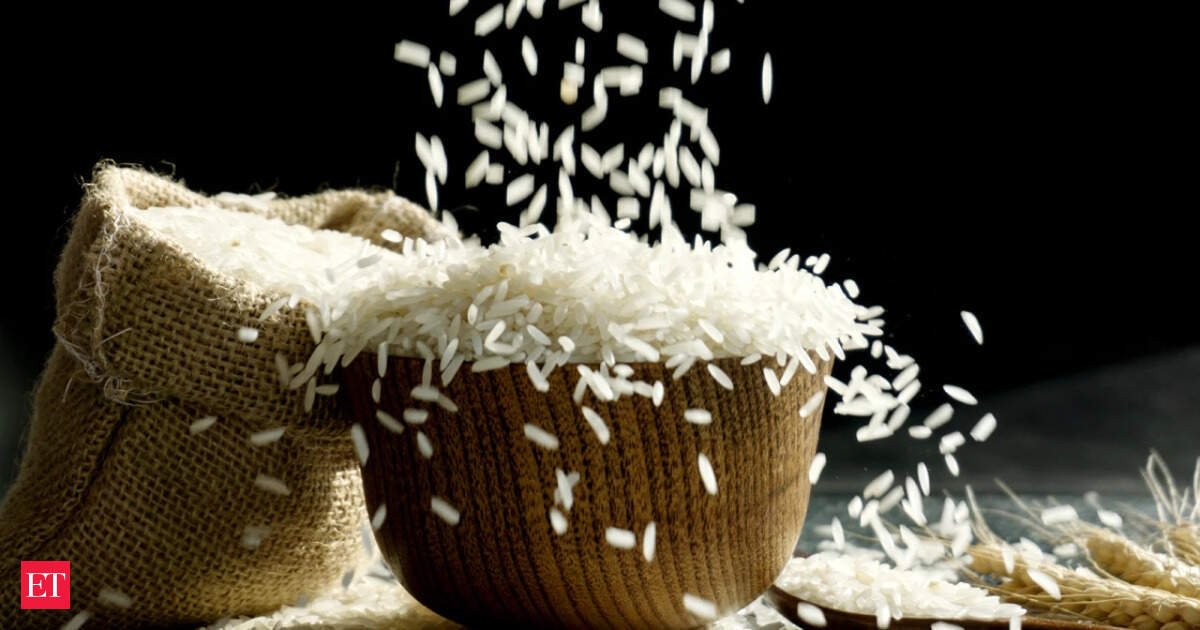
“After the interim (US-Iran) peace deal was announced, exporters started buying basmati rice in good quantities for shipment to the Middle East and prices surged 15-20%. But this sudden announcement will bring down prices,” said Dev Garg, vice-president, Indian Rice Exporters Federation.
Also Read: Nearly 12 ships carrying fertiliser cross Strait of Hormuz
Nearly 60,000 tonnes of basmati rice destined for West Asian markets is currently in transit.
Five of the leading destinations for Indian basmati rice are in West Asia – Saudi Arabia, Iran, Iraq, the UAE and Yemen. Together, they account for about 50% of India’s total basmati rice exports and are among the markets most directly affected by the disruption. India produces about 7.2 million tonnes of basmati rice annually, of which around 6 million tonnes is exported.

West Asia is also a major export destination for Indian tea. Consumers in the region have a strong preference for Indian second-flush premium orthodox teas. Orders usually begin flowing in from late May, with shipments starting in early June. Second-flush teas are a significant foreign-exchange earner for the country.
“India’s tea exports, which hit an all-time record of 285 million kg in 2025, have faced a huge challenge due to the Middle East crisis. Close to 50% of the tea shipped from India goes to Middle Eastern countries. The blockade of Hormuz and the sharp increase in freight charges through Red Sea ports have brought our exports to a virtual standstill,” said Mohit Agarwal, director of Asian Tea & Exports, a major exporter to the region.